
 Worksheets
quiz w 1-4
Total questions: 88
Worksheet time: 44mins
Misfolding of polypeptides is a serious problem in cells. Which of the following diseases is NOT associated with an accumulation of misfolded proteins?
Graves’ disease
Creuzfeldt-Jakob Disease
Kuru
Alzheimer Disease
Parkinson
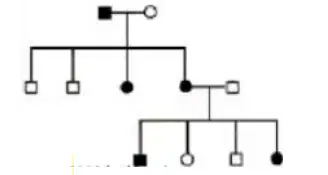
The following pedigree is characteristic for a disease which is inherited in___ manner.
X-linked recessive
x-linked dominant
Autosomal dominant
Mitochondrial
Autosomal recessive
Interaction between an enhancer sequence and an activator in the regulation of gene expression is an example of:
DNA-DNA interaction
RNA-protein interaction
Protein-protein interaction
DNA-RNA interaction
DNA-protein interaction
Chaperone molecules bind to proteins targeted into organelles to …
Modify the proteins
Cleave signal sequences
Direct the transport
Prevent premature folding
Destroy protein folding
In eukaryotic cells, transcription cannot begin until …
The 5’ caps are removed from the mRNA
The two DNA strands have completely separated and exposed the promoter
DNA nucleases have isolated the transcription unit
Several transcription factors have bound to the promoter
The DNA introns are removed from the template
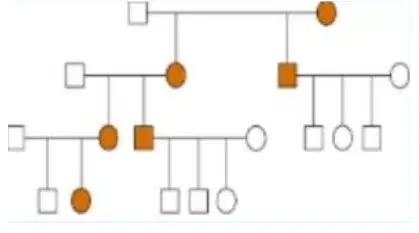
The following pedigree is an example of _____ inheritance.
X-linked recessive
Autosomal dominant
Mitochondrial
X-linked dominant
Autosomal recessive
Carriers of balanced Robertsonian translocation may have offspring with _________.
Normal chromosomes
Balanced Robertsonian translocation
Loss of a chromosome
A and B
A, B and C
Misfolded proteins in the ER are transported to ____ covalently linked to _____ and degraded in the _____.
Cytosol, Poly-Ubiquitin, Proteasome
Cytosol, Poly-Lysin, Proteasome
Golgi apparatus, Poly-Lysin, Lysosome
Cytosol, Poly-Ubiquitin, Autophagy
Golgi apparatus, Poly-Ubiquitin, Lysosome
Which of the following is/are true regarding a synonymous single nucleotide polymorphism (SNP)?
A change in a nucleotide in the DNA sequence results in coding for the same amino acid
Will always result in a change in function of the protein
Is a product of genetic variation in the non–coding region
A change in a nucleotide in the DNA sequence results in coding of a different amino acid
Is a product of genetic variation in the intron region
Which one of the following statements describes essential amino acids?
They are stored in adequate amounts so are not needed in the diet
They are ingested but not used in protein synthesis
They are less important in cells than non-essential amino acids
They must be included in our diet because humans cannot synthesize them
They can be synthesized from non-essential amino acids
What is the function of signal peptidase?
Release newly synthesized proteins from ribosomes
Removing the signal sequence of a protein after reaching its correct location
Helping newly synthesized proteins to be folded properly
Helping old and unused proteins to be degraded
Directing proteins into the nucleus
Human genome project revealed that only approximately 23,000 genes have been mapped in humans. However, it is known that there are many more proteins human can produce than the genes code for. The process called ________ is thought to be one of the mechanisms allowing human cells to produce more proteins from only one single gene.
Single mutation
Genome editing
Alternative splicing
RNA silencing
RNAi (RNA interference)
Which of the following pairs of amino acids might contribute to protein conformation by forming electrostatic interactions?
Lysine and arginine
Glutamate and aspartate
Phenylalanine and tyrosine
Glycine and leucine
Glutamate and lysine
In bacteria, some of the functions of the organelles in eukaryotic cells are performed by …
Mitochondria
Nucleoli
Lysosomes
Vesicles
The plasma membrane
Meiotic error in human oogenesis (the process of producing the female gametes) may cause following conditions except:
XYY
Trisomy 18
XXY
Trisomy 13
XXX
Choose the answer that has these events of protein synthesis (translation) in the proper sequence.
1,3,2,4,5
2,4,5,1,3
4,1,3,2,5
5,4,3,2,1
4,1,2,5,3
This condition occurs when an organism is having an unequal number of chromosomes in adjacent cells or tissues.
Polyploidy
Diploidy
Mixoploidy
Aneuploidy
Haploidy
Which statement is true for the function of Peroxisome?
The breakdown of very long fatty acids through beta oxidation
Single membrane bound
Synthesis of Catalase
A and B
A,B and C
Which of the following is not true of RNA processing?
A primary transcript is often much longer than the final RNA molecule that leaves the nucleus
Nucleotides may be added at both ends of the RNA
snRNP and snRNA may function in RNA splicing
RNA splicing can be catalyzed by spliceosomes
Exons are cut out before mRNA leaves the nucleus
Which of the following statements about Cell is false?
Different cells use different genetic code
All cells need energy to operate
All cells synthesize proteins by using the ribosome
All cells store information in genes in the form of DNA
Proteins govern the activities, functions and structures in all cells
B-thalassemia case common in South East Asia is often due to a point mutation E26K in the B-globin gene. This mutation results in a B-globin protein that ______.
Contains aspartate (aspartic acid) at position 26 instead of lysine
Is only 26 amino acids long with lysine as the last amino acid
Contains lysine at position 26 instead of aspartate (aspartic acid)
Cannot be synthesized (no B-globin protein at all)
Contains lysine at position 26 instead of glutamate (glutamic acid)
A skin biopsy from an anorexic 16 year old girl showed cellular atrophy. During atrophy:
Protein synthesis increases
Cellular organelles swell
Cell size increases
The cell disappears
Cell size decreases
Plasma membrane’s function in prokaryotic cells includes the followings EXCEPT:
ATP production
DNA anchoring site
Regulate molecules’ transport
Permeability Barrier
Site of translation
Which of the following statements is TRUE about Necrosis?
No loss of membrane integrity
No inflammatory response
It affects groups of cells
It results in the formation of vesicle
Pre-lytic DNA fragmentation
The following statements is true about Chimera except:
Occurs only in female
The result of double fertilization
Blood chimera occurs in fraternal twins
Blood chimera formed because of shared placenta
From two genetically different sperms
The anticodon of a particular tRNA molecule is
Complementary to the corresponding mRNA codon
Complementary to the corresponding triplet in rRNA
The part of tRNA that bonds to a specific amino acid
Catalytic, making the tRNA a ribozyme
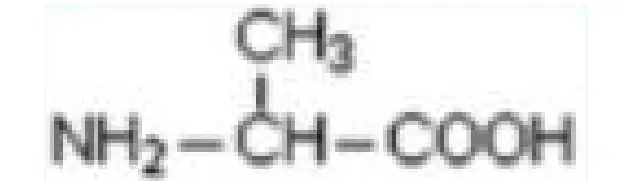
This amino acid is
Nonpolar and hydrophobic
Polar and hydrophobic
Polar and hydrophilic
Aromatic
Nonpolar and hydrophilic
Which of the following is a non-essential amino acid?
Phenylalanine
Tyrosine
Valine
Methionine
Leucine
E.coli cells grown on a 15N medium are transferred to a 16N medium and allowed to grow for two more generations (two rounds of DNA replication), FNA extracted from these cells is centrifuged. What density distribution of DNA would you expect in this experiment?
One low-density band
One high-density and one intermediate-density band
One intermediate-density band
One high-density and one low-density band
One low-density and one intermediate-density band
Which statement best describes Endocytosis?
Vesicle fused with Golgi membrane
Export of products such as insulin
Passive transport
Mediated by Receptor
Cargo release in high pH environment
Protein deficiency disease is known as
Cystic fibrosis
Alzheimer’s disease
Kwashiorkor and marasmus
Prion disease
Parkinson
The cytoskeleton includes at the following except:
Tubulin
Actin
Lamin
Vimentin
Myosin
Which of the following statements about membrane protein is not correct?
Many integral membrane proteins are glycoproteins with sugar groups conjugated in their extracellular domains
Many integral membrane proteins function as transporters, channels, and receptors
Transmembrane domains of integral membrane proteins are rich in hydrophobic amino acids
Integral membrane proteins are anchored to the lipid bilayer by ionic bonds
At the following are structures that are part of the secretory pathway EXCEPT:
Trans-Golgi network
Transport vesicles
Peroxisomes
Cis Cisterna
Rough endoplasmic reticulum
Daughter strands in replication are always made of one strand of old DNA and one newly synthesized complementary strand. This nature of DNA replication is referred as:
Dispersive
Semiconservative
Conservative
Discontinuous
Antiparallel
In a nucleosome, the DNA is wrapped around
A thymine dimer
Satellite DNA
Ribosomes
Histones
Polymerase molecules
Amino acids produced upon protein degradation constitute the amino acid pool in the cell, if not used for protein synthesis, what happens to the amino acids?
-NH2 group will be released as urea in urine via the kidney
The carbon skeleton of the amino acids can be used for fat synthesis
The carbon skeleton of the amino acids can be used for produce energy
Used for the synthesis of nitrogen-containing compounds like creatinine and serotonin
All of these
Which of the following does not contribute to the formation of a tertiary structure of a protein?
Hydrogen bonds between different amino acid side chains
Hydrophobic and van der Waals interactions
Ionic bonds between oppositely charged amino acid side chains
Covalent bonds joining different parts of the peptide backbone
Disulfide bridges between cysteine residues
After fertilization, the resulting zygote begins to divide by
Synapsis
Meiosis
Mitosis
Autophagocytosis
Binary fission
Nuclear pore allows the movement of
RNA
Ion, protein and RNA
Ion and protein
Ion
Protein
The regions of a gene located at -10 and -35 with respect to the start of transcription are termed
Enhancer sequences
Start codons
Terminator
Origin of replication (ori)
Promoters
Which one of the following statements is not correct about Meiosis?
Homologous pairs of chromosomes are pulled apart
Meiosis results in haploid daughter cells
Meiosis occurs in reproductive cells
Meiosis results in four daughter cells
Chromosomes do not exchange genetic material
What protein condenses during apoptosis
Dynein
Clathrin
Actin
Chromatin
Myosin
Which of the following help(s) to stabilize mRNA by inhibiting its degradation?
Introns
5’ cap and poly (A) tail
TATA box
Spliceosomes
RNA polymerase
In analyzing the number of different bases in a DNA sample, which result would be consisten with the base pairing rules (Chargaff’s Rule)?
A + T = G + T
A = C
G = T
A = G
A + G = C + T
UV radiation can cause DNA damage in the form of thymine dimers formation. This DNA damage is usually repaired by the DNA repair mechanism of:
NHEJ
NER
BER
MMR
HDR
Which of the following best describes the flow of information in eukaryotic cells?
DNA -> proteins -> RNA
DNA -> RNA -> proteins
Proteins -> DNA -> RNA
RNA -> proteins -> DNA
RNA -> DNA -> proteins
Y is for yellow color, and R is for the round shape of seeds. The color yellow is dominant over the color green, and the round shape is dominant over the wrinkled shape. In Mendel’s dihybrid cross, what would be the ratio of round to wrinkled yellow seed?
9:3:3:1
9:3:4
3:1
9:6
1:2:1
Replication of the genome occurs in the ____ of Cell Cycle.
Telophase
Anaphase
Prophase
Interphase
Metaphase
What causes the decreased pH in the endosomes and lysosome?
Receptor mediated Endocytosis
Proton pumps in the membrane
Autophagy
Phagocytosis
Vesicle fusion
In a study of skin cell reproduction, it is noticed that genetic material is not being divided equally. A cell structure that could make mistake could be the:
Centrioles
Mitochondria
Lysosome
ER
Nucleolus
Virus has the advantage over non-virus agent to be used in gene therapy because:
It is non-modifiable
It targets specific cells
It is non-infectious
There is vaccine available
It is made of RNA
An abnormal chromosome with two identical arms is called
Paracentric inversion
Dicentric chromosome
Reciprocal translocation
Isochromosome
Lysosomal Storage Diseases are the result of a defective
Lysosomal Enzyme
Ion transporter
Glycosylation in Golgi Apparatus
A and B
A, B and C
If Ovalbumin’s egg white protein is denatured in a hard-boiled egg, then which of the following is feast affected?
The primary structure of ovalbumin
The tertiary structure of ovalbumin
The quaternary structure of ovalbumin
All stages of protein structures remain intact
The secondary structure of ovalbumin
When two or more genes are responsible for a single phenotype, this is called:
Polygenic inheritance
Pleiotropy
Polydactyly
Epistasis
Polyploidy
At the center of the cell cycle control system is Cdk, a protein that:
is only active during mitosis
is phosphorylated to become active
manufactures growth factors
is endocytosed from plasma membrane
that binds to different cyclins
Peptides resulting from protein digestion by pepsin in the stomach are digested further by pancreatic and small intestinal proteases. Which of the following proteases cuts peptide bonds on the -COOH side of the aromatic amino acid (Tyr, Trp and Phe)?
Gastrin
Carboxypeptidase
Trypsin
Chymotrypsin
Elastase
Nondisjunction in Meiosis I may result in a daughter cell with _______.
Extra chromosome
Loss of a chromosome
Normal number of chromosomes
A and B
A, B and C
Gastrin is _______.
First protease to digest protein in the stomach
A serine protease that cuts peptide bonds on the -COOH side of Arginine & Lysine
A hormone that controls hydrochloric acid production and pepsin release
A serine protease that cuts peptide bonds on the -COOH side of Tyr, Trp, and Phe
A serine protease that cuts peptide bonds on the -COOH side of Valine & Threonine
In the Ubiquitin Proteasome Pathway, Ubiquitin acts as
Activating Enzyme for degradation
Marker for cellular protein targeted for degradation
Conjugating Enzyme for cellular protein
Chaperone for Protein Folding
Protease Complex
Enlargement of skeletal muscle with exercise is an example of
Dysplasia
Atrophy
Metaplasia
Hyperplasia
Hypertrophy
White blood cells engulf foreign material by using the process of
Phagocytosis
Constitutive secretion
Receptor-mediated endocytosis
Regulated secretion
Pinocytosis
Consider this sequence A-B-C-D-E-O-F-G-H, to be a DNA sequence where O is the centromere. Which of the following will be a paracentric inversion?
A-B-C-B-C-D-E-O-F-G-H
A-B-C-F-G-O-D-E-H
A-D-C-B-E-O-F-G-H
A-B-C-F-G-O-E-D-H
A-B-D-E-O-F-G-H
In Mendel’s experiment with the pea plants, which trait was observed in the F1 generation?
Recessive
Co-dominant
Incomplete recessive
Dominant
Incomplete dominance
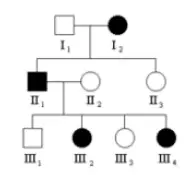
The following pedigree is characteristic for a disease which is inherited in____________ manner
X-linked recessive
Autosomal recessive
Y-linked dominant
X-linked dominant
Autosomal dominant
You would expect an individual with a tetrasomy to have ___________ chromosomes
45
47
46
69
48
The following statements for SNP are correct, except:
Detected in non-coding region
Present in <1% of study population
May have effect on drug transport
Occur when a single base is altered
Detected in coding region
Which statement about Cell is FALSE?
Different cells use different genetic code
All cells synthesize proteins by using the ribosome
All cells store information in genes in the form of DNA
Proteins control the activities, functions, and structures in all cells
All cells need energy to operate
Which of the following statement about Endoplasmic Reticulum is CORRECT?
The pH in the ER is lower than the Lysosomes
Proteins synthesized in the rough ER may have errors
Messenger RNA need to enter rough ER to be translated into proteins
Smooth and rough ER are separated organelles
Proteins synthesized in the ER can be targeted to mitochondria
Gene expression can be suppressed (“knocked out” or “switched off”) by introducing an antisense RNA or a double stranded RNA (dsRNA) of the corresponding gene into the cells. This method is called _______
CRISPR/Cas9
DNA silencing
Alternative splicing
Genome editing
RNAi (RNA interference)
In Gene Therapy, viral vectors are generally preferred over non-viral vectors because viral vectors:
Can be engineered to target specific types of cells
Are expensive
Can only carry RNA
Can induce immune response
Are pathogenic
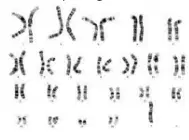
Individuals with this karyotype are most likely
Mentally retarded
Sterile
Taller than average
Have cleft palate
Not survive
The followings are example of Numerical chromosomal abnormalities, EXCEPT: a. Trisomy b. Mixoploidy c. Polyploidy d. Triploidy e. Tetrasomy
Trisomy
Mixoploidy
Polyploidy
Triploidy
Tetrasomy
Chimerism is the result of
Double fertilization
Sex-linked Recombination
Non-Disjunction in Mitosis
Non-Disjunction in Meiosis I
Chromosomal Deletion
Individuals with CYP2D6*4 allele are considered poor metabolizer for the cancer drug Tamoxifen. These allelic variants lead to:
Inactive CYP2D6 enzymes
Reduced drug dose
Increased risk of side-effect
A and B
A, B and C
Autophagy includes all the following except
Vesicle elongation
Degradation in Lysosome
Secretory Vesicle formation
Degradation of unneeded Peroxisome
Vesicle breakdown
In eukaryotic cell, the following structure aconsists of double membrane
Cytoplasm
Golgi Apparatus
Nuclear Envelope
Endoplasmic Reticulum
Ribosome
Gram positive bacteria differs from Gram negative bacteria in which of the following
The presence of plasma membrane
The absence of cell wall
The presence of teichoic acid
The presence of large periplasmic space
The absence of DNA
Secretory cells that release relatively large quantities of glycoproteins contain relatively large amounts of which of the following?
Rough endoplasmic reticulum, Golgi apparatus
Smooth endoplasmic reticulum, Golgi apparatus
Smooth endoplasmic reticulum, Golgi apparatus, Mitochondria
Smooth endoplasmic reticulum
Rough endoplasmic reticulum, Golgi apparatus, Mitochondria
Which statements is TRUE about Necrosis?
It affects groups of cells
Pre-lytic DNA fragmentation
It results in fragmentation of the cell
No loss of membrane integrity
No inflammatory response
Which of the following statements is not correct about Apoptosis?
Activation through extracellular signals
Induces inflammatory response
Activation through intracellular signals
Activation of Caspase Cascade
Induces nucleus condensation
Choose the answer that has these events of protein synthesis (translation) in the proper sequence. 1. An aminoacyl-tRNA binds to the A site. 2. A peptide bond forms between the new amino acid and a polypeptide chain. 3. tRNA leaves the P site, and the P site remains vacant. 4. A small ribosomal subunit binds with mRNA. 5. tRNA translocate to the P site.
4, 1, 3, 2, 5
1, 3, 2, 4, 5
5, 4, 3, 2, 1
4, 1, 2, 5, 3
2, 4, 5, 1, 3
Marfan syndrome is a human genetic disorder affecting the connective tissues, caused by mutations of the fibrillin-1 (FBN1) gene. This disease commonly affects the eyes, heart, blood vessels, and skeleton. This is an example of:
Polydactyly
Polyploidy
Pleiotropy
Polygenic inheritance
Epistasis
The body's natural process for removal of the body's dead and non-functioning cells is
Fatty acid change
Chaperone mediated degradation
Inflammation
Apoptosis
Necrosis
Which of the following statements about Lysosomes is FALSE?
Proton pump on Lysosomal membrane require ATP
Lysosomes can fuse with plasma membrane
Lysosomal enzymes degrade a wide variety of molecules
The internal acidic environment of lysosomes requires proton pump
Lysosomes degrade molecules coming from exocytosis
A cross between two individuals results in a ratio of 9:3:3:1 for four possible phenotypes. This is an example of a
Monohybrid cross
Dihybrid cross
Trihybrid cross
Test cross
None of the above
Cellular adaptation that occurs due to an increase in workload that results in an increase in the number of cells is
Hypertrophy
Metaplasia
Hyperplasia
Atrophy
Dysplasia

