
 Worksheets
Subtracting Integers Practice
Total questions: 151
Worksheet time: 1hrs 16mins
Evaluate: (−10) + 5
−15
−5
5
10
Evaluate: (−3) + 4
1
−7
7
−1
Evaluate: 7 + (−6)
13
1
−1
0
Evaluate: (−4) + (−2)
−6
2
−2
6
Evaluate: (−4) + 5
−9
9
1
−1
Evaluate: (−15) − 7
−8
−22
22
8
Evaluate: (−9) − (−6)
−15
−3
3
15
Evaluate: 5 − (−9)
−14
14
−4
4
Evaluate: (−4) + 9
−13
5
13
−5
Evaluate: (−2) + 1
−1
1
−3
3
Evaluate: 6 + (−3)
9
3
−3
0
Evaluate: (−3) + (−5)
−8
8
−2
2
Evaluate: (−1) + 2
3
−3
1
−1
Evaluate: (−3) − 7
−10
10
−4
4
Evaluate: (−2) − (−6)
−8
8
4
−4
Evaluate: 9 − (−3)
12
−12
6
−6
Evaluate: −4 × −5 × −2
−40
−20
40
20
Evaluate: 4 × 5 + 10
30
40
25
10
Evaluate: 15 + 5 − 10
0
10
20
5
Evaluate: 25 ÷ 5 × 5
1
5
25
0
Evaluate: 100 ÷ 4 ÷ 5
5
20
10
25
Evaluate: −5 − −5 + 2
−8
2
0
12
Evaluate: 24 ÷ 12 + 8
10
12
6
9
Evaluate: 8 ÷ 4 × 2
1
2
4
8
Evaluate: −27 ÷ −3 + 3
−12
6
12
−6
Evaluate: −55 ÷ 5 × −2
−22
−11
22
44
Evaluate: 49 ÷ 7 × −2
−14
14
7
−7
Evaluate: −9 ÷ −3 ÷ −3
−1
1
3
−3
Evaluate: −5 × 8 + 4
−36
−44
−4
4
Evaluate: −22 × 2 ÷ 5
−44
−8.8
8.8
44
Evaluate: −11 × −2 ÷ −2
−11
11
−22
22
Evaluate: 5 × 7 − −2
35
37
33
−37
Evaluate: 18 ÷ 3 × −2
−12
12
−3
3
Evaluate: 8 × 9. Choose the correct product.
72
81
63
18
Evaluate: 3 × 2. Choose the correct product.
5
6
9
12
Evaluate: −6 × 5. Choose the correct product.
−30
30
−11
−1
Evaluate: 9 × 4. Choose the correct product.
13
18
36
45
Evaluate: 6 × (−10). Choose the correct product.
−60
60
−16
−6
Evaluate: −6 × 10. Choose the correct product.
−60
60
−16
0
Evaluate: 10 × 4. Choose the correct product.
14
24
30
40
Evaluate: 8 × 2. Choose the correct product.
4
10
14
16
Evaluate: −9 × 0. Use the zero property of multiplication.
0
−9
9
1
Evaluate: −2 × (−1). Choose the correct product.
2
−2
1
0
Evaluate: 6 × 4. Choose the correct product.
10
20
24
28
Evaluate: 2 × (−8). Choose the correct product.
−16
16
−10
−6
Evaluate: −4 × (−1). Choose the correct product.
4
−4
1
0
Evaluate: −5 × (−3). Choose the correct product.
−15
8
15
−8
Evaluate: −7 × 10. Choose the correct product.
−70
70
−17
−7
Evaluate: 10 × (−10). Choose the correct product.
−100
100
−20
0
Evaluate: 9 × 3. Choose the correct product.
18
21
24
27
Evaluate: 3 × (−7). Choose the correct product.
−21
21
−10
−14
Evaluate: −2 × 1. Choose the correct product.
2
−2
−1
0
Which statement best describes how to add integers with the same sign?
Add their absolute values and keep the same sign
Subtract their absolute values and keep the same sign
Add their absolute values and take the sign of the larger absolute value
Subtract the smaller number from the larger and always use a positive sign
What is the result of −6 + (−2)?
−8
+8
−4
+4
When adding integers with different signs, what do you do?
Add absolute values and keep the positive sign
Subtract the absolute values and take the sign of the larger absolute value
Subtract the absolute values and always take the negative sign
Add the absolute values and take the sign of the larger absolute value
Evaluate 7 + (−4).
−11
−3
+3
+11
Which statement about subtraction of integers is correct?
Subtracting is the same as dividing the opposite
Subtracting is the same as adding the opposite
Subtracting is the same as multiplying the opposite
Subtracting is the same as keeping the same sign and adding absolute values
Compute 6 − (−2).
−8
+8
+4
−4
Choose the true rule for multiplying integers.
Same signs give a negative result; different signs give a positive result
Same signs give a positive result; different signs give a negative result
Both results are always positive
Both results are always negative
What is the value of (−4) × (−3)?
−12
+12
−7
+7

On a number line, moving 3 steps to the right from 6 lands at which integer?
3
6
9
12
Which expression matches this description: Start at −6 on a number line and move right 3 steps to land at −3.
−6 + (−3)
−6 + 3
6 + (−3)
3 + (−6)
A diagram shows starting at −9 and moving right 4 steps to arrive at −5. Which statement best explains why this is correct?
Adding a positive number moves left on the number line.
Adding a negative number moves right on the number line.
Adding a positive number moves right, so −9 + 4 = −5.
Starting at a negative number makes every sum negative.

Look at the example showing 67 and 76 with the open alligator mouth facing 76. Which inequality correctly compares the two integers?
67 > 76
67 < 76
76 < 67
67 = 76
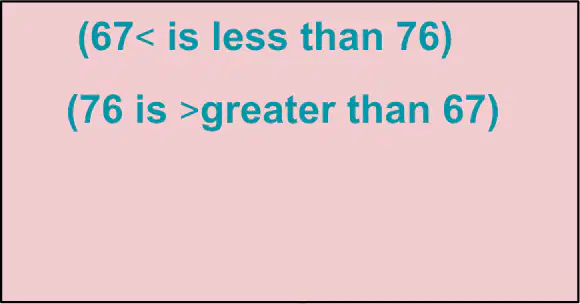
A student says, "Because the alligator mouth opens toward the larger number, 76 is greater than 67." Which statement is also true based on this idea?
76 < 67
67 > 76
67 is less than 76
67 equals 76
According to the rule for adding integers with the same signs, what should you do?
Add the values and keep the sign
Subtract the values and keep the sign of the larger absolute value
Multiply the values and keep the positive sign
Add the values and always make the answer negative
Compute (+3) + (+5). Use the rule for same signs.
+2
+8
−8
0
Compute (−4) + (−6). Use the rule for same signs.
−10
+10
−2
+2
When adding integers with different signs, which sign should the sum have?
Always positive
Always negative
The sign of the number with the greatest absolute value
The sign of the first number
Compute (+7) + (−3). Follow the rule for different signs.
−4
+4
+10
0
Which expression equals −3 based on the examples of different signs addition?
(+3) + (+5)
(−4) + (−6)
(−8) + (+5)
(+7) + (−3)
Evaluate: +9 − (+4) = ?
+13
+5
−5
−13
Evaluate: −7 − (−3) = ?
−10
−4
−3
−1
Evaluate: +12 − (−8) = ?
+20
+4
−20
−4
Evaluate: −15 − (+5) = ?
−20
−10
+10
+20
Evaluate: +20 − (+25) = ?
+45
+5
−5
−45
Evaluate: −30 − (−10) = ?
−40
−20
+20
+40
Evaluate: +18 − (−7) = ?
+11
+25
−11
−25
Evaluate: −22 − (+12) = ?
−34
−10
+10
+34
Evaluate: +14 − (−6) = ?
+8
+20
−8
−20
Evaluate: −40 − (+15) = ?
−55
−25
+25
+55
Evaluate: +5 + (+3) =
+2
+8
+15
-8
Evaluate: -7 + (-2) =
-9
-5
+9
+5
Evaluate: +8 + (-3) =
+11
+5
-5
-11
Evaluate: -4 + (+9) =
-13
+13
+5
-5
Evaluate: -10 + (+6) =
-16
-4
+4
+16
Evaluate: +12 + (-15) =
+27
-27
-3
+3
Evaluate: -20 + (-5) =
-25
-15
+15
+25
Evaluate: +25 + (-10) =
-35
+35
+15
-15
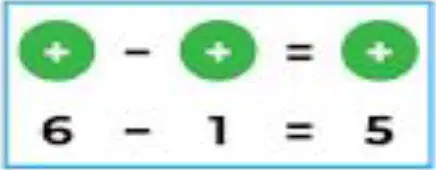
Using the integer chip model shown (green = positive, red = negative), what is the value of 6 − 1?
7
5
−5
−7
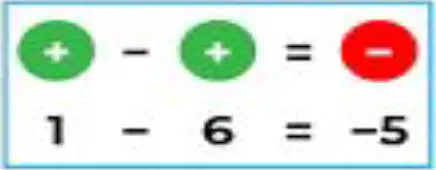
Which expression represents subtracting a positive number and results in a negative answer, as shown in the diagram?
1 − 6
6 − (−1)
−1 − (−6)
6 − 1
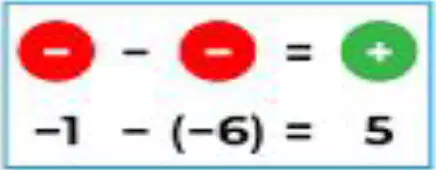
According to the visual model, what is the result of subtracting a negative from a negative: −1 − (−6) = ?
−7
−5
5
7
Which statement best matches the rule for subtracting a negative integer?
Subtracting a negative makes the value smaller.
Subtracting a negative is the same as adding a positive.
Subtracting a negative is the same as subtracting a positive.
Subtracting a negative always gives zero.
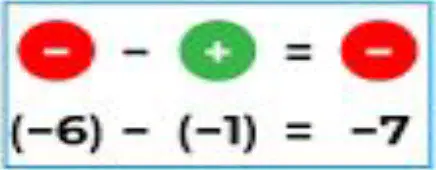
Use the diagrams to evaluate (−6) − (−1).
−7
−5
5
7

A student says, “Since 6 − (−1) = 7, subtracting a negative increases the number by that amount.” Which example from the diagram also supports this reasoning?
6 − 1 = 5
1 − 6 = −5
−1 − (−6) = 5
−6 − (−1) = −7
Evaluate the integer sum: −7 + 12 = ?
−19
5
−5
19
Compute: 15 + (−9) = ?
6
−24
−6
24
Find the result: −25 + (−30) = ?
−55
−5
55
5
Evaluate: 40 + (−18) = ?
−58
22
−22
58
Compute: −10 + 50 = ?
−60
60
40
−40
Evaluate the difference: −8 − 6 = ?
−2
−14
14
2
Compute: 20 − (−5) = ?
15
−15
25
−25
Find: −15 − (−10) = ?
−25
−5
5
25
Compute: 32 − 50 = ?
−18
18
−82
82
Evaluate: −45 − 20 = ?
65
−25
−65
25
Multiply: −4 × 7 = ?
−28
28
−11
11
Compute: −9 × −3 = ?
−27
27
−6
6
Evaluate: 6 × (−8) = ?
−48
48
−14
14
Find the product: −12 × 5 = ?
−60
60
−17
17
Compute: −11 × −11 = ?
−121
11
121
−22
Divide: 24 ÷ −6 = ?
4
−4
6
−6
Compute: −30 ÷ −5 = ?
6
−6
−35
35
Evaluate: 81 ÷ −9 = ?
−9
9
−8
8
Find: −72 ÷ 12 = ?
6
−6
−60
60
Compute: −100 ÷ −20 = ?
−5
5
−120
120
Evaluate: (−8) + 12
4
−4
20
−20
Evaluate: 16 ÷ (−4)
−12
4
12
−4
Evaluate: (−9) × (−2)
−7
18
7
−18
Evaluate: −7 × 4. Choose the correct product.
28
11
−11
−28
Evaluate: (−6) + 12
−18
18
−6
6
Evaluate: 16 ÷ −4 × 3
−4
12
−12
4
Evaluate: (−8) + 12
−4
−20
4
20
Evaluate: 7 × (−3). Choose the correct product.
−21
21
10
−10
Evaluate: (−9) − (−5)
−14
−4
4
14
Evaluate: (−7) + 9
2
−2
−16
16
Evaluate: 12 ÷ (−3)
36
−36
4
−4
Evaluate: (−5) × (−6)
−11
30
−30
11
Evaluate: (−8) + 12
20
−4
−20
4
Evaluate: 6 × (−7). Choose the correct product.
42
−42
−13
13
Evaluate: (−10) − (−4)
6
14
−14
−6
Evaluate: (−8) + (−3)
−11
11
−5
5
Evaluate: 12 ÷ (−3)
9
−9
4
−4
Evaluate: (−6) × 2 + 8
20
−4
−20
4
Evaluate: 12 × (−3). Choose the correct product.
9
−9
36
−36
Evaluate: (−8) + 6
14
−14
2
−2
Evaluate: 21 ÷ (−7)
14
−14
3
−3
Evaluate: −3 × 7. Choose the correct product.
−10
10
21
−21
Evaluate: 12 ÷ 4 + 5
8
6
7
9
Evaluate: (−8) + (−6)
−2
−14
14
2
Evaluate: (−8) + 12
4
20
−20
−4
Evaluate: 7 × (−3)
10
21
−21
−10
Evaluate: −6 × −2 ÷ 3
−12
−4
12
4
Evaluate: (−7) + 12
−19
19
−5
5
Evaluate: 18 ÷ (−3)
−15
−6
15
6
Evaluate: 4 × (−5) + 6
−14
−26
14
26
Evaluate: (−8) + 3
5
−5
11
−11
Evaluate: 6 × (−4). Choose the correct product.
10
−10
24
−24
Evaluate: −12 ÷ 3
−4
4
−9
9
Evaluate: (−6) + 8
−14
14
−2
2
Evaluate: −12 × 3 ÷ −4
−36
9
36
−9
Evaluate: (−8) − (−5)
−13
−3
3
13

