
 Worksheets
Chapter 4 Review for EC
Total questions: 111
Worksheet time: 56mins
Which act asserted that Parliament had the power to make laws for the colonies after repealing the Stamp Act?
Currency Act (1764)
Declaratory Act (1766)
Quartering Act (1765)
Townshend Acts (1767)
What was the main purpose of the Stamp Act Congress according to colonial leaders?
To organize militias against British troops
To draft a statement that only colonial representatives could tax colonists
To negotiate a trade treaty with France
To elect a colonial governor
Match each act or term with its correct description.
Stamp Act (1765)
Required taxed stamps on legal documents and printed materials
Quartering Act (1765)
Required colonists to house and supply British troops
Townshend Acts (1767)
Imposed new duties on glass, lead, paper, paint, and tea
Writs of assistance
Search warrants allowing customs officers to look for smuggling
Who argued that colonists could not be justly taxed without representation, summarizing the idea with the phrase 'No Taxation Without Representation'?
Samuel Adams
James Otis
John Dickinson
Isaac Sears
Which group organized anti-tax demonstrations and was associated with hanging an effigy of the stamp distributor from a tree?
Daughters of Liberty
House of Burgesses
Sons of Liberty
Stamp Act Congress
According to the materials, what did merchants agree to do under the nonimportation agreement related to the Stamp Act?
Raise prices on British goods
Stop buying British goods until the Stamp Act was repealed
Smuggle goods from other colonies
Petition the king for representation
What did the Revenue Act of 1767, part of the Townshend Acts, specifically place duties on?
Sugar, molasses, and rum
Glass, lead, paper, paint, and tea
Tobacco and cotton
Iron and timber
Which document, created by the House of Burgesses, claimed that it alone had the power to tax Virginians?
Virginia Resolves
Letters From a Pennsylvania Farmer
Declaration of Rights and Grievances
Nonimportation agreement
John Dickinson’s Letters From a Pennsylvania Farmer argued which principle about taxation?
Parliament could tax all subjects equally
Only assemblies elected by colonists had the right to tax them
The king should set all tax rates
Taxes were legal only during wartime
Match the leaders or groups with their roles during the colonial response.
Sam Adams
Organized Boston resistance and united social classes against British policies
Daughters of Liberty
Women who refused to buy British wool and homespun their own clothes
Sons of Liberty
Organized activists who led anti-tax demonstrations
Isaac Sears
Organizer linked to the formation of the Sons of Liberty
What action did Parliament take in response to colonial protests, according to the material?
Lowered all import duties
Dissolved several colonial assemblies
Granted the colonies representation in Parliament
Repealed the Declaratory Act
Which of the following best describes the purpose of propaganda during the Stamp Act Crisis?
To encourage colonists to enlist in the British army
To circulate pamphlets and make speeches condemning the taxes
To negotiate peace with Native nations
To promote British goods in the colonies
Which immediate British action followed mobs threatening customs officers in Boston?
Repeal of the Stamp Act
Dispatch of 1,000 troops to maintain order
Closure of Boston Harbor
Appointment of colonial representatives to Parliament
What event on March 5, 1770, escalated tensions in Boston?
The Gaspee Affair
The signing of the Stamp Act
A crowd taunted and threw snowballs at British soldiers
Parliament passed the Townshend Acts
How did colonial newspapers and propaganda portray the British soldiers involved in the Boston Massacre?
As peacekeepers under attack
As heroes who saved civilians
As killers and the British government as tyrannous
As neutral observers
Who was killed during the Boston Massacre and is noted as the first casualty of the Revolution?
Samuel Adams
John Dickinson
Crispus Attucks
John Hancock
Match each term with its correct description related to colonial resistance.
Propaganda
Information portraying British as tyrannous and soldiers as killers
Sons of Liberty
Group that organized protests against British policies
Boycott
Refusal to buy British goods to apply pressure
Stamp Act Congress
Meeting of colonial representatives to oppose taxation measures
What was a direct consequence in Parliament after the Boston Massacre, according to the material?
The Tea Act was passed
The Townshend Acts were repealed
Martial law was declared in all colonies
The Intolerable Acts were immediately enacted
What was the Gaspee and why was it significant?
A British customs ship burned by colonists after running aground
A colonial newspaper that spread propaganda
A Boston meeting hall for the Sons of Liberty
A British tax policy that replaced the Townshend Acts
Which outcomes are associated with the Committees of Correspondence?
They divided the colonies over trade policy
They unified the colonies, shaped public opinion, and coordinated resistance plans
They negotiated a treaty with France
They ended smuggling by enforcing warrants
Which problem did the Tea Act of 1773 aim to solve for the British East India Company?
Shortage of tea in Britain
Surplus of 17 million pounds of unsold tea and heavy shipping taxes
Lack of ships to carry tea
Competition from French tea in Canada
According to the material, which was NOT a provision of the Tea Act?
Refunded most taxes the East India Company paid to ship tea to the colonies
Allowed British tea to be sold cheaper than Dutch tea
Required all tea to be sold only through colonial merchants
Allowed the East India Company to sell directly to shopkeepers
What immediate action did colonists in Boston take in December 1773 in response to new tea shipments?
Petitioned Parliament for lower taxes
Destroyed 342 chests of tea by dumping them into Boston Harbor
Seized the customs house
Marched on Philadelphia
Match each Coercive Act measure with its description.
Boston port policy
Port shut until destroyed tea was paid for
Changes to Massachusetts officials
Council members, sheriffs, and judges appointed by governor
Trials of British officials
Trials transferred to England away from colonial juries
Quartering requirement
Local officials to provide lodging in private homes if needed
Which statement best explains why the Coercive Acts were passed?
To reward Boston for compliance with British laws
In response to the Boston Tea Party
To raise revenue for the French and Indian War
To expand the rights of colonial assemblies
What appointment accompanied the dispatch of 2,000 British troops to New England after the Boston Tea Party?
William Pitt as colonial secretary
Thomas Gage as reigning governor
George Grenville as customs chief
John Adams as colonial mediator
Which feature of the Quebec Act most alarmed colonists moving westward?
New elected assemblies for Quebec settlers
Additional territory given to Quebec with no elected assemblies
A tax on frontier fur trading
Mandatory military service for colonists
How did colonists collectively refer to the Coercive Acts and the Quebec Act?
Townshend Duties
Navigation Laws
Intolerable Acts
Olive Branch Petition
What role did committees of correspondence play leading up to the First Continental Congress?
They served as colonial militias
They set up a large meeting for delegates to discuss options
They negotiated the Treaty of Paris
They collected taxes for the king
Which statement from the Declaration and Resolves is accurately summarized?
Declared immediate independence from Britain
Expressed loyalty to the king but condemned the Coercive Acts and formed a nonimportation association
Promised to repay the cost of the destroyed tea
Asked France to intervene in the colonies
What famous line is attributed to Patrick Henry during this period?
“Don’t fire until you see the whites of their eyes.”
“Join, or Die.”
“Give me liberty or give me death!”
“No taxation without representation.”
Which of the following accurately describes participation in the First Continental Congress on September 5, 1774?
13 colonies sent 100 delegates to New York
55 delegates represented 12 colonies in Philadelphia
Only New England colonies attended a town meeting in Boston
A single delegate from each colony met in Williamsburg
Who was chosen by the Massachusetts Assembly to lead the Committee of Public Safety with authority to call up local militias?
George Washington
John Hancock
Thomas Gage
Samuel Adams
In Massachusetts, special militia units ready to fight at a minute’s notice were called what?
Regulars
Grenadiers
Minutemen
Continentals
Match each person or group to the correct role during the mobilization in Massachusetts.
John Hancock
Led the Committee of Public Safety
Minutemen
Local militia units ready to fight quickly
Massachusetts Assembly
Chose a leader to organize public safety
On April 18, 1775, what action did General Thomas Gage take regarding Concord, Massachusetts?
He signed a peace treaty with the colonists.
He sent 700 redcoats to seize the militia’s supply depot.
He resigned as royal governor.
He ordered the minutemen to stand down.
Which trio was sent by Patriot leaders to warn colonists from Boston to Concord?
Paul Revere, Dr. Samuel Prescott, and William Dawes
Patrick Henry, Samuel Adams, and John Adams
Benedict Arnold, Ethan Allen, and Israel Putnam
George Washington, Nathanael Greene, and Henry Knox
According to the account, when did British troops arrive in Lexington and how many minutemen did they find?
April 17, 1775; 150 minutemen
April 18, 1775; 50 minutemen
April 19, 1775; 70 minutemen
April 20, 1775; 30 minutemen
Match each date or term with its description from the events around Lexington and Concord.
April 18, 1775
Gage sent 700 redcoats toward Concord
April 19, 1775
British arrived in Lexington and encountered minutemen
Concord supply depot
Target of the British mission
Warning riders
Paul Revere, Dr. Samuel Prescott, and William Dawes
Which event is described as the start of open conflict at Lexington?
The arrival of Paul Revere
A mysterious single shot was fired
Washington taking command
The Olive Branch Petition being sent
At Lexington, who were ordered to disperse before the shooting began?
Regular British Army
Hessian mercenaries
Minutemen
French allies
According to the account, what immediate effect did the first shot at Lexington have?
Colonists surrendered
Redcoats fired at the minutemen and killed 8
British retreated to Boston without fighting
A peace treaty was signed
Match each place or term with its description.
Lexington
Site where minutemen were ordered to disperse and 8 were killed
Concord
Town where redcoats met 400 colonial militia and then retreated
Minutemen
Colonial militia ready to fight at a minute's notice
Shot Heard Around the World
Nickname for the mysterious opening gunfire that started the fighting
During the Battle of Concord, approximately how many colonial militia did the redcoats meet?
100
250
400
800
What happened as the British retreated from Concord back toward Boston?
Colonists escorted them safely
Colonists fired from behind trees, stone walls, barns, and houses
A ceasefire stopped all shooting
The British captured the colonial leaders
Compare losses reported after the fighting from Concord to Boston: which statement is accurate?
British lost 49 men; colonial militia lost 99
British lost 99 men (174 wounded); colonial militia lost 49 men (46 wounded)
Both sides lost 174 men
Only the British suffered wounds
What major decision did the Second Continental Congress make regarding the militias around Boston?
Disband them immediately
Rename them the Continental Army
Send them to Canada
Place them under British command
Who was appointed general and commander in chief of the Continental Army, and when?
Thomas Jefferson, July 4, 1776
George Washington, June 15, 1775
Benjamin Franklin, May 10, 1775
John Adams, April 19, 1775
What was the Olive Branch Petition intended to convey to King George III?
A declaration of independence
A request to raise taxes
That the colonies were still loyal and sought a peaceful end to hostilities
An offer to surrender Boston
How did King George III respond to the Olive Branch Petition?
He accepted and halted the fighting
He refused to read it and issued a proclamation declaring the colonies enemies
He asked for a new draft
He appointed colonial representatives to Parliament
Which body convened in 1775 and took steps such as organizing the war effort against Britain?
First Continental Congress
Second Continental Congress
Parliament of Great Britain
Committee of Correspondence
Who was appointed to command the newly created Continental Army?
Thomas Gage
Benedict Arnold
George Washington
John Adams
What was the purpose of the Olive Branch Petition sent by the colonists in 1775?
To declare independence from Britain
To request French military aid
To seek reconciliation with King George III
To impose new taxes on the colonies
Match each term with its description.
Continental Army
Army formed by the Second Continental Congress
Olive Branch Petition
Last colonial appeal to the king for peace
Proclamation for Suppressing Rebellion and Sedition
Royal declaration rejecting reconciliation and labeling the colonies in rebellion
How did King George III respond to the colonists' appeal for peace?
He accepted the petition and negotiated a truce
He ignored it and issued the Proclamation for Suppressing Rebellion and Sedition
He granted immediate independence
He replaced all royal governors with colonial leaders
Which hill was primarily fortified by colonial forces during the Battle of Bunker Hill?
Bunker Hill
Breed's Hill
Dorchester Heights
King's Mountain
Who commanded the American colonial forces at the Battle of Bunker (Breed's) Hill?
George Washington
William Prescott
Benedict Arnold
Nathaniel Greene
What immediate effect did the heavy British casualties at Bunker (Breed's) Hill have on the American colonists?
They surrendered Boston.
They lost faith in independence.
They gained confidence in their ability to fight the British.
They sought a truce with King George III.
Match each figure or term with its correct description from the Battle of Bunker (Breed's) Hill.
William Prescott
Colonial commander who directed defenses
Breed's Hill
Location primarily fought over, despite the battle’s common name
British casualties
Were high, even though the British took the ground
American confidence
Rose after the battle, encouraging continued resistance
Why is the Battle of Bunker Hill often called the Battle of Breed's Hill?
Breed's Hill was the British headquarters.
Most of the fighting occurred on Breed's Hill.
It was renamed after the war.
Bunker Hill did not exist at the time.
Which statement best summarizes the strategic outcome of the Battle of Bunker (Breed's) Hill for the British?
A decisive victory with minimal losses
A tactical gain but with significant casualties
A complete defeat and retreat to Canada
An armistice with the colonists
Which of the following was a key lesson American leaders took from Bunker (Breed's) Hill?
Militia could not stand against regulars.
Artillery was unnecessary.
Prepared defenses and determination could inflict serious losses on British forces.
Naval power would decide the war.
Which statement best describes Patriots during the American Revolution?
Colonists who supported British rule and policies
Colonists who rejected British rule and favored greater liberties and independence
British soldiers stationed in the colonies
Native allies who fought for the French
Loyalists in the colonies were also known by which name?
Whigs
Federalists
Tories
Anti-Federalists
According to the material, which observation about colonial society during the conflict is accurate?
Only wealthy planters joined the Patriots
Both Patriots and Loyalists drew support from farmers, merchants, planters, lawyers, artisans, and ministers
Most Americans firmly chose a side at the outset
Patriots were primarily recent immigrants
Some Americans did not favor either Patriots or Loyalists. What does the material say many of these people were willing to do?
Move to Canada to avoid the war
Support whoever won
Pay higher taxes to Britain
Join the Continental Army
Match each British attribute with whether it was an advantage or disadvantage during the war.
Superior navy
Advantage
Fighting in unfamiliar territory
Disadvantage
Strong central government
Advantage
Fighting far from resources and supplies
Disadvantage
Experienced, professional soldiers
Advantage
Which of the following was listed as a British disadvantage?
Well-trained troops
Abundance of resources
Troops indifferent and homeland offering only halfhearted support
Disciplined soldiers
Which British strength is explicitly noted in the material?
Militia expertise
Superior navy
Guerrilla tactics
Local supply lines
Which combination best captures the challenges Britain faced?
Unfamiliar territory and long supply lines
Weak navy and untrained soldiers
No central government and scarce resources
Overabundance of troops and leaders
Which statement best explains a key American advantage during the Revolution?
They possessed the world’s strongest navy.
They fought on familiar terrain and knew the local population.
They had unlimited access to food and ammunition.
They fielded a large, consistently disciplined standing army.

Match each category to an example from the American Revolution.
American Advantages
French alliance with loans, navy, and troops
American Disadvantages
Weak and divided central government; inexperienced forces
Evidence of limited resources
Shortages of food, ammunition, uniforms, supplies, weapons

Which disadvantage most directly reflects the challenges of organizing a new nation’s military?
Knowledge of home turf
Use of militia (guerrilla warfare)
New fragile nation leading to limited discipline among soldiers
Good leadership
Which action did George Washington take during the winter of 1776 that boosted American morale?
Retreated to Canada to regroup
Led 2,400 men across the Delaware River for a surprise attack at Trenton
Surrendered Philadelphia to avoid casualties
Signed a truce with the Hessians
Why was the surprise attack at Trenton especially unexpected?
It occurred at night during a thunderstorm
Winter fighting was not customary due to food shortages
The British had already surrendered
It took place on open seas
What immediate result followed the American victory at Trenton?
Americans captured or killed about 1,000 enemies and morale rose
Washington lost most of his artillery
The Continental Army disbanded for winter
The British captured New York City
After Trenton, how did Washington use the momentum according to the material?
He marched on Quebec
He attacked British forces at Princeton and won another key victory
He negotiated peace with King George III
He retreated to Valley Forge immediately
Which general designed the British plan in 1777 for a three‑pronged attack intended to isolate New England?
William Howe
John Burgoyne
Charles Cornwallis
Horatio Gates
Match each figure or battle to the correct description.
Battle of Brandywine
Howe defeated Washington and captured the American capital
Battle of Saratoga
Turning point where Burgoyne surrendered thousands of troops
General William Howe
Forsook Burgoyne’s plan and attacked Philadelphia
General Horatio Gates
Received Burgoyne’s surrender
Which of the following was NOT listed as a result of the American victory at Saratoga?
Morale boost
International recognition of America as a legitimate power
France joins America as an ally against the British
Immediate capture of London
During the campaign of 1777, what happened to Burgoyne’s troops before the surrender at Saratoga?
They were resupplied by loyalists
They were harassed by militia and cut off from supplies
They were evacuated by sea
They captured Philadelphia
Which event best describes the British objective in the 1776 New York Campaign during the American Revolution?
Seize control of the Hudson River Valley to split the colonies
Capture Philadelphia to remove the Continental Congress
Invade Canada to cut off French support
Blockade southern ports to weaken trade
Nathan Hale is most closely associated with which role during the early Northern campaigns?
Diplomat to France
Patriot spy captured by the British
Commander at Fort Lee
Author of Common Sense
Match each location with the correct outcome during the Northern campaigns.
New York City
Captured by the British in 1776
Fort Washington
Fell to the British after New York
Fort Lee
Abandoned/evacuated leading to loss on New Jersey side
Hudson River Valley
Strategic corridor targeted to split the colonies
After the fall of Fort Washington, what immediate consequence followed on the New Jersey side of the Hudson?
American counterattack retook Manhattan
Fort Lee was lost or evacuated by the Americans
Washington surrendered his army
The British retreated to Canada
Why was control of the Hudson River Valley so important in the British strategy?
It provided gold mines to finance the war
It would isolate New England from the other colonies
It allowed a direct route to Florida
It was the only place the Continental Army could winter
According to the slide, what happened when Congress ran out of hard currency during the Revolution?
They halted all military spending
They began printing paper money called Continentals
They borrowed only from European banks
They raised taxes on the colonies to pay soldiers
What economic problem was caused by the issuance of Continentals?
Deflation
Barter economy collapse
Inflation
Trade embargo
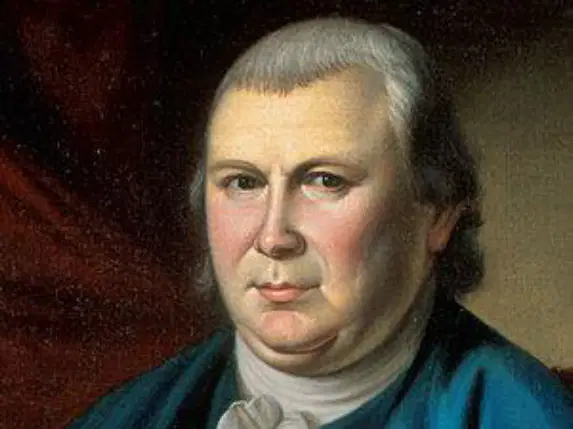
Match each figure with their role in financing the Revolutionary War.
Robert Morris
Appointed to head finance in 1781
Haym Solomon
Associate who personally borrowed money to fund the army
Continental Congress
Authorized printing paper money called Continentals
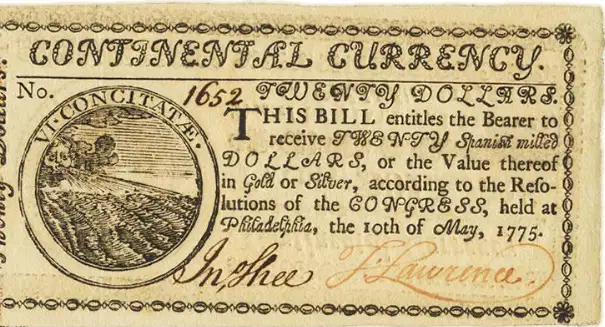
The slide shows an image of a paper note labeled 'Continental Currency.' What was its purpose during the war?
It replaced British pounds after independence was achieved
It was printed to compensate for a shortage of gold and silver
It served only as a commemorative certificate
It was used exclusively by foreign diplomats
According to the slide, in what year did Congress appoint Robert Morris to head finance?
1775
1776
1781
1783
Which 1777 battle resulted in General Howe defeating George Washington, forcing an American retreat?
Battle of Brandywine
Battle of Saratoga
Battle of Monmouth
Siege of Yorktown
Why is the American victory at Saratoga considered the turning point of the Revolutionary War?
It ended the war immediately
It convinced France to form a military alliance with the Americans
It led to Washington’s resignation
It forced the British to evacuate Philadelphia
Match each commander or figure to the correct 1777 campaign event.
General John Burgoyne
Led the British invasion from Canada and was defeated at Saratoga
General George Washington
Rallied Continental forces after setbacks in 1777
General William Howe
Defeated Washington at Brandywine
What was General John Burgoyne’s strategic goal in 1777?
Capture Philadelphia to cut off Congress
Seize the Hudson River corridor to isolate New England
Blockade the American coastline
Invade the South to recruit Loyalists
Which statement best compares Brandywine and Saratoga in 1777?
Both were decisive British victories
Brandywine was a British victory; Saratoga was an American victory
Both battles forced French neutrality
Saratoga occurred before Brandywine
The French alliance that followed Saratoga most directly provided which advantage to the Americans?
Access to a powerful navy and additional troops
Control of Canada
Immediate British surrender
A truce halting all battles in the North
Which event best describes the Continental Army’s situation during the winter of 1777–1778?
A prosperous period with abundant supplies
A harsh winter encampment at Valley Forge marked by shortages
A rapid offensive that ended the war
A retreat to Europe for reinforcements
What was a major challenge faced by soldiers at Valley Forge?
Food shortages
Overcrowding by British troops
Tropical diseases
Lack of gunpowder only
Match each foreign commander to his primary contribution at Valley Forge.
Marquis de Lafayette
French noble who volunteered and helped secure support
Baron Friedrich von Steuben
Prussian officer who drilled troops and improved discipline
Continental Army
Endured winter encampment hardships and emerged more professional
Which statement best explains the significance of Valley Forge to the Continental Army?
It was a decisive battlefield victory over the British.
It was a training ground where hardship and foreign assistance strengthened the army.
It was the site where the Declaration of Independence was signed.
It marked the end of foreign involvement in the war.
Who instituted systematic drills that professionalized Washington’s troops during the Valley Forge winter?
Thomas Paine
Baron Friedrich von Steuben
Benedict Arnold
Henry Knox
Which term refers to the paper currency issued by the Continental Congress during the American Revolution?
Specie
Continentals
Pounds sterling
Greenbacks
What was a major problem caused by printing large amounts of Continentals?
Deflation lowered prices
Inflation reduced the value of money
Immediate economic boom
Increased hard currency reserves
Match each figure with the correct contribution to financing the war.
Robert Morris
Superintendent of Finance who coordinated funding and supplies
Haym Solomon
Financier who helped secure loans and support for the cause
Hard currency
Gold and silver used to back value and make reliable payments
Why did the Continental Congress struggle to pay for the war?
Colonies refused to fight
Lack of hard currency and reliance on paper money
British blockade stopped all trade permanently
France refused to lend any funds
Which American general assumed direct command at the Battle of Monmouth after rebuking General Charles Lee for ordering a retreat?
Benedict Arnold
George Washington
Nathanael Greene
Horatio Gates
At the Battle of Monmouth, which woman famously carried water to soldiers and took over firing a cannon when her husband was incapacitated?
Abigail Adams
Sybil Ludington
Molly Pitcher
Phillis Wheatley
Match each figure to their role or action related to the Battle of Monmouth and the Revolution.
General Charles Lee
Ordered a premature retreat at Monmouth
George Washington
Asserted leadership and stabilized American lines
Molly Pitcher
Brought water and manned a cannon at Monmouth
Margaret Corbin
Wounded while serving artillery, received a military pension
What was a significant outcome of George Washington’s leadership at the Battle of Monmouth?
The Continental Army disintegrated and fled
American lines were stabilized and the retreat was halted
The British surrendered immediately
French troops arrived and won the day alone
Which statement best captures women’s contributions highlighted in this section?
Women were barred from battlefields and contributed only by fundraising
Women like Molly Pitcher and Margaret Corbin directly supported combat operations, even serving artillery when needed
Women negotiated the British surrender at Monmouth
Women’s roles were limited to nursing away from the front

