
 Worksheets
Exploring Heat and Matter Concepts
Total questions: 30
Worksheet time: 16mins
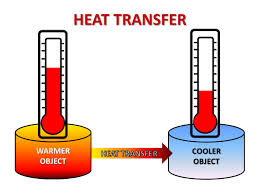
Which of the following is a good conductor of heat?
Wood
Copper
Plastic
Rubber
What is the main difference between a conductor and an insulator?
Conductors allow heat to pass through easily, insulators do not
Insulators are always metals
Conductors are always cold
Insulators are always liquids
Which method of heat transfer occurs mainly in solids?
Conduction
Convection
Radiation
Evaporation
Which state of matter has particles arranged in a fixed, closely packed pattern?
Solid
Liquid
Gas
Plasma
Which process transfers heat through the movement of fluids (liquids or gases)?
Conduction
Convection
Radiation
Sublimation
What is the name of the process where heat is transferred without the movement of matter?
Conduction
Convection
Radiation
Melting
Which of the following best describes the arrangement of particles in a gas?
Closely packed and fixed
Closely packed but able to move past each other
Far apart and moving freely
Arranged in layers
What happens to the particles in a solid when it is heated?
They stop moving
They move faster
They move slower
They disappear

Which state of matter does this image represent?
liquid
solid
gas
plasma
Which of the following materials would be best for keeping a drink hot?
Metal cup
Plastic cup
Glass cup
Styrofoam cup

If you touch a metal spoon that has been sitting in a pot of hot soup, why does it feel hot?
The spoon is an insulator
The spoon conducts heat from the soup to your hand
The spoon reflects heat
The spoon cools down quickly
Why does warm air rise in a room?
Warm air is heavier than cold air
Warm air is lighter and less dense than cold air
Warm air is attracted to the ceiling
Warm air is pushed up by cold air
Which method of heat transfer is responsible for the warming of your face when you stand near a campfire?
Conduction
Convection
Radiation
Evaporation
If you place a metal rod with one end in ice water and the other in hot water, what will happen to the temperature along the rod over time?
The whole rod will become hot instantly
The temperature will gradually even out along the rod
The rod will stay cold
The rod will melt
A balloon filled with air is placed in the sun. What will happen to the balloon as it warms up?
It will shrink
It will stay the same size
It will expand
It will turn into a solid
Why does a metal spoon feel colder than a wooden spoon at room temperature?
Metal is a better conductor of heat than wood
Metal is always colder than wood
Wood absorbs heat faster
Wood is a better conductor of heat than metal
Which of the following best explains why double-glazed windows help keep houses warm?
They let more sunlight in
They trap air, which acts as an insulator
They are made of metal
They conduct heat better
If you heat a gas in a sealed, rigid container, what happens to the pressure inside the container?
It decreases
It stays the same
It increases
It disappears
Which of the following is an example of convection?
A metal spoon getting hot in soup
Warm air rising near a heater
The sun warming your skin
Ice melting in your hand
A student places a metal rod so that one end is in boiling water and the other is in ice water. Predict and explain what will happen to the temperature at the center of the rod after a few minutes.
It will be the same as the boiling water
It will be the same as the ice water
It will be somewhere between the two temperatures due to conduction
It will not change
You are given three cups: one metal, one glass, and one plastic. You pour hot water into each. After 10 minutes, which cup will have the coolest water and why?
Metal, because it conducts heat away fastest
Glass, because it is transparent
Plastic, because it is an insulator
All will be the same
A student observes that when a pot of water is heated on a stove, bubbles rise from the bottom to the top. Explain what type of heat transfer is occurring and why.
Conduction, because heat moves through the pot
Convection, because warm water rises and cool water sinks
Radiation, because heat is transferred through space
Insulation, because the pot keeps heat in

If you want to keep an ice cube from melting as long as possible, which material should you wrap it in and why?
Aluminum foil, because it is shiny
Cotton cloth, because it is soft
Wool, because it is a good insulator
Steel, because it is strong
Explain why a metal bench feels hotter than a wooden bench on a sunny day, even though both are in the same sunlight.
Metal absorbs more sunlight
Metal is a better conductor and transfers heat to your skin faster
Wood is always cooler
Wood reflects sunlight
Describe how the arrangement of particles changes as a solid turns into a liquid and then into a gas.
Particles get closer together and move slower
Particles stay the same distance apart
Particles move farther apart and move faster
Particles stop moving
A student wants to design a lunchbox that keeps food warm for several hours. Which features should they include and why?
Use metal walls to conduct heat
Use insulating materials like foam or wool to reduce heat loss
Make it very thin
Add holes for air flow

Which state of matter does this image represent?
liquid
solid
gas

