
 Worksheets
SS8H4: Westward Expansion in Georgia (1789-1840)
Total questions: 68
Worksheet time: 34mins
According to the learning objectives for SS8H4, which time span frames the study of Georgia’s westward expansion?
1492–1607
1733–1776
1789–1840
1861–1877
Which pair of topics is students specifically expected to explain under SS8H4?
Reasons for establishing the University of Georgia and for the westward movement of Georgia’s capitals
Causes of the Civil War and Reconstruction policies in Georgia
Industrialization and the rise of Atlanta after 1900
Effects of World War II on Georgia’s economy
Under SS8H4, which land policy topics are to be evaluated for their impact on Georgia?
Sharecropping, tenant farming, and New Deal programs
Headright system, land lotteries, and the Yazoo Land Fraud
Railroad expansion, cotton gin, and gold rush
Prohibition laws, county unit system, and Jim Crow
After the Revolutionary War, what was a primary reason people migrated to Georgia?
To escape European conflicts
To seek new land opportunities and economic prospects
To join established industrial cities
To avoid coastal weather
Who authored the charter establishing the University of Georgia?
George Walton
Abraham Baldwin
James Oglethorpe
Button Gwinnett
Which factor best explains why Cedar Shoals in Athens was chosen as the site for the University of Georgia?
Its proximity to the Atlantic coast for trade
Its central inland location with access to the Oconee River
Existing large population and urban infrastructure
Availability of a pre-existing college campus
Which action by Georgia’s General Assembly in 1784 demonstrated growing state support for education after the American Revolution?
Passing a national education law
Setting aside 40,000 acres of land for the University of Georgia
Creating free primary schools statewide
Inviting private donors to fund a college
In 1785, what principle did Abraham Baldwin include in the University of Georgia’s charter?
Only the wealthy should receive higher education
Education is a federal, not state, responsibility
All people, not just the wealthy, have a right to education
Religious groups must control colleges
Why is the University of Georgia historically significant within the United States?
It was the first private university
It was the first state-supported university
It was the first university to admit women
It was the oldest college founded before the Revolution
Which statement best explains how UGA influenced later American higher education?
Its curriculum became the national standard for all colleges
Its funding model set the example for the current system of public colleges and universities
Its campus design was copied by most universities
Its admissions policies led to universal free tuition
Who was named the first president of the institution that became the University of Georgia?
Abraham Baldwin
John Milledge
Benjamin Franklin
Hamilton Holmes
Construction of the University of Georgia began in 1801 after which future governor donated land on the Oconee River?
James Oglethorpe
John Milledge
Carl Sanders
Lester Maddox
What was the University of Georgia originally called when it opened its doors in 1801?
Athens College
Franklin College
Georgia State College
Oconee Institute
Which statement best describes a major milestone in UGA’s inclusion policies during the 20th century?
Women were first allowed to attend in 1918, and in 1961 Charlayne Hunter and Hamilton Holmes became the first African American students to enroll.
Women were first allowed to attend in 1961, and in 1918 Charlayne Hunter and Hamilton Holmes enrolled as the first African American students.
Women and African American students were both admitted for the first time in 1901.
UGA integrated in 1918, but women were not admitted until 1961.
UGA is located in which Georgia city?
Savannah
Atlanta
Athens
Augusta
Which statement best explains why the 1785 charter of the University of Georgia was historically significant?
It founded the first private college in the South.
It created the first state-chartered school of higher education in the United States.
It established the first law school west of the Appalachians.
It admitted women on equal terms from the start.
Who appointed Abraham Baldwin to write the charter documents for the University of Georgia?
James Oglethorpe
Lyman Hall
Button Gwinnett
Alexander Stephens
Abraham Baldwin believed education should be available to which group?
Only the wealthy elite
Only men of property
All people, not just the wealthy
Only residents of Athens
During which years did Abraham Baldwin serve as the first president of the University of Georgia?
1776–1783
1785–1801
1806–1819
1859–1872
Which milestone occurred first in the early operations of the University of Georgia?
Opening of Franklin College building for classes
Opening of the School of Law
Doors opened to students
Appointment of the first female faculty
What was the effect of the Morrill Act of 1872 on the University of Georgia after the Civil War?
It forced the university to close permanently.
It declared UGA a land-grant institution and provided federal aid, expanding agriculture and mechanical arts classes.
It merged UGA with Franklin College and ended liberal arts programs.
It required immediate integration of the university.
Which sequence correctly orders these events at the University of Georgia?
Women attended; UGA integrated; Civil War closure
Civil War closure; Morrill Act aid; women attended; UGA integrated
Morrill Act aid; Civil War closure; UGA integrated; women attended
School of Law opened; doors opened to students; Franklin College held classes
In which year did the University of Georgia open its School of Law?
1785
1801
1806
1859
Which statement best summarizes the historical debate highlighted in the note about early U.S. public universities?
UGA was the first to hold classes, while UNC was the first to be chartered.
UGA was the first public university to be chartered, but UNC was the first to hold classes.
Both UGA and UNC were chartered and held classes on the same date.
UNC was neither chartered nor held classes before UGA.
Why does uncertainty remain over which institution is the United States’ first state-sponsored university?
Records for both universities were destroyed.
The title depends on whether being chartered first or holding classes first is prioritized.
Neither university was supported by the state.
The federal government never recognized state universities.
Which city was Georgia’s first state capital before any westward moves occurred?
Savannah
Augusta
Louisville
Milledgeville
What was the main reason the capital’s location in Savannah became increasingly inconvenient?
Frequent flooding on the coast
A westward population shift among Georgians
Loss of access to the Atlantic Ocean
Destruction from the American Revolution
In which year did Georgia move its state capital from Savannah to Augusta?
1776
1785
1786
1795
Why did citizens call for establishing a new capital after Augusta?
To place the capital on the Atlantic coast
To find a more central and accessible location for all Georgians
To reduce river traffic on the Savannah River
To honor a Revolutionary War hero
In 1786, where did the General Assembly designate the new capital site?
Near an Indian trading post on the Ogeechee River
At the mouth of the Savannah River
In the Appalachian foothills
On the Chattahoochee River
Which pair best explains both the name and advantages of the new capital at Louisville?
Named for George Washington; nearby railroads and gold fields
Named for King Louis XVI; Ogeechee River transport and proximity to an Indian trading post
Named for Marquis de Lafayette; fertile cotton lands
Named for Thomas Jefferson; coastal shipyards
According to the timeline provided, when did Georgia’s government finally move to Louisville after the site had been selected over a decade earlier?
1776
1786
1796
1806
Which statement best describes Louisville after its development as a state capital?
It failed economically but thrived socially.
It was successful both socially and financially.
It was isolated and lost population rapidly.
It served as the capital for only five years.
What combination of factors led officials to move Georgia’s capital from Louisville to Milledgeville in 1807?
Coastal hurricanes and foreign invasion
Northwestern population expansion and a malaria outbreak
Gold discovery and railroad construction
Agricultural collapse and drought
Milledgeville received its name in honor of which Georgia governor, and how long did it serve as the state capital?
George Troup; 25 years
John Milledge; 61 years
James Jackson; 40 years
Joseph Brown; 12 years
Why did legislators push for another westward move of the state capital before choosing Atlanta?
To follow river trade to the coast
Because the Cherokee Indians had been removed from the state
To escape repeated fires in Milledgeville
To align with new county boundaries
What was the original name of Atlanta, and what transportation feature influenced its selection as the capital’s site?
Marthasville; highway network
Terminus; railroad accessibility
Standing Peachtree; canal access
Five Points; port facilities
According to the summary, what was the primary reason Georgia’s state capital moved over time?
To follow the center of the state’s population for accessibility
To align with changes in state borders
To reduce government spending on buildings
To be closer to neighboring states
Which set lists only cities that have served as Georgia’s state capital?
Savannah, Macon, Atlanta
Augusta, Louisville, Milledgeville
Savannah, Athens, Milledgeville
Columbus, Augusta, Atlanta
A mnemonic used to remember Georgia’s five capitals is S.A.L.M.A. Based on the summary, which city does the letter ‘L’ represent?
Louisville
Lagrange
Lithonia
Lawrenceville
According to the narrative, what happened to Georgia's capital cities as the population shifted westward?
They remained on the Atlantic coast
They moved westward as well
They alternated between coastal and inland locations
They moved north toward the mountains
How many capital cities has Georgia had throughout its history, as noted in the overview?
Three
Four
Five
Six
Which mnemonic is provided to remember the sequence of Georgia’s five capital cities?
G.E.O.R.G.
S.A.L.M.A.
P.E.A.C.H.
A.T.L.G.A.
Which city served as Georgia’s capital from 1732 to 1784?
Augusta
Savannah
Louisville
Milledgeville
Which pair correctly matches the capital with its years of service?
Augusta: 1796–1806
Milledgeville: 1868–Present
Atlanta: 1868–Present
Louisville: 1732–1784
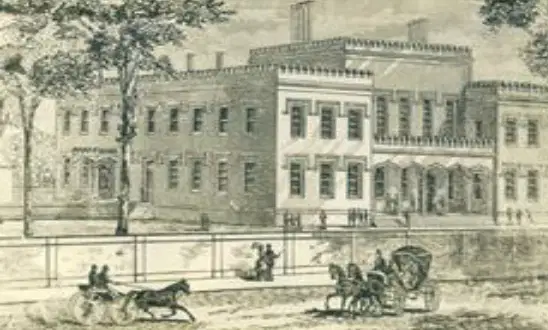
By 1785, where had Georgia’s population center moved, prompting the capital’s relocation to Augusta?
The coast
The mountains
The backcountry
The Piedmont’s eastern edge
What consequence followed soon after the capital was moved to Augusta in 1785?
The population center shifted further west, leading to the search for a new capital
Savannah reclaimed capital status for another decade
President Washington vetoed the move
Atlanta immediately became the next capital
In 1796, Georgia’s state government moved to a site near which river?
Savannah River
Chattahoochee River
Ogeechee River
Oconee River
Why was the new capital city named Louisville?
After the Western & Atlantic Railroad
In honor of King Louis XVI of France
To recognize Governor John Milledge
Because it was at the end of a railroad line
In 1806, Georgia moved its capital west to follow population migration to a site along which river?
Ogeechee River
Oconee River
Flint River
Altamaha River
The capital city named in honor of Governor John Milledge was:
Louisville
Marthasville
Milledgeville
Atlanta
How long did Milledgeville remain Georgia’s state capital?
About 20 years
About 40 years
About 60 years
About 80 years
Which sequence correctly shows the names that preceded Atlanta?
Marthasville → Terminus → Atlanta
Terminus → Marthasville → Atlanta
Louisville → Milledgeville → Atlanta
Oconee → Ogeechee → Atlanta
What was the reason the early name “Terminus” was given to the city that became Atlanta?
It was the state’s westernmost fort
The state legislature met there
The Western and Atlantic Railroad ended there
It was named after the governor’s daughter
In what year did the Georgia General Assembly rename the city Atlanta?
1796
1806
1847
1868
Atlanta became the final capital of Georgia in which year?
1847
1861
1865
1868
According to Georgia’s post–Revolutionary War policy, how was land primarily distributed until 1803?
By auction to the highest bidder
Under the headright system
Through lottery drawings
By federal military reservation
What was the main reason Georgia chose to give away land for free rather than sell it after the Revolutionary War?
To reduce tax rates
To encourage population growth
To punish Loyalists
To expand naval power
Under the headright system, what base acreage did an eligible white male head of family receive before adding acreage for family members?
50 acres
100 acres
150 acres
200 acres
Which statement best describes a limit or exception within Georgia’s headright allocations to families?
Families could receive unlimited acres if they were farmers.
Families were limited to 1,000 acres, but Revolutionary War veterans could receive more.
All families were capped at 500 acres with no exceptions.
Only widows could exceed the standard limit.
Which feature of the headright system most directly encouraged rapid settlement patterns?
It prioritized urban development over rural farms.
It operated on a “first come, first served” basis for unclaimed land.
It required a decade of residency before settlement.
It reserved the most fertile land for the state government.
During the period of the headright system, what did land ownership most clearly signal about an individual?
Level of military training
Religious affiliation
Social status and wealth
Citizenship status
According to the material, what action by government officials constituted land fraud during this period?
They enforced a strict 1,000-acre limit on all sales
They granted more land than actually existed to speculators
They restricted all sales to family farms only
They banned all purchases west of the Mississippi River
Which statement best describes the Yazoo lands targeted by speculators?
A small strip along the Atlantic coast
A vast territory located between Georgia and the Mississippi River
An area north of the Ohio River
A region entirely within South Carolina
Who is identified as bribing fellow legislators to support the Yazoo land purchase plan?
Alexander Hamilton
Thomas Jefferson
James Gunn
Andrew Jackson
Under the Yazoo Act of 1795, what was the approximate price paid by speculators for the land?
One dollar per acre
Ten cents per acre
One cent per acre
Free grants for settlers
Which event signaled public outrage after the Yazoo Land Fraud was exposed?
Citizens boycotted westward expansion
Citizens burned the Yazoo Act on the steps of the state capitol in Louisville
Citizens petitioned the British Parliament
Citizens refused to pay state taxes
What sequence of government actions followed the exposure of the Yazoo Land Fraud?
Immediate cession to the US in 1795, then repeal in 1802
Repeal of the Yazoo Act in 1796, followed by Georgia ceding the Yazoo area to the US government in 1802
A new land sale at higher prices in 1796, with no cession
Military occupation of the Yazoo area in 1795 with permanent state control

