
 Worksheets
MP1 review (Part 1)
Total questions: 35
Worksheet time: 27mins
Which statement best describes a mixture, based on the definitions provided?
Matter with a fixed composition that is always homogeneous
A blend of two or more types of matter that keep their own identity and properties
A substance made of only one type of atom
A compound whose components lose their original properties
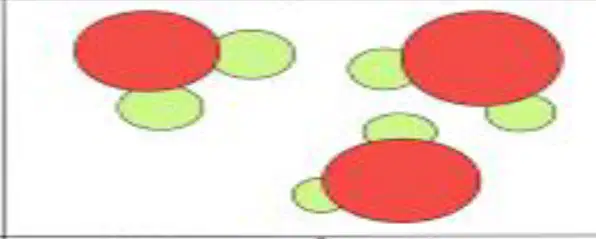
A sample is observed to have a fixed composition and is always homogeneous. Which classification fits best?
Mixture
Pure substance
Heterogeneous mixture
Colloid
Select the description that matches an element.
A substance that can be broken down into simpler stable substances and contains atoms from two or more elements
A substance that cannot be broken down into simpler stable substances and is made of one type of atom
A mixture of compounds that can be separated physically
A substance composed of molecules that are not chemically bonded
You are given an unknown pure substance. It decomposes into hydrogen and oxygen when electricity is passed through it. Based on this evidence, how should it be classified?
Element, because it is made of one type of atom
Compound, because it can be broken down (NOT by physical means ) into simpler stable substances composed of different elements
Mixture, because it separates into two parts
Element, because it contains hydrogen
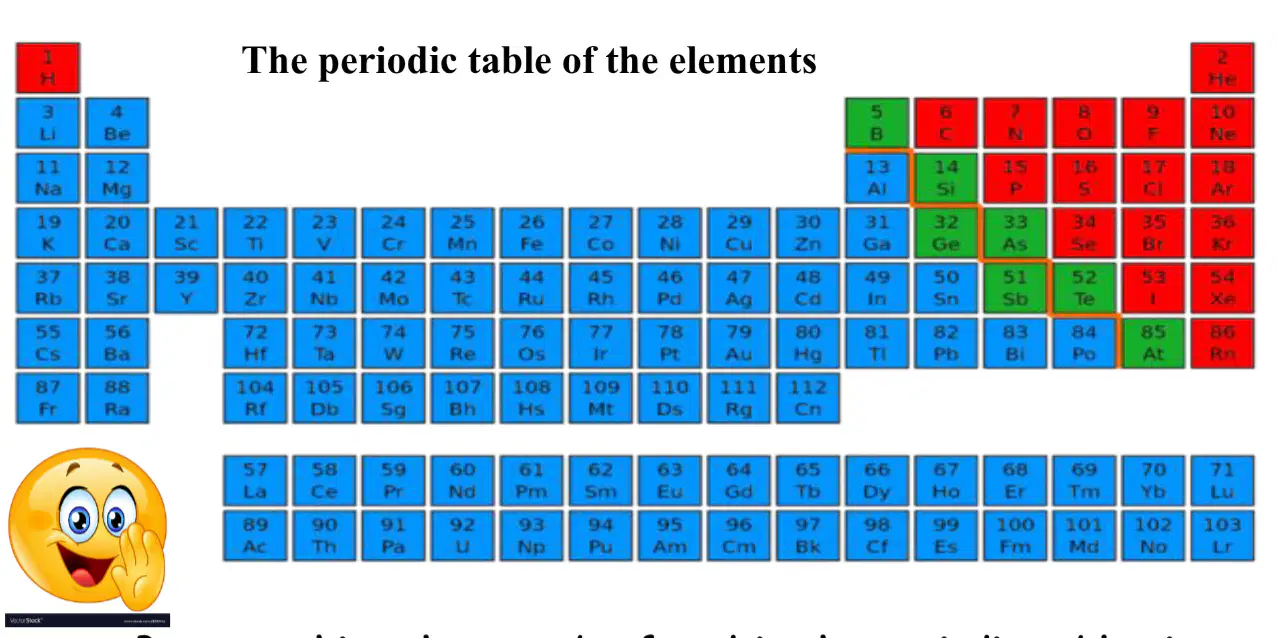
Using the periodic table shown, which of the following is an element?
Water (H2O)
Hydrogen (H)
Carbon dioxide (CO2)
Table salt (NaCl)
Which statement best describes a compound?
Made of a single type of atom that can vary in ratio
Made of elements in a specific ratio that is always the same
Mixture of substances that can be separated physically
Has properties identical to its component elements
Which statement BEST defines a mixture?
A pure substance made of one type of matter with new properties
A blend of two or more types of matter that keep their own identity and properties
A chemical compound formed by elements reacting in fixed ratios
Any substance that is evenly mixed and uniform
Which feature characterizes a homogeneous mixture?
Unevenly mixed and not uniform
Evenly mixed and uniform; parts cannot be seen
Contains visible chunks of different substances
Always a gas

Sugar dissolved in water is labeled in the diagram as a solution. What term is used for sugar in this mixture?
Solvent
Solute
Precipitate
Reactant
What is another name for homogeneous mixtures given in the material?
Alloys
Solutions
Suspensions
Colloids

Which observation would indicate a heterogeneous mixture based on the description and image examples?
The mixture appears uniform with no visible parts
You can see different parts that make up the mixture
It consists of only one ingredient
It must be a liquid
A snack bowl contains pretzels, crackers, and nuts that remain as separate pieces. How should this mixture be classified?
Homogeneous, because it is evenly mixed
Heterogeneous, because its parts are visible and unevenly mixed
Compound, because different substances are chemically bonded
Solution, because it forms one uniform phase

Based on the diagram of coffee, milk, and sugar being combined, which result represents a homogeneous mixture?
A cup where milk and sugar remain as visible lumps floating in coffee
A uniformly blended cup where coffee, milk, and sugar are evenly mixed
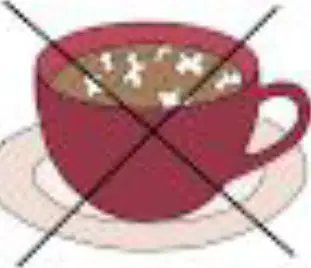
Which observation best indicates a heterogeneous mixture in the context of coffee, milk, and sugar?
The liquid appears uniform in color and texture after stirring
There are visible clumps of milk and undissolved sugar in the cup
The mixture tastes sweet
The temperature of the drink increases slightly after adding milk
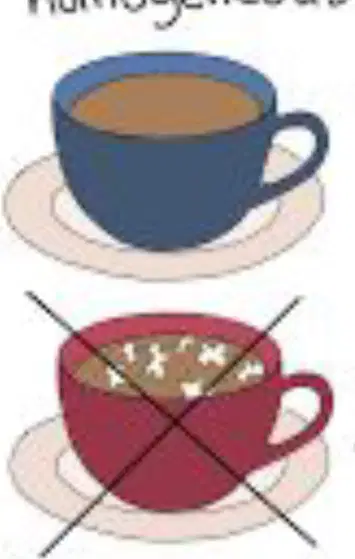
You prepare two cups: Cup A shows a smooth, even brown beverage after adding coffee, milk, and sugar. Cup B shows white specks and grainy crystals floating. Which classification is correct?
Cup A: heterogeneous; Cup B: homogeneous
Cup A: homogeneous; Cup B: heterogeneous
Both A and B are homogeneous
Both A and B are heterogeneous
How would you classify a sample that cannot be physically separated but can be chemically decomposed?
Element
Compound
Homogeneous mixture (solution)
Heterogeneous mixture
A mixture has a uniform composition throughout, which classification is correct?
Heterogeneous mixture
Homogeneous mixture (solution)
Pure substance
Element

Diagram A shows several identical pairs of different-colored circles stuck together (each pair has one pink and one blue circle). What is the best classification for the substance represented?
Element
Compound
Mixture of elements
Mixture of compounds

Diagram B shows separate single blue circles, separate single dark teal circles, and a few pairs of light-blue circles bonded together. What is the best classification for the sample?
Pure element
Pure compound
Mixture of elements and compounds
Mixture of two compounds
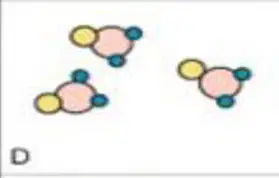
Diagram D shows identical three-atom clusters with one yellow, one pink, and one blue circle bonded together in the same arrangement throughout. What does this represent?
Element
Compound
Mixture of elements
Mixture of compounds
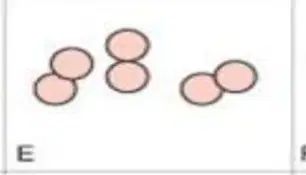
Diagram E shows only identical pairs of pink circles bonded together and nothing else. Choose the best classification.
Element
Compound
Mixture of elements
Mixture of compounds

Diagram F shows only separate, single pink circles with no bonds. What is the classification?
Element
Compound
Mixture of elements
Mixture of compounds
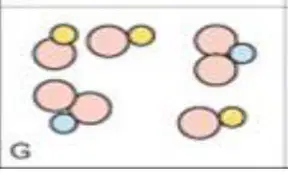
Diagram G shows multiple different small clusters: some pink–blue pairs, some pink–yellow pairs, and some larger groups. What is the best classification for this sample?
Pure element
Pure compound
Mixture of elements only
Mixture of compounds
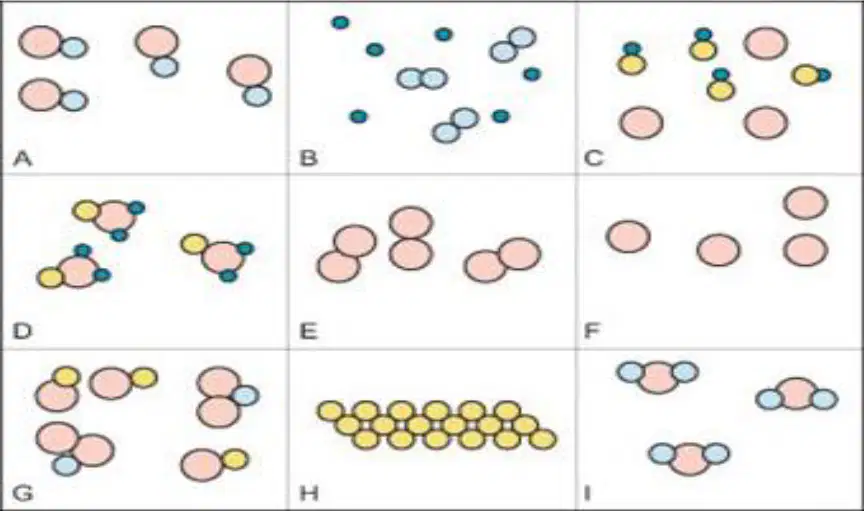
Diagram H shows many yellow circles arranged in a continuous, repeating lattice with all particles the same. What does this depict?
Element
Compound
Mixture of elements
Mixture of compounds
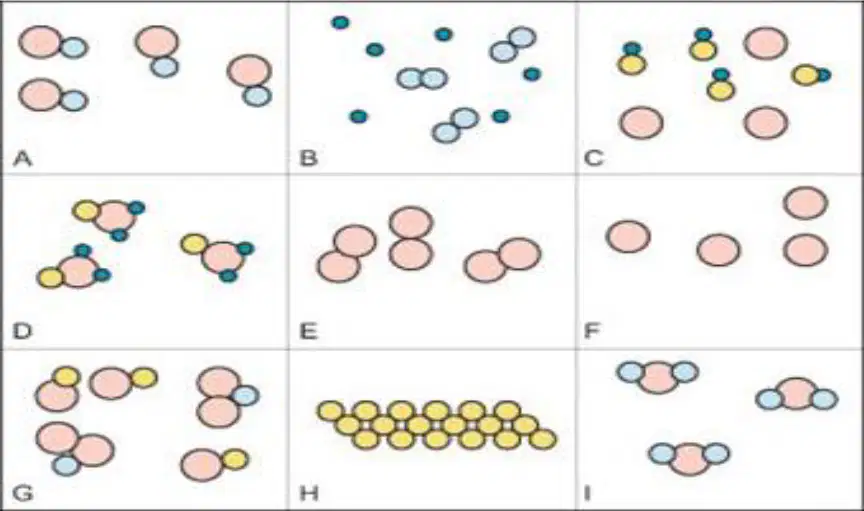
Diagram I shows identical molecules where one pink circle is bonded to two blue circles in a bent arrangement, repeated throughout. Classify this substance.
Element
Compound
Mixture of elements
Mixture of compounds
Match each separation technique to its correct description or example
Flitration
Separating sand and water
Evaporation
Separating salt and water
Chromatography
Separating by molecular polarity
Separation of iron fillings from sand can be done by a use of_____.
funnel
filter
magnet
sieve

Classify the following as Chemical Change or a Physical Change.

Chopping wood

Heating soup

Steam from a shower

Burning marshmellow

A bike rusting

baking soda and vinegar
Classify the following as Chemical Change or a Physical Change.
breaking apart a chocolate bar
boiling water
air drying clothes
melting butter
rusting nail
burning fuel in a car
digesting a chocolate bar
Match the following:
Physical Changes
Changes that change the appearances of the substance, not is identify.
Chemical Changes
changes that cause a substance to change into a new substance
Freezing, Grinding, Chopping, Tearing, Evaporating
Examples of Physical Changes
Combustion, Rusting, Burning, Corroding
Examples of Chemical Changes
Breaking chalk is a (a) change.
Rusting iron is a (b) change.
Subliming dry ice is a (c) change.
This diagram shows (a) change

This diagram shows (a) change

