
Font size
 Worksheets
Feudalism and Hierarchy
Total questions: 84
Worksheet time: 42mins
What does the root 'Hier' mean?
sacred
ancient
leader
earth
What does the root 'Arch' mean?
rule
water
light
earth
In the context of feudalism, what does the root 'fief' mean?
payment for land
loyalty to a king
ownership of a castle
service to a lord

Based on the diagram, which group is at the top of the feudal hierarchy?
Knights
Peasants
King
Lords
Match the following feudal groups to their primary role or responsibility as shown in the diagram:
Provide food, farm the land, pay rent
D
Loyalty, military aid to king
B
Homage, military service to lords
C
Rule over all, receive loyalty and military aid
A
The feudal system developed in the years following the fall of the Roman Empire because:
there was a need for protection and order after the collapse of central authority
the Roman Empire encouraged feudalism before its fall
trade increased rapidly and required new systems
democracy was spreading throughout Europe
After the fall of Rome, what was missing that left most people undefended?
A strong economy
A central government or army
Trade routes
Religious leaders
After the fall of Rome, small kingdoms started to form and were often at war with one another.
True
False
Fill in the blank: The most powerful of the small kingdoms that formed after the fall of Rome had the most ______ and best _______.
land; warriors
gold; ships
villages; farmers
books; scholars

One of the most powerful groups from this time is known as the _______.
Franks
Romans
Vikings
Huns

Who was the most important leader of the Franks?
Julius Caesar
Charlemagne
Alexander the Great
Napoleon

Charlemagne united almost all of the Christian lands of _______ into one empire.
Europe
Asia
Africa
Australia

Charlemagne’s empire survived many attacks from outside enemies, but after his death in 814 CE, the empire fell apart due to weak leaders.
True
False

After the Franks fell, what happened to the people of Western Europe?
They gained more protection
They no longer had protection
They moved to Asia
They became Vikings
Which three groups threatened Western Europeans after the fall of the Franks?
Muslims, Magyars, and Vikings
Romans, Greeks, and Egyptians
Huns, Mongols, and Persians
Franks, Saxons, and Normans
Muslims who threatened Western Europe came from which regions?
The Middle East and North Africa.
Eastern Europe and Scandinavia.
South America and the Caribbean.
East Asia and Australia.
Why did feudalism develop in Western Europe after the fall of the Franks?
Europeans needed a way to defend themselves from threats.
To promote trade with Asia.
Because the Church demanded it.
To encourage the growth of cities.
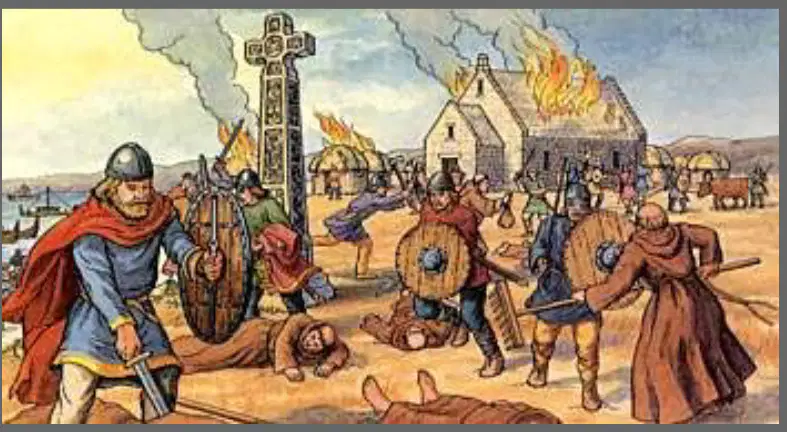
The illustration depicts a scene related to the fall of the Franks and the rise of feudalism. What does this scene represent?
The breakdown of central authority and the emergence of local lords controlling land and people
The unification of Europe under a single ruler
The spread of democracy throughout the Frankish kingdom
The rise of powerful merchant cities dominating the countryside
By about ____ CE, the system of feudalism had developed. This system provided people with a place to live, safety, and protection by creating a stable social order.
1000
500
1500
200
In the feudal system, people were bound to each other by promises of _____
loyalty
wealth
freedom
punishment
Under the feudal system, all land in a kingdom belonged to a monarch, which is a ____ or _____.
king, queen
lord, lady
prince, princess
duke, duchess
Which of the following best describes the main purpose of the feudal system?
To create a stable social order and provide safety and protection
To encourage trade between kingdoms
To promote democracy
To abolish monarchies
A fief in the feudal system was:
a piece of land granted by a lord to a vassal
a type of medieval weapon
a religious ceremony
a royal title
A vassal in the feudal system was:
a person who received land and protection from a lord in exchange for loyalty and service
a king who ruled over all the land
a merchant who traded goods between towns
a peasant who worked the land for free
In the feudal system, most lords and wealthier knights lived on ________, which were large estates.
manors
castles
villages
towers
Which of the following was NOT typically included in a manor?
A castle or large house
One or more villages
Surrounding farmland
A large city
True or False: Manors were usually located close to towns.
True
False
Why did peasants on manors have to produce everything they needed to survive?
Because manors were usually far away from towns, so peasants had to produce everything needed for survival.
Because peasants were not allowed to trade with anyone outside the manor.
Because the king demanded all goods be produced on the manor.
Because peasants preferred to be self-sufficient even when markets were nearby.
What type of house did the lord of the manor live in?
Wooden cottage
Large stone house called the manor house
Small hut
Church
What was the village church built on?
A) A large field
B) A small piece of land that belonged to the lord
C) Next to the river
D) In the forest
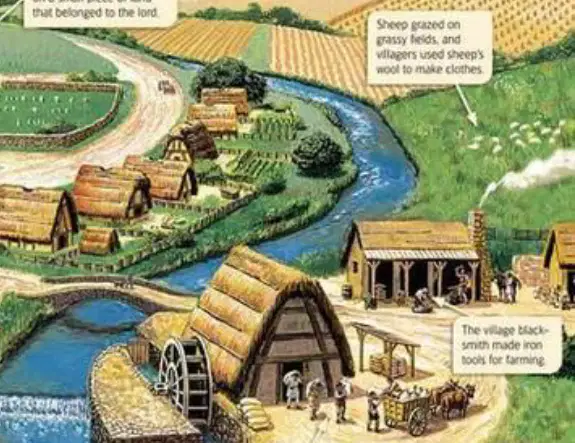
Sheep grazed on grassy fields, and villagers used sheep's wool to make _______.
clothes
bricks
jewelry
furniture

Peasants grew _______ in small gardens near their houses.
vegetables
gold
books
cars

In the fall, peasants worked to harvest crops like _______.
wheat
apples
carrots
rice
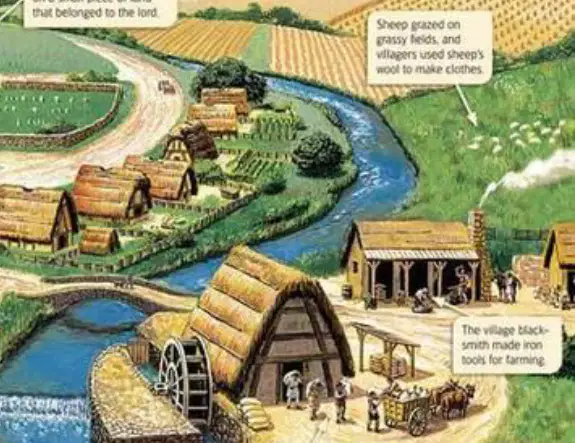
The village blacksmith made iron tools for _______.
farming
cooking
painting
dancing
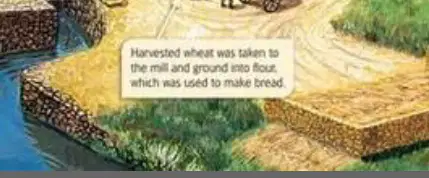
Harvested wheat was taken to the mill and ground into flour, which was used to make _______.
bread
cheese
juice
butter

Fill in the blank: Monarchs were at the top of _______ society.
medieval
modern
ancient
industrial
Fill in the blank: Monarchs owned all of the _______ in their kingdom.
land
money
castles
villages
True or False: The amount of power a monarch had was always the same.
True
False
Most monarchs heavily relied on their most trusted lords to help them keep power.
True
False
Fill in the blank: Monarchs would give out plots of land (fiefs) to their most trusted _______.
lords
peasants
merchants
serfs
What was the main job of a monarch?
To keep order and provide protection for their vassals.
To write new laws for every village.
To farm the land personally.
To serve as a merchant in the kingdom.
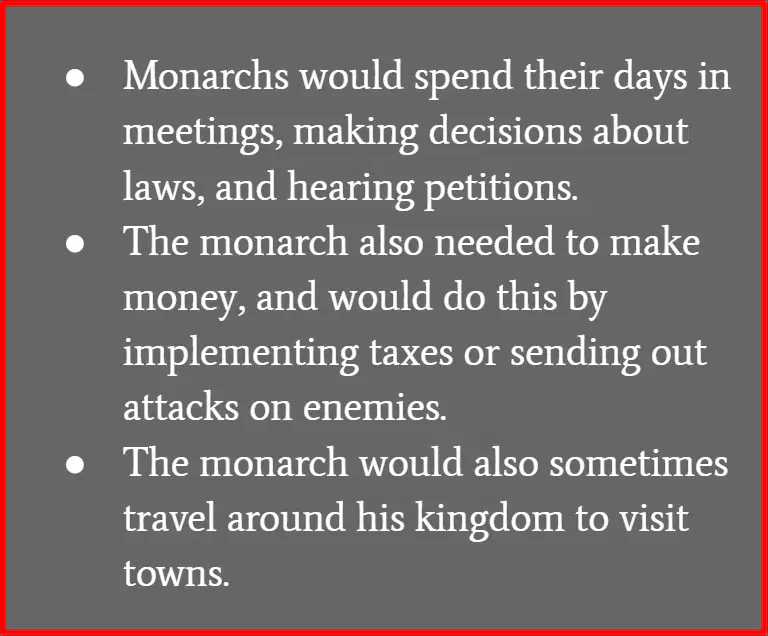
According to the passage 'Duties of Monarchs', what would monarchs spend their days doing?
Monarchs would spend their days in meetings, making decisions about laws, and hearing petitions.
Monarchs would spend their days farming and tending to livestock.
Monarchs would spend their days traveling from village to village collecting taxes.
Monarchs would spend their days studying art and music exclusively.
According to the passage 'Duties of Monarchs', how did monarchs make money?
By implementing taxes or sending out attacks on enemies.
By trading with neighboring kingdoms.
By inventing new technologies.
By farming their own lands.
According to the passage 'Duties of Monarchs', Monarchs would sometimes travel around their kingdom to visit towns.
True
False
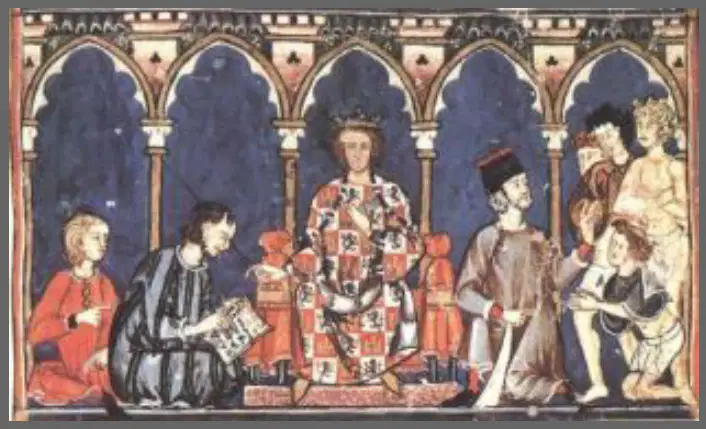
Look at the image of the monarch and his subjects. Based on the passage 'Duties of Monarchs', which duty might the monarch be performing in this scene?
The monarch might be making decisions about laws, hearing petitions, or meeting with his subjects.
The monarch might be preparing for a battle in the royal armory.
The monarch might be leading a religious ceremony in the palace chapel.
The monarch might be training horses in the royal stables.
Lords, vassals to the monarch, supplied knights during war.
True
False
Where did lords and ladies reside?
Small cottages
Large manor houses or castles
Tents
Apartments
Manor life revolved around the ________, hosting important events and feasts.
manor or castle
village market
church tower
blacksmith's shop
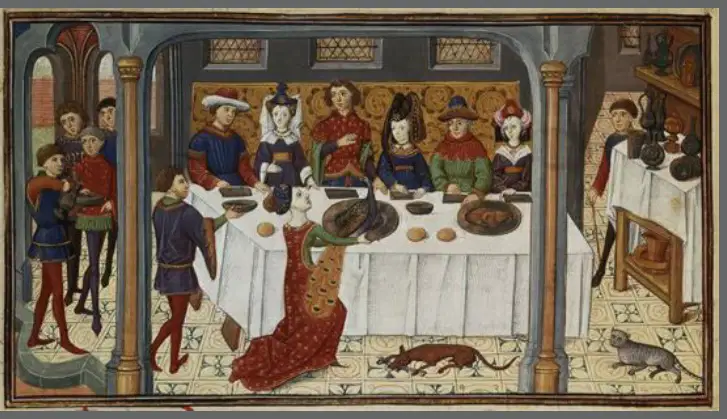
Look at the illustration of the feast. What kind of events did manor life revolve around?
Important events and feasts
Farming
Traveling
Building castles
According to the passage 'Duties of Lords and Ladies', what was one of the main responsibilities of lords?
A) Managing and defending their land and people
B) Only participating in leisure activities
C) Only raising children
D) Building castles
According to the passage 'Duties of Lords and Ladies', what roles did ladies sometimes take on?
Only leisure activities
The same roles as lords, or managing the household and raising children
Only reading and sewing
Only serving as judges
According to the passage 'Duties of Lords and Ladies', list two leisure activities enjoyed by lords and ladies.
Hunting and feasting
Farming and blacksmithing
Building castles and mining
Sailing and fishing
Knights were mounted soldiers and vassals of lords who served monarchs during ________.
wartime
harvest season
religious festivals
parliament sessions
Knights were typically wealthy because:
they needed to afford expensive armor and horses.
they were always born into royalty.
they did not have to pay taxes.
they owned all the land in the kingdom.
Training for knights began at what age, and what was the first role called?
At age 7, as a page
At age 10, as a squire
At age 5, as a knight
At age 12, as an apprentice
At age 14, a knight-in-training became a ______ and began to ______.
squire; assist a knight and learn combat skills
page; serve as a messenger
knight; lead armies
apprentice; learn a trade
In their early 20s, squires who proved worthy became ________.
knights
pages
lords
serfs
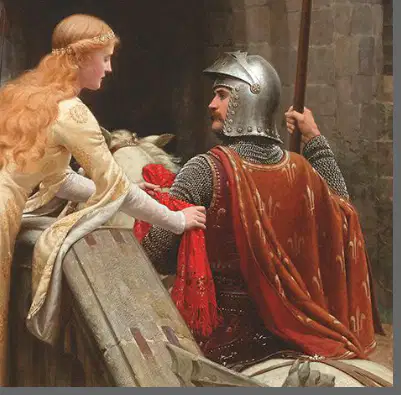
Refer to the image of the knight being honored by a lady. What stage of knighthood does this image most likely represent?
Page
Squire
Knighting ceremony
Training for battle
What is the code that knights followed in their daily lives and duties?
Chivalry
Democracy
Feudalism
Monarchy
Which of the following is NOT a quality of chivalry that knights followed?
A) Loyal to lord and church
B) Just and fair
C) Protected the helpless
D) Disrespectful towards women
Fill in the blank: Knights were expected to be _______ to their lord and church.
loyal
rebellious
indifferent
disloyal
Fill in the blank: Knights were expected to be _______ and fair.
just
brave
selfish
greedy
Fill in the blank: Knights were expected to protect the _______.
helpless
wealthy
knights
kings
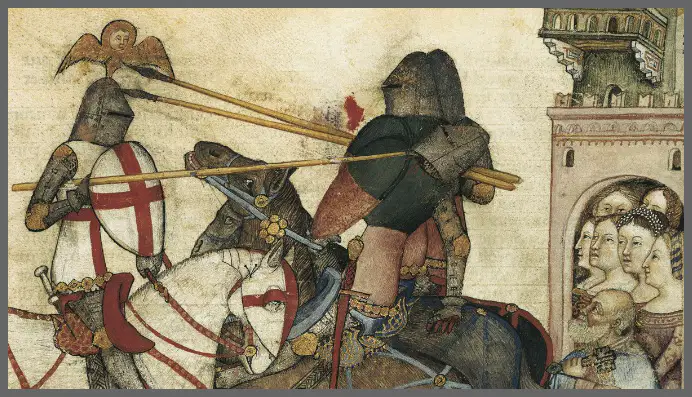
What was the main goal of jousting tournaments?
To entertain the king
To knock each other off horseback using lances
To train for farming
To build castles

Most people in the Middle Ages supported the entire feudal structure by working the _____
land
churches
castles
markets
What did the labor of peasants allow knights and lords to focus on?
Farming
Fighting and warfare
Building castles
Trading goods
Peasants were either free or unfree. Free peasants rented land to farm and owed rent to the _____?
lord
priest
merchant
knight
Unfree peasants were known as _____
serfs
lords
knights
burghers
True or False: Unfree peasants, or serfs, could leave the land whenever they wished without permission from the lord.
True
False
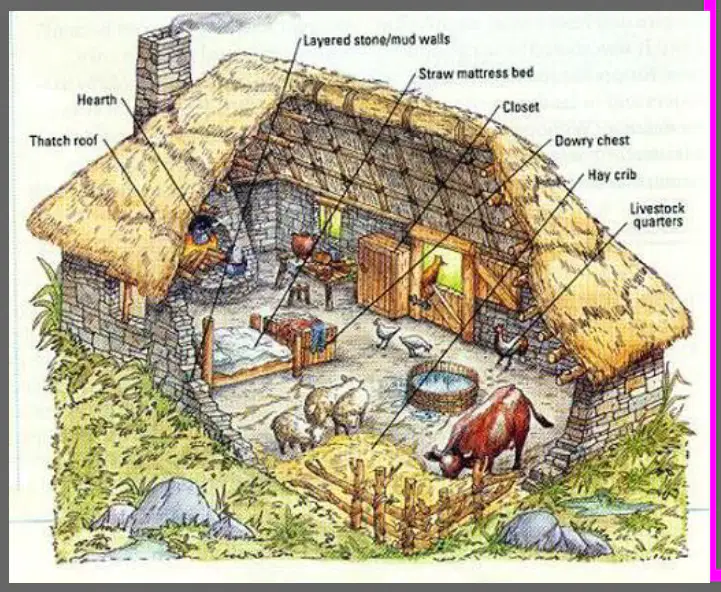
Peasants had a lot of furniture in their homes.
True
False

What did peasants eat?
Peasants ate vegetables, meat, and bread.
Peasants ate only fruits and fish.
Peasants ate chocolate and coffee.
Peasants ate only rice and noodles.
Where did peasants often spend their little free time?
At church
In the marketplace
At the lord's manor
In the forest
Fill in the blank: Monarchs held daily meetings to decide ______ and hear petitions.
laws
meals
games
songs
Fill in the blank: Monarchs generated income through ______ or by attacking enemies.
taxes
farming
trading spices
building castles
Fill in the blank: Monarchs also traveled their kingdoms, visiting ______.
towns
oceans
mountains
deserts
Fill in the blank: Lords managed and defended their land and people, serving as judges and appointing officials, with power to fine and ______.
punish
reward
ignore
praise
Fill in the blank: Ladies often managed households and raised ______; sometimes they took on the same roles as lords.
children
animals
buildings
weapons
Fill in the blank: Leisure activities for nobles included hunting, feasting, dancing, chess, reading, and ______.
sewing
farming
blacksmithing
carpentry
baking
Fill in the blank: Knights adhered to a code of conduct known as ______.
chivalry
alchemy
democracy
feudalism
Fill in the blank: Chivalry mandated loyalty to their leader and the church, fairness, protection of the vulnerable, and respect for ______.
women
animals
nature
money
Fill in the blank: Knights participated in jousting tournaments, riding horses and using ______ to dislodge opponents.
lances
shields
swords
bows
Fill in the blank: Peasants were essential ______ laborers who sustained the feudal system.
agricultural
industrial
technological
medical
Fill in the blank: Free Peasants rented land and had the ______ to leave.
freedom
obligation
permission slip
requirement
Fill in the blank: Unfree Serfs farmed the lord's land, required permission to leave, and received a small plot of land in exchange for their ______.
labor
money
weapons
loyalty

