
 Worksheets
Unit 3 Part 1 Test (World History)
Total questions: 27
Worksheet time: 14mins
Name
Class
Date
1.
The chief cause of the revolution in the 13 Colonies was:
a)
Losing the French and Indian War
b)
New British taxes
c)
Too many freedoms
2.
Which country helped the 13 Colonies defeat the British?
a)
England
b)
Britain
c)
France
d)
Spain
3.
Which type of government did the 13 colonies set up under the Constitution?
a)
Republican
b)
Direct Democracy
c)
Monarchy
d)
Absolutism
4.
Who could contribute essays to Denis Diderot's Encyclopédie?
a)
Absolute Monarchs
b)
Peasants
c)
Enlightenment thinkers
d)
Bourgeoisie
5.
Who could vote under the new American government?
a)
Males
b)
Males and females
c)
White male property owners
d)
Male and female property owners
e)
everyone could vote
6.
The Bill of Rights was added as the first ______ amendments.
a)
10
b)
20
c)
15
d)
5
7.
What was the main cause for the start of the French Revolution?
a)
They were struggling economically
b)
They were hurting financially
c)
They were struggling to maintain their society
8.
The end of the French Revolution involved their first _____________ legislature.
a)
Unicameral
b)
Tricameral
c)
Bicameral
9.
The National Convention was led by who?
a)
King Louis
b)
Napoleon Bonaparte
c)
Thomas Hobbes
d)
John Locke
10.
Toussaint Louverture was described as a skilled diplomat and what else?
a)
Prince
b)
Leader
c)
Military genius
d)
Cannon expert
11.
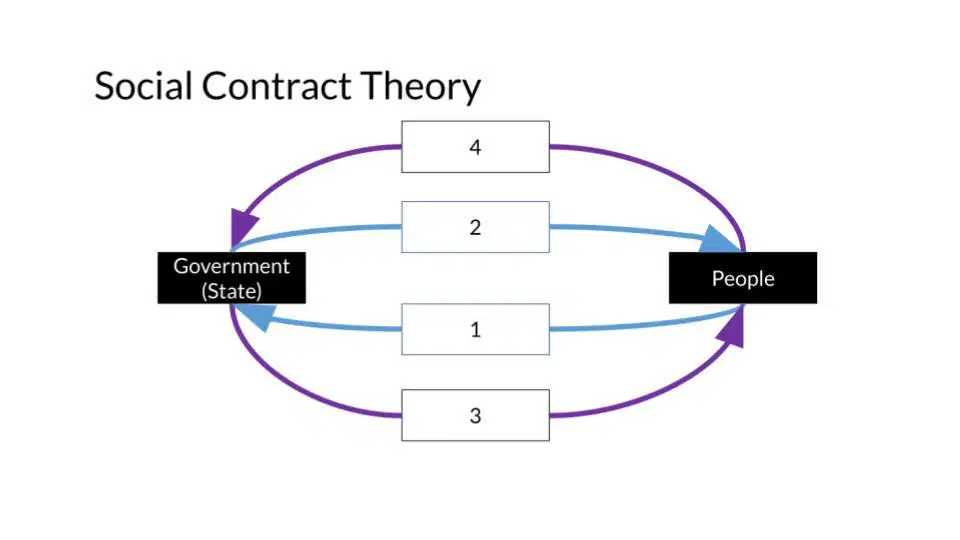
Which of the numbers on the diagram would be "misuse power"?
a)
1
b)
2
c)
3
d)
4
12.
Which Enlightenment philosopher believed, since the world was chaotic, that people should hand over their rights to a strong ruler?
a)
Hobbes
b)
Locke
c)
Voltaire
d)
Wollstonecraft
13.
Which Enlightenment philosopher believed the degree of punishment should be based upon the crime?
a)
Montesquieu
b)
Beccaria
c)
Rousseau
d)
Voltaire
14.
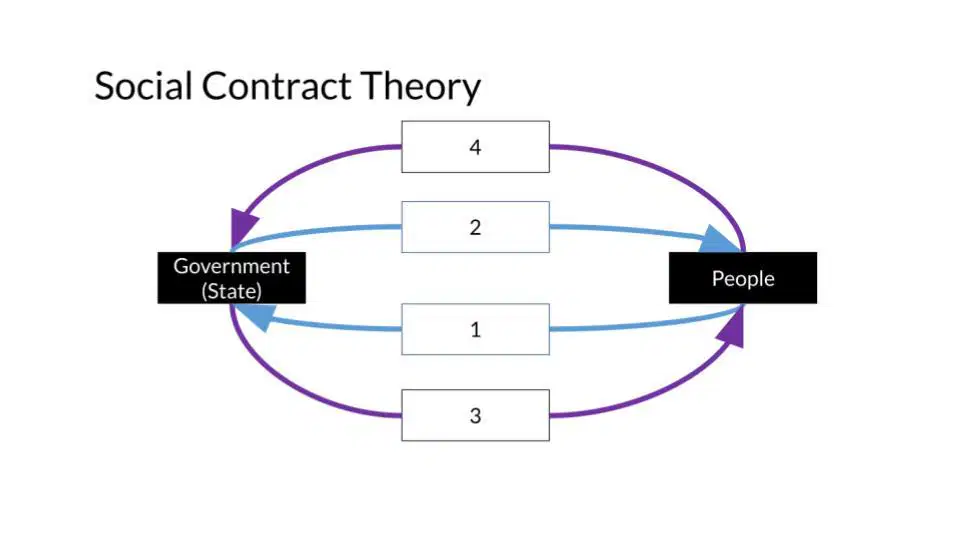
Which of the numbers on the diagram would be "give power"?
a)
1
b)
2
c)
3
d)
4
15.
The French and Indian War was fought between France and Britain over control of what?
a)
England
b)
France
c)
Africa
d)
North America
16.
Which of the following were members of the Third Estate in France?
a)
Bourgeoisie
b)
Royal family
c)
Church leaders
d)
Rich nobles
17.
In France, which social class paid the most taxes?
a)
First Estate
b)
Second Estate
c)
Third Estate
d)
Everyone paid the same amount of taxes
18.
Which Enlightenment philosopher believed people were naturally good and could govern themselves?
a)
Wollstonecraft
b)
Locke
c)
Hobbs
d)
Montesquieu
19.
In the social contract theory, where does the state's power come from?
a)
The government
b)
The people
c)
The Constitution
d)
The Bible
20.
Which philosopher advocated for the separation of powers and checks and balances?
a)
Locke
b)
Voltaire
c)
Rousseau
d)
Montesquieu
21.
Which philosopher believed that a good government should be guided by the "general will" of the people?
a)
Locke
b)
Voltaire
c)
Rousseau
d)
Montesquieu
22.
Which philosopher advocated that the degree of punishment should be based on the crime?
a)
Locke
b)
Voltaire
c)
Rousseau
d)
Beccaria
23.
Denis Diderot's Encyclopedia's help spread ideas across Europe about what topic?
a)
Religion
b)
Social classes
c)
Enlightenment
24.
Which of the following is NOT a place that the French and Indian War was fought?
a)
North America
b)
The Atlantic
c)
Africa
d)
Europe
25.
In the French and Indian War, the Native Americans fought alongside who?
a)
British
b)
French
c)
Americans
26.
In the French and Indian War, the American Colonists fought alongside who?
a)
British
b)
French
c)
Spanish
27.
What was the famous phrase used by the colonists regarding the rise in taxes?
a)
No representation without taxation!
b)
Life, liberty, and the pursuit of happiness!
c)
No taxation without representation!
d)
Freedom and rights for all!
100 %

