
 Worksheets
Lesson 5 - Toward Independence (Mastering the Content)
Total questions: 53
Worksheet time: 42mins
Mastering the Content: Select the letter next to the best answer. Which of these groups gained territory in North America as a result of the French and Indian War?
Spain
France
Great Britain
American Indians
Mastering the Content: Select the letter next to the best answer. Before 1760, which statement best describes the colonies?
The colonies had assemblies that passed laws.
The colonies had representation in Parliament.
The colonies were united into one government.
The colonies depended upon the British government.
Mastering the Content: Select the letter next to the best answer. Which of these was a result of the French and Indian War?
The British government had a large war debt.
The colonists were given their independence.
The British government stayed out of colonial politics.
The colonists were free to move west of the Appalachians.
Mastering the Content: Select the letter next to the best answer. Which of these groups benefited from the Proclamation of 1763?
Enslaved Africans
British soldiers
American Indians
American colonists
Mastering the Content: Select the letter next to the best answer. Which group formed the Sons of Liberty?
Patriots
Loyalists
British soldiers
American Indians
Mastering the Content: Select the letter next to the best answer. What did the colonists resent most about the Stamp Act?
They did not believe in any form of taxation.
They had no representatives to vote on the tax.
People in Great Britain did not have to pay taxes.
People in Great Britain were taxed only on property.
Mastering the Content: Select the letter next to the best answer. How did Parliament respond to the colonists’ protests against the Stamp Act?
They repealed the Stamp Act.
They increased the tax on paper.
They refused to sell stamps to the colonists.
They arrested those who complained about the Stamp Act.
Mastering the Content: Select the letter next to the best answer. Which of these belongs in place of the question mark in the diagram that shows Cause: The Stamp Act → Effect: ?
Proclamation of 1763
French and Indian War
boycott of British goods
expansion of the British Empire
Mastering the Content: Select the letter next to the best answer. The name Boston Massacre was given to the events of March 5, 1770, in order to
create anti-British sentiment.
create trouble for the colonists.
warn of a deadly disease in the city.
describe the truth about what happened.
Mastering the Content: Select the letter next to the best answer. How did many of the Loyalists view the Patriots?
as brave soldiers
as foreign invaders
as ungrateful rebels
as agreeable neighbors
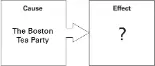
Mastering the Content: Select the letter next to the best answer. Which of these belongs in place of the question mark in the diagram that shows Cause: The Boston Tea Party → Effect: ?
the Stamp Act
the Intolerable Acts
the Boston Massacre
the Proclamation of 1763
Mastering the Content: Select the letter next to the best answer. In which way did Great Britain increase its control of the colonies?
It took away colonists' land.
It required that colonists pay taxes.
It demanded that colonists join the army.
It forced colonists to work for the government.
Mastering the Content: Select the letter next to the best answer. What was a goal of the First Continental Congress?
to declare war on Great Britain
to find a solution to the conflicts with Great Britain
to create taxes that would be acceptable to the Americans
to bring representatives from Great Britain and America together
Mastering the Content: Select the letter next to the best answer. Which of these best describes how the colonists viewed themselves in 1774?
They saw themselves as united Americans.
They saw themselves as dependent on the king.
They saw themselves as citizens of their individual colonies.
They saw themselves as united under the British government.
Mastering the Content: Select the letter next to the best answer. Which of these did the colonists consider an act of tyranny?
the Boston Tea Party
the Proclamation of 1763
the French and Indian War
the First Continental Congress
Mastering the Content: Select the letter next to the best answer. What became evident when the colonists and British troops clashed at Lexington and Concord?
The British soldiers were fearful of the colonial militia.
The British troops were eager to start a war with the colonies.
The colonial militia was no match for the well-trained British troops.
The colonists were willing to fight for the right to govern themselves.
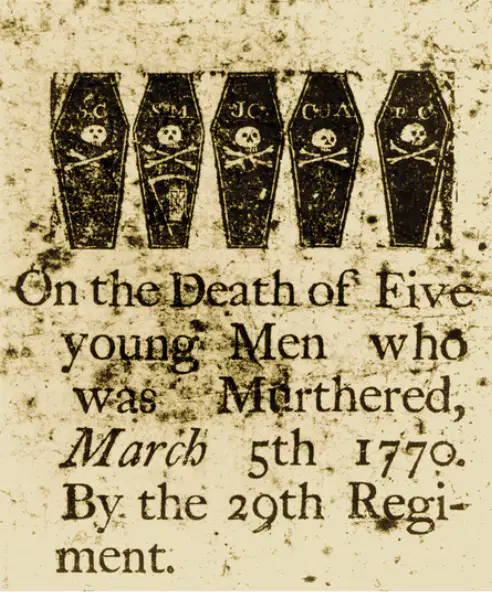
Use the two engravings shown to answer: To which of the following events are the two Paul Revere engravings referring?
Boston Tea Party
Boston Massacre
Proclamation of 1763
French and Indian War
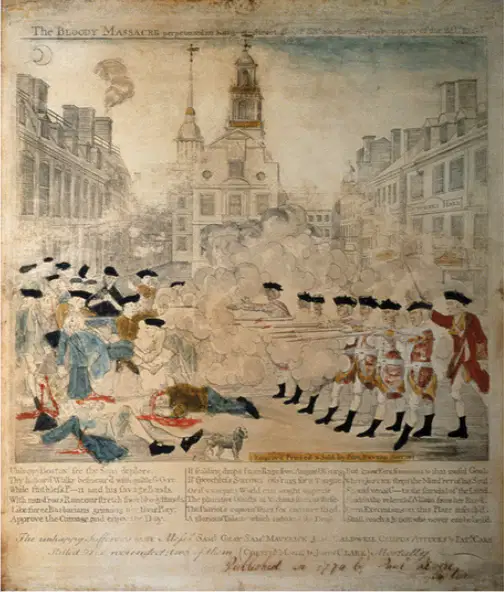
Look at the men who are shooting in the first engraving of British soldiers firing on colonists. Which group of people do these men represent?
British
Patriots
Loyalists
Parliament
Which of these groups gained territory in North America as a result of the French and Indian War?
Spain
France
Great Britain
American Indians
Before 1760, which statement best describes the colonies?
The colonies had assemblies that passed laws.
The colonies had representation in Parliament.
The colonies were united into one government.
The colonies depended upon the British government.
What did the colonists resent most about the Stamp Act?
They did not believe in any form of taxation.
They had no representatives to vote on the tax.
People in Great Britain did not have to pay taxes.
People in Great Britain were taxed only on property.
How did Parliament respond to the colonists’ protests against the Stamp Act?
They repealed the Stamp Act.
They increased the tax on paper.
They refused to sell stamps to the colonists.
They arrested those who complained about the Stamp Act.
What became evident when the colonists and British troops clashed at Lexington and Concord?
The British soldiers were fearful of the colonial militia.
The British troops were eager to start a war with the colonies.
The colonial militia was no match for the well-trained British troops.
The colonists were willing to fight for the right to govern themselves.
the government or controlling power
auhority
boycott
militia
repealed
tyranny/trant
the unjust use of government power. A ruler who uses power in this way is called a _________
auhority
boycott
militia
repealed
tyranny/trant
to take back, or to cancel, a law
auhority
boycott
militia
repealed
tyranny/trant
a small army made up of ordinary citizens who are trained to fight in an emergency
auhority
boycott
militia
repealed
tyranny/trant
to refuse to buy one or more goods from a certain source. An organized refusal by many people is also called a boycott.
auhority
boycott
militia
repealed
tyranny/trant


The Quartering Act forced the colonists to
House and feed British soldiers
Give up all of their quarters
Pay property taxes
Pay taxes on tea

The Boston Tea Party was when
The British and colonists traded tea with each other
The colonists would have tea
Colonists dumped tea into Boston Harbor to protest
King George invited people to the palace to party

What was the name of the group that met to discuss what the colonists should do about unfair laws like the Intolerable Acts?
The First Continental Congress
The House of Burgesses
The Sons of Liberty
The Boston Tea Party

Why did Great Britain pass the Proclamation of 1763?
To help the French
Because they favored the Native Americans
The King made Parliament pass the law
They couldn't afford to protect the colonists from Native American attacks

The excerpt above reflects the dissatisfaction of American colonists with the —
political debates that took place at the Albany Convention
interference of Great Britain in the slave trade
economic consequences of the Great Awakening
economic policies imposed by Great Britain following the French and Indian War

A
B
C
D

Which event was a major form of protest against British rule?
The Boston Tea Party
The Intolerable Acts
Lexington and Concord
The Boston Massacre

These acts contributed to the start of the Revolutionary War by:
restricting colonial trade with American Indians
imposing regulations on colonial trade
angered colonists who believed their rights were violated
punishing colonists for resisting British authority

According to the graphic below the colonies were upset by the British-- (8.4A)
practice of mercantilism that used the raw materials in the colonies and kept them dependent on finished products from Britain
use of the free enterprise system which prevented the colonies from smuggling imports and exports
limiting the westward expansion of the colonies by giving weapons to the Native Americans to use against the colonists
requiring the colonists to give housing and supplies to all the British troops that were stationed in the colonies
What were the three themes that outlined the colonists desire to be independent?
government, Parliament, monarchy
limited government, habeas corpus, goods
representation, tax, individual rights
consent of the governed, natural law, policy
When colonists objected to laws passed by Parliament and King George with protest and petition they did so because they viewed themselves as English citizens.
Which colonial concern is this an example of?
goods
Parliament
taxation
individual rights

This picture shows a political cartoon from 1766 showing a mock funeral of the Stamp Act.
How does this primary source show one of the main colonial concerns?
colonist opposed taxation on goods
colonist favored taxation on goods
Parliament was concerned about individual rights
King George wanted to protect the colonists
What was the main issue of King George and Parliament taxing the colonists?
colonies had their own legislatures to pass tax policy
colonies had no representation in Parliament
some acts went beyond taxation
colonist had new roads built with tax money
In reaction to some of the English policies that went beyond taxes the colonists began to form militias and some actions became violent. What would be the next step in this causal relationship?
colonists began to pay taxes and swear loyalty to the king
Thomas Paine writes Common Sense arguing for independence
Parliament repealed all taxation policy
Colonist sent a petition to the king asking for Stamp Act to be repealed
Which law taxed goods like legal documents, wills, newspapers, playing cards, etc.?
Navigation Acts
Pamphlet Act
Stamp Act
War Debt Act
Which act made colonists give food & drinks to British soldiers and allowed them to live in their homes?
Penny Act
Quartering Act
Food Act
Tea Act
Which act was the considered the WORST EVER, closed the port of Boston, and limited town meetings?
Intolerable Acts
Perfectly Tolerable Acts
Stamp Act
Proclamation of 1763
How did the colonists react to the Tea Act?
They held a political party
Dumping coffee into Boston Harbor
Kicking British soldiers out of their homes
Boston Tea Party
Why did Britain pass taxes in the colonies?
They wanted to buy more gold
To pay French and Indian War debt
The King needed new clothes
To punish the colonists for disobeying laws
The Sons of Liberty
were arrested and hung in Boston
protested British Acts
went to Britain to vote
supported British Acts
What was the main issue of King George and Parliament taxing the colonists?
colonies had their own legislatures to pass tax policy
colonies had no representation in Parliament
some acts went beyond taxation
colonist had new roads built with tax money
What two groups were involved in conflict after the French & Indian War?
British & Colonists
French & Native Americans
Huron & Iroquois
French and Spanish
What slogan did the colonists use when they were speaking against the British?
Join or Die
No Taxation without Representation
The British Are Coming....
Give Me Liberty or Give Me Death
Taxes on all imported goods
Tea Act
Stamp Act
Intolerable Acts
Townshend Acts

