wayground logo

Free Printable Worksheets

Font size

S
M
L
XL
Worksheets

SY26_Evidence of Evolution Quiz

Total questions: 40

Worksheet time: 23mins
Name
Class
Date
1.
_______ share the same form but different functions; suggests that organisms share a common ancestry
a)
vestigial structures
b)
homologous structures
c)
analogous structures
d)
fossil
2.
Study of developmental stages of various organisms to suggest a common ancestor because of similarities from fertilization to birth
a)
comparative anatomy
b)
embryology
c)
molecular biology
d)
evolution
3.
Two organisms that are closely related would have
a)
very similar DNA sequence
b)
exactly the same DNA sequences
c)
no proteins in common
d)
completely different DNA sequence
4.
If modern organisms have a lot of homologous structures, what inference might paleontologists make about those organisms?
a)
They are reptiles
b)
One organism evolved from the other
c)
The organisms likely shared a common ancestor
d)
The organisms can breed with one another
5.
Scientists compare organisms' DNA to support the theory that all species share a common _________________
a)
separation
b)
ancestor
c)
population
d)
environment
6.
Recently, scientists have been able to use ___________to find common proteins and amino acids to determine how closely related species are.
a)
DNA
b)
Vestigial structures
c)
Fossils
d)
Homologous structures
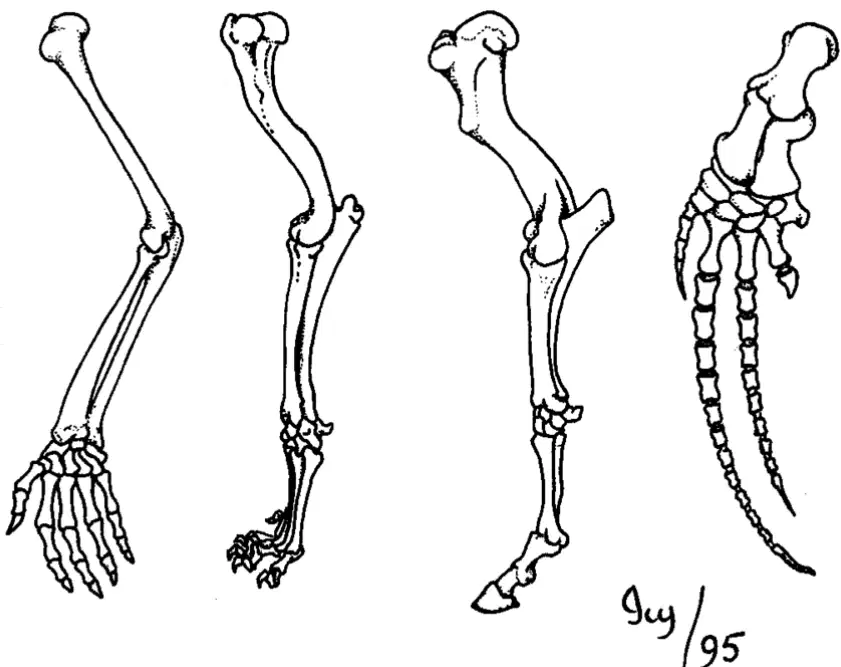
7.
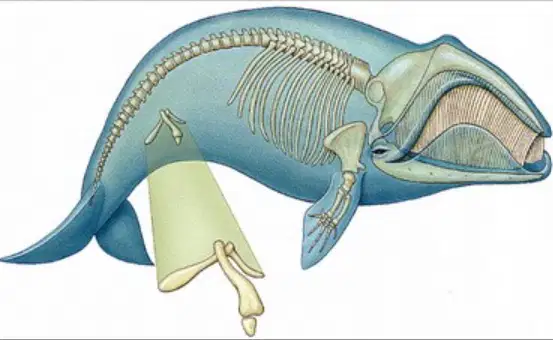
What is this an example of?
a)
Homologous structures
b)
Analogous structures
c)
Vestigial organs
d)
Functional adaptations
8.
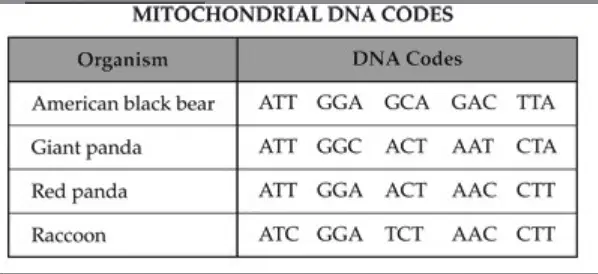
What conclusions can be made based on this table shown?
a)
the American black bear and the giant panda are most closely related
b)
the giant panda and the red panda are most closely related
c)
the red panda and the racoon are the most closely related
d)
the giant panda and the racoon are most closely related
9.
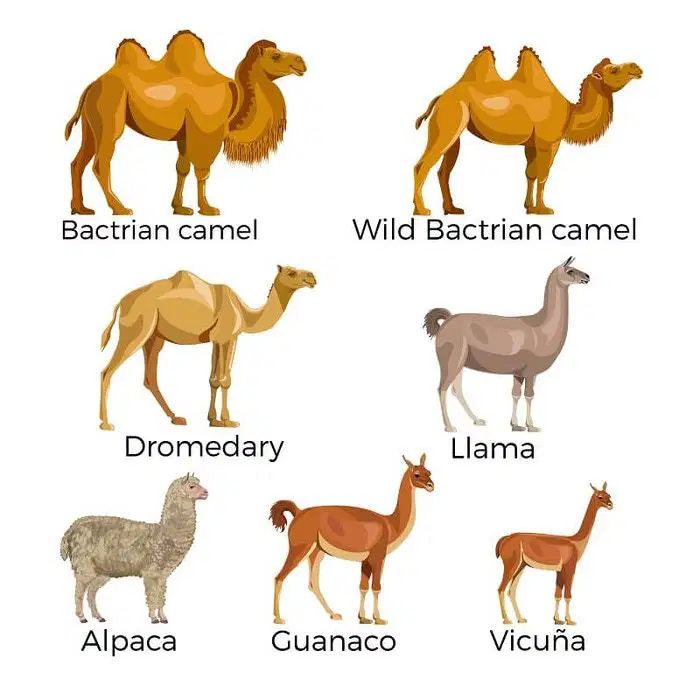
The picture shows the members of the Camelidae family. The physical features and the geographical origin of these animals provide evidence that they
a)
likely have a common ancestor.
b)
live in the same type of environment.
c)
have slowly evolved to become herbivores.
d)
exchanged DNA in the past.
10.
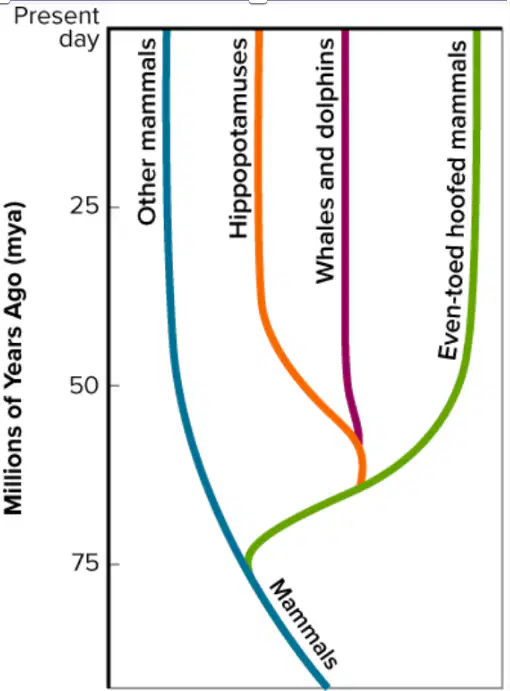
The image suggests that whales and hippopotamuses shared a common ancestor. When did these ancestors live?
a)
25-35 million years ago
b)
50-60 million years ago
c)
60-75 million years ago
d)
75 million years ago or more
11.
Which of the following is NOT a Biological Evidence of Evolution?
a)
Fossils
b)
Comparative Anatomy
c)
Embryology
d)
Molecular Biology
12.
Butterflies taste with their legs while humans taste with their tongues. In this way, butterfly legs and human tongues are ______________ structures
a)
homologous
b)
extinct
c)
vestigial
d)
analogous
13.
What is the group of animals that birds are most closely related to, according to most scientists?
a)
mammals
b)
amphibians
c)
fish
d)
reptiles
14.
What does the picture suggest?
a)
Horses appeared up to a million years ago and did not have any ancestors before that time
b)
Between 55 and 50 million years ago there weren't any animals that could be considered related to horses
c)
The hyracotherium is the same species as the modern horse
d)
The modern horse is related to an extinct species
15.
The picture is an example of .......
a)
trace fossil.
b)
carbonization.
c)
original fossil.
d)
cast.
16.
During a field trip, Ana, Danielle, and Eva found a rock with spaces created by decayed and/or dissolved animal and plant remains. They were excited to learn that these are called ______ fossils.
a)
Mold
b)
Cast
c)
Trace
d)
Imprint
17.
Tikaalik is a famous example of a _________ fossil.
a)
transitional
b)
cast
c)
mold
d)
trace
18.
Which is an example of a sudden change that could explain the extinction of a species?
a)
a mountain range isolates a species
b)
Earth's tectonic plates move
c)
a volcano erupts
d)
sea level changes
19.
Whales have pelvic bones. What type of structure does this best represent?
a)
Homologous
b)
Analogous
c)
Vestigial
d)
Transitional
20.
Scientists use radioactive decay to measure...
a)
absolute time
b)
relative time
c)
half-lives
d)
time of day
21.
Which of these describes a likely reason why a species would become extinct after a major environmental change?
a)
The environmental change means fewer predators are around.
b)
There are more homes for the species in the changed environment.
c)
There are not enough members of the species born with a trait necessary to survive in the new environment.
d)
The change in the environment opens new resources with less competition.
22.
Analyze the seashell found in the white layer. Which statement is true of the rock layer that contains this fossil?
a)
It could also contain a fossil from the bottom layer.
b)
It is older than the layers below it.
c)
It is younger than the layers above it.
d)
It is older than the layers above it.
23.
Which of the following words describes extinction caused by the movement of tectonic plates that form mountains and oceans?
a)
Sudden Change
b)
Rare Change
c)
Global Change
d)
Gradual Change
24.
Which fossil would make the best index fossil?
a)
Ammonite
b)
Brachiopod
c)
Trilobite
d)
Shark
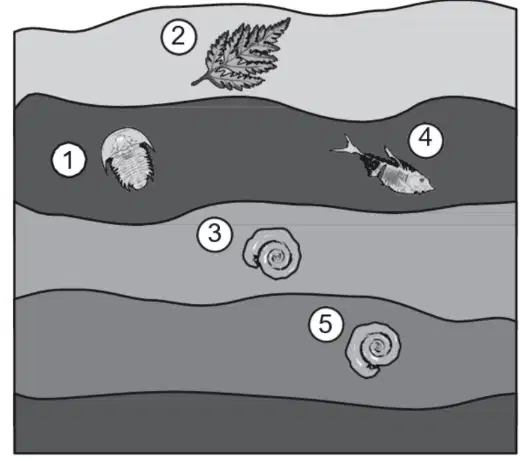
25.
Order the fossils according to their relative age from oldest to youngest.
a)
2,1,4,3,5
b)
2,4,3,5,1
c)
5,3,4,2,1
d)
5,3,4,1,2
26.

How would you describe this population pyramid?

a)
Rapid Growth
b)
Industrialized Country
c)
Declining Growth
d)
Stable Growth
27.

How would you describe this population pyramid?

a)
Stable Growth
b)
Developing Country
c)
Exponential Growth
d)
Negative Growth
28.
What three factors can affect ANY population's growth rate?
a)
Birthrate, death rate, migration
b)
disease, predation, migration
c)
medicine, agriculture, industry
d)
life expectancy, sanitation, vaccines
29.

The largest population size of a species that can be supported by the environment is referred to as ____.

a)

Carrying Capacity

b)

Equilibrium

c)

Limited Factors

d)

Population Growth

30.

What type of environment do you think this data was collected from?

a)

forest with primarily white-bark trees

b)

forest with primarily dark-bark trees

31.

A difference in beak shape among members of the same finch species is an example of .

a)

variation

b)

reproduction

c)

competition

d)

selection

32.

When nature "selects" a variation, that means that the trait:

a)

Gets passed along from generation to generation

b)

Causes the population to shrink

c)

Has brought about a new species

d)

Helps prey escape predators

33.

A dog owner prefers very pointy noses for his dogs. So, he has dogs with the most pointed noses mate in hopes of getting puppies with very pointy noses. This process is called____________

a)

mutation

b)

gene therapy

c)

natural selection

d)

selective breeding

34.

Which adaptation for protection allows an animal to hide either from predators or prey by blending with its environment?

a)

albinism

b)

conformity

c)

mimicry

d)

camouflage

35.

A caterpillar that resembles a snake is an example of what type of adaptation?

a)

translation

b)

transcription

c)

mimicry

d)

camouflage

36.

A male peacock will spread his feathers when trying to attract a mate. What type of adaptation is SPREADING its feathers to attract a mate?

a)

functional

b)

behavioral

c)

structural

37.

Which best describes the role of mutations in natural selection?

a)

Mutations help an organism to better survive in their environment

b)

An organism may acquire a helpful mutation by interacting with the environment

c)

A mutation may result in a beneficial trait that makes an organism more likely to survive and reproduce

d)

Organisms with certain traits are more likely to win competitions for mutations

38.
Why do frogs and other organism reproduce so many eggs or offspring?
a)
so that their babies can have friends to play with
b)
the more offspring the more likely the offspring will survive
c)
the more offspring the less likely offspring will survive 
d)
the more offspring the less competition
39.

A species could go extinct if:

a)

food becomes more plentiful.

b)

members of the species have adaptations to enhance survival.

c)

the environment changes drastically and no one can adapt.

d)

there is less competition for resources.

40.

Which of the following is an example of an environmental pressure?

a)

The air pressure in the atmosphere

b)

Breeding between two members of the same species

c)

A lake that's gradually running out of water

d)

A fight between two members of the same species