
Font size
 Worksheets
Y8 Winter Revision Quiz
Total questions: 77
Worksheet time: 4hrs 23mins
Particles are always moving.
True
False
Which of the following statements about the particles of a gas is true?
The particles vibrate about a fixed position.
The particles are far apart and move freely.
The particles are packed close together, but in a disorderly arrangement.
The particles are stationary and orderly.
An inflated balloon is placed in a refrigerator. Which statement the movement of the gas particles in the balloon?
The particles move faster and become further apart.
The particles move more slowly and become further apart.
The particles move faster and become closer together.
The particles move more slowly and become closer together.
When gas particles collide with other particles, they ...
Travel in a spiral.
Lose energy and move slowly.
Stop motion.
Rebound in a straight line.
A substance Y has a melting point of -7 degrees Celsius and a boiling point of 63 degrees Celsius. At which temperature is Y a liquid?
-25
25
75
150

Which phase change occurs between points D and E if heat is removed?
Freezing
Melting
Boiling
Condensation

What phase change occurs between points B and C if heat is added?
Freezing
Melting
Boiling
Condensing
Thermal energy always moves from :
Warm object to cool object
Object with low KE to object with high KE
Cool object o warm object
Object with high mass to object with low mass
A __________ has a definite shape and a definite volume.
Gas
Liquid
Solid
Plasma

Two flasks each contain water at 25 degrees Celsius. Which one has more heat energy?
They have the same heat energy because they are the same temperature.
The one on the right has more heat energy because it has less water.
The one on the left has more heat energy because it has more water.
Temperature is a measure of an object's average :
electro-static force
heat
density
kinetic energy
The state of matter with definite volume but no definite shape.
solid
liquid
gas
plasma
Which of the following is true when particles gain thermal energy?
Particles move more slowly.
Particles move closer together.
Particles stop moving.
Particles move further apart.
When a substance changes directly from a gas to a solid, it is called :
Deposition
Sublimation
Condensation
Vaporization

This diagram represents particles in a __________ state.
solid
liquid
gas
plasma
Element
Compound
Mixture
Contains two or more different types of atoms combined
Elements
Compounds
Mixtures

Which of these is pure element?
A
B
C
D

Which is a mixture of ELEMENTS
A
B
C
D

Which is a mixture of compounds?
A
B
C
D

Select all the terms that are correct about the above diagram
Mixture
Pure
Element
Compound

Select all the terms that are correct about the above diagram
Mixture
Pure
Element
Compound

Select all the terms that are correct about the above diagram
Mixture
Pure
Element
Compound

Select all the terms that are correct about the above diagram
Mixture
Pure
Element
Compound

Select all the terms that are correct about the above diagram
Mixture
Pure
Element
Compound

Select all the terms that are correct about the above diagram
Mixture
Pure
Element
Compound

Select all the terms that are correct about the above diagram
Mixture
Pure
Element
Compound

Select all the terms that are correct about the above diagram
Mixture
Pure
Element
Compound

Select all the terms that are correct about the above diagram
Mixture
Pure
Element
Compound

Select all the terms that are correct about the above diagram
Mixture
Pure
Element
Compound

Select all the terms that are correct about the above diagram
Mixture
Pure
Element
Compound

Select all the terms that are correct about the above diagram
Mixture
Pure
Element
Compound

Which one of these is NOT a mixture?
A
B
C
D
Which of these are a mixture of compounds
A
B
C
D
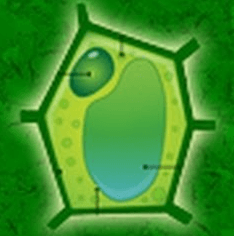
Which organelle belongs in plant cells only?
Cytoplasm
Mitochondrion
Large Permanent Vacuole
Cell Membrane
Nucleus
produce ATP (energy)


What part of the animal cell represents the cell membrane?
5
1
2
4

What part of the plant cell represents the cell wall?
5
3
6
4


A group of tissues that work together is a(n) ______________________.
cell
organ
organ system

Muscle tissue is made of ...
muscle cells
skin tissue
stem cells

What is the correct order of organization?
cells->tissue->organs->organ systems-> organism
tissue->cells->organs->organ systems-> organism
organs->organ systems-> organism->cells->tissue
The main force at play during making of our solar system
strong force
weak force
gravity
electrostatic force
Where are asteroids found?
between earth and venus
between Jupiter and Saturn
between Saturn and Uranus
between Mars and Jupiter

What do the outer planets have in common?
They are much larger than Earth and are made mainly of Hydrogen and Helium
The are about the same size as Earth and are mostly made of Hydrogen and Helium
They are must larger than Earth and are mainly made of iron
They are the same size as Earth and are mainly made of iron

What is stage A?
Protostar
Black Dwarf
Nebula
White Dwarf & Planetary Nebula
Main Sequence
What is stage B?
Protostar
Black Dwarf
White Dwarf & Planetary Nebula
Main Sequence
Red Giant
What is stage C?
Protostar
Nebula
White Dwarf & Planetary Nebula
Main Sequence
Red Giant
What is stage D?
Protostar
Nebula
White Dwarf & Planetary Nebula
Main Sequence
Red Giant
What is stage E?
Black Dwarf
Nebula
White Dwarf & Planetary Nebula
Main Sequence
Red Giant
What is stage F?
Black Dwarf
Nebula
White Dwarf & Planetary Nebula
Main Sequence
Red Giant

Subatomic particles with a negative charge
Electrons
Neutrons
Protons
Quarks

The smallest particle of an element.
Element
Molecule
Atom

A substance that cannot be broken down into other substances by chemical or physical means.
Covalent bond
Atom
Element
A combination of two or more atoms
Period
Molecule
Atom
Family

What is one way Neutrons are different from electrons?
they both are negative
neutrons have no charge, while electrons have a negative charge
Both are in the nucleus( center of atom)
Electrons are inside nucleus and neutrons are outside the nucleus.

