
 Worksheets
Benefit and Deficiencies of Nutrition
Total questions: 20
Worksheet time: 10mins
Which meal plan best provides the nutrients needed for a teen athlete's growth, maintenance, and daily functioning during exam week?
Skipping breakfast and eating one large sugary meal at night
Eating balanced meals with fruits, vegetables, whole grains, lean proteins, and water
Focusing on energy drinks and avoiding vegetables
Eating only high-protein foods and no carbs or fats
A nurse sees more fatigue and infections in teens. Based on these definitions—malnutrition: poor nutrition; undernutrition: too little food or nutrients; overnutrition: too much food or nutrients—which is most likely causing these symptoms?
Undernutrition, because not enough energy and nutrients can lower immunity and cause tiredness
Overnutrition, because extra calories always help the immune system
Malnutrition only means being overweight, so it can't explain these symptoms
Overnutrition, because eating too much always prevents fatigue
Which school plan best reduces disease risk for both undernutrition and overnutrition?
Give unlimited snacks so no one is hungry
Teach nutrition and serve balanced meals that fit energy needs
Tell students to skip lunch to avoid overeating
Serve only high-calorie foods to increase energy for all
A student suggests replacing water with only vitamins and minerals supplements. Which critique best identifies the flaw based on the six nutrient classes?
Vitamins and minerals are macronutrients that can hydrate as effectively as water.
Water is a distinct nutrient essential for hydration and cannot be replaced by vitamins or minerals.
Carbohydrates should replace water because they are absorbed faster.
Protein is the only nutrient needed for hydration.

If a meal has whole-grain bread, olive oil, grilled chicken, a multivitamin, and table salt, which nutrient class is missing?
Carbohydrates
Water
Protein
Fat
Label A lists carbohydrates, fat, protein, vitamins, and water. Label B lists carbohydrates, fat, protein, minerals, and water. Which is most accurate?
Label A is complete; minerals are not a class of nutrients.
Label B is complete; vitamins are not a class of nutrients.
Neither label is complete; each is missing one class (A lacks minerals, B lacks vitamins).
Both labels are complete; they include all six classes.
Which nutrient classes provide immediate energy during a game?
Vitamins and minerals
Carbohydrates and fat
Water and protein
Minerals and water
Which carbohydrate components mainly provide energy?
Fiber only
Sugar and starch
Sugars ending in “ose” and fiber
Starch and fiber only
You are comparing two bread labels. Bread A lists "enriched white flour". Bread B lists "100% whole wheat" as the first ingredient. Which bread is a complex carbohydrate and why?
Bread A, because enriched products are fortified and therefore complex
Bread B, because 100% whole wheat is categorized as complex carbohydrates
Neither, because all breads are simple carbohydrates regardless of ingredients
Both, because any grain-based food provides glucose and is therefore complex
A classmate says fiber gives quick energy like sugar. What is the best response?
Agree, fiber is digested quickly and raises blood sugar
Partly agree, fiber gives energy but slower than sugar
Disagree, fiber is not digestible and mainly helps digestion
Disagree, fiber is digested only in fruits and vegetables
Which food grouping matches the definitions of simple and complex carbohydrates?
Simple: 100% whole wheat; Complex: enriched white breads
Simple: fortified and processed foods; Complex: whole grain and whole foods
Simple: fiber-rich vegetables; Complex: white pastas
Simple: whole foods only; Complex: foods ending in “ose”
Which substitution best replaces a saturated fat with an unsaturated fat that is liquid at room temperature?
Swap olive oil for grilled salmon at dinner
Replace ice cream with full-fat butter on toast
Use sunflower oil instead of butter when sautéing vegetables
Choose red meat instead of fish for the entrée
One snack is solid at room temperature and the other is liquid. Based on this, which option best predicts their main fat types and effects on lipoproteins?
Solid snack likely has saturated fat that increases LDL; liquid snack likely has unsaturated fat that increases HDL
Solid snack likely has unsaturated fat that increases HDL; liquid snack likely has saturated fat that increases LDL
Both snacks must be trans fats and will increase LDL
Both snacks must be omega fats that only repair cells and do not affect lipoproteins
Why are fats important in a healthy diet? Use the listed purposes to support your answer.
Fats only add flavor and should be avoided
Fats provide insulation, protect the body, give energy, and help absorb vitamins
Fats only raise LDL and have no benefits
Fats replace proteins and are the only needed nutrient
A student wants to eat vegetarian and get all essential amino acids without eggs or dairy. Which strategy works best?
Eat only one type of incomplete plant protein all day.
Combine different incomplete plant proteins or include complete plant sources like tofu or quinoa.
Avoid soy and quinoa because they lack essential amino acids.
Eat only carbohydrate foods since proteins do not have essential amino acids.
The body needs 20 amino acids; 11 can be made by the body, 9 must come from food. What happens if someone eats too little protein?
The body will make all 20 amino acids to compensate.
Only the 11 nonessential amino acids will be made, and the 9 essential ones may be lacking without enough protein.
Essential amino acids will be made from carbohydrates, so protein doesn't matter.
Fat stores will turn into the 9 essential amino acids if protein is low.

Which set best represents sources of complete proteins?
Meat, eggs, tofu, soy, dairy; quinoa is complete on its own.
Leafy greens, fruit, and oils; quinoa is incomplete unless mixed with meat.
Rice, corn, and nuts only; tofu and soy are incomplete by definition.
Water, herbal tea, and spices; eggs are incomplete unless combined with dairy.
Which macronutrient provides 4 Calories per gram and supplies amino acids for muscle repair?
Protein, because it supplies amino acids for tissue building and provides 4 Calories per gram.
Fat, because it delivers amino acids and provides 9 Calories per gram.
Carbohydrate, because it is made of amino acids and provides 4 Calories per gram.
Water, because it contains amino acids and provides 0 Calories per gram.
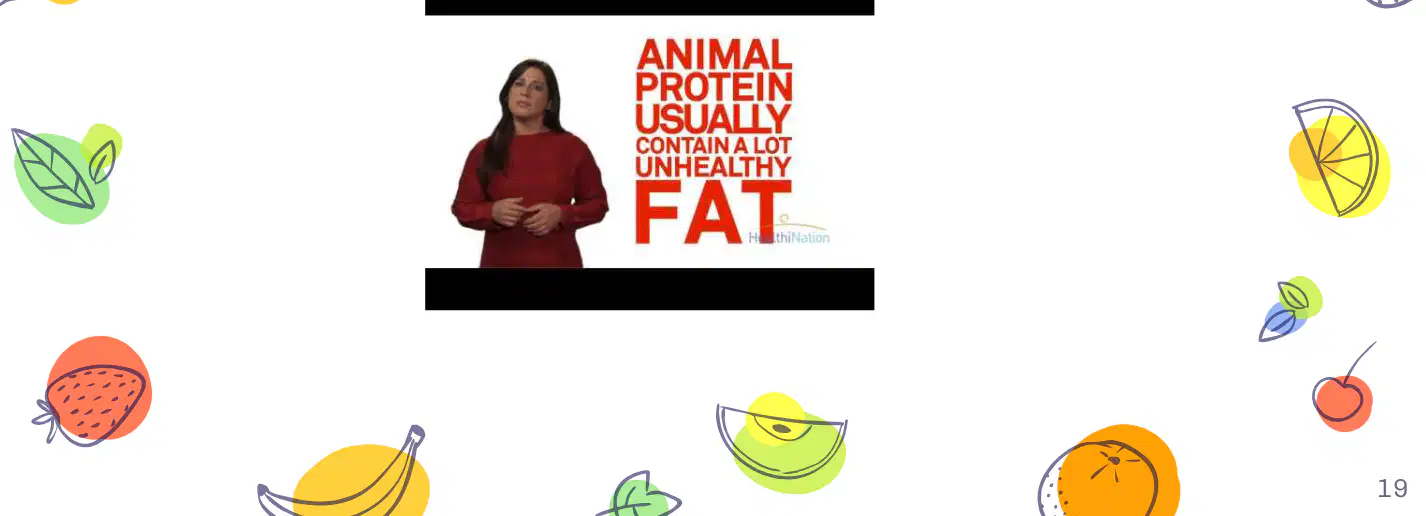
Based on the visual “Animal protein usually contain a lot unhealthy fat,” which change would most directly lower unhealthy fat from protein sources while still meeting protein needs?
Eat more processed meats for protein
Choose plant-based proteins like beans and lentils for less unhealthy fat
Pick full-fat dairy as the main protein source
Use fried chicken for protein
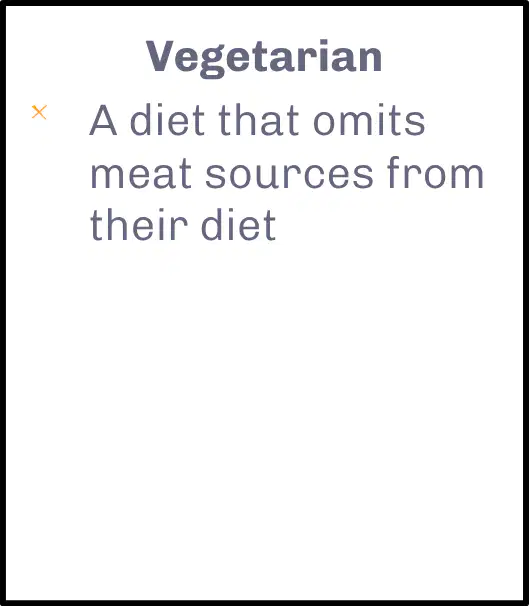
If someone stops eating meat but still eats eggs and dairy, which diet is this? How is it different from vegan?
Vegan; it omits only meat but keeps eggs and dairy
Vegetarian; it omits meat, while vegan omits all animal products including eggs and dairy
Vegan; it includes meat but excludes dairy and honey
Vegetarian; it allows meat sometimes but excludes all plant foods

