
 Worksheets
Chapter 8 Test Review
Total questions: 76
Worksheet time: 38mins
Which statement best describes the roles or beliefs of the Sadducees and Pharisees in Judaea under Roman rule?
Sadducees were scholars who strictly enforced religious law; Pharisees favored cooperation with Rome.
Sadducees were priests who favored cooperation with Rome; Pharisees were scholars who emphasized observance of religious law.
Both Sadducees and Pharisees advocated violent revolt against Rome.
Pharisees were a separatist community awaiting divine deliverance; Sadducees promoted ascetic living.
Which group lived apart from society and awaited God’s deliverance of Israel from oppression?
Zealots
Pharisees
Essenes
Sadducees
Select all statements that accurately describe the Zealots based on the lesson.
They promoted cooperation with Roman authorities to preserve religious traditions.
They took a violent approach to overthrow Roman rule.
They began a Jewish revolt in 66 A.D. but were crushed by the Romans four years later.
They focused on scholarly interpretation of religious law and avoided political conflict.
Which outcome followed the Jewish revolt mentioned in the lesson?
Rome granted Judaea limited self-rule and rebuilt the Temple.
The Romans destroyed the Jewish Temple and reasserted their supremacy.
The Essenes took control of Jerusalem and established a theocratic state.
Pharisees negotiated peace leading to lasting autonomy for Judaea.
According to the lesson, what early action by Jesus initiated a new movement among the Jews?
He organized a revolt against Rome
He traveled and preached throughout Judea and Galilee
He abolished the Law and the Prophets
He established churches in Rome and Athens
Which statement best explains why the rise of Christianity gained additional support according to the lesson?
Reports that Jesus overcame death encouraged belief
Roman prefects mandated conversion
Jewish leaders endorsed the new faith
Trade routes spread Greek philosophy to Judea
Which concept summarizes Jesus’s stated mission in this lesson?
To abolish the Jewish Law and the Prophets
To complete the salvation promised to Israel
To secure political independence from Rome
To establish a new legal code for Judea
Which Christian concepts highlighted in the lesson later influenced western civilizations?
Humility
Charity
Love toward others
Military conquest
Which official ordered Jesus’s death by crucifixion according to the lesson?
Herod Antipas, a tetrarch
Pontius Pilate, a prefect
Julius Caesar, a dictator
Caiaphas, a high priest
What location is identified as the site of Jesus’s crucifixion in the lesson?
The Mount of Olives
The Temple Mount
Golgotha, ‘the Place of the Skull’
Bethlehem, the city of David
After Jesus’s death, what did his followers claim and believe according to the lesson?
He rose from the dead and appeared to them
He was the Messiah (anointed one)
He would deliver Israel from oppression and begin an age of peace and prosperity
He had intended to abolish the Law and the Prophets
In the crucifixion sequence described, which detail confirmed Jesus’s death?
A public proclamation by Pilate
The removal of the crossbeam
A Roman soldier pierced his side with a spear
The tearing of the temple veil
Which pair of leaders is credited in the material with spreading the message of Jesus to both Gentiles (non-Jews) and Jews?
Simon Peter and Paul
James and John
Augustus and Tiberius
Nero and Constantine
According to the lesson, what was the core message early Christians proclaimed about Jesus?
He was a wise teacher whose ideas should be debated
He was the son of the one true God and savior who came to Earth to save humanity
He was a revolutionary seeking political power in Rome
He was a prophet who sought to restore the Roman temples
By around 100 AD, what development regarding Christianity is emphasized in the text?
It remained confined to a single city
It had spread to most major cities in the east
It became the official religion of Rome
It was banned throughout the empire
In the context of this lesson, who are the Gentiles?
Roman emperors who opposed Christianity
Non-Jews to whom the message of Jesus was also preached
Jewish priests who compiled the gospels
Soldiers responsible for enforcing state worship
Which statement best explains what the gospels are, as described in the material?
Letters from Roman governors about public order
Accounts known as 'good news' concerning Jesus that record his life and teachings
Philosophical essays criticizing emperor worship
Military reports from Judea during Nero’s reign
What portion of the Christian Bible do the writings about Jesus’s life and teachings form, according to the text?
The Old Testament
The New Testament
The Apocrypha
The Septuagint
Which belief did Christians hold that led them to refuse worship of state gods and emperors, according to the lesson?
Worshiping false gods would endanger their salvation
Roman rituals guaranteed prosperity
Emperor worship was a harmless tradition
The state gods were the same as the Christian God
Why did many Romans view Christianity as harmful to the Roman State, based on the material?
Christians demanded tax exemptions
Christians refused to worship state gods and emperors
Christians supported rival political parties
Christians avoided military service
According to the lesson, what was the legal consequence in Rome for refusing to worship the state gods and emperors?
A small fine
Temporary exile
An act of treason punishable by death
Mandatory military service
During whose reign did the Roman government begin persecuting Christians, according to the lesson?
Julius Caesar
Augustus
Nero
Trajan
Which event in 64 AD is highlighted as a turning point that led to Christian persecutions under Nero?
The Sack of Jerusalem
The Great Fire of Rome
The Battle of Actium
The Edict of Milan
According to the lesson, what response did Emperor Nero take after the fire that intensified persecution of Christians?
He pardoned suspected arsonists and rebuilt temples to Jewish worship
He rebuilt parts of Rome and blamed Christians, leading to persecutions
He resigned from office and fled the city
He declared Christianity the official religion
Which punishments are described as methods used against Christians under Nero? Select all that apply.
Tying victims to stakes and burning them alive as 'human torches'
Crucifixion or forced fights against wild animals in arenas
Confiscation of property only, without physical harm
Torture before execution, including beatings and floggings
Which factor helped Christianity appeal to Romans who felt distant from the state religion? Choose the best answer based on the lesson: Christianity offered a personal faith promising salvation for all people, unlike the impersonal Roman state cult focused on the good of Rome.
It required expensive initiation rites conducted by aristocrats
It promised salvation and eternal life to all people through a personal relationship with God
It mandated military service to prove devotion to the emperor
It limited membership to citizens born in Rome
According to the lesson, which statement best explains why persecution ultimately strengthened early Christianity in the second and third centuries?
Persecution eliminated all missionaries, ending doctrinal disputes
Persecution caused the church to become more organized and committed despite setbacks
Persecution forced Christians to adopt Roman state rituals
Persecution led bishops to abandon leadership roles
In the early Christian communities, which distinction correctly matches the groups and their roles?
Clergy were regular church members; laity were church leaders
Clergy were church leaders with distinct functions; laity were regular church members
Clergy and laity had identical responsibilities within churches
Laity served exclusively as missionaries while clergy avoided evangelism
Which group found Christianity particularly attractive, according to the lesson?
Only wealthy aristocrats seeking prestige
Primarily soldiers stationed on Rome’s frontiers
All classes, especially the poor and powerless
Only Roman citizens living in the city of Rome
Who carried out the last major persecution of Christians in the fourth century, and what was his conclusion?
Constantine, who decided Christianity should be outlawed permanently
Diocletian, who admitted Christianity was too strong to be blotted out by force
Theodosius, who required Christians to return to pagan rituals
Julius Caesar, who declared Christianity a mystery cult
Which imperial action best marks the turning point toward tolerance of Christianity in the Roman Empire?
The sack of Rome by foreign invaders
The Edict of Milan issued by Emperor Constantine after a vision before battle
A senate decree forbidding missionary work throughout Italy
The resignation of bishops from church leadership
Which emperor is identified as the last of the Five Good Emperors in the early decline of Rome?
Nerva
Trajan
Hadrian
Antoninus Pius
Marcus Aurelius
According to the introduction, which combination of pressures pushed the Roman Empire toward crisis in the third century? Select all that apply.
Repeated invasions encouraged by internal turmoil
Stable succession and peaceful transfers of power
Economic trouble including shortages and inflation
A decline limited to the Western Balkans only
According to the lesson, which direct effect did epidemic plague have on the Roman economy and society?
It increased urban wages by attracting migrants to cities
It caused labor shortages that weakened multiple sectors
It boosted trade by creating demand for imported goods
It led to surplus harvests due to reduced consumption
Which development in Roman military staffing is linked to the aftermath of the plague?
Recruitment of more senators into legions
Reliance on hired German soldiers with limited loyalty
Exclusive use of citizen-soldiers from Italy
Creation of a professional navy to secure grain routes
Identify the statement that best explains why crop production declined during Rome’s crisis period described in the lesson.
Farms were abandoned due to invasions or commandeered by the Roman army
Farmers shifted to luxury goods instead of grains
Droughts permanently ended agriculture in Italy
Imperial policy banned rural markets
Which reform created a new governmental structure known as the Late Roman Empire?
Julius Caesar’s dictatorship
Augustus’s principate
Diocletian and Constantine’s reforms
Hadrian’s consolidation
What was Diocletian’s solution to the problem of governing a very large empire?
Centralize power in Rome alone
Divide the empire into east and west and implement a tetrarchy
Grant independence to frontier provinces
Replace emperors with elected governors
Select the accurate descriptions of the tetrarchy under Diocletian. Select 2 that apply
Rule by four individual rulers
Diocletian remained the ultimate ruler
Abolition of eastern and western divisions
Elected leaders chosen by the Senate
Which statement about Constantine from the lesson is accurate?
He ruled from 306–337 A.D. and expanded Diocletian’s policies
He reversed the tetrarchy and restored city-state rule
He abolished all price controls and taxes
He ended monotheistic religion in the empire
Which institutions were enlarged by the political and military reforms of Diocletian and Constantine?
The civil service and the army
The Senate and the guilds
The temples and the navy
The universities and the courts
According to the lesson, why did Roman currency begin losing its value during this reform period?
The empire stopped minting coins entirely
Population growth outpaced resources
The expanded army demanded more revenue than the tax base could provide
Foreign traders flooded markets with counterfeit currency
What was the primary aim of Diocletian’s Price Edict of 301, and what was its outcome?
To reduce unemployment; it immediately created jobs across the empire
To fight inflation by setting wage and price controls; despite severe penalties, it failed to work
To promote free markets; it eliminated all tariffs successfully
To stabilize currency by banning silver coins; it permanently strengthened the economy
Which city did Constantine choose as the site for his new capital, later renamed Constantinople (“New Rome”)?
Athens
Byzantium
Alexandria
Carthage
Why was the location of Constantinople strategically selected according to the lesson text?
It was centrally located in the Italian peninsula for trade.
It offered defensive protection on the eastern frontier bordering the Black and Mediterranean Seas.
It had abundant silver mines that funded the army.
It was the birthplace of Julius Caesar, giving it symbolic value.
Multi-select: Which features are explicitly mentioned as part of Constantinople’s grandeur? Select two that apply
Large palaces
A vast amphitheatre like the Hippodrome
Massive aqueducts serving all of Greece
A desert fortress outside the city walls
Who deposed the young Roman emperor Romulus Augustulus in 476, signaling the end of the Western Roman Empire?
Attila the Hun
Alaric the Visigoth
Odoacer
Theodoric the Ostrogoth
Multi-select: According to the lesson, which outcomes followed the fall of the Western Roman Empire in 476? Select all that apply.
Germanic kingdoms replaced western imperial rule.
The Eastern Roman Empire lasted for another thousand years in part by withstanding invaders.
Rome immediately regained control over Spain and Gaul.
Constantinople was abandoned as a capital.
Which statement best defines a bishopric (also called a diocese) as described in the lesson?
A monastic community independent of local churches
A group of Christian communities and parishes under the leadership of a bishop
A single parish led by a priest
A political district ruled by a secular governor
In the church hierarchy described, who directed multiple bishoprics joined together?
Archbishop
Patriarch
Deacon
Emperor
What claim did the bishop of the Roman church later make regarding leadership within Western Christianity?
He was leader of monastic orders only
He was the leader of the entire western Christian Church
He was subordinate to the bishops of Jerusalem and Alexandria
He was merely a local parish priest
According to church tradition presented, what connection links Peter to Rome and later papal authority?
Peter founded the Papal States
Peter was the chief apostle and first bishop of Rome
Peter wrote the first complete church law code
Peter crowned the first emperor
Which term originates from the Latin word meaning “father” and became the title for the bishops of Rome considered Peter’s successors?
Patriarch
Deacon
Pope
Abbot
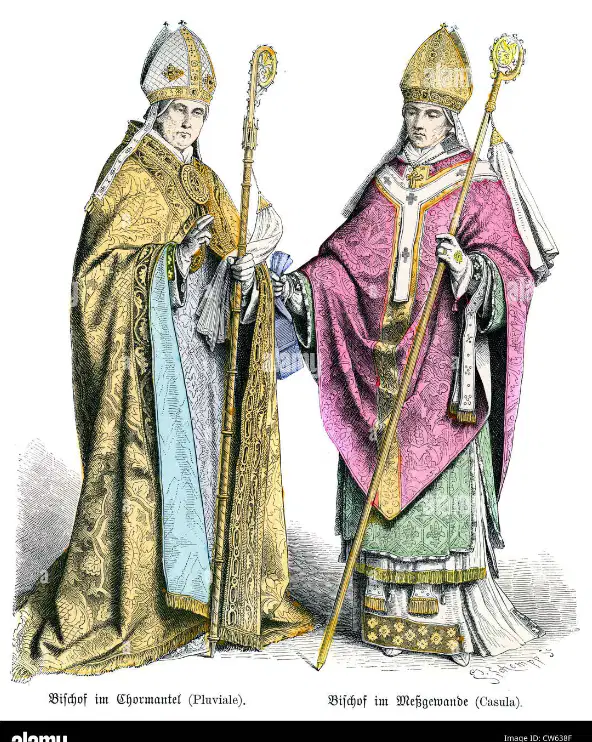
Based on the painting of bishops, identify the office symbolized by ornate vestments and a pastoral staff. Use the image to infer the role.
Priest
Bishop
Monk
Deacon
What was a key political consequence of Gregory I taking control of Rome and its surrounding territories?
It dissolved the church’s hierarchy of bishops and archbishops
It created the papal-states, giving the papacy a source of political power
It ended missionary work among Germanic peoples
It transferred authority to secular city councils
According to the lesson, what best defines a monk in the early Christian tradition?
A religious leader who governs local churches
A man who separates himself from ordinary human society to dedicate himself to God
A traveling preacher who spreads Christianity across cities
A scholar who studies ancient texts within universities
Which term refers specifically to the practice of living the life of a monk?
Asceticism
Clericalism
Monasticism
Evangelism
Who headed monasteries in the early Christian church?
Bishops
Priors
Abbots
Deacons
According to the lesson, why was physical work required under the Benedictine Rule?
To prepare monks for military service
Because idleness was considered "the enemy of the soul"
To increase agricultural production for local markets
To qualify monks for civic leadership roles
Which practices were central to daily life in Benedictine monasteries? Select all that apply.
Gathering seven times a day for prayer and chanting of the Psalms
Taking a vow of poverty within the monastery
Election of abbots by local townspeople
Combining study with hospitality and care for the sick
Which services did monasteries provide to society, according to the lesson?
Tax collection and law enforcement
Schools for the young, hospitality for travelers, and hospitals for the sick
Market regulation and trade licensing
Military training and defense
What role did monasteries play in preserving knowledge for European civilizations?
They produced legal codes for kingdoms.
They served as places of learning where monks passed on the legacy of the ancient world.
They focused solely on prayer without scholarly activity.
They restricted access to texts to prevent cultural change.
By the 9th century, what major educational activity were Benedictine monks engaged in?
Translating Greek plays into vernacular languages
Copying manuscripts in a scriptorium
Printing books using movable type
Composing royal charters for kings
Which role is defined as a person sent out to carry a religious message, contributing to the spread of Christianity across Europe?
Abbess
Missionary
Scribe
Pilgrim
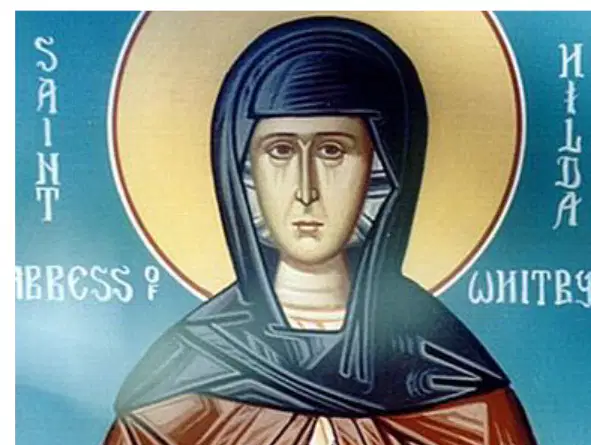
According to the lesson, which statements about women in the monastic missionary movement are accurate? Select all that apply.
Women became nuns to dedicate themselves to God.
Convents were led by abbesses.
Nuns focused exclusively on domestic crafts and avoided religious study.
Nuns established convents across Europe, including Germany and Northumbria.
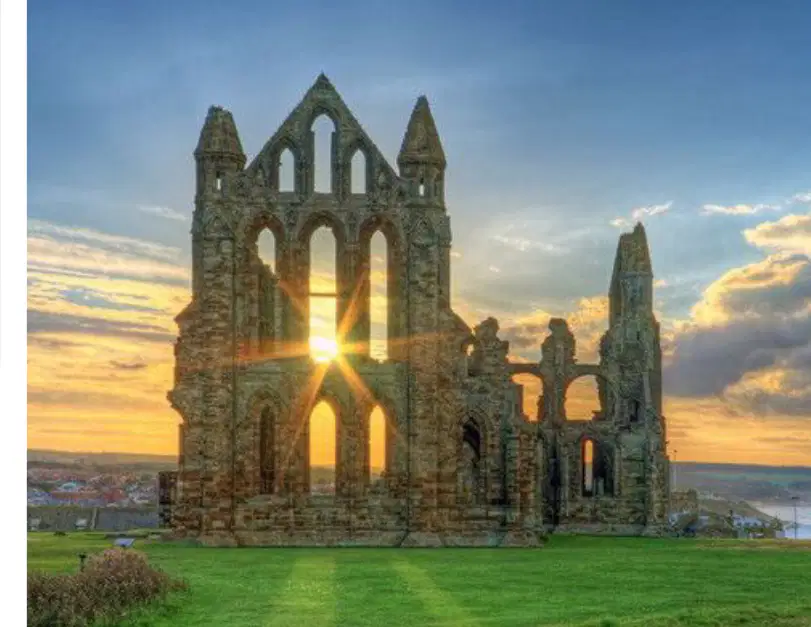
Who founded the monastery of Whitby, and in what year was it established?
Bishop Aidan in 635
Saint Benedict in 529
Abbess Hilda in 657
Pope Gregory I in 590
What is the best definition of an abbess based on the material?
A female missionary who travels between monasteries
The leader of a convent, essentially a monastery for women
A noble patron who funds monastic building projects
A master scribe overseeing manuscript copying
Which combination best captures monasteries’ dual impact as described in the section?
Preserving texts through manuscript copying and spreading Christianity via missionaries
Organizing military campaigns and hosting royal courts
Developing printing presses and establishing universities
Controlling trade routes and minting coins
According to the lesson, which Germanic leader established a long-lasting Frankish kingdom and became the first Germanic ruler to convert to Catholic Christianity around the year 500?
Theodoric of the Ostrogoths
Alaric of the Visigoths
Clovis of the Franks
Charlemagne of the Carolingians
During a battle with another Germanic tribe, Clovis reportedly vowed to believe in Jesus Christ and be baptized if granted victory. What immediate outcome is emphasized in the lesson as resulting from this episode?
He negotiated a peace treaty with the Ostrogoths.
He converted to Catholic Christianity and strengthened his rule.
He founded monasteries across Spain.
He retreated from warfare and abdicated the throne.
Select the statements that accurately describe Clovis’s impact on the Franks and his kingdom, according to the lesson.
He unified the Franks by defeating Germanic tribes.
His conversion aligned his rule with Catholic Christianity.
He expanded the kingdom to include the Eastern Roman Empire.
After his death, his sons divided the kingdom into three major areas.
According to the lesson, what social change occurred as Germans and Romans interacted over time?
They kept strictly separate communities with no intermarriage
They intermarried and began to create new people
Romans fully adopted Germanic law while Germans rejected Roman customs
Germans migrated back to Scandinavia to avoid Roman influence
Which statement best describes Germanic family structure as presented in the lesson?
Women shared equal decision-making with men and led military defense
Males were dominant, made decisions, and offered protection for the family
Children were legally independent from parents by age 10
Elders formed councils that overruled family heads in daily matters
In Germanic law, what was the wergild?
A ritual of public confession used to determine guilt
A warrior oath taken before battle
A fine paid by the wrongdoer to the victim’s family for murder
A land grant given to families for loyal service
Select all features that accurately describe the Germanic ordeal as explained in the lesson.
It was a method to determine guilt through a physical trial
It relied on the belief that divine intervention would protect the innocent
It required monetary compensation similar to the wergild
It was conducted exclusively by Roman judges
Why couldn't the toilet paper cross the road?
Because it was flushed with fear
Because it got stuck in a crack
Because it was on a roll
Because it didn't want to get wiped out

