
 Worksheets
CPR 3
Total questions: 100
Worksheet time: 50mins
What can excessive exposure to heat or high external temperatures lead to?
A life-threatening emergency
Mild discomfort only
Improved physical strength
Better sleep quality
What are heat cramps caused by?
Exposure to heat resulting in the loss of water and salt through perspiration.
Lack of physical activity during hot weather.
Consuming cold drinks rapidly in the sun.
Wearing loose clothing in hot environments.
Which of the following is NOT a symptom of heat exhaustion?
Pale and clammy skin
Profuse perspiration
High fever
Dizziness and/or fainting
What is an important first aid step for treating heat exhaustion?
Move the victim to a cooler area, loosen or remove excessive clothing, apply cool, wet cloths, lay the victim down, and elevate the victim's feet 12 inches.
Give the victim hot drinks and keep them in direct sunlight.
Encourage vigorous physical activity to increase circulation.
Wrap the victim in warm blankets and provide caffeinated beverages.
If heat exhaustion is not treated, it can develop into heat stroke.
True
False
Which of the following is NOT a step in providing first aid for heat exposure according to Procedure 17:7?
E) Provide care to the victim.
C) Ignore bleeding and do not control it.
D) Call emergency medical services (EMS) if necessary.
B) Check the victim for consciousness and breathing.
A) Check the scene and move the victim only if absolutely necessary.
What is the recommended action if the victim is experiencing heat cramps?
Apply cold packs to the victim's wrists.
Use your hand to apply firm pressure to the cramped muscle(s).
Move the victim to a warm area.
Encourage the victim to exercise.
Fill in the blank: If the victim is alert and conscious and is not nauseated or vomiting, give him or her small sips of _______ or an electrolyte solution such as a sport drink. Encourage the victim to drink approximately 4 ounces every 15 minutes.
cool water
hot coffee
carbonated soda
milk
Heat stroke is caused by prolonged exposure to high temperatures and is a medical emergency.
True
False
Which of the following is a sign of heat stroke?
Pale and clammy skin
Red, hot, and dry skin
Perspiring excessively
Weakness and dizziness
Fill in the blank: Treatment for heat stroke is geared primarily toward ways of _______ the body quickly, because a high body temperature can cause convulsions and/or death in a very short period of time.
cooling
heating
hydrating
exercising
After victims have recovered from any condition caused by heat exposure, they must be warned to avoid abnormally warm or hot temperatures for several days.
True
False
What is the first step you should take if a victim has heat stroke?
Give them water
Move the victim to a cool area, if at all possible
Call for help
Remove excessive clothing
Which of the following is a sign of hypothermia?
Sweating
Shivering
High body temperature
Rapid breathing
Fill in the blank: Frostbite is actual freezing of tissue fluids accompanied by damage to the skin and underlying tissues. It is caused by exposure to ______ or below-freezing temperatures.
freezing
humid
hot
windy
Which of the following is NOT a recommended treatment for hypothermia?
A) Slowly warm the victim by wrapping in blankets
B) Remove wet clothing
C) Rapidly warm the victim
D) Give nonalcoholic, noncaffeinated liquids by mouth if fully conscious
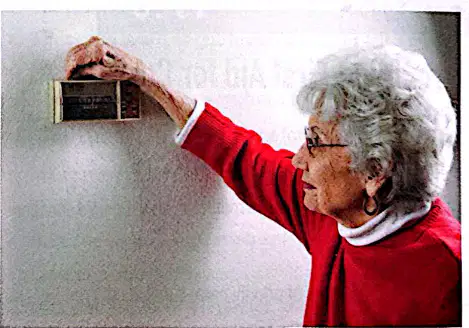
Elderly individuals are more susceptible to hypothermia than younger individuals.
True
False
Fill in the blank: If the victim complains of nausea and/or vomits during heat exposure, ______ medical help.
obtain
ignore
delay
refuse
Which of the following is a sign of frostbite?
Pale, glossy skin
Sweating
High body temperature
Rapid breathing
What is frostbite? (Refer to the image showing frostbite on toes)
Actual freezing of tissue fluids accompanied by damage to skin and underlying tissues
A mild sunburn
A type of heat rash
Swelling due to insect bite
Which of the following is NOT a recommended step when providing first aid for cold exposure?
A) Move the victim to a warm area as soon as possible
B) Rub or massage the affected parts
C) Slowly warm the victim by wrapping in blankets
D) Check the victim for consciousness and breathing
Fill in the blank: The parts affected by frostbite may be immersed in warm water at ________ (37.8°C–40°C).
100°F–104°F
80°F–85°F
60°F–65°F
120°F–125°F
Heat lamps, hot water above 104°F (40°C), or heat from a stove or oven should be used to warm frostbitten areas.
True
False
List two signs or symptoms of cold exposure that should be observed in a victim.
Shivering and pale skin
Sweating and flushed skin
Rapid pulse and high temperature
Dry mouth and increased thirst
What should you do if you see blisters forming on frostbitten skin?
Open or break the blisters
Leave the blisters intact and avoid opening them
Rub the blisters
Apply heat directly to the blisters
Fill in the blank: Medical help should be obtained as ________ as possible for a person with frostbite.
quickly
slowly
rarely
casually
What should you never use to treat frostbite according to the safety caution in Procedure 17:8?
Heat lamps
Hot water above stated temperatures
Heat from stoves or ovens
All of the above
Fill in the blank: After the body part affected by frostbite has been thawed and the skin becomes flushed, discontinue warming the area because ______ may develop rapidly.
swelling
numbness
bleeding
itching
You should rub or massage the frostbitten area to help restore circulation.
True
False
Fill in the blank: If the victim is conscious and is not nauseated or vomiting, give ______ to drink.
warm liquids
cold water
carbonated drinks
alcohol
Which of the following is NOT recommended for beverages to give a frostbite victim?
Alcohol
Caffeine
Warm broth
Water
Fill in the blank: A fracture is a break in a ______.
bone
muscle
vein
artery
Which of the following is a common sign or symptom of a fracture?
Deformity
Limited motion or loss of motion
Pain and tenderness at the fracture site
All of the above
Fill in the blank: A dislocation is when the end of a bone is either displaced from a joint or moved out of its normal position within a ______.
joint
muscle
artery
ligament
Which of the following is NOT a sign or symptom that may occur with a dislocation?
Deformity
Limited or abnormal movement
Increased appetite
Swelling
First aid for a dislocation should include immobilizing the affected part in the position in which it was found.
True
False
A sprain is an injury to the tissues surrounding a joint, usually caused when the part is forced beyond its normal range of movement.
True
False
Frequently, sprains resemble ______ or dislocations.
fractures
bruises
burns
cuts
First aid for a sprain includes which of the following steps?
Apply a cold application to decrease swelling and pain
Elevate the affected part
Encourage the victim to rest the affected part
All of the above
A strain is the overstretching of a ______; it is caused by overexertion or lifting.
muscle
bone
ligament
tendon
Which of the following is a basic principle of first aid treatment for a strain?
Encourage the victim to rest the affected muscle while providing support
Apply cold applications to reduce the swelling
Apply warm, wet applications after the swelling decreases
All of the above
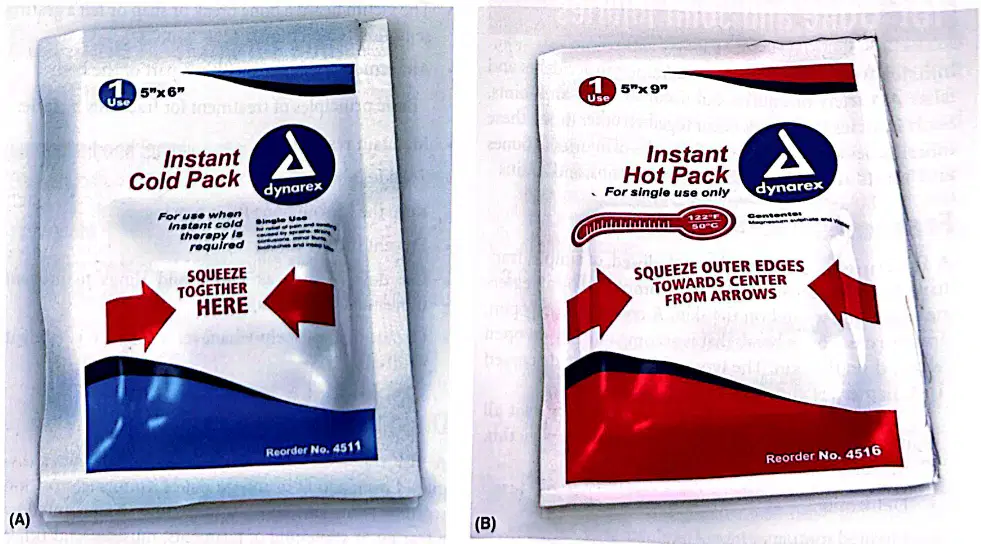
Refer to the images below. Which pack should be used for instant cold therapy?
Instant Cold Pack
Instant Hot Pack
Which of the following is NOT a reason for using a splint? Choose the correct option.
To prevent movement of injured parts
To reduce pain and swelling
To increase blood flow to the area
To prevent further injury
Fill in the blank: Splints are used to immobilize the ___ .
joint above and the joint below
injured muscle only
bone only
skin around the injury
Which type of splint uses air pressure to hold the splint over a particular site?
Traction splint
Vacuum splint
Pneumatic splint
Rigid splint
Only persons specifically trained in traction splints should apply them.
True
False
The first step in applying a splint to a fractured limb is:
Immobilize the limb in the position found
Apply ice to the fracture site
Elevate the limb above heart level
Remove any clothing from the limb
Fill in the blank: Never make any attempt to ___, as more harm may result.
replace broken bones or reduce a dislocation
apply a tourniquet to a minor wound
give water to an unconscious person
remove a bandage from a healing wound
Which of the following is a precaution to take when applying a splint?
Apply the splint tightly to stop bleeding
Leave the dressing in place and avoid disturbing it
Remove the dressing before applying the splint
Apply the splint only above the injury
The purpose of immobilizing the joint above and below the injured area is:
To prevent further injury and reduce movement
To increase blood flow to the area
To speed up the healing process by applying heat
To allow the patient to move the injured area freely
The function of vacuum pneumatic splints is:
To immobilize and support injured limbs
To increase blood flow to the injured area
To provide electrical stimulation to muscles
To reduce swelling through compression
After a splint is applied, what should be checked to ensure the splint is not too tight?
Swelling or edema
Skin temperature
All of the above
Numbness or tingling
Skin color
CAUTION: If any signs of impaired circulation or impaired neurological status are present, immediately ______ the ties holding the splint.
loosen
tighten
remove
cut
When a sling is applied to an arm, the hand should be positioned higher than the elbow. What is the purpose of elevating the hand?
To promote circulation, prevent swelling (edema), and decrease pain.
To restrict blood flow to the fingers.
To make the arm look shorter.
To increase the risk of infection.
Blue or very pale skin color indicates poor circulation when checking a limb in a sling.
True
False
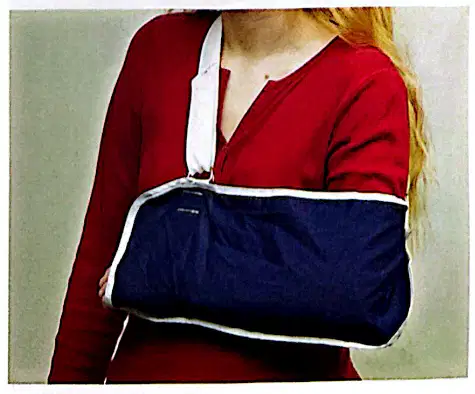
What region do the straps of commercial slings usually extend around?
Neck and/or thoracic (chest) region
Abdominal region
Pelvic region
Lower limb region
If a sling is being applied because of a suspected fracture to the bone, what should be done to minimize pain while the sling is being applied?
Take care to move the injured limb as little as possible and the victim can help by holding the injured limb in position while the sling is slipped into place.
Apply the sling quickly without considering the position of the injured limb.
Ask the victim to move the injured limb as much as possible to check for pain.
Ignore the victim's comfort and focus only on securing the sling tightly.
When shoulder injuries are suspected, it may be necessary to keep the arm next to the body and place another bandage around the thoracic region to hold the arm against the body.
True
False
What should you do if neck or spinal injuries are suspected?
Avoid any movement of the victim and wait until a backboard, cervical collar, and adequate help for transfer is available.
Move the victim immediately to a comfortable position.
Try to straighten the victim's neck to check for injuries.
Ask the victim to walk to assess their mobility.
What is the first step to follow when providing first aid for bone and joint injuries?
Call emergency medical services
Check the scene and move the victim only if absolutely necessary
Control severe bleeding
Immobilize the injured part
If neck or spinal injuries are suspected, you should avoid any movement of the victim unless movement is necessary to save the victim's life.
True
False
When controlling bleeding from an open wound with a fracture, what precaution should you take?
Use bare hands
Take care not to push broken bone ends into the wound
Ignore the bleeding
Move the victim immediately
Fill in the blank: Wear ______ or use a protective barrier while controlling bleeding.
gloves
shoes
hats
scarves
Which of the following is NOT a symptom of a fracture, dislocation, or joint injury?
Swelling
Tenderness
Increased flexibility
Limited motion or loss of motion
You should attempt to straighten a deformity or replace broken bone ends when immobilizing an injured part.
True
False
What should you use to immobilize the injured part if a bone injury is suspected?
Splints or slings
Bandages only
No support
Ice packs
To apply splints, which of the following materials can be used to improvise splints?
Blankets
Pillows
Newspapers
All of the above
Fill in the blank: Make sure the splints are long enough to immobilize the joint both ______ and ______ the injury.
above, below
inside, outside
left, right
front, back
Direct contact between the splint material and the skin should be avoided to protect bony areas.
True
False
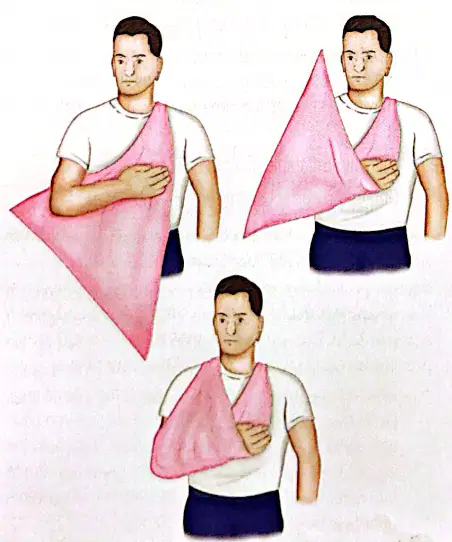
According to Procedure 17:9, what is the first step when applying a sling using a triangular bandage?
Place the bandage over the injured arm
Obtain the help of another individual to support the injured arm
Tie a knot near the neck
Pin the bandage at the elbow
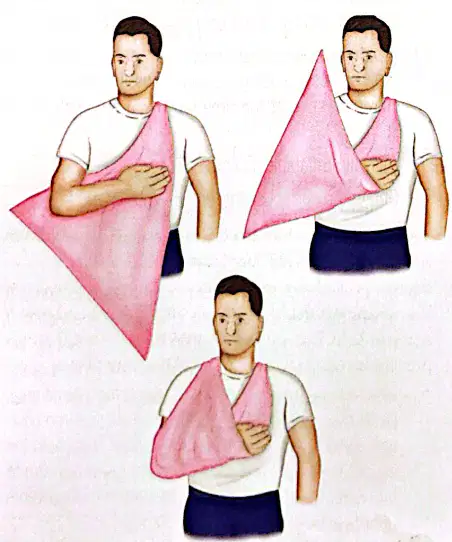
Fill in the blank: When positioning the sling, avoid excessive movement of the ______ limb.
injured
healthy
upper
lower
Which of the following is a sign of poor circulation after splints and/or slings have been applied?
Skin should be warm to the touch
Swelling
Pink color returns to nail beds immediately
No numbness or tingling
Fill in the blank: If circulation is good, the pink color will return to the nail beds ______ after pressure is released.
immediately
after 5 minutes
after 1 hour
after 24 hours
According to the instructions, if you note any signs of impaired circulation after applying a splint or sling, you should:
Loosen the splint or sling and seek medical attention.
Tighten the splint or sling further.
Ignore the signs and continue monitoring.
Remove the splint or sling immediately.
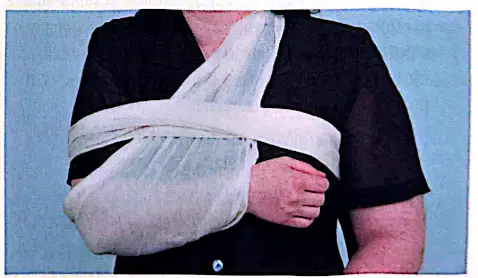
If a shoulder injury is suspected, what type of bandage should be used to secure the arm against the body to stabilize the shoulder joint?
Triangular bandage
Long bandage
Elastic bandage
Gauze bandage
Which of the following is a sign of impaired circulation in a victim with a bone or joint injury?
Redness around the lips
Cyanotic (bluish) tinge around the lips or nail beds
Swelling of the hands
Excessive sweating
To prevent injury to the skin when applying an ice bag to a bone or joint injury, what should you do?
Apply ice directly to the skin
Cover the ice bag with a towel or other material
Use hot water instead
Leave the ice bag uncovered
Fill in the blank: If a neck or spinal injury is suspected, avoid any _________.
movement
talking
breathing
eating
When providing first aid for bone and joint injuries, you should always avoid unnecessary movement of the victim.
True
False
What is the top priority of first aid care for eye injuries?
Provide major treatment
Obtain medical help, preferably from an eye specialist
Use home remedies
Ignore the injury
Which of the following should you NOT do if a foreign object is embedded in the eye tissue?
Use water to gently flush the eye
Use a piece of sterile gauze to gently remove the object
Attempt to remove the object if embedded
Tell the victim to look down and tilt their head toward the injured side
Fill in the blank: If an object is protruding from the eye, make no attempt to remove the object. Rather, support it by ________ applying dressings.
loosely
firmly
tightly
directly
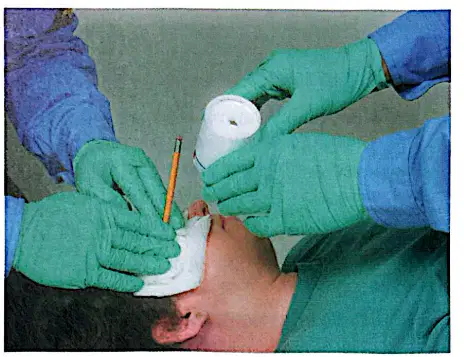
What is the recommended position for a victim with an injured eye to prevent fluids from draining out of the eye?
Sitting upright
Lying flat on his or her back
Standing
Lying on the stomach
When treating wounds of the ear, what should be applied to control bleeding?
Cold compress
Sterile dressings with light pressure
Bandage
Cotton swab
You should put liquids into the ear if the eardrum is ruptured or perforated.
True
False
Clear or blood-tinged fluid draining from the ear can be a sign of ______ or brain injury.
skull
lung
spinal cord
heart
What is a common sign of brain injury?
Loss of appetite
Clear or blood-tinged cerebrospinal fluid draining from the nose or ears
Increased energy
Dry mouth
When treating a nosebleed, what position should the victim be placed in?
Lying flat
Sitting with the head leaning slightly forward
Standing with head tilted back
Lying on the stomach
If the victim loses consciousness, you should note how long the victim is unconscious and report this to emergency rescue personnel.
True
False
What is the first step to control bleeding from the nose?
Apply pressure to the bleeding nostril toward the midline
Insert a cotton ball into the nostril
Apply a cold compress to the bridge of the nose
Refer for medical assistance immediately
If both nostrils are blocked, tell the victim to breathe through the mouth.
True
False
Fill in the blank: Wear gloves or use a protective barrier to avoid contamination from _______.
blood
water
dust
paint
Which of the following should NOT be used to stop nosebleeds because the fibers will shed and stick?
Cotton balls
Gauze
Aluminum foil
Wet cloth
What type of chest injury is described as an open chest wound that allows air to flow directly in and out with breathing, causing the lung on the injured side to collapse?
Penetrating injury
Sucking chest wound
Crushing injury
Abdominal injury
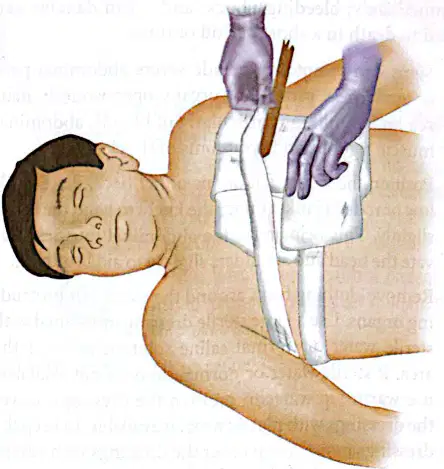
Figure 17-39 shows how to immobilize an object protruding from the chest. What is the correct procedure?
Remove the object immediately
Place dressings around the object and tape the dressings in place
Apply pressure directly to the object
Ignore the object and focus on breathing
Fill in the blank: Abdominal injuries can damage internal organs and cause bleeding in major ______ vessels.
blood
nerve
bone
air
Which of the following is a sign of severe abdominal pain or injury?
Excessive thirst
Protruding organs
Headache
Rash
You should attempt to reposition protruding organs when providing first aid for abdominal injuries.
True
False
Fill in the blank: When treating a victim for shock, you should elevate the head and shoulders slightly to aid ________.
breathing
digestion
hearing
vision
Which item should be used to cover dressings to keep them moist and warm?
Plastic wrap
Aluminum foil
Folded towel
All of the above

