
 Worksheets
Remember, Remember the 5th of November: An Introduction
Total questions: 74
Worksheet time: 37mins
According to the rhyme shown, which date is emphasized as significant for the Gunpowder Plot?
31st of October
5th of November
25th of December
1st of January
In the rhyme excerpt, what was the intended target of the plot mentioned?
To raid the royal treasury
To blow up the king and Parliament
To kidnap the monarch
To burn the Tower of London
Which phrase from the rhyme captures its purpose of warning against forgetting the event? Select all that apply.
"I see no reason why gunpowder treason"
"Should ever be forgot"
"By God's mercy he was caught"
"Let the bells ring"
Based on the rhyme, how was the conspirator discovered?
Tracked by carrier pigeons
Caught with a dark lantern and lighted match
Arrested at sea while escaping
Identified by a royal proclamation
The rhyme refers to 'three score barrels were laid below.' What does 'three score' mean in this context?
20 barrels
30 barrels
60 barrels
100 barrels
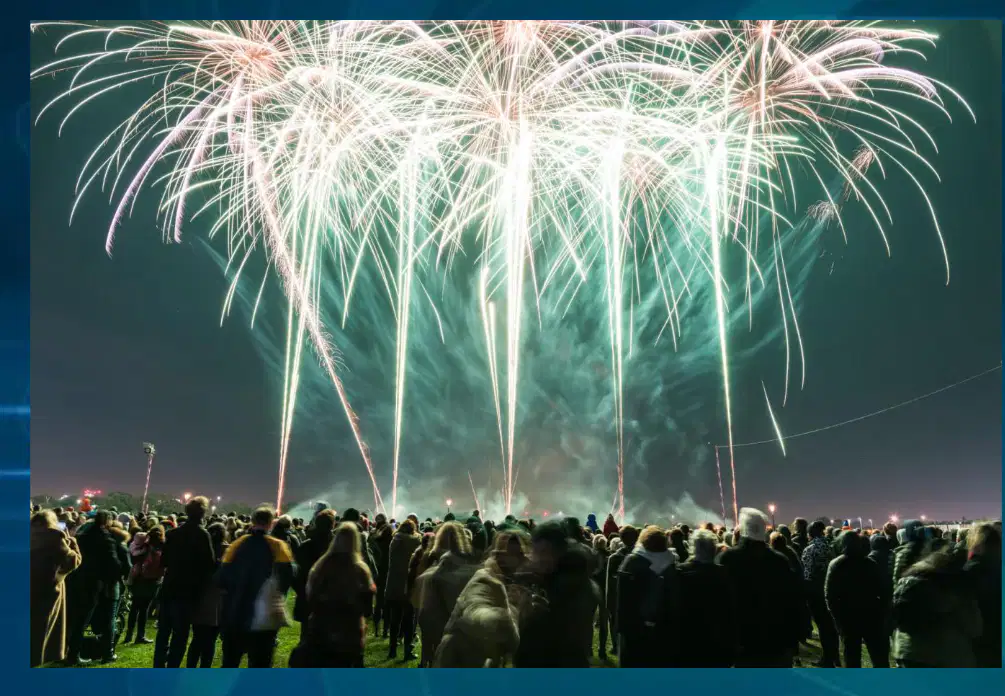
Which celebration is visually associated with the 5th of November in the material?
Harvest Festival
Bonfire Night with fireworks
May Day parade
Remembrance Sunday ceremony
What central question is posed in the introduction to engage readers about the historical context?
Why do people celebrate summer solstice?
Who was Guy Fawkes and why is the 5th of November iconic?
How did Britain win the Battle of Hastings?
What caused the Great Fire of London?
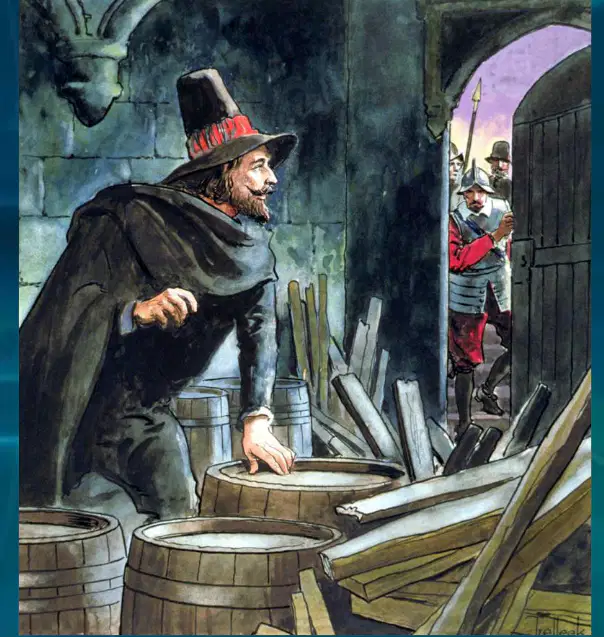
From the visual depiction of the cellar scene, what was Guy Fawkes shown doing?
Writing a letter to Parliament
Guarding barrels in a cellar
Planting a flag on a hill
Negotiating with soldiers
Which key concepts are directly reinforced by the rhyme and images provided? Select all that apply.
Gunpowder Plot
Guy Fawkes Night
Industrial Revolution
5th of November rhyme
According to the introduction passage, what common modern symbol has made Guy Fawkes widely recognizable?
A royal crest
A commemorative coin
A distinctive mask
A national anthem verse
According to the passage, when was Guy Fawkes born?
13 April 1570
5 November 1605
23 January 1560
13 April 1670
Which ruling house was in power at the time of Guy Fawkes’ birth, and which monarch is specifically mentioned?
Plantagenet dynasty under King Richard III
Stuart dynasty under King James I
Tudor dynasty under King Henry VIII
Hanoverian dynasty under King George I
What change in religious affiliation did Guy Fawkes make at age 16?
Converted from Catholicism to Protestantism
Remained a Protestant without change
Converted from Protestantism to Catholicism
Adopted Puritanism from Anglicanism
Which foreign power did Guy Fawkes fight for, and what nickname did he acquire during this period?
France; "Jean"
Catholic Spain; "Guido"
The Dutch Republic; "Willem"
Portugal; "Fernando"
The conflict abroad in which Guy Fawkes participated is identified as which war?
The Thirty Years’ War
The English Civil War
The Eighty Years’ War
The War of the Spanish Succession
What happened when Guy Fawkes was arrested in London and asked to confirm his identity?
He immediately admitted his identity and signed as Guy Fawkes
He refused to sign and was released without penalty
He initially refused, but after torture he signed using the name "Guido"
He denied involvement and signed with a false alias unrelated to "Guido"
Which statements accurately describe Guy Fawkes’ early life and actions? Select all that apply.
He was born on 13 April 1570 during the Tudor dynasty.
He converted to Catholicism at age 16 after being born Protestant.
He fought on the side of Catholic Spain and was nicknamed Guido.
He participated in the War of the Spanish Succession.
In the passage, Catholicism is characterized in England at the time of Guy Fawkes’ conversion as what?
A dominant state religion widely accepted
A troubling religion viewed with suspicion
A newly formed sect with little following
An underground movement with no political implications
Based on the description, what event does Bonfire Night commemorate?
A successful fireworks festival organized by London
The foiling of a plan by Guy Fawkes and others to blow up the Houses of Parliament
The coronation of King James I at Westminster
A peaceful protest by Catholics for religious tolerance
Which practice is specifically mentioned as part of Bonfire Night celebrations?
Lighting candles inside Parliament
Burning an effigy of Guy Fawkes and launching fireworks
Marching from London Bridge to Westminster
Reading a royal proclamation from King James I
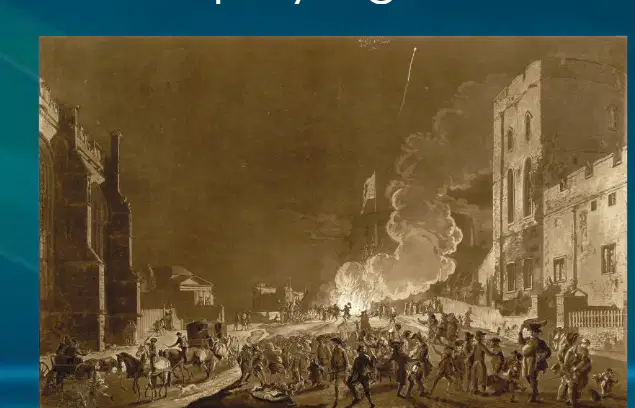
Identify the location targeted in the plot described in the material.
Tower of London
Buckingham Palace
Houses of Parliament in London
St Paul's Cathedral
According to the section, who is named as the real mastermind behind the Gunpowder Plot?
Guy Fawkes
Robert Catesby
Oliver Cromwell
Sir Francis Bacon
Why did Robert Catesby organize the conspiracy, according to the text?
He wanted to celebrate Bonfire Night with fireworks
He was angry about how King James I treated Catholics
He sought a promotion within the government
He planned to defend Parliament from invasion
What role did Guy Fawkes play in the conspiracy as described?
He devised the plan and recruited conspirators
He negotiated with King James I for religious reforms
He served as the explosives expert responsible for lighting the fuse
He acted as the messenger to Parliament
Which statements about the Gunpowder Plot are supported by the material? Select all that apply.
Robert Catesby assembled a group to attempt a massive explosion
Guy Fawkes was the leading mastermind of the plot
The goal was to take out the king and most of the government
Guy Fawkes joined because of experience with explosives as a soldier
According to the description of Bonfire Night, what do some people enjoy about the celebration in London?
Listening to speeches outside Parliament
Watching numerous fireworks displays light up the night sky
Participating in a reenactment inside Westminster Hall
Viewing a parade of royal guards across the city
According to the passage, how many barrels of gunpowder were smuggled into a cellar beneath the Houses of Parliament during the Gunpowder Plot?
24 barrels
30 barrels
36 barrels
40 barrels
What tactic did the plotters use to avoid suspicion while moving gunpowder into the cellar under Parliament?
They disguised the barrels as food supplies for the royal kitchens.
They rented the cellar as if storing old furniture.
They smuggled the barrels through secret tunnels at night.
They bribed guards to look the other way.
Which statement best captures the scale of the planned explosion described in the passage?
It would cause minor damage limited to one room.
It was enough to blow the entire place sky-high and more.
It would only damage the cellar but leave Parliament intact.
It was expected to scare officials without harming anyone.
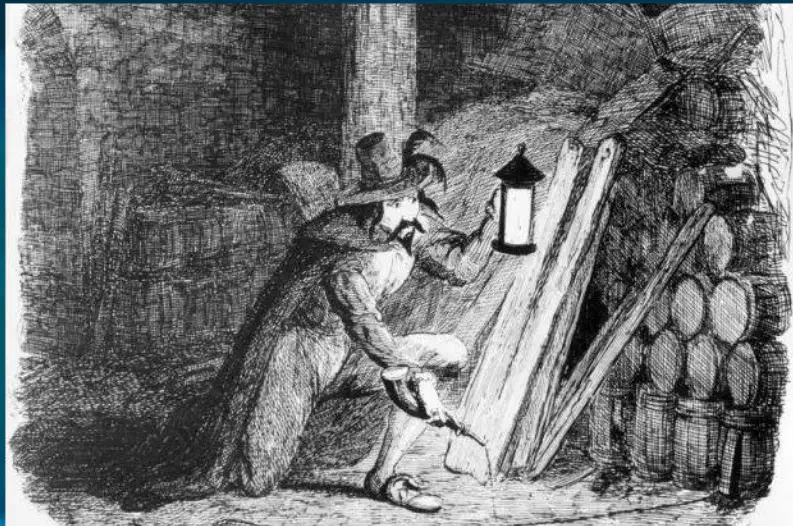
Based on the illustration described, who is shown in the cellar near stacked barrels, holding a lantern? Use the visual to identify the figure connected with the gunpowder.
King James I
Lord Monteagle
Guy Fawkes
Francis Tresham
Who is thought to have sent the warning letter to Lord Monteagle that led to the discovery of the plot?
Guy Fawkes, worried about being caught
Robert Catesby, seeking a pardon
Francis Tresham, concerned for his brother-in-law
Thomas Percy, trying to delay the plan
Why did Francis Tresham reportedly want Lord Monteagle warned, according to the passage?
He feared Monteagle would be arrested for treason.
He worried his brother-in-law might be blown up in the explosion.
He wanted Monteagle to join the plotters.
He believed the gunpowder would spoil without action.
What was Lord Monteagle’s response upon receiving the letter?
He burned the letter to protect the plotters.
He hid the letter and warned only his family.
He showed the letter to the authorities, prompting a search.
He ignored the letter as a prank.
During the search of the cellars triggered by Monteagle’s letter, who did the king’s men find, and what was he guarding?
Guy Fawkes, with gunpowder ready to ignite
Robert Catesby, with plans for a getaway
Francis Tresham, carrying the warning letter
Lord Monteagle, inspecting the barrels
According to the account, what was Guy Fawkes doing in the cellar on the night of November 4th, 1605 when he was discovered?
Preparing to light the fuse to explode Parliament the next day
Hiding stolen royal jewels from the Tower of London
Meeting secretly with the king’s advisors
Writing a confession about the plot
When arrested, which alias did Guy Fawkes give to the guards?
Tom Percy
John Johnson
Robert Catesby
Christopher Wright
Which items were found with Guy Fawkes at the time of his arrest, indicating he was ready for the plot?
Fuse
Matches
Royal warrant
Gunpowder
Where was Guy Fawkes taken after being caught with gunpowder?
The Palace of Whitehall
The Tower of London
Newgate Market
Westminster Abbey
What was the king’s main goal during Fawkes’s interrogation after his arrest?
To negotiate Fawkes’s release
To learn who else was involved in the plot
To recruit Fawkes as a royal guard
To punish Fawkes for stealing money
Which torture method mentioned was commonly used and could pull a prisoner’s body apart?
The stocks
The pillory
The rack
The dunking chair
What evidence suggests Guy Fawkes endured days of pain during interrogation?
His detailed diary of suffering
Witness accounts of his laughter
His confession signature was notably poor
A royal medal awarded for bravery
What was the outcome of Guy Fawkes’s torture and interrogation?
He escaped from the Tower of London
He refused to speak and was released
He confessed and revealed the names of fellow plotters
He was pardoned by the king and sent home
According to the passage, what punishment was given to those found guilty of treason in Guy Fawkes’ time?
Beheading alone
Imprisonment for life
Hanging, drawing, and quartering
Exile to the colonies
What happened at Guy Fawkes’ trial after the Gunpowder Plot was foiled?
He was acquitted due to lack of evidence
He was found guilty of treason along with other plotters
He confessed but was offered royal pardon
The trial was postponed indefinitely
How did Guy Fawkes avoid enduring the full gruesome execution sentence?
He bribed the executioner to end it quickly
He was secretly rescued by allies
He jumped off the gallows and broke his neck instantly
He received a last-minute pardon from the king
Which statement best explains the origin of Bonfire Night?
A medieval harvest celebration replaced by fireworks
A yearly memorial created by Parliament to honor Guy Fawkes
A royal decision by King James I to mark his survival after the Gunpowder Plot
A church festival commemorating saints who opposed rebellion
In what year did people first begin lighting bonfires on November 5th to celebrate the king’s survival?
1603
1605
1606
1610
Which elements became part of the Bonfire Night tradition, according to the passage? Select all that apply.
Fireworks to represent the gunpowder
Burning an effigy of Guy Fawkes
Public prayers inside churches
Official military parades
What message was Bonfire Night intended to remind people of?
That political change should be peaceful
That trying to blow up the government is a terrible idea
That monarchs are chosen by divine right
That winter festivals should include communal feasts
Which event directly prompted King James I to encourage annual bonfires on November 5th?
The successful defense against a foreign invasion
The Gunpowder Plot being foiled
The coronation of Queen Anne
A great fire in London
According to the passage, what did children traditionally do during 'Penny for the Guy' to collect money?
Dress in costumes and sing door to door
Wheel straw-stuffed life-size models of Guy Fawkes and ask for a coin
Sell homemade sweets at market stalls
Perform short plays about the Gunpowder Plot
What was the typical use of the money collected during 'Penny for the Guy'?
Buying masks for a parade
Purchasing fireworks for the Bonfire Night party
Donating to church charities
Saving for winter clothing
Which description best matches the 'guy' used in the tradition?
A paper lantern carried by children
A banner with Guy Fawkes quotes
A life-size figure made from old clothes and stuffed with straw
A carved wooden effigy painted in bright colors
Select the statements that accurately describe Bonfire Night customs mentioned in the passage.
Children collected coins by showing a straw-stuffed figure
The 'guy' was burned on the bonfire at the end
The money was used to buy fireworks
Adults wore Guy Fawkes masks while marching through town
What popular culture work helped make the Guy Fawkes mask a global symbol?
A historical documentary called 'Gunpowder'
A comic book and movie titled 'V for Vendetta'
A television series about Tudor politics
A modern protest anthem released in 2005
How has the meaning of the Guy Fawkes mask changed in modern times, according to the passage?
It is now a symbol of traditional British holidays
It represents loyalty to government authority
It has become a symbol of protest and rebellion
It is mainly used for fundraising events
Which statements best capture the contrast between the historical Guy Fawkes and his modern image?
Historically, Guy Fawkes led peaceful reforms for voting rights
He was part of a violent plot, yet his mask now symbolizes standing up to authority
His legacy always centered on heroism and justice
Popular culture transformed his image through 'V for Vendetta'

In the images described, the character wearing the iconic mask appears in a dark setting and a close-up portrait. Based on the passage, what do these visuals most likely reference?
A scene from a historical reenactment of Bonfire Night
Promotional material for a charity fireworks display
The portrayal of the masked character from 'V for Vendetta'
A museum exhibit about 17th-century clothing
According to the passage, why do fireworks feature prominently in Bonfire Night celebrations?
They symbolize the gunpowder from the failed plot to blow up Parliament
They mark the end of the harvest season
They honor the coronation of a monarch
They represent victory in a recent war
Which description best captures how fireworks are portrayed in the text?
Dangerous blasts that usually cause damage
Quiet, subtle lights meant for reflection
Bright, loud displays that make the night feel magical when handled safely
Religious rituals performed in silence
In the context provided, fireworks during Bonfire Night are contrasted with which outcome of the Gunpowder Plot?
A peaceful treaty between rival factions
A scary explosion that would have caused a lot of damage
An artistic festival held in Parliament
A successful reform of voting laws
Select all statements that align with the passage’s explanation of Bonfire Night fireworks.
They are colorful and light up the sky
They directly recreate the original explosion at Parliament
They represent the gunpowder intended for the plot
They are enjoyed when people follow safety precautions
Complete the line from the famous rhyme quoted in the passage: "Remember, remember the __________ of November."
first
third
fifth
tenth
Which trio of words appears together in the rhyme to summarize the event being remembered?
Liberty, justice, peace
Gunpowder, treason, and plot
Fireworks, bonfires, and fun
Monarchy, Parliament, and law
What purpose does the rhyme serve, according to the passage?
To teach chemistry through poetry
To remind people of Guy Fawkes’ plan and how it was stopped in time
To advertise modern fireworks shows
To celebrate the successful destruction of Parliament
Which line from the rhyme expresses that the event should not fade from memory?
"I see no reason why gunpowder treason"
"Should ever be forgot!"
"Remember, remember the fifth of November,"
"Gunpowder, treason, and plot."
According to the passage, when was the planned explosion supposed to occur during the Gunpowder Plot?
During a random night in October 1605
At the State Opening of Parliament on November 5, 1605
On Christmas Day in 1605
At King James I’s coronation
Which outcome was expected if the Gunpowder Plot had not been discovered?
Only Guy Fawkes would have been injured
The king and many government leaders could have been killed
Parliament would have been relocated to a safer building
Religious tolerance laws would have been passed immediately
Why is Lord Monteagle mentioned in the description of the Gunpowder Plot’s impact?
He organized the State Opening of Parliament
He warned authorities by showing them a letter, preventing disaster
He supplied the gunpowder for the conspirators
He arrested King James I
Based on the text, which statement best explains Guy Fawkes’ main motivation?
He wanted personal wealth from government offices
He was a Catholic angry about King James I’s treatment of Catholics
He sought fame as an explosives expert
He opposed all forms of monarchy regardless of religion
Select the factors that contributed to Guy Fawkes’ anger and the decision to join the plot.
Religious tension between Catholics and Protestants in England
Unfair taxes on merchants
King James I’s policies toward Catholics
Desire to abolish Parliament entirely
What problem did Guy Fawkes believe might be solved by removing the Protestant king?
Economic recession affecting trade
Religious conflict between Catholics and Protestants
Lack of representation for rural areas
Military threats from foreign kingdoms
Which statement reflects the author’s perspective on violent solutions to political disagreements?
Blowing up the government is widely accepted as effective
Most people agree that blowing up the government is not the best way to solve disagreements
Violence is the only way to change a king’s policies
Explosions were common in 1605 politics
Which two consequences are emphasized to show how close the plot came to disaster?
The king could have been killed
Only minor damage to a storage room
Many important government figures might have died
A peaceful protest was scheduled instead

