
 Worksheets
Wound Healing: Definitions and Phases Overview
Total questions: 16
Worksheet time: 8mins
Which term describes the replacement of damaged tissue with the same type of cells, resulting in restoration of normal structure?
Regeneration
Inflammation
Proliferation
Fibrosis
Fill in the blank: (a) is the replacement of damaged tissue with dense fibroconnective tissue, commonly leading to scar formation.
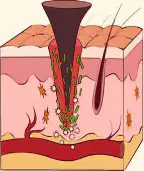
According to the diagram titled "Stages of Wound Healing," which phase is defined by the body stopping the bleeding of the wound?
Inflammation
Proliferation
Hemostasis
Remodeling
Which sequence correctly orders the four main phases of wound healing from first to last?
Inflammation → Hemostasis → Proliferation → Remodeling
Hemostasis → Inflammation → Proliferation → Remodeling
Proliferation → Remodeling → Hemostasis → Inflammation
Remodeling → Proliferation → Inflammation → Hemostasis
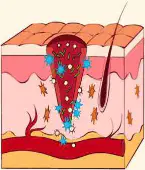
During which phase do white blood cells move to the wound to clean debris and pathogens?
Proliferation
Inflammation
Remodeling
Hemostasis
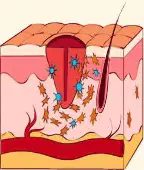
A clinician notes that new skin tissue is forming and broken blood vessels are being repaired. Based on the phases of wound healing, which phase is most consistent with this observation?
Remodeling
Hemostasis
Proliferation
Inflammation
During the hemostasis phase of wound healing, which event directly helps stop bleeding?
Vasodilation caused by histamine
Vasoconstriction and blood clotting
White blood cell phagocytosis
Collagen reorganization
Which process forms the initial plug that stabilizes a wound in hemostasis?
Platelet aggregation leading to a fibrin clot
Epithelial migration under the scab
Scar tissue maturation
Increased blood flow due to histamine
Fill in the blank: In the inflammation phase (1–4 days), (a) is released, increasing blood flow to the injured area.
Which statement best describes the primary role of white blood cells during inflammation?
They reorganize collagen to strengthen the scar.
They clean the wound as part of a non-specific response.
They produce granulation tissue under the scab.
They cause vasoconstriction to stop bleeding.
In the proliferation phase (4–21 days), which event occurs under the scab?
Collagen reorganization to mature the scar
Epithelial tissue grows to form new tissue
Platelet aggregation to initiate clotting
Histamine release to dilate vessels
Which product is emphasized as being synthesized during the proliferation phase?
Elastin
Keratin
Collagen
Fibrinogen
Match each wound healing phase to its typical timeframe.
Hemostasis: hours; Inflammation: 1–4 days; Proliferation: 4–21 days; Remodeling: 21 days–2 years
Hemostasis: 1–4 days; Inflammation: hours; Proliferation: 21 days–2 years; Remodeling: 4–21 days
Hemostasis: 4–21 days; Inflammation: 21 days–2 years; Proliferation: hours; Remodeling: 1–4 days
Which phase is most associated with collagen reorganization and scar tissue maturation?
Hemostasis
Inflammation
Proliferation
Remodeling
Fill in the blank: The pink tissue visible under a scab during healing is called (a) .
A patient’s wound shows decreased redness but a firm, reorganizing scar 30 days after injury. Which phase most likely describes this stage?
Hemostasis
Inflammation
Proliferation
Remodeling

