
NEW
Font size
 Worksheets
Arousal, Anxiety and Stress
Total questions: 10
Worksheet time: 5mins
Which statement best describes the Inverted U hypothesis in sport psychology?
Performance steadily increases as arousal rises, with no upper limit
There is an optimal range of arousal for peak performance, and performance drops if arousal is too high or too low
Low arousal always produces the best performance because it enhances concentration
High arousal consistently leads to superior performance in all sports and tasks
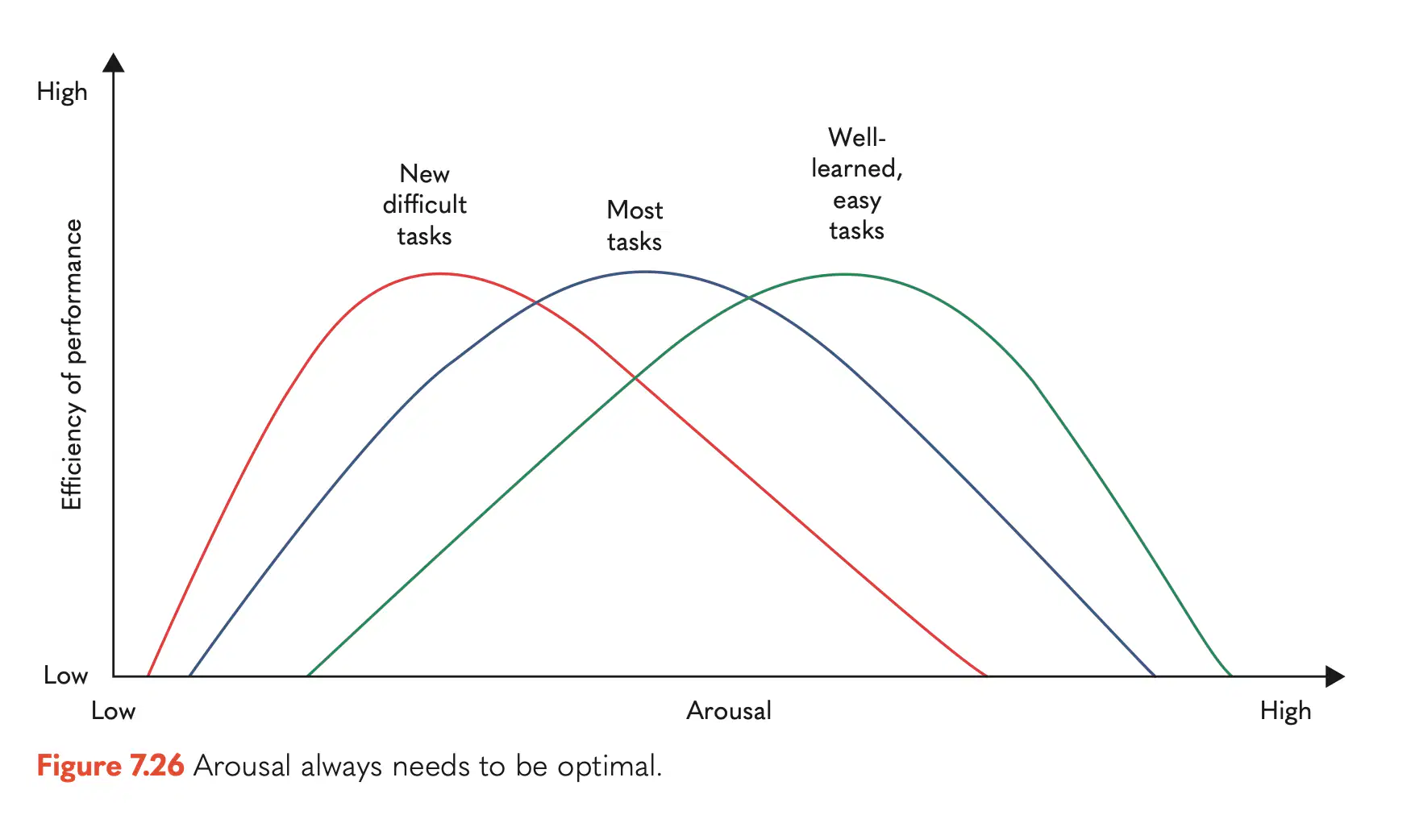
Using the graph, which task type is most likely to require lower levels of arousal to perform optimally?
Tasks demanding stamina or persistence, such as long-distance cycling
Difficult or intellectually demanding tasks that require focused concentration
Highly physical sports like rugby union or weightlifting
Any task performed by elite athletes regardless of context
Match the anxiety type to its correct definition based on the text.
Trait anxiety: feelings of anxiety related to a specific event; State anxiety: a genetic predisposition to anxiety
Trait anxiety: a genetic predisposition toward increased anxiety; State anxiety: feelings related to a specific game or event
Trait anxiety: temporary nervousness during training; State anxiety: permanent personality-based anxiety
Trait anxiety: anxiety caused by spectators; State anxiety: anxiety unique to elite athletes
An athlete learning basic skills and tactics is advised to maintain which arousal level, and why?
High arousal, to increase motivation and aggression during learning
Moderate arousal, because the Inverted U eliminates the need for adjustment
Lower arousal, to support concentration and attention while acquiring skills
Variable arousal, because learning is unaffected by arousal levels
Which statement best distinguishes trait anxiety from state anxiety in athletes?
Trait anxiety reflects a person’s general tendency to feel anxious across many situations, whereas state anxiety rises temporarily with the pressure of specific competitions.
Trait anxiety occurs only during competitions, whereas state anxiety persists throughout everyday life regardless of events.
Trait anxiety is always beneficial for performance, whereas state anxiety is always harmful.
Trait anxiety is caused by coaches’ feedback, whereas state anxiety comes only from internal thoughts.
An athlete with high trait anxiety is MOST likely to experience which outcome when entering a high-pressure elite competition?
A reduced need to control nerves because trait anxiety declines during elite events
An added mental obstacle because general anxiety proneness amplifies competitive pressure
Complete immunity to state anxiety because trait anxiety replaces it
Improved accuracy on precise skills without additional stress
Which sign is commonly reported by athletes experiencing increased anxiety?
Lower heart rate and deep relaxation before competition
Calm legs and steady pacing without restlessness
Muscle tension leading to more errors as competition intensifies
Increased confidence and self-belief regardless of doubts
In the context provided, what is the correct pairing of stress type with example?
Eustress—fear of losing in front of a large crowd
Distress—excitement from activities like bungy jumping
Eustress—positive stress from exciting circumstances that can motivate action
Distress—small amounts of stress that improve focus for an exam
Which scenario best represents an INTERNAL source of stress for an athlete?
Feeling threatened by the possibility of being dropped from the team due to personal worry patterns
A coach warning about losing sponsorship after poor performance
Performing in front of a large crowd in a championship final
A contract not being renewed by a sports organization
A tennis player serving to close out a match begins to feel ‘twitchy’ legs, persistent tension, and doubts about their ability. What is the MOST appropriate immediate performance implication based on the material?
Performance may decline due to increased errors and reduced confidence.
Performance will automatically improve because anxiety boosts focus.
Performance will remain unchanged because physical signs do not affect execution.
Performance will only suffer in endurance sports, not skill-dependent tasks.

