
 Worksheets
EMS 111 Review Week 12
Total questions: 20
Worksheet time: 35mins
What is the maximum oxygen concentration that should be delivered via a Nasal Cannula?
95%
22%
36%
44%
Which of the following conditions is not a common cause of an altered mental status?
Hypoxia
Traumatic brain injury
Hypoglycemia
Allergic reaction
A 10-year-old patient has a history of severe allergic reactions. He is currently experiencing facial swelling, urticaria, and inspiratory/expiratory wheezing that is equal bilaterally. If available, which intervention would be the most appropriate to initiate?
High-flow oxygen via a non-rebreather mask
Diphenhydramine
Inhaled beta-agonists
Epinephrine auto-injector
A frightened five-year-old boy with a patent airway requires some oxygenation but strongly resists receiving oxygen by mask. What is the most appropriate method of delivering oxygen in this case?
Do not administer oxygen to prevent anxiety
Use the blow-by technique
Hold the mask firmly over the child's face and tell them to breathe
Insert an oropharyngeal airway
A 44-year-old male presents with labored shallow breathing at 34 breaths per minute, with an oxygenation saturation of 88% on room air. He is conscious, alert, extremely restless, and irritable. His skin is cool, clammy, and slightly cyanotic. Which of the following is the most appropriate next step?
Oxygen supplementation with a non-rebreather mask and oxygen flowing at 15 LPM
Advise the patient to breathe into a paper bag
Assisted ventilations using a bag valve mask with oxygen flowing at 15 LPM
Oxygen supplementation using a nasal cannula and oxygen flowing at 6 liters per minute
Which of the following are indications for CPAP?
(select all that apply)
Bilateral rales heard upon auscultation of the lungs
Hypoventilation
Pulse Oximetry below 90% despite supplemental oxygen
Lung injury from trauma
Stridor lung sounds heard upon auscultation
A 36-year-old male patient took a large dose of heroin. He is supine and semiconscious and begins to vomit. Which of the following is the most appropriate immediate intervention?
Suction as much of the vomit as possible before resuming BVM
Insert an oropharyngeal airway
Roll the patient onto his left side
Begin BVM ventilations immediately
Your adult patient denies difficulty breathing after a known exposure to an allergen but reports hives, hypotension, and nausea/vomiting. Which of the following interventions would provide the most benefit to the patient?
Oral ondansetron
Oral diphenhydramine
Intramuscular epinephrine
Albuterol via a nebulizer
Which of the following statements regarding pediatric airways is true?
Pediatric airways are softer, meaning they are less likely to be obstructed
Pediatric patients have relatively smaller tongues
Pediatric patients rely more heavily on their diaphragm for respirations
Pediatric airways have more rigid trachea and cricoid cartilage
The primary pathological concern of bronchospasm is
Constricted airways constrict as the patient exhales, trapping air in the lungs
Constricted airways get tighter as the patient inhales, reducing air flow and making it hard to move air into the lungs
Increased mucus production causes airways to dry out, increasing inflammation
Airway swelling causes excessive oxygen absorption resulting in metabolic acidosis
Your infant patient displays intercostal or substernal muscles drawing in during inspiration, what causes this?
Increased work of breathing creates an increase in the negative pressure needed to move air into the lungs
Increased work of breathing creates an increase in positive pressure needed to move air
Abnormally deep respirations cause the muscles associated with breathing to over extend
Low oxygen saturations cause the chest muscles to constrict when breahting
Which of the following patients most meets the criteria for sepsis?
24 YOM complaining of a fever (100.2F) HR 84, BP 126/78, RR 20
60 YOF reported to be acting weird, Temp 101.4, BP 90/54, HR 114, RR 24
45 YOM with nausea/vomiting. Temp 102, HR 98, BP 118/72, RR 18
74 YOF reporting painful urination, Temp 99.2, BP 102/60, HR 114, RR 16
you are dispatched for a 3 YOF who's parents reports a bad cough that sounds "like a seal barking" along with high fever and apparent difficulty breathing. As you take the patient outside into the cool air, her breathing appears to improve. Which diagnosis is most likely
Epiglottitis
Pertussis
Croup
Pneumonia
You are dispatched for a 3-YOF who's parents report has difficulty breathing that is made significantly worse when they lay her down to bed. They also report significantly increased amounts of drooling and high fever. Which diagnosis is most likely
Epiglotitis
Pertussis
Croup
Pneumonia
Your asthmatic patient is using his albuterol inhaler and asks how the medication works. Which would you tell him?
It increased alveolar blood flow to improve oxygenation
It relaxes bronchial smooth muscle to improve airflow
It increased overall lung compliance to decrease your work of breathing
IDK, I'm just supposed to give it to you
Which of the following processes most accurately explain what is happening during an anaphylactic reaction?
Overactivation of the sympathetic nervous system causes severe hypertension, tachycardia, and widespread vasoconstriction
Widespread vasodilation and increased capillary permeability cause fluid to shift into tissues, leading to angioedema, bronchoconstriction, and hypotension
A sudden release of cortisol triggers widespread inflammation, causing rash, and airway irritation
Severe bronchial inflammation causes mucus overproduction and airway swelling, leading primarily to hypoxia without cardiovascular involvement
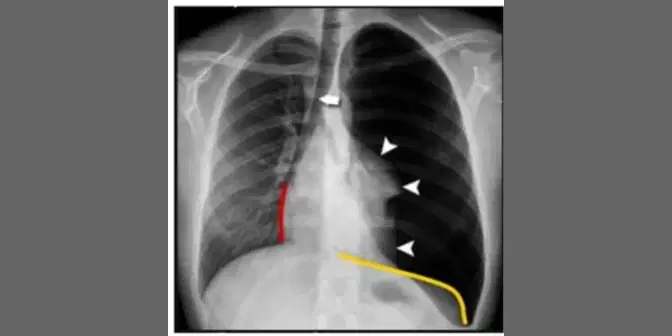
You suspect that your patient has a pneumothorax, which of the following signs/symptoms would you see latest?
Tracheal deviation
Jugular vein distension
Narrowing pulse pressures
Diminished or absent lung sounds on one side
Listen to the following lung sounds. If this is heard when a patient is inhaling, you would determine this is:
Stridor
Wheezing
Rales
Ronchi
Your 32-YOM reporting difficulty breathing with an SpO2 of 82% is on a Non-rebreather at 15LPM when you auscultate the following lung sounds. Which treatment option is the most appropriate next intervention?
Albuterol nebulizer
Assist ventilations with a Bag-valve mask device
Continue them on the non-rebreather and tansport
Place them on CPAP
Contact ALS and await further instructions
Which of the following conditions can lead to tissue hypoxia without causing cyanosis?
Airway obstruction
Hypothermia
Anemia
COPD

