
 Worksheets
Magnetic Effects of Electric Current
Total questions: 72
Worksheet time: 1hrs 10mins
Magnetic field inside a long solenoid carrying current is
same at all points (uniform)
different at poles and at the centre
zero
different at all points
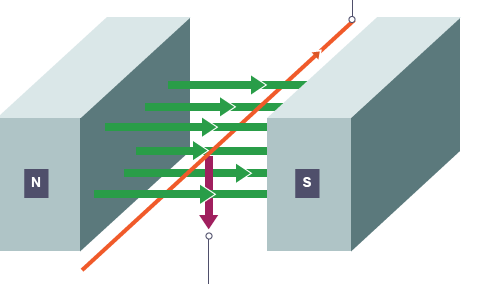
What direction is the force/motion in the following diagram?
Perpendicular to the magnets
Downwards
Parallel and through the magnets

What angle must there be between a magnetic field and a conductor in order for the maximum force to be exerted?
180
45
90
270
The direction of magnetic field developed around a current -carrying conductor can be easily found by the use of
right hand thumb rule
left hand thumb rule
Fleming's left hand rule
Fleming's right hand rule
when current flows clockwise in a loop the polarity of its face is
east
south
west
north

Refer the diagram. A wire carries a current, creating a magnetic field around itself as shown. The current in the wire is:
Directed to the right
Directed to the left
Equal to the magnetic field
n the same direction as the magnetic field
Who was the first to observe the magnetic effect of electric current?
Faraday
Oersted
Volta
Ampere
A wire is parallel to the lines of the force of the magnetic field and the current flows in the wire. Then
The wire will experience a force along the direction of the magnetic field
The wire will not experience any force
The wire will experience the torque
The wire will experience a perpendicular force
Imagine that you are holding a current-carrying straight conductor in your right hand such that the
Thumb points towards the direction of current.
Thumb points towards the direction of magnetic lines of force
fingers will wrap around the conductor in the direction of the field of electric current
The magnetic field lines are closed curves.
If there is a circular coil having “n” turns, the field produced is
“2n” times as large as that produced by a single turn.
“n” times as large as that produced by a single turn.
“n2” times as large as that produced by a single turn.
“n3” times as large as that produced by a single turn.
which one is not a devices that use current-carrying conductor and magnetic fields
Electric motor,
electric generator,
loudspeakers,
electric Heater
The magnetic field lines are__________.
curves
closed loops
lines
circular
Fuse wire has high melting point. True or False:
True
False
May be false
May be correct

Refer the diagram. The right face of the loop acts as North pole and left side of loop acts as south pole
False
True
A compass needle is
temprorary magnet
horse shhoe magnet
bar magnet
solenoid
magnetic feild is
a imaganery quantity
vector
scalar
both a and b
NO two field lines are found to cross each other .if they did....
it would mean that outside the point of intersection the compass needle point towards to directions.
the like poles will attract each other
the unlike poles would repel
none of these
which of these acts like a bar magnet
(a)
hose shoe magnet
circular loop
solenoid
both b and c
the magnet field adds up if
heat increases
wire increases
turn increases
all of the above
draw the magnetic field of circular loop

the direction of force o the conductor depends on the
direction of current and diection of magnetic field
dirction of field and amount of current
heat and direction of current
heat and direction of magnetis field
the force is maximum when diection of current is at ---------to the direction of magnetic field
parllel
perpendicular
180 degree
same direction
what is the rule,what to these fingers point


an electon eneter a magnetic field right hand to it. the direction of force on the electron will be...
to the right
to the left
towards you
away from you
what are the two different standards of circuits used
20 A
and 15 A
220A
and 110A
15 A
and 5 A
240 A
and 220 A
for what gadgets earth wire is used
high voltage gadgets
low voltage gadgets
gadgets which
are important and coslty
like ac ,fridge
gadgets with mettalic body
name any to precaution
fuse and earth wire
fuse and genrator
earth wire and generator
all three
an electrical oven of 2 kw power rating is operated in adomestic cirruit that has a current rating of 5 A .WHAT WILL HAPPEN
it will work
it will blast
the equipment and socket will be damaged
it will not wotk

The equation F = BIL only applies when
The current is parallel to the magnetic field
The current is angled with respect to the magnetic field
The current is perpendicular to the magnetic field
The current is in the opposite direction to the field
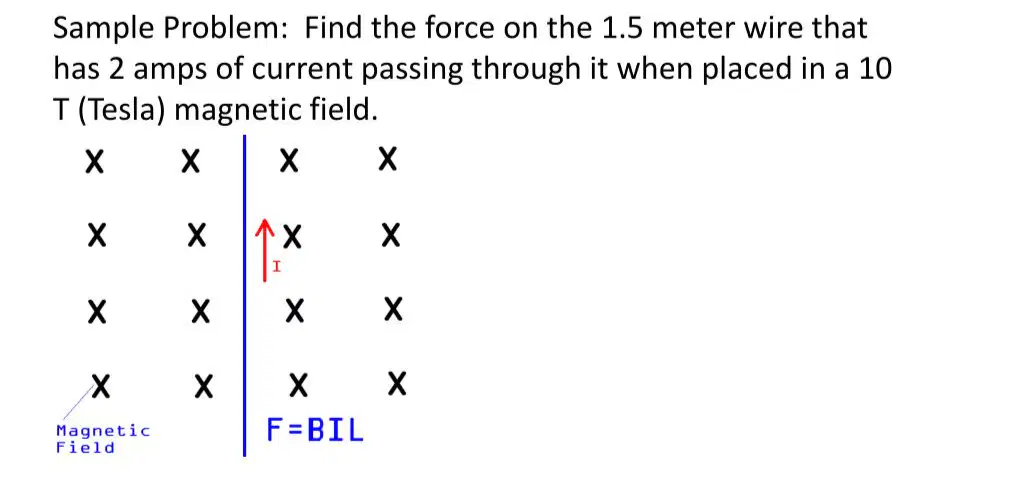
The cross is used to denote the direction
to the right
to the left
out of the page
into the page

Identify the direction of the force on the wire using Fleming's Left Hand rule.
Left
Right
Top of page
Bottom of page
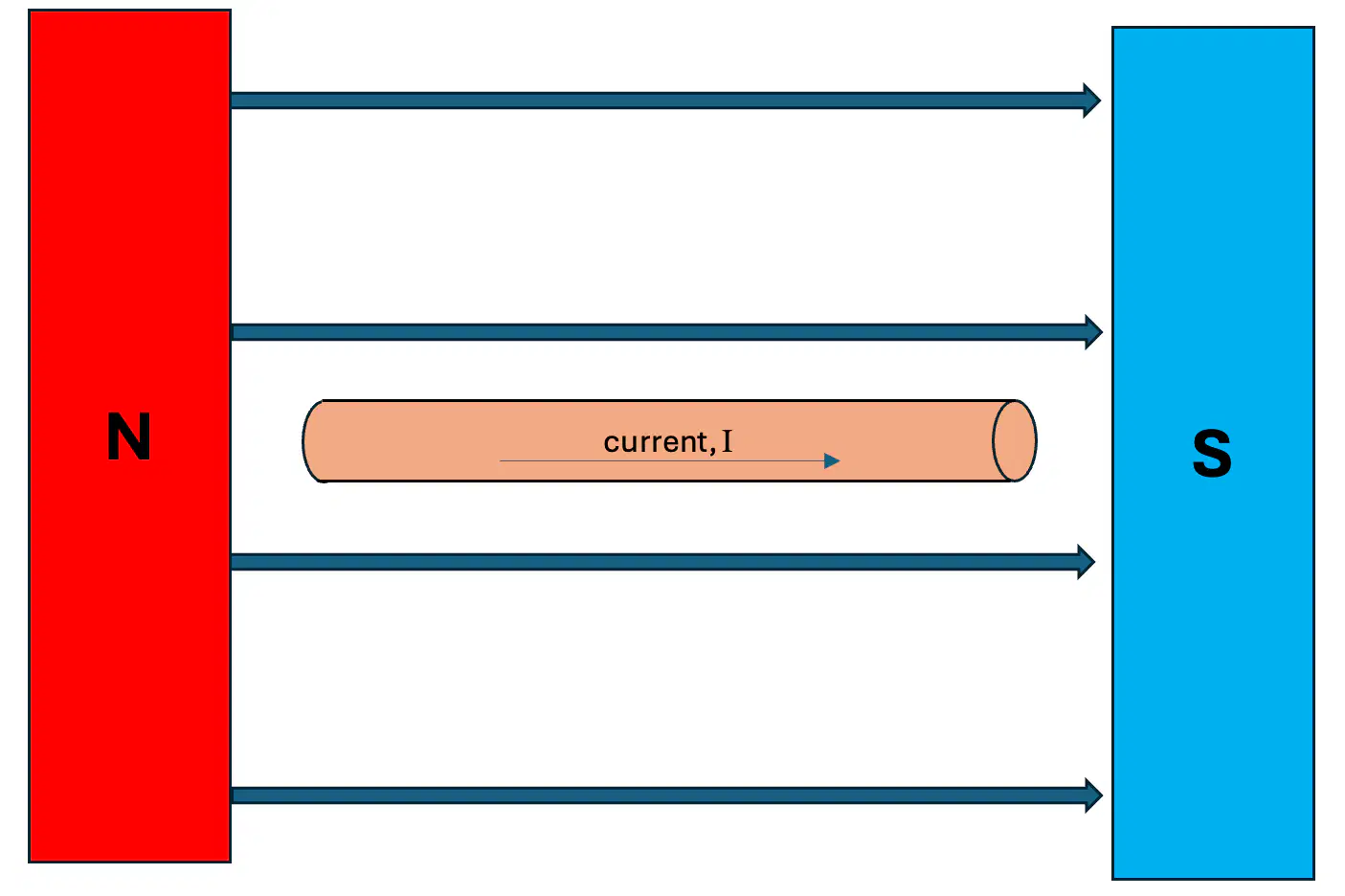
Which situation best describes this scenario
The force on the wire is upwards
The force on the wire is directed into the page
The force is maximum because the current is parallel to the field
The force is zero because the current is parallel to the field
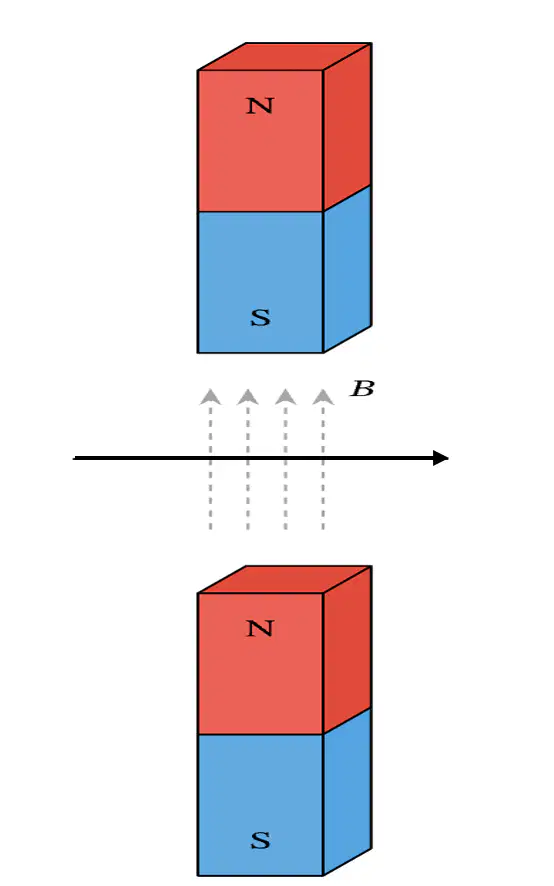
What is the direction of the force on the wire?
Out of the page
Into the page
to the right
to the left
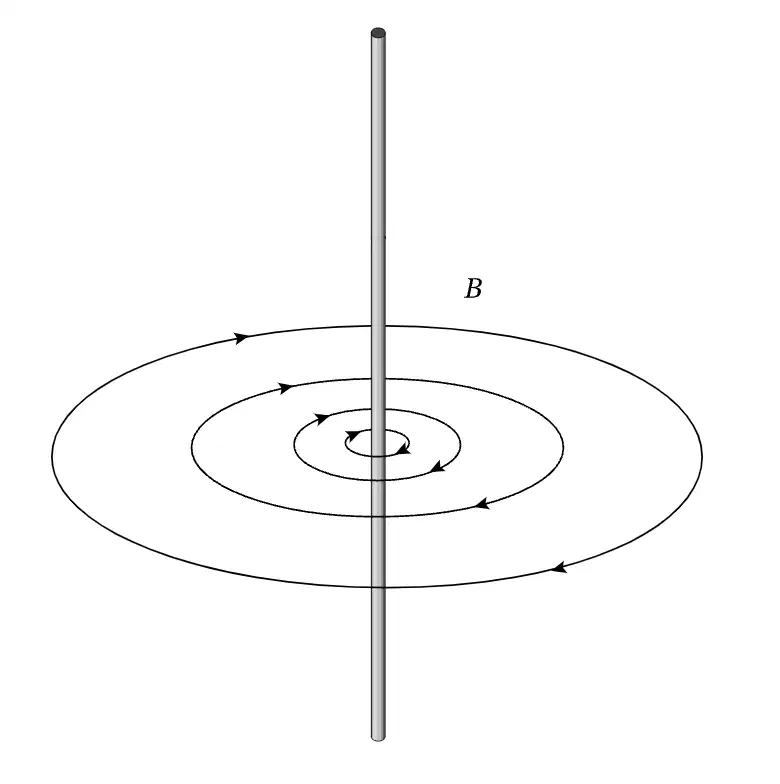
A wire currying a current creates a magnetic field around it. What direction is current flowing here? Use the right hand grip rule.
Left
right
up
down
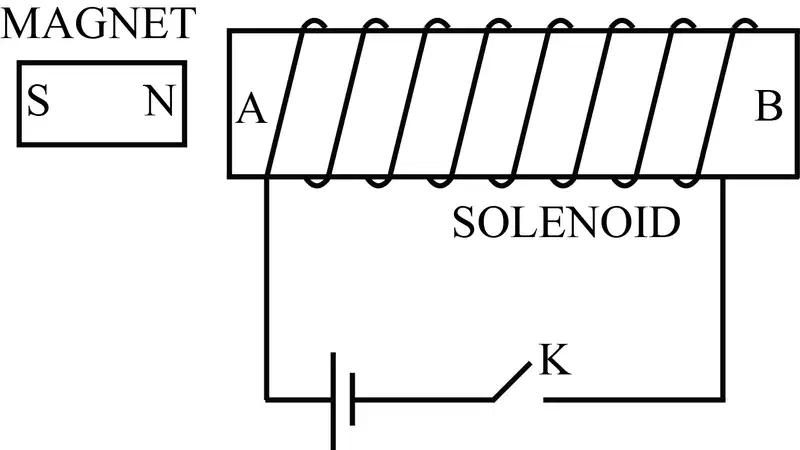
What happens to the iron core when the switch is closed?
Nothing
it attracts
the magnet repels it
A force out of the page
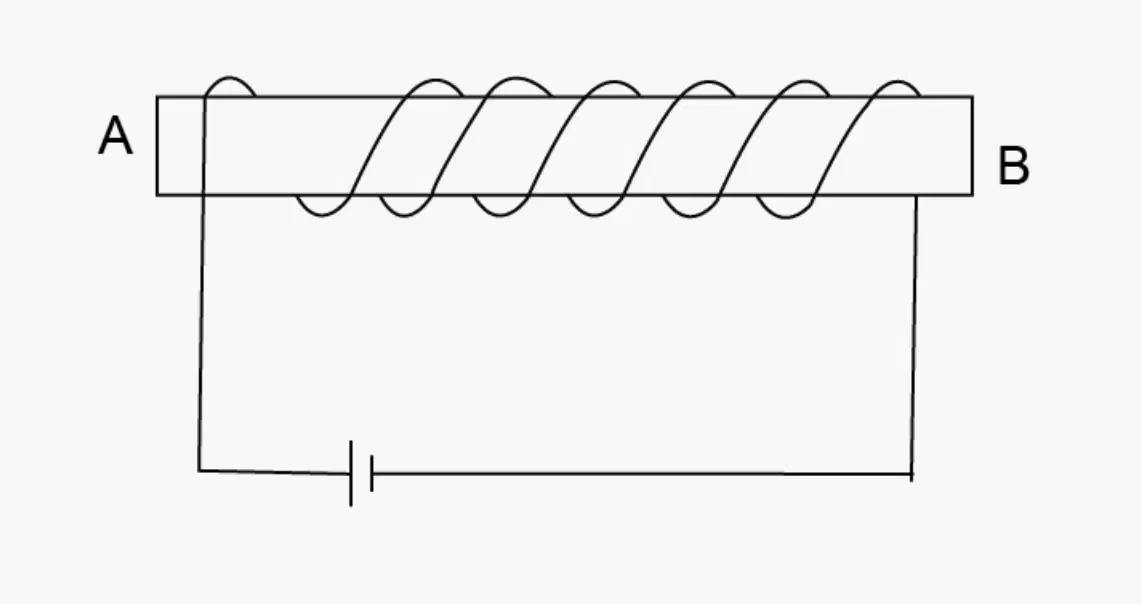
What is the polarity of B?
Hint: Use the right hand solenoid grip rule.
North
South
Neither
It Switches with 50hz frequency
Which is NOT an advantage of Electromagnets?
They can be switched on an off instantly
The magnetic field strength can be controlled easily
They create a uniform field
They can be made with a simple wire and an iron core
Which is NOT an advantage of Electromagnets?
They can be switched on an off instantly
The magnetic field strength can be controlled easily
They create a uniform field
They can be made with a simple wire and an iron core
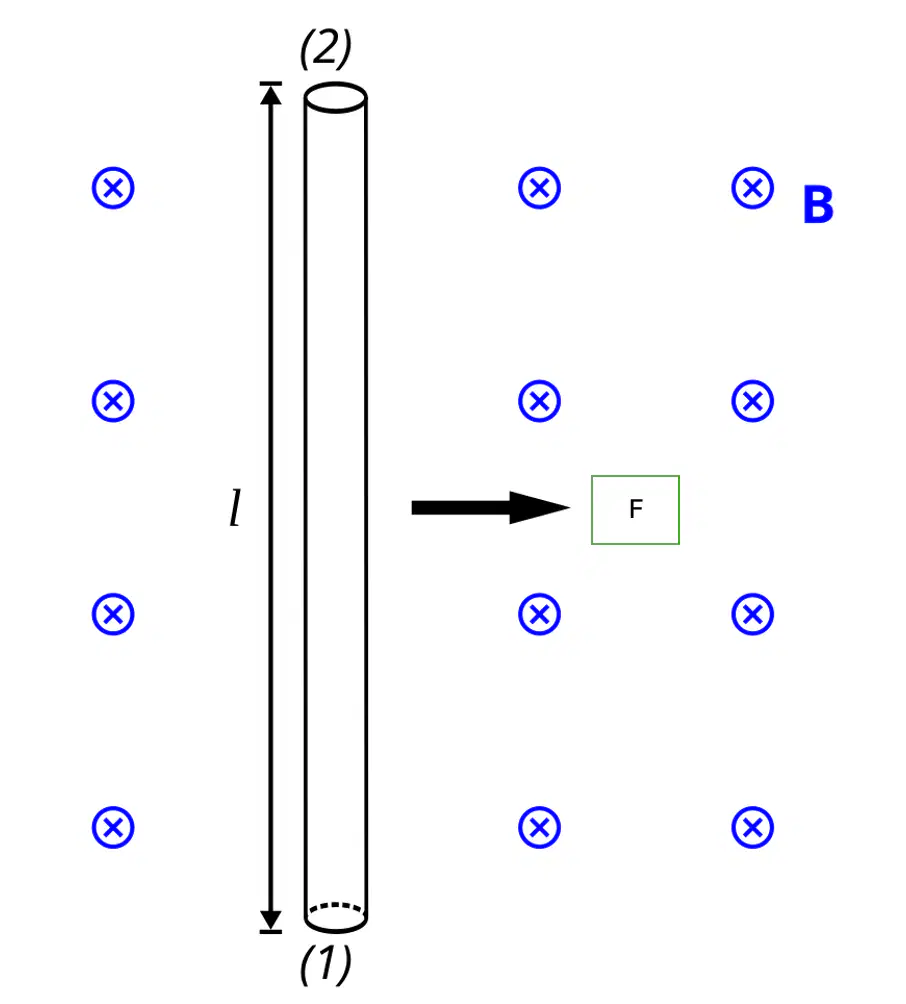
What is the direction of the current?
Out of the page
Up
Into the page
Down

Consider the current which runs from B to A.
What is the direction of the force on this part of the wire?
up
down
left
right
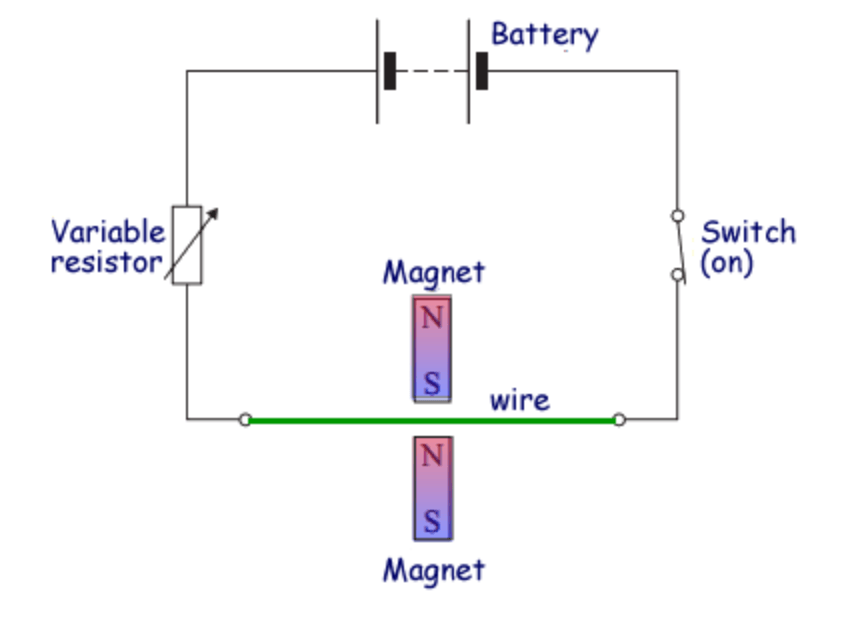
The current in the green wire flows from the left to the right.
What magnetic field flows perpendicular upwards (towards sky)
In what direction will the conductor experience a force?
Up
Down
Into the page
Out of the page
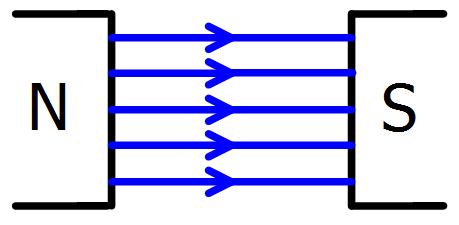
A magnetic field like this is called...
a parallel field
a distorted field
a uniform field
a paramagnetic field

The diagram show the direction of magnetic field,B and current, I.
By using Fleming left hand rules, determine the direction of Magnetic force, F.
no force produced
downward
into the page
out from the page
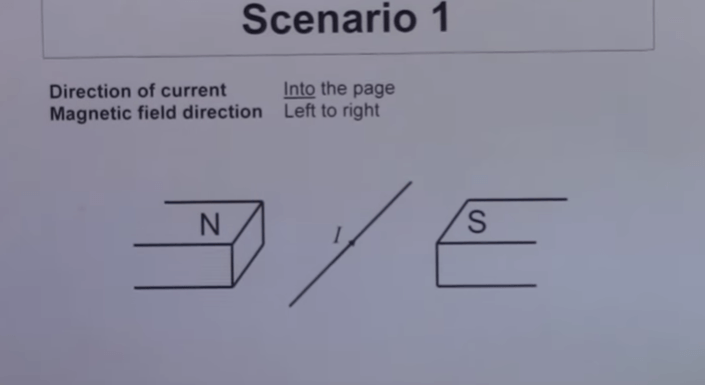
What direction does the wire move?
Up
Down
Left
Right
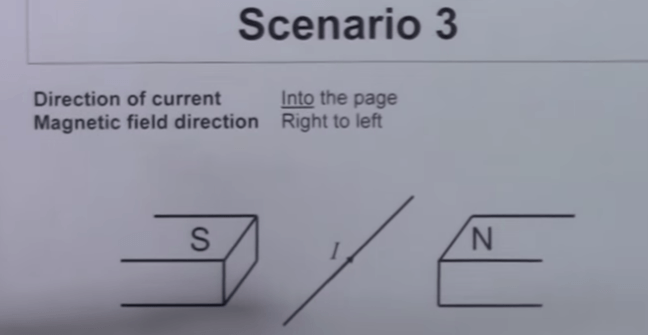
What direction would the wire move?
Up
Down
Left
Right

Thumb and first finger represent .......
magnetic field, force
force, current
force, magnetic field
current, force

The diagram show the direction of magnetic field,B and velocity,v of an electron.
By using Fleming left hand rules, determine the direction of Magnetic force, F.
left
right
into the page
out from the page

The diagram show the direction of magnetic field,B and current, I.
By using Fleming left hand rules, determine the direction of Magnetic force, F.
left
downward
into the page
out from the page
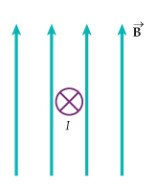
The diagram show the direction of magnetic field,B and current, I.
By using Fleming left hand rules, determine the direction of Magnetic force, F.
no force produced
right
into the page
out from the page

The diagram show the direction of magnetic field,B and current, I.
By using Fleming left hand rules, determine the direction of Magnetic force, F.
no force produced
right
downward
out from the page


Using the right-hand-slap rule, A represents
The current
The magnetic field
The direction of the force
Using the right-hand-slap rule, B represents
The current
The magnetic field
The direction of the force
Using the right-hand-slap rule, C represents
The current
The magnetic field
The direction of the force

Using the right hand slap rule, the force would go
towards you
away from you
to the left
to the right

Using the right hand slap rule, the force would go
towards you
away from you
to the left
to the right

Using the right hand grip rule, if the current is flowing towards you then the magnetic fields will flow from...
A to D to C to B and around
A to B to C to D and around
A to C to D to B and around
A to C to B to D and around
Using the right hand grip rule, if the current is flowing away from you then the magnetic fields will flow from...
A to D to C to B and around
A to B to C to D and around
A to C to D to B and around
A to C to B to D and around

In the solenoid pictured, the north pole would be on the
Left side
Right side
In the solenoid pictured, the south pole would be on the
Left side
Right side

In the solenoid pictured, the north pole would be on the
Left side
Right side
In the solenoid pictured, the south pole would be on the
Left side
Right side


