
 Worksheets
Prenatal Development and Care
Total questions: 36
Worksheet time: 18mins
According to the passage, fertilization is the union of which cells?
a male sperm cell and a female egg cell
the zygote and the uterine wall
the embryo and the placenta
the fetus and the umbilical cord
After fertilization, the resulting cell is called what?
zygote
embryo
fetus
placenta
Implantation is described in the passage as which process?
the zygote attaching to the uterine wall
the separation of the mother’s and embryo’s blood supplies
the division of the zygote into layers of tissue
the formation of the umbilical cord
According to the passage, after about eight weeks, the developing baby is called what?
fetus
zygote
placenta
amniotic sac
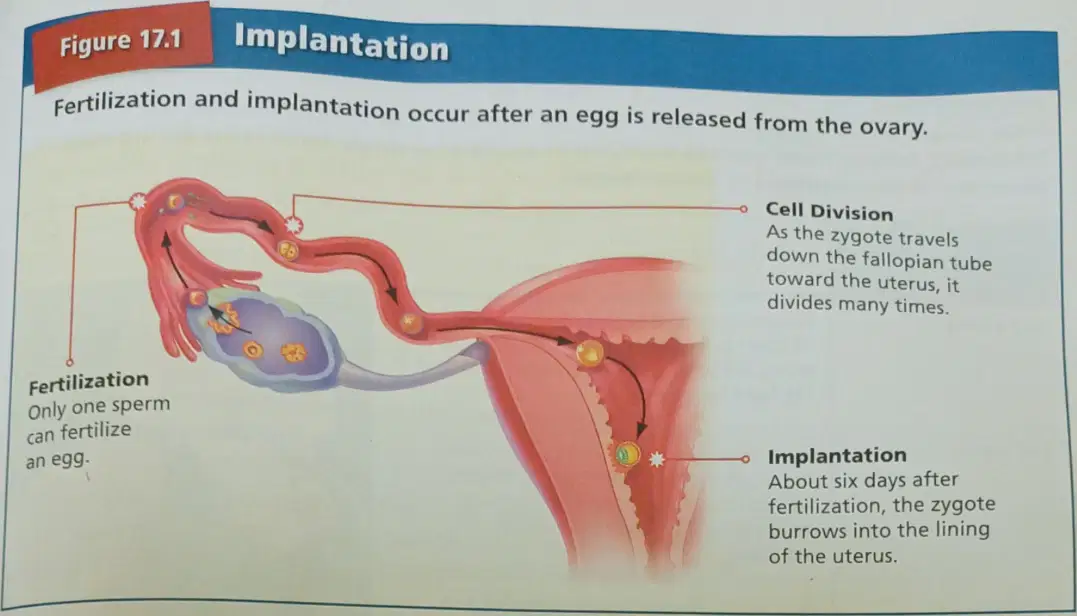
According to Figure 17.1, about how many days after fertilization does implantation occur?
about six days
about two weeks
about 24 hours
about nine months
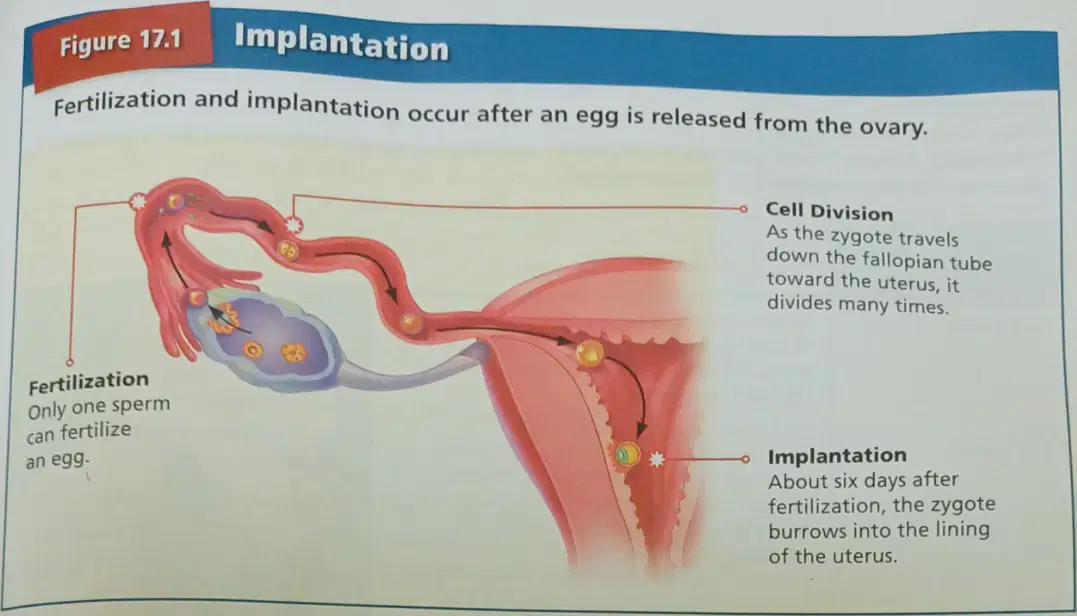
What does Figure 17.1 indicate about fertilization?
only one sperm can fertilize an egg
multiple sperm typically fertilize the same egg
fertilization occurs inside the uterus
fertilization happens after implantation
During pregnancy, how do oxygen and nutrients reach the developing embryo according to the passage?
they pass from the mother’s blood to the embryo and wastes return to the mother’s blood
the mother’s and embryo’s blood mix directly
they are absorbed through the amniotic sac walls
they enter the embryo through the mother’s digestive system
Which structure connects the fetus with the mother’s placenta?
umbilical cord
amniotic sac
fallopian tube
cervix
What is the placenta described as in the passage?
a thin, fluid-filled membrane that surrounds the embryo
a ropelike structure connecting the fetus to the placenta
a thick, blood-rich tissue lining the uterus that nourishes the embryo
a muscular organ that expels the baby during birth
Which substances are identified in the passage as harmful because they can cross the placenta and affect the embryo?
tobacco, alcohol, or other drugs
vitamins and oxygen
amniotic fluid
maternal antibodies only
The time from conception to birth usually lasts about how long according to the passage?
about 280 days, or nine months
about 180 days, or six months
about 90 days, or three months
about 60 weeks, or fifteen months
In the first trimester (0–2 weeks), which event may occur before implantation according to Figure 17.2?
the zygote may float freely in the uterus for 48 hours
the fetus begins to pass water from the bladder
eyebrows and eyelashes develop
the fetus can hear conversations
Which change is described for 3–8 weeks in Figure 17.2?
the embryo is about 1 inch long at 8 weeks
the fetus uses all five senses
the fetus weighs 6 to 9 pounds
the fetus may survive if born after 24 weeks
By 9–14 weeks, which development is noted in Figure 17.2?
the fetus can make crying motions and may suck its thumb by week 12
the heart begins to beat
eyebrows and eyelashes develop
the fetus begins to pass water from the bladder
Which ability is listed for 15–20 weeks in the second trimester in Figure 17.2?
the fetus can blink its eyes
the fetus dreams during sleep
the fetus passes water from the bladder
the fetus sucks its thumb
At 21–28 weeks, approximately how long and heavy is the fetus according to Figure 17.2?
about 12 inches long and a little more than 1 pound
about 6 inches long and less than 1 pound
about 20 inches long and 6 to 9 pounds
about 1 inch long and less than an ounce
Which change is typical of the third trimester (29–40 weeks) in Figure 17.2?
the fetus uses all five senses and begins to pass water from the bladder
the heart begins to beat for the first time
eyelids, fingernails, and toenails first appear
the fetus first hears conversations
Reading Check: Describe some of the changes that occur during the second trimester of pregnancy.
Fetal movement becomes noticeable, major organs continue developing, and the fetus grows rapidly while the mother’s abdomen expands.
Fertilization occurs and a single-celled zygote forms in the fallopian tube.
Labor contractions begin and the cervix fully dilates in preparation for birth.
Menstruation resumes as the uterine lining is shed.
Figure 17.3 shows a pregnant woman having a snack and drink. Why are healthy snacks important to fetal development?
They provide steady nutrients between meals that support fetal growth and help the mother maintain stable energy levels.
They allow the mother to skip prenatal vitamins entirely without consequence.
They reduce the amount of sleep the mother needs during pregnancy.
They cause the fetus to grow faster than normal regardless of overall diet.
Figure 17.4 shows pregnant women exercising on stability balls. How can regular physical activity help the health of a pregnant female and the fetus?
It helps the mother maintain a healthy weight during pregnancy, supporting overall maternal and fetal health.
It causes the fetus to grow at a faster-than-normal rate.
It eliminates the need for prenatal medical checkups.
It guarantees that labor and delivery will be painless.
Figure 17.5 shows a person painting indoors. Why is it important to keep a room well-ventilated while painting during pregnancy?
To speed the paint’s drying time so the room can be used immediately.
To prevent paint from dripping on surfaces.
To reduce inhalation of fumes and vapors that could harm the mother and fetus.
To keep the room at a constant temperature for the paint’s color to set.
Pregnancy Alert scenario: LeAnn is anxious after her first prenatal visit. What can LeAnn and Walt do together to reduce her anxiety and help her focus on having a healthy pregnancy?
Attend prenatal appointments together, make a plan for preparing for the baby, and follow healthy habits
Delay all decisions until the third trimester to avoid stress
Avoid discussing the pregnancy until after delivery
Rely only on relatives to make decisions about the baby
Writing activity guideline: Which of the following are recommended topics to include in a pamphlet on how to plan for a healthy pregnancy? Select all that apply.
Identify substances to be avoided during pregnancy
List ways to prepare for pregnancy and birth
Develop strategies to incorporate physical activity
Compare childbirth options
Create a schedule for infant feeding during the first month
Reading Check: Why is low birth weight a concern?
It is associated with increased risk of health problems for the newborn
It guarantees an easier delivery for the mother
It indicates superior prenatal growth
It is linked to fewer medical complications
During prenatal care, how can medical professionals help reduce risks for the fetus?
By identifying medical problems with the fetus before birth and reducing the risk or severity of complications
By scheduling elective surgery after birth only
By discouraging all physical activity throughout pregnancy
By delaying medical care until labor begins
Which signs characterize preeclampsia during pregnancy? Select all that apply.
High blood pressure
Swelling
Large amounts of protein in urine
Low blood pressure
Dehydration
In an ectopic pregnancy, where might implantation occur? Select all that apply.
Fallopian tube
Abdomen
Ovary
Cervix
Uterine wall
Childbirth steps: During delivery, what must happen before the baby can pass through the birth canal?
The cervix must be fully dilated
The placenta must detach first
The umbilical cord must be cut
The amniotic fluid must be cleared from the lungs
Figure 17.6 prompt: What steps can pregnant women take to help ensure a healthy pregnancy and delivery? Select all that apply.
Receive regular prenatal care
Avoid tobacco and illicit drugs
Prepare for childbirth and learn about delivery options
Ignore symptoms such as swelling or headaches
Incorporate appropriate physical activity with medical guidance
Describe an embryo and a fetus.
An embryo is the developing organism up to about the eighth week; a fetus is the developing organism from about the ninth week until birth
Both terms refer to the same stage throughout pregnancy
A fetus exists only during the first four weeks; embryo follows afterward
An embryo refers only to the placenta; fetus refers only to the umbilical cord
What is the difference between identical and fraternal twins?
Identical twins develop from one fertilized egg that splits; fraternal twins develop from two separate eggs fertilized by two sperm
Identical twins always differ genetically; fraternal twins are genetically identical
Identical twins result from two sperm fertilizing two eggs; fraternal twins result from one egg splitting
Identical twins occur only with medical assistance; fraternal twins occur naturally
What is the relationship between the placenta and the umbilical cord?
The placenta nourishes the fetus, and the umbilical cord connects the fetus to the placenta to carry oxygen and nutrients and remove wastes
The umbilical cord nourishes the placenta, and the placenta removes wastes from the mother
Both structures are parts of the mother's lungs
The placenta connects the fetus directly to the cervix
How is the diet of a pregnant female important to her growing fetus?
A nutrient-rich diet supports fetal growth and reduces the risk of complications such as low birth weight
Skipping meals promotes fetal development by conserving energy
A diet high in sugar ensures rapid fetal growth
Diet has no effect on fetal development
What are some risks that may occur if a pregnant female uses tobacco, alcohol, or drugs during her pregnancy?
Increased risk of miscarriage or stillbirth and other complications for the fetus
Guaranteed prevention of preeclampsia
Improved placental blood flow
Elimination of the need for prenatal care
Gestational hypertension: Which warning signs and needs for treatment are correct? Select all that apply.
High blood pressure after the twentieth week of pregnancy
Swelling and protein in the urine suggest risk of preeclampsia
Prompt medical evaluation and possible medication or bed rest may be needed
Only postnatal care is necessary; hypertension cannot affect pregnancy
Ignoring symptoms is acceptable if the mother feels well
Which statement would best persuade a mother to eat healthy foods during pregnancy?
Nutrient-rich foods support fetal growth and reduce the risk of complications
Skipping meals prevents excessive weight gain and benefits the fetus
Relying only on vitamin supplements is sufficient for fetal development
High-sugar snacks provide all the energy a fetus needs

