
 Worksheets
Technical Knowledge Objectives
Total questions: 44
Worksheet time: 22mins
Which option best describes the concept of the continuum of care in rehabilitation?
A coordinated sequence of services that supports a person from acute treatment through community and home-based rehabilitation
A single, intensive inpatient program delivered only in an acute hospital
An optional add-on service offered after discharge that is unrelated to earlier treatment
A model focused solely on palliative care without transitions to other settings
In Singapore’s typical rehabilitation settings, which combination lists ONLY settings identified for rehabilitation services?
Acute hospital
Community hospital
Community rehabilitation
Palliative care
Home therapy
Community rehabilitation service models are often organized by service format and rehabilitation phase. Which pairing aligns with these models?
Inpatient and outpatient services; active and maintenance rehabilitation
Emergency and surgical services; diagnostic and therapeutic rehabilitation
Telemedicine and pharmacy services; preventive and curative rehabilitation
Which statement best defines the continuum of care in rehabilitation?
Coordinating a single clinic visit across multiple departments
Providing consistent and coordinated health care for a patient over time and across the spectrum of care
Delivering only hospital-based services during an admission
Referring patients to community services without follow-up
According to the concept of continuum of care, care should be coordinated across which dimensions?
Across the spectrum of care settings
Over a period of time
Only during inpatient admission
Only within one provider’s clinic
Which sequence correctly represents stages commonly described in the continuum of care?
Acute care → Pre-acute care → Post-acute care → Chronic care
Pre-acute care → Acute care → Post-acute care → Chronic (maintenance) care
Post-acute care → Chronic care → Acute care → Pre-acute care
Chronic care → Post-acute care → Acute care → Pre-acute care
Why does each type of service complement others throughout the continuum of care?
To make treatment more efficient and effective
To reduce the number of healthcare providers involved
To limit care to the hospital setting only
To avoid transitions between services
Which setting is an example of pre-acute care?
Emergency Department
Community Hospital
Home or Active Ageing Centre
Nursing Home
Which settings are typically part of acute care within the continuum?
Acute hospital wards
Emergency Department
Retail pharmacy
Senior Activity Centre
Which options are examples of post-acute care services?
Day rehabilitation
Home therapy
Polyclinic consultation
Community hospital
Maintenance care in the continuum is best illustrated by which options?
Day care services
Nursing home care
Palliative care
Emergency Department attendance
Match each continuum stage to a representative Singapore provider or setting shown in the examples.
Pre-acute: Polyclinic or retail pharmacy
Acute: Changi General Hospital or Tan Tock Seng Hospital
Post-acute: Outram Community Hospital or home therapy providers (e.g., Homage)
Maintenance: THK Nursing Home or Assisi Hospice
A patient starts with advice at a general practitioner clinic, is admitted through the Emergency Department to an acute hospital, then transfers to a community hospital for rehabilitation, and later attends day care at a nursing home. Which statement best describes this pathway?
It moves from maintenance care to pre-acute care repeatedly
It follows the continuum from pre-acute to acute to post-acute to maintenance care
It skips the acute phase and begins with post-acute care
It represents only community-based care without hospital involvement
Which institutions are listed under General Hospitals in Singapore? Select all that apply.
Singapore General Hospital (SGH)
Tan Tock Seng Hospital (TTSH)
Changi General Hospital (CGH)
KK Women’s and Children’s Hospital (KKH)
Institute of Mental Health (IMH)
Which type of acute hospital is specifically dedicated to mental health services?
General Hospital
Women’s and Children’s Hospital
Psychiatry Hospital
Community Hospital
KK Women’s and Children’s Hospital (KKH) falls under which category of acute hospitals?
General Hospitals
Women’s and Children’s Hospital
Psychiatry Hospital
Rehabilitation Hospital
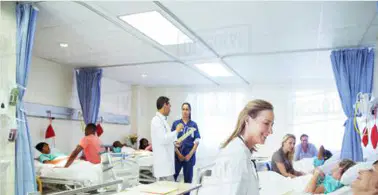
Primary objective of Emergency Care in an acute hospital is best described as:
To schedule non-urgent outpatient follow-up visits
To provide immediate attention to patients with life-threatening conditions
To conduct long-term rehabilitation services
To develop public health policy
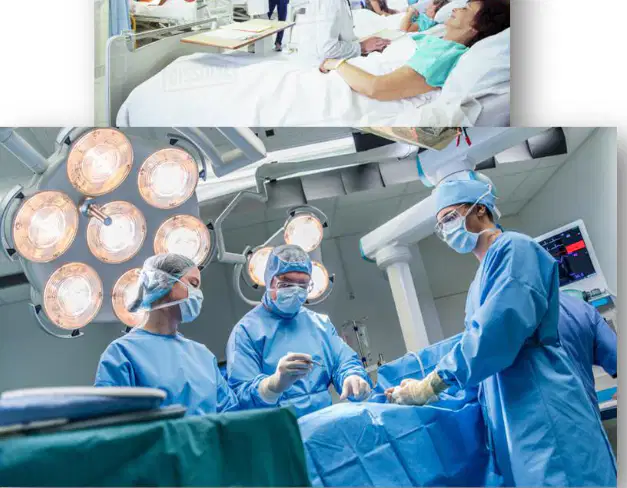
Diagnosis and Treatment in acute hospitals primarily aim to:
Screen populations for public health surveillance
Diagnose medical conditions and provide treatment
Offer long-term residential care
Deliver telehealth services only
Which statements align with the Research and Innovation objective of acute hospitals? Select all that apply.
Advance medical knowledge
Improve patient care
Provide clinical training opportunities for students
Offer continuing education programs for staff
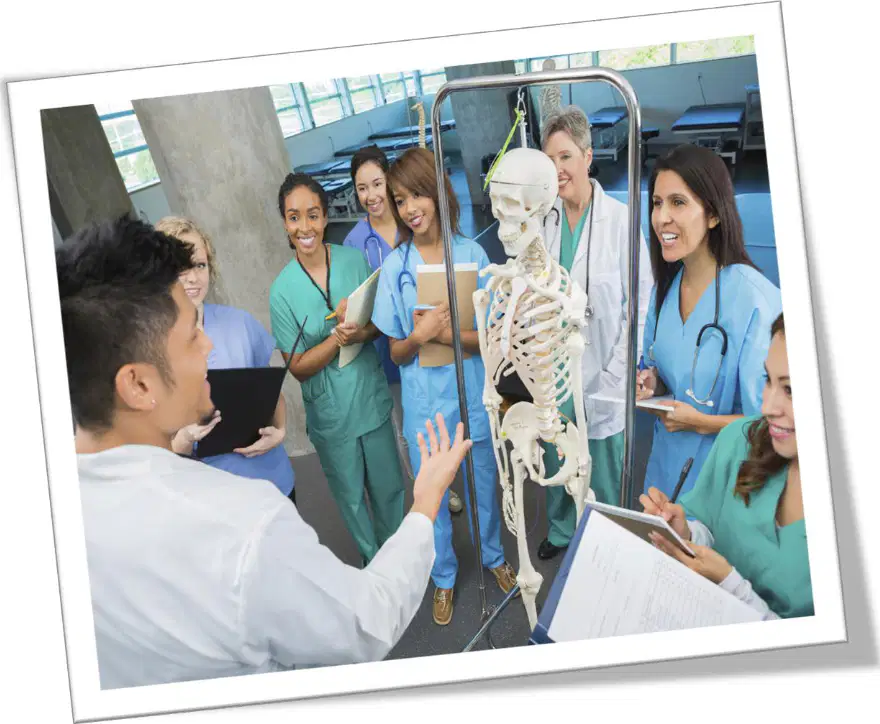
Education and Training in acute hospitals commonly includes which activities? Select all that apply.
Clinical training opportunities for healthcare students
Continuing education programs for staff
Development of hospital parking facilities
Expansion of cafeteria services
According to the instructional text, what is the primary role of community hospitals in Singapore?
Provide long-term residential care for patients who cannot return home
Offer a short period of continuation of care for patients after discharge from general hospitals
Serve as emergency departments for acute critical cases
Deliver only outpatient specialist clinics with no inpatient beds
Select all statements that align with the stated objectives of community hospitals as described:
They provide medical services to patients needing a short continuation of care.
They typically care for patients immediately after discharge from general hospitals.
They replace general hospitals for complex acute surgeries.
They are designed mainly for chronic long-stay custodial care without rehabilitation focus.
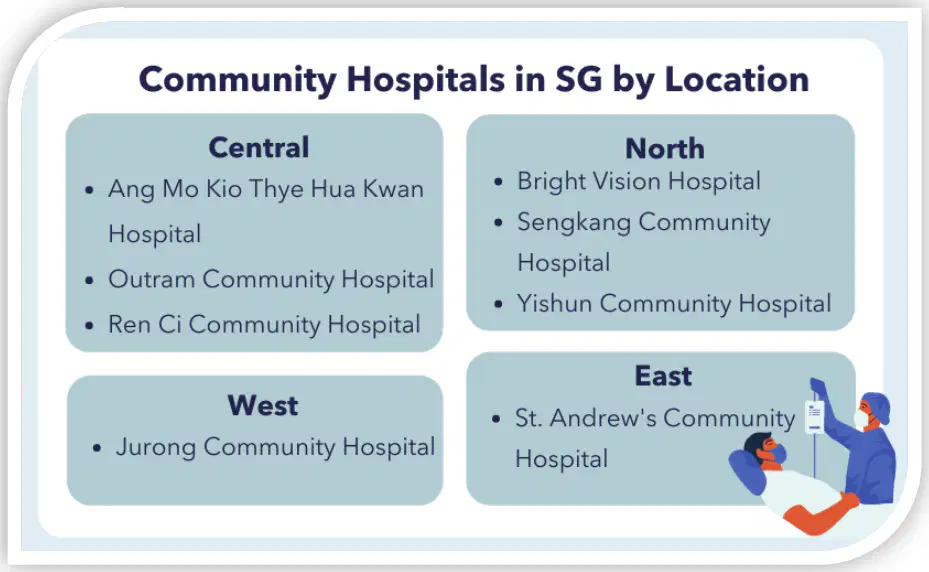
Which community hospital is located in the West region of Singapore, based on the location list provided in the diagram? (Refer to the diagram description.)
Jurong Community Hospital
Ren Ci Community Hospital
Sengkang Community Hospital
St. Andrew’s Community Hospital
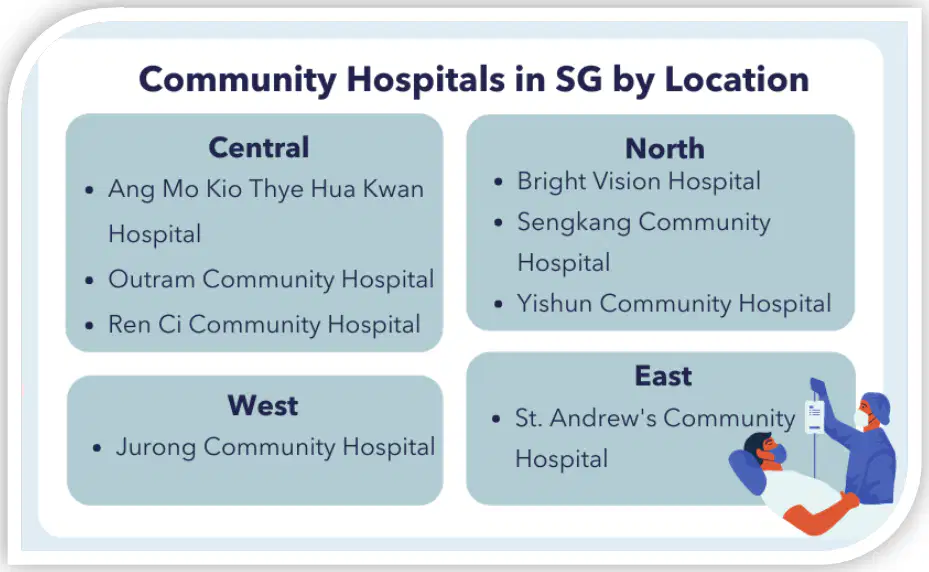
Which hospitals are listed under the Central region in the diagram? Choose all that apply.
Ang Mo Kio Thye Hua Kwan Hospital
Outram Community Hospital
Ren Ci Community Hospital
Yishun Community Hospital
Bright Vision Hospital
According to the objectives of community rehabilitation, which statement best describes the scope of service delivery?
Services are limited to inpatient hospital units only
Services are provided across different healthcare facilities
Services are restricted to home-based care exclusively
Services focus solely on specialty rehabilitation centers
Select all objectives that are explicitly part of community rehabilitation.
Providing active or maintenance rehabilitation to patients
Offering caregiver training and client education
Conducting surgical interventions to correct impairments
Limiting services to acute emergency care
A community rehabilitation team plans a program that includes progressive exercise sessions for clients and workshops for family members on safe transfer techniques. Which objective does this plan most clearly fulfill?
Caregiver training and client education
Acute medical management of injuries
Referral coordination to tertiary hospitals
Long-term residential placement services
According to the listed service providers, which option best describes care delivered in the patient’s residence by a palliative team?
Palliative Day care
Home Palliative care
Inpatient hospice palliative care
Which service type most closely aligns with short visits to a centre for activities, symptom management, and support without overnight stay?
Home palliative care
Palliative Day care
Inpatient hospice palliative care
Select the types of palliative care services identified for Singapore in the material.
Home palliative care
Community dental outreach
Palliative Day care
Inpatient hospice palliative care
Which statement captures a core objective of palliative care for patients and families coping with life‑threatening illness?
Provide only curative treatments until disease is resolved
Enhance quality of life while addressing physical, psychosocial, and spiritual needs
Limit care to end‑of‑life pain relief in hospital settings
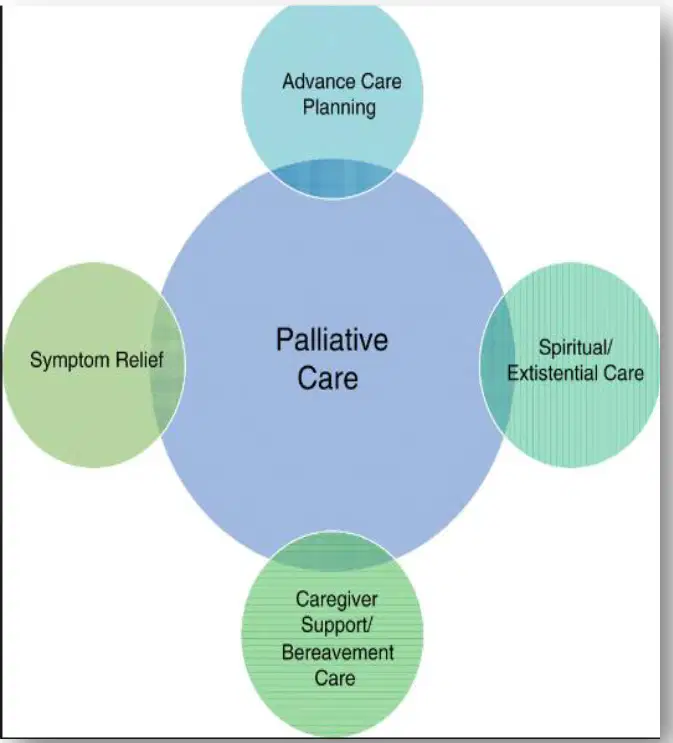
Based on the diagram of palliative care components, which domains are explicitly addressed? Select all that apply.
Symptom relief
Spiritual/existential care
Advance care planning
Financial investment planning
Which benefit best fits the physical domain of palliative care?
Empowerment and finding purpose
Provide emotional and mental support
Relieve pain, manage symptoms, and mitigate discomfort
Which items are listed under psychosocial benefits of palliative care? Select all that apply.
Provide emotional and mental support
Fulfil goals and desires
Mitigate discomfort
In the benefits graphic, which description aligns with the spiritual domain of palliative care?
Empowerment, finding purpose, and closure
Relieve pain and manage symptoms
Provide transportation to clinics
Which statement best defines home therapy in the context of rehabilitation services?
Rehabilitation delivered in outpatient clinics with periodic home visits
Rehabilitation services provided in the client’s home
Community wellness programs offered at local centers
Telehealth consultations without in-person contact
Select the primary objectives of a therapist conducting home therapy. Choose all that apply.
Assess the client’s home to identify hazards and recommend modifications
Design and review exercises for the client
Train the client’s caregiver
Provide acute hospital care and emergency transport
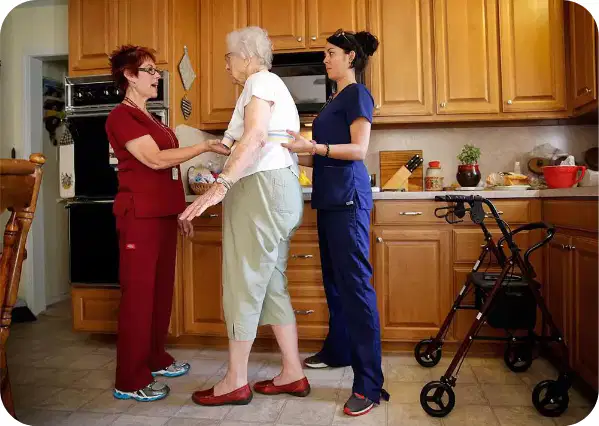
A client is beginning home therapy after a fall. According to the objectives of home therapy, what should the therapist do first to reduce future risk?
Initiate high-intensity strength training without assessment
Assess the home environment for hazards and recommend modifications
Transfer the client to a rehabilitation hospital for continuous monitoring
Focus solely on caregiver scheduling and respite services
Which statement best defines an inpatient rehabilitation service objective?
Provides short daytime therapy without hospital admission
Offers at least one overnight stay with access to 24-hour medical care
Schedules home visits following clinic sessions
Focuses solely on preventative screenings
Select all objectives commonly associated with inpatient services.
At least one overnight stay for clients
24-hour medical care as needed
Routine discharge review for safety to return home or other facilities
Daytime visits with immediate return home after session
A patient needs constant monitoring and may require immediate medical support at any hour. Which service setting is most appropriate?
Outpatient rehabilitation clinic
Home-based wellness program
Inpatient service with 24-hour medical care
Telehealth consultation
Which statement correctly describes an outpatient service objective?
Requires hospital admission and overnight stay
Provides healthcare that does not require hospital admission
Limits care to emergency situations only
Ensures transfer to long-term residential facilities after treatment
In outpatient rehabilitation, what typically happens after the session?
Patients remain admitted for observation overnight
Patients return home the same day
Patients move to an inpatient ward for continued monitoring
Patients are restricted from driving for one week
Match each service type to its defining characteristic.
Inpatient: 24-hour medical care available
Inpatient: patient returns home immediately after each session
Outpatient: no hospital admission required
Outpatient: at least one overnight stay is required

