
 Worksheets
Understanding Economic Principles Quiz
Total questions: 143
Worksheet time: 5hrs 39mins
What is the term for the limited nature of society’s resources?
Surplus
Scarcity
Equilibrium
Deflation
Which curve shows the maximum possible output combinations of two goods that can be produced with available resources and technology?
Demand Curve
Production Possibility Curve
Supply Curve
Circular Flow Chart
What is the opportunity cost?
The cost of producing one more unit
The value of the next best alternative forgone
The total cost of production
The price paid for a good
Which of the following is NOT one of the four main types of economic systems?
Command
Market
Mixed
Democratic
What does the Law of Demand state?
As price increases, quantity demanded increases
As price increases, quantity demanded decreases
As price decreases, quantity supplied decreases
As price decreases, quantity demanded decreases
Which of the following is a function of money?
Medium of exchange
Price ceiling
Surplus
Deficit
Which market structure is characterized by a single seller?
Monopoly
Oligopoly
Perfect Competition
Monopolistic Competition
Which type of unemployment is caused by changes in the business cycle?
Frictional
Structural
Cyclical
Seasonal
Which of the following is a characteristic of money?
Durability
Surplus
Deflation
Debt
If the government sets a maximum legal price for a good below equilibrium, what is this called?
Price Floor
Price Ceiling
Surplus
Deficit
Given a production possibility curve, if a country moves from point A to point B, what does this represent?
A change in opportunity cost
A reallocation of resources between two goods
An increase in total resources
A decrease in technology
If the supply of a product increases, what is likely to happen to its equilibrium price, assuming demand remains constant?
It will increase
It will decrease
It will stay the same
It will become unpredictable
Which of the following would cause a shift in the demand curve for a product?
A change in the price of the product
A change in consumer income
A change in supply
A change in equilibrium price
If a country has an absolute advantage in producing wheat, what does this mean?
It can produce wheat at a lower opportunity cost than other countries
It can produce more wheat than other countries using the same resources
It can trade wheat for other goods
It has the highest demand for wheat
Which of the following is an example of a trade barrier?
Tariff
Comparative advantage
Circular flow chart
Law of supply
A business organization wants to maximize profit. Which market structure would likely allow for the greatest pricing power?
Perfect competition
Monopoly
Oligopoly
Monopolistic competition
Suppose the government implements an expansionary fiscal policy. What is the likely effect on aggregate demand?
Aggregate demand will decrease
Aggregate demand will increase
Aggregate demand will remain unchanged
Aggregate demand will become unpredictable
A country can produce 10 units of cars or 20 units of computers with its resources. Another country can produce 5 units of cars or 15 units of computers. Which country has the comparative advantage in producing computers?
The first country
The second country
Both countries
Neither country
If the government sets a price floor above the equilibrium price, what is the most likely outcome in the market?
Shortage
Surplus
Equilibrium
Deflation
A business is experiencing a contraction in the business cycle. What strategic action could it take to minimize losses?
Increase production
Reduce costs and delay expansion plans
Hire more workers
Raise prices

Which country has the comparative advantage in producing trucks and what is their opportunity cost?

Which country has the comparative advantage in producing airplanes and what is their opportunity cost?


A _______ is the giving up of one thing to get something else.
resource
scarcity
trade off
economy


What you get when you make a choice
opportunity cost
benefit
trade

If the class lowers the supply of doughnuts to 10 doughnuts a day, what do you think they could do with the price?
Raise it
Leave it the same
Lower it

Which of these best describes the law of demand?
if prices go up, quantity demanded will fall and if prices go down, quantity demanded will go up
if prices go up, quantity demanded will also go up and if prices go down, quantity demanded will also go down
there is no law of demand, each situation is unique and demand and prices cannot be predicted
prices will go up for certain goods when quantity demanded goes up and vice versa

more than enough of a product?
Supply
Demand
Surplus
Deficit


economic law stating that as the price of a good or service increases, the quantity demanded decreases, and vice versa
Revenue
Law of Demand
Elasticity
Law of Supply


Which economy relies mostly on agriculture, gathering, hunting and fishing? It includes time -honored beliefs and specific gender roles.
Market Economy
Mixed Economy
Traditional Economy
Command Economy


Which of these are functions of money?
medium of exchange that allows the trade of goods and services
holds value over time
standard of value that allows comparison of the value of goods related to one another
used as the only means of trade between nations
Money is a medium of exchange, store of value, and a unit of account, durable, portable, divisible, and uniform.
True
False
Any asset that is widely accepted as final payment for goods and services.
Currency
Barter
Trade
Money
What 3 functions does money serve in the economy? Pick all that apply.
medium of exchange
demand deposit
standard of value
store of value
Money has ______ if it can be broken down into smaller units so it can be used as needed.
Divisibility
Portability
Scarcity
Durability
What is the main function of money in the economy?
To save wealth
To reduce inflation
Facilitate exchange of goods/services
Which characteristic of money means easily transferred from person to person, to make the exchange of money for products easier?
Durability
Portability
Divisibility
Scarcity
Money has ______ if it doesn't deteriorate when it is being handled frequently.
Scarcity
Divisibility
Durability
Portability

What type of market structure is described by the information?
Pure Competition
Monopolistic Competition
Oligopoly
Monopoly

Which of the following is described by the characteristics listed in the box?
Monopoly
Oligopoly
Pure competition
Monopolistic competition

When a business controls a product of service by eliminating the competition.
capitalism
copyrights
monopoly
Walmart

What letter on the graph represents the proper location for the market structure “oligopoly”?
W
Y
X
Z

The most competitive market structure is
perfect competition.
Oligopoly
monopolistic competition
Monopoly
Sara’s Hair Palace is a small, locally owned beauty salon in Bainbridge. This represents what type of business?
corporation
partnership
sole proprietorship
Susie is starting her own online shoe store. What economic term would best describe Susie and what does that term mean?
Consumer – a person who uses or consumes goods
Partnership – partner in the lemonade stand
Entrepreneur- - person who takes a risk to start a new company
The most common type of business organization in the United States in the _________.
corporation
partnership
sole proprietorship

Which of the following is NOT a Phase?
Expansion
Contraction
Neutral
Peak
Trough
The Business Cycle measures ___ over time.
wealth
inflation
economic growth
The business cycle is made up of how many phases?
5
4
3
2
The business cycle rises above the trendline during-
rescessions
expansions
troughs
GDP declines during a(an)
peak
contraction
expansion
Economic recovery begins-
above the trend line
at the end of a recession (trough)
at the "boom" period
When GDP rises faster than the long-run trend the economy is experiencing-
recession
expansion
recovery
GDP will begin to decline at-
the peak.
the trough.
the contractionary phase.

If a news headline says, "Finally!!! 2 straight months of increased jobs."
Where on the business cycle is the current economy?
Peak
Contraction/Recession
Trough
Expansion/Growth/Recovery
If a news headline says, "3 months of consecutive job losses is impacting consumer confidence."
Where on the business cycle is the current economy?
Peak
Contraction/Recession
Trough
Expansion/Growth/Recovery

Which of the following is a peak?
A
B
C
D
Which of the following is a recession, or contraction?
A
B
C
D
Which of the following is a trough?
A
B
C
D
Which of the following is an expansion, or recovery?
A
B
C
D
GDP divided by ______ = GDP per capita
population
income
wealth
production
Inflation Rate =
CPI Current Year - CPI of Previous Year/CPI of Previous Year X 100
CPI of Base Year - CPI of Current Year/CPI of Current Year X 100
PPI / CPI X 100
PPI X CPI / 100
Comparative advantages show:
outcomes without trading
who can make more items
competition within countries
who should produce what item at the lowest cost
What type of advantage shows who can make the most item?
absolute advantage
comparative advantage
Joy gives 2 haircuts and 1 perm. Susie gives 3 haircuts and 2 perms. Who has the absolute advantage for haircuts?
Joy
Susie
True or False: It is better for countries to specialize and conduct trades given comparative advantage data.
True
False

High Demand and Low Supply
Low Demand and High Supply

High Demand and Low Supply
Low Demand and High Supply

High Demand and Low Supply
Low Supply and High Demand

High Demand and Low Supply
Low Demand and High Supply
When producers offer more of a good as its price increases and less as its price falls, this defines the
law of demand
law of supply
change in demand
change in supply
The willingness and ability of a producer to make a product is referred to as
quantity supplied
quantity demanded
supply
demand
Movement along a supply curve demonstrates
a change in quantity supplied
a change in quantity demanded
a change in supply
a change in demand
Which of these demonstrates an example of a supply curve? (More than one answer)


Which of the following supply curves demonstrates a decrease in the quantity supplied?
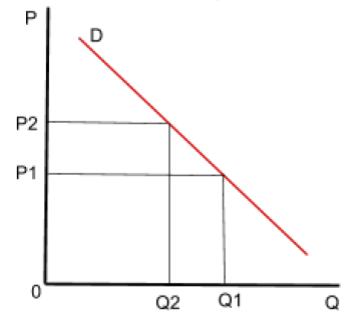


A decrease in supply is demonstrated by which of the following?


A hurricane wipes out an orange crop in Florida, sharply affecting the supply of oranges. Which chart demonstrates this concept?


Which of the following is NOT one of the determinants of supply?
Change in cost of production/resources
Change in number of sellers
Substitutes
Change in technology
Example: As the demand for DVDs decreased due to consumer preference for streaming movies, the market price for DVDs fell. This lower market price caused sellers to leave the DVD market and supply decreased.
Example: If airlines expect prices for airline tickets to fall in September when families are less likely to travel due the school calendar, they will supply more during the summer months when they can charge higher fares.
Which of the following is NOT a determinant of supply?
Change in cost of production
Technology
Change in number of consumers
Government regulations

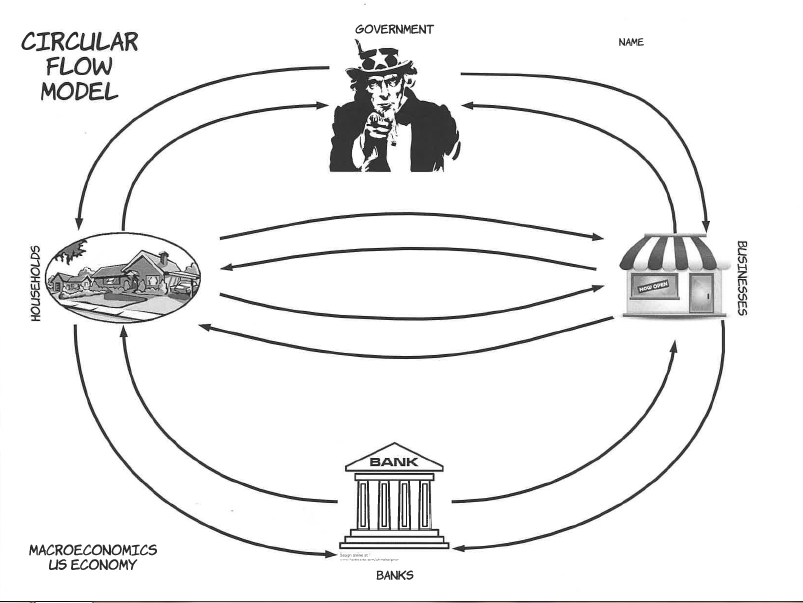
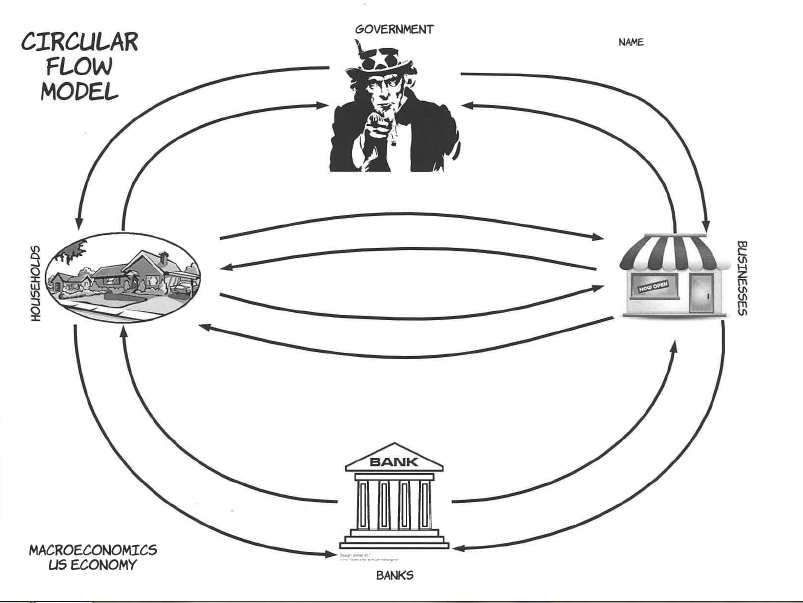
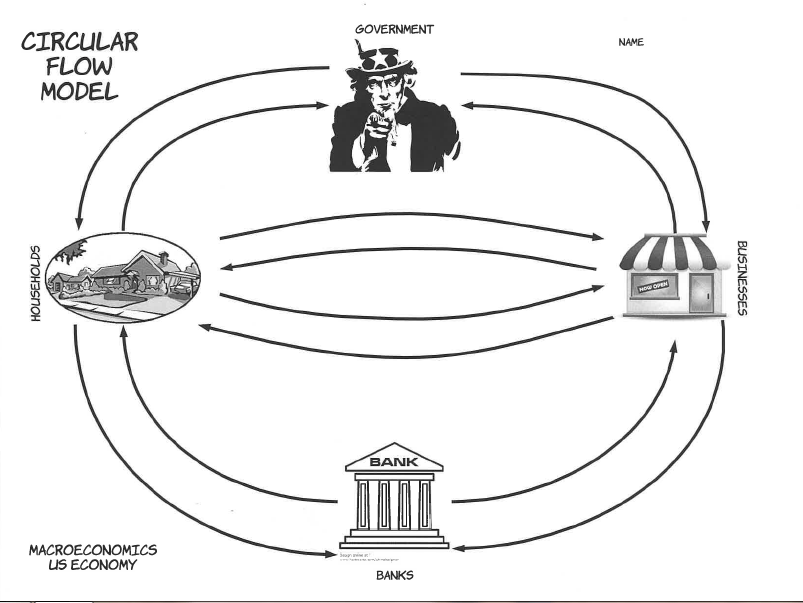
This is an example of an economic model called a ____________
Production Possibilities Curve
Intro. to Economics Curve
Latter Curve
Circular Flow Curve

Points B, D, and C represent ___________ use of resources.
Ineffecient
Efficient
Unfeasible

Point X represents an amount of production which is __________.
Unfeasible
Inefficient
Efficient
Well thought out

Point A represents an __________ use of resources.
Smart
Inefficient
Efficient
Unfeasible

Which factors could cause an increase the productive capacity of the PPC?
Adding land, labor, and capital
Losing land, labor, and capital

Which factors could cause a decrease the productive capacity of the PPC?
Adding land, labor, and capital
Losing land, labor, and capital

What is the opportunity cost of moving from production from point D to B?
35 units of food
1,000 units of clothes
150 units of clothes
100 units of clothes
Which of the following concepts can be modeled using a PPC?
Societies have preferences about what should be produced
Governments, rather than markets, are more efficient allocators of resources
Prices that the goods will sell for will be determined in a market
A society can produce more of any good just by reallocating its resources more efficiently
When all resources are being used, making more of one good means making less of the other good
A full time construction worker working 60+ hours a week at $18 per hour plus overtime pay.
Employed
Unemployed
Not counted / Not in the Labor Force
A 40 year old man living at home collecting a disability check.
Employed
Unemployed
Not counted / Not in the Labor Force
An 80 year old woman living off Social Security.
Employed
Unemployed
Not counted / Not in the Labor Force
Laid off autoworker who is receiving unemployment benefits and is looking for a new job.
Employed
Unemployed
Not counted / Not in the Labor Force
Sixteen year old high school junior working at McDonalds after school a few nights a week.
Employed
Unemployed
Not counted / Not in the Labor Force
Carl is in prison for life. He sorts laundry for $0.35 per hour.
Employed
Unemployed
Not counted / Not in the Labor Force
a student who just graduated from college and is waiting to start their new job is...
frictionally unemployed
structurally unemployed
technologically unemployed
cyclically unemployed
seasonally unemployed
a woman who lost her job due to a decrease in sales during a recession in the economy is...
frictionally unemployed
structurally unemployed
technologically unemployed
cyclically unemployed
seasonally unemployed
Farm helpers are unemployed when the cropping season is over.
frictional
cyclical
structural
seasonal
Which of the following best defines unemployment?
The state of being able to work and actively seeking work, but unable to find employment
The state of being able to work, but choosing not to
The percentage of the labour force that is able and actively seeking work, but cannot find employment
The total number of people who do not work
Sum of the employed and the unemployed
Employed
Unemployment
Labor Force
Joe is an expert at repairing VCRs. However, due to a lack of customers, his business had to close.
frictionally unemployed
structurally unemployed
technologically unemployed
cyclically unemployed
seasonally unemployed
These decisions are determined by the U.S. Congress.
FISCAL
MONETARY
Making changes to the federal funds rate is a policy tool.
FISCAL
MONETARY
The buying and selling of bonds are tools of this policy.
FISCAL
MONETARY
Increases in spending on infrastructure is part of this policy.
FISCAL
MONETARY
Raising taxes to slow the growth of the economy.
FISCAL
MONETARY
The discount rate gets lowered.
FISCAL
MONETARY
Income tax rates get lowered.
FISCAL
MONETARY
The reserve requirement gets raised.
FISCAL
MONETARY
These decisions are determined by the Federal Reserve Board of Governors.
FISCAL
MONETARY
Increases in unemployment benefits for people looking for work.
FISCAL
MONETARY
Who controls fiscal policy?
The Federal Reserve
The Federal Government
The FBI
Federal Income Tax
During economic crisis, the primary role of the Federal Government is to promote a healthy economy by...
controlling the budget
setting spending levels
manipulating taxes and government spending
loaning out money
Increasing taxes...
increases money supply
decreases money supply
Decreasing taxes...
increases money supply
decreases money supply
Which policy would help fight inflation?
Expansionary Policy
Contractionary Policy
Which policy would help fight unemployment?
Expansionary Policy
Contractionary Policy
During a recession, the Federal Government should use...
Expansionary Policy
Contractionary Policy
During rapid expansion, the Federal Government should use...
Expansionary Policy
Contractionary Policy
Increasing Government Spending...
increases money supply
decreases money supply
Decreasing Government Spending...
increases money supply
decreases money supply
Does increasing the money supply cause inflation or deflation?
Inflation
Deflation

