wayground logo

Free Printable Worksheets

Font size

S
M
L
XL
Worksheets

ENVS Final Review

Total questions: 147

Worksheet time: 3hrs 24mins

Name
Class
Date
1.
What is the process in which the oceanic crust creates a ocean trench and is pushed back into the mantle?
a)
Sea Floor Spreading
b)
Sublimation
c)
Subduction
d)
Volcanism
2.
What is the name of the process that continually adds new rock at the Mid Ocean Ridges and pushes old rock out, making an ocean larger?
a)
Sea Floor Spreading
b)
Sublimation
c)
Subduction
d)
Volcanism
3.
If heat and pressure is added to an igneous rock what will it become?
a)
Magma
b)
Sedimentary
c)
Metamorphic
d)
It will stay igneous
4.
What is the breaking down of rock by wind, water, ice, or gravity called?
a)
Weathering
b)
Erosion
c)
Deposition
d)
Cementation
5.
What is it called when a river transports sediment?
a)
Weathering
b)
Depostion
c)
Erosion
d)
Cementation
6.
What is it called when Sediment is packed together  by a natural force? 
a)
Weathering 
b)
Compaction
c)
Erosion
d)
Deposition
7.
What type of rock is formed when magma or lava cools?
a)
Sedimentary
b)
Metamorphic
c)
Igneous
d)
Clastic
8.
What is the theorized force that moves the plates?
a)
Subduction
b)
Sea Floor Spreading
c)
Convection
d)
Mid Ocean Ridge
9.
If an igneous rock erodes, deposits, compacts, and cements, then goes under heat and pressure, then melts into magma, then cools, then goes under heat and pressure again what type of rock has the rock become?
a)
Clastic
b)
Sedimentary
c)
Igneous
d)
Metamorphic
10.
This is a diagram of a transform boundary which of the following things do transform boundaries create?
a)
Deep ocean Trench
b)
Volcano
c)
Mountain
d)
Earthquakes
11.
This is a diagram of the Mid Atlantic Ridge. What type of plate boundary is the Mid Atlantic Ridge?
a)
Divergent
b)
Convergent
c)
Transform
d)
What in the World is a Plate Boundary OH MY GOD I NEED TO STUDY!!!
12.
What is the outermost layer of the Earth?
a)
Outer core
b)
Inner core
c)
Mantle
d)
Crust
13.
Which layer of the core is mostly liquid?
a)
inner core
b)
outer core
14.
What is caused when the tectonic plates slip?
a)
thunderstorms
b)
hurricanes
c)
tornadoes
d)
earthquakes
15.

On which layer can we find the tectonic plates?

a)

Lithosphere

b)

Asthenosphere

c)

Lower Mantle

d)

Upper Mantle

16.
Are the same waves that travel through Earth's interior during an earthquake.
a)
Sound
b)
Water
c)
Seismic
d)
Infrared
17.
The measure of the energy released by an earthquake is called ____________________.
a)
Magnitude
b)
Seismic Waves
c)
Force
d)
Vectors
18.
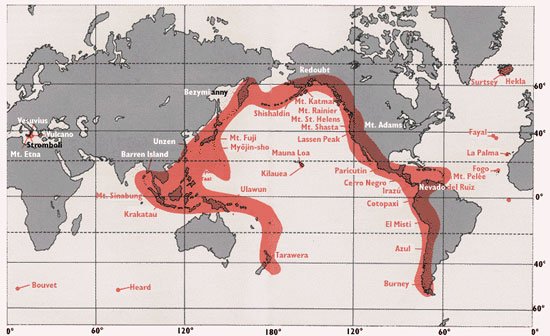
This is the name for the chain of volcanos around the edge of the Pacific Plate.
a)
Circle of Fire
b)
Ring of Lava
c)
Ring of Fire
d)
Circle of Magma
19.
The upper mantle is also known as the 
a)
Lithosphere
b)
Asthenosphere
c)
Mesosphere
d)
Core
20.
What is a true fact about the mesosphere?
a)
it is the hottest layer
b)
meteors burn up here
c)
the ozone layer is found here
d)
Northern Lights happen here
21.

How does air pressure change as you climb a mountain?

a)

it decreases (less air pressure)

b)

it increases (more air pressure)

c)

stays the same

d)

the temperature gets warmer

22.
A layer of air that surrounds Earth to keep us warm is called ...
a)
atmosphere
b)
Sun's rays
c)
ozone layer
d)
air pressure
23.

What protects Earth from ultraviolet rays from the sun?

a)

ozone layer

b)

mesosphere

c)

air pressure

d)

troposphere

24.
In what layer would you find the ozone layer?
a)
troposphere
b)
stratosphere
c)
mesosphere
d)
thermosphere
25.
The Northern Lights occur in which layer?
a)
mesosphere
b)
exosphere
c)
thermosphere
d)
stratosphere
26.

What gas makes up the majority of the atmosphere?

a)

oxygen

b)

nitrogen

c)

water vapor

d)

carbon dioxide

27.
In what layer of the atmosphere would you find clouds and weather?
a)
troposphere
b)
stratosphere
c)
mesosphere
d)
thermosphere
28.

Which layer of the atmosphere do we live in?

a)

troposhphere

b)

mesosphere

c)

stratosphere

d)

exosphere

29.
Convection
a)
transfer of heat by flow
b)
transfer of heat by touch
c)
transfer of heat by waves and rays
d)
transfer of heat by wind
30.
The hottest layer.
a)
troposphere
b)
thermosphere
c)
exosphere
d)
mesosphere
31.
How much of Earth's water is unavailable for humans to consume due to its high salinity? 
a)
3%
b)
23%
c)
77%
d)
97%
32.
How much of the earth's water is freshwater?
a)
50 %
b)
3 %
c)
97 %
d)
93 %
33.
All the water on, in , and surrounding the earth
a)
Atmosphere
b)
Hydrosphere
c)
Biosphere
d)
Lithosphere
34.
The process that cycles water around Earth and it's atmosphere is called 
a)
The Natural Cycle
b)
The Carbon Cycle
c)
The Water Cycle
35.

What is pictured?

a)

Salinity

b)

Ocean Currents

c)

Ice Caps

d)

Pollution Distribution

36.

The diagram above represents relationships in an

ecosystem. What is the primary source of energy in

this environment?

a)

cellular respiration in the plants

b)

energy from minerals in the soil

c)

fossil fuels

d)

solar energy

37.

Five different living organisms are represented below.

Which statement about the organisms represented

above is correct?

a)

All of the organisms are autotrophs.

b)

Only the flowering plant, green heron, and

aquatic plant carry out photosynthesis.

c)

Only the frog, aquatic plant and green heron are

heterotrophs.

d)

Only the flowering plant and aquatic plant are

autotrophs.

38.

Stability within an ecosystem is achieved partially by

the presence of organisms that break down important

molecules and make them available for other

organisms to use. These organisms are

a)

plants

b)

herbivores

c)

scavengers

d)

decomposers

39.

The bar graph below shows the number of species in

four pond ecosystems.

Based on this information, which ecosystem is likely

to be the most stable?

a)

A

b)

B

c)

C

d)

D

40.

The diagram below represents an energy pyramid.

Which type of organism could occupy levels B, C,

and D of this energy pyramid?

a)

consumer

b)

producer

c)

autotroph

d)

carnivore

41.

Which human activity most directly causes a

significant increase in the amount of carbon dioxide

in the atmosphere?

a)

growing corn for food

b)

not using products containing plastics

c)

driving cars long distances

d)

planting large numbers of trees

42.

Producers are generally found at the beginning of a

food chain. Which statement best explains why this

is true?

a)

Producers are usually smaller in size than

consumers.

b)

Producers do not rely on other organisms for

food.

c)

There are always more consumers than

producers in food chains.

d)

Consumers are always more complex

organisms than producers.

43.

Some organisms in an ecosystem are represented in

the pyramid below. In the pyramid, the arrows

labeled X represent

a)

the loss of organisms due to predation

b)

a decrease in photosynthetic organisms

c)

the loss of energy in the form of heat

d)

a decrease in available oxygen

44.
Members of a species in a defined area
a)
Ecosystem
b)
community
c)
biodiversity
d)
population
45.
Consumer that eats plants
a)
heterotroph
b)
herbivore
c)
producer
d)
community
46.
Series of steps in which organisms transfer energy by eating and being eaten
a)
foodweb
b)
consumer
c)
food chain
d)
omnivore
47.
What does fungi do to dead plants and animals?
a)
Leave them there
b)
Decompose them
c)
Wait for other animals to eat them
d)
Move away
48.
In the energy pyramid here, how much of the energy in the producers gets passed to the herbivores?
a)
10%
b)
20%
c)
80%
d)
90%
49.
A carbon "sink" is best described as:
a)
a reservoir that readily releases carbon to another reservoir
b)
a carbon reservoir that stores more carbon that it is releasing
c)
something that causes carbon to leak out to the atmosphere
d)
a carbon reservoir that is releasing more carbon than it is taking in
50.
Nitrogen fixation processes nitrogen from which of the following sources?
a)
lightning
b)
fertilizers
c)
dead plants
d)
atmosphere
51.
What is the term for each step in the transfer of energy and matter within a biological community?
a)
energy path
b)
food web
c)
trophic level
d)
food pyramid
52.
symbiotic relationship in which both organisms benefit
a)
competition
b)
Mutualism
c)
nitrogen fixation
d)
energy pyramid
53.
What does a food web represent?
a)
All connections of energy flow throughout all organisms in a habitat.
b)
The specific ways that mutualism is carried out.
c)
A single pathway or energy flow between organisms. 
d)
How carnivores get their food. 
54.
Where an organism lives
a)
habitat
b)
niche 
c)
heterotrogh
d)
biosphere
55.
Non-living factor that affects an ecosystem
a)
biotic factor
b)
abiotic factor
c)
food chain 
d)
biome
56.
All of the different populations that live in a specific area.
a)
ecosystem
b)
habitat
c)
ecology
d)
community
57.
An abiotic part of an ecosystem; required by plants to perform photosynthesis.
a)
water
b)
soil
c)
sunlight
d)
oxygen
58.
the living parts of an ecosystem
a)
biotic factors
b)
biology
c)
abiotic factors
d)
animals
59.
The gradual change in species over time is...
a)
Evolution
b)
Nucleotide 
c)
Adaptation
d)
Natural Selection
60.
Which term refers to the process by which individuals that are better suited to the environment survive and reproduce therefore passing down their genes to their offspring? 
a)
Evolution 
b)
Variation 
c)
Adaptation
d)
Natural Selection 
61.
The white feathers of a snowy owl allow it to blend in with its environment during the winter months (snow). This is an example of ________________
a)
Species
b)
Environmental Change
c)
Adaptation
d)
Variation
62.
The struggle for existence against other members of an organisms species is
a)
Competition
b)
Natural Selection
c)
gene flow
d)
genetic drift
63.
What is this an example of?
a)
diversity of species
b)
variation
c)
vestigial structures
d)
DNA studies
64.
Horse breeding for specific desired traits is an example of which type of evolutionary evidence?
a)
Artificial selection
b)
Embryology
c)
Fossils
d)
Biochemical molecules
65.
The environment around Manchester, England, changed during the Industrial Revolution.  How did this change affect peppered moths living in the area?
a)
Natural selection favored moths with dark wings because predators could not see them on the soot-colored trees.
b)
Natural selection favored moths with white wings that were easy for predators to see.
c)
Natural selection favored moths with white wings because predators could not see them on the soot-colored trees.
d)
Natural selection caused moths with white wings to become extinct.
66.
Tigers, Jellyfish, Gorillas and Sponges are all part of kingdom _______.
a)
Animalia
b)
Plantae
c)
Fungi
d)
Bacteria
67.
How many kingdoms are there?
a)
2
b)
3
c)
6
d)
8
68.
Examples are mushrooms and yeast
a)
Fungi
b)
Protista
Protista
c)
Plantae
d)
Animalia
69.
Archeabacteria...
a)
are eukaryotic
b)
live in extreme environments
c)
are non-living
d)
live in the soil
70.
The process of plants losing water through their leaves is called ____.
a)
condensation
b)
evaporation
c)
transpiration
d)
exhaling
71.
Where are nitrogen-fixing bacteria found?
a)
In the soil
b)
Root nodules
c)
In dead things
d)
In the atmosphere
72.
What is the only process that removes carbon from the atmosphere?
a)
combustion
b)
cellular respiration
c)
photosynthesis
d)
decomposition
73.
What is this a picture of?
a)
Nitrogen cycle
b)
carbon cycle
c)
water cycle
d)
plant cycle
74.
A particular golf course is using large amounts of nitrogen fertilizer. What process could move this nitrogen into a local stream?
a)
volatilization
b)
nitrogen fixation
c)
runoff
d)
ammonification
75.

What cycle does not has a gas phase?

a)

carbon

b)

nitrogen

c)

phosphorus

d)

water

76.

What is the largest reservoir for water?

a)

the ocean

b)

rocks and minerals

c)

the atmosphere

d)

glaciers

77.
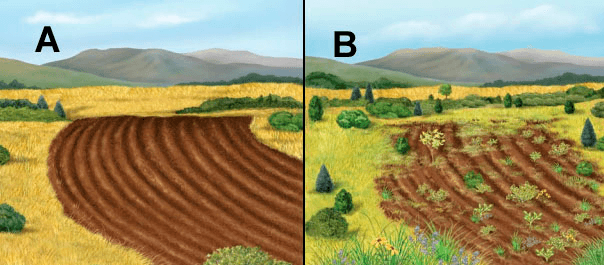
What is the order of succession shown in this figure?
a)
A, B, C, D
b)
B, A, D, C
c)
C, D, A, B
d)
D, A, B, C
78.
What type of succession is shown going from figure A to figure B?
a)
primary succession
b)
ecological succession
c)
secondary succession
d)
intermediate
79.
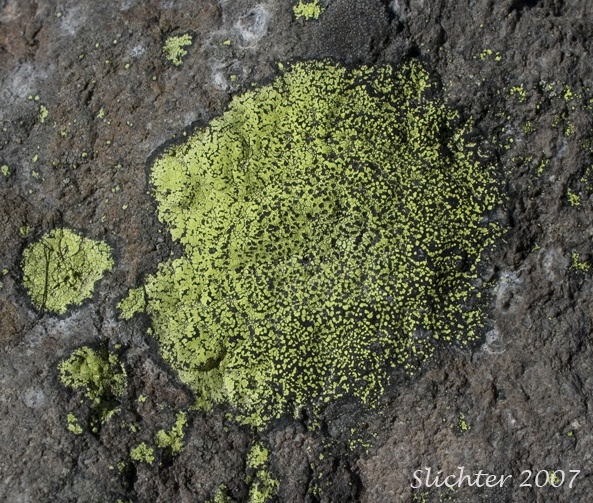
What is the goal of the pioneer species in Primary Succession?
a)
To kill the dead materials after a disaster
b)
To rebuild soil
c)
To feed Johnny
d)
To put fresh oxygen into the air
80.
What is the name given to lichen or algae after a primary succession?
a)
pioneer species
b)
volunteer species
c)
founder species
d)
conqueror species
81.
After a volcanic eruption, lava covers the land. What is the order that plants grow to repopulate the area?
a)
Lichens → Shrubs → Grasses → Trees
b)
Lichens → tree → shrubs→Grasses
c)
Grasses → Lichens → Shrubs → Trees
d)
Lichens → Grasses → Shrubs → Trees
82.
Succession that occurs in an area with NO SOIL
a)
ecological succession 
b)
primary succession 
c)
secondary succession
d)
pioneer speciles
83.
this type of succession occurs after a forest fire
a)
primary succession
b)
secondary succession
c)
both
84.

What is a scientist doing when she listens to the sounds that an elephant makes?

a)

making a conclusion

b)

making observations

c)

analyzing data

d)

making a hypothesis

85.

An essential feature of every good experiment is that it should

a)

Use a control

b)

Test a single variable

c)

Graph data

d)

Test a single variable and use a control

86.

What is the first step in an environmental decision making model?

a)

a. Explore the consequences of each option

b)

Consider which values apply to the issue

c)

Make a decision

d)

Gather information

87.

Risk is

a)

The collection of numerical data

b)

The probability that something wanted will happen

c)

The probability that something unwanted will happen

d)

A group of similar things of interest to a scientist

88.

The group that doesn’t get the experimental treatment in an experiment is the

a)

Control group

b)

Experimental group

c)

Data

d)

Variable

89.

In an experiment, the factor of interest is called the

a)

Control group

b)

Experimental group

c)

Hypothesis

d)

Variable

90.

When doing an experiment, what should you also be recording at the same time?

a)

data

b)

problems

c)

predictions

d)

songs

91.

When humans are able to live with a high quality of life while not depleting nonrenewable resources, a level of ______________ has been reached.

a)

Sustainability

b)

Depletion

c)

Desparation

d)

Overuse

92.

The time period when machines began to replace machines powered by humans or animals?

a)

Agricultural Revolution

b)

Hunter-Gatherer period

c)

The 80's

d)

Industrial Revolution

93.

This period in history is when humans grew plants and animals were raised and harvested, the human population dramatically increased.

a)

Industrial Revolution

b)

Agricultural Revolution

c)

Hunter-Gather period

d)

The Renaissance

94.
Oil, iron ore and diamonds are examples of what?
a)
Renewable Resources
b)
Nonrenewable Resources
c)
Biodegradable substances
d)
Biotic examples
95.
The time period that greatly improved the quality of life for humans but also uses triggered the use of nonrenewable resources at a level that is not sustainable.
a)
Industrial Revolution
b)
Agricultural Revolution
c)
Hunter-Gatherer Period
d)
The Great Depression
96.

the study of the interactions of living organisms with one another and with their environment.

a)

biology

b)

ecology

c)

environmental science

d)

agriculture

97.

the conflict between the short-term interests of individuals and the long-term welfare of society

a)

law of supply and demand

b)

law of economics

c)

Tragedy of the Commons

d)

scientific law

98.

Type of nation that has higher incomes and slow population growth.

a)

developed

b)

developing

99.

Type of nation that has lower incomes and a rapid population growth.

a)

developed

b)

developing

100.
The biome known for trees with broad leaves that fall off the trees in the winter.
a)
Coniferous Forests
b)
Deciduous Forests
c)
Deserts
d)
Tropical Rain Forests
101.
One characteristic feature of the tundra is that only the surface thaws in the summer and refreezes in the winter, leaving a permanently frozen subsoil. This characteristic is known as 
a)
Hoarfrost
b)
Glaciation
c)
Permafrost
d)
Crystallization 
102.
The taiga:
a)
a cold, treeless, desert-like biome found near the North and South Poles
b)
found mostly in Africa
c)
a forest biome dominated by coniferous trees, such as pine, fir, and spruce
d)
a dry, rocky biome found in the central part of South America.
103.
Name the biome that has cold winters, warm summers, moderate seasonal precipitation, fertile soils and occasional wildfires.
a)
Tropical Dry Forest
b)
Tropical Grassland
c)
Temperate Grassland
d)
Temperate Woodland/Shrubland
104.
Regions of Earth that are defined by their climate and the unique plants & animals that live there
a)
biome
b)
ecosystem
c)
environment
d)
niche
105.
What are the key features of the Tundra?
a)
cold winter, thin acidic soil, evergreen trees
b)
treeless, permafrost, cold dark winters
c)
ong cool summers, short dark winters, migrating animals
d)
many evergreen trees, short moist summers, long snowy winters
106.
Taiga is a biome consisting of evergreen trees (conifers).  Where is taiga found?
a)
northern parts of Mexico
b)
midwestern states such as Kansas
c)
northeastern states such as Maine
d)
southwestern parts of Canada
107.
a)
temperate deciduous forest
b)
desert
c)
grassland
d)
rainforest
108.
a)
tundra
b)
taiga
c)
temperate rainforest
d)
desert
109.
a)
desert
b)
temperate rainforest
c)
temperate deciduous forest
d)
grasslands
110.
a)
rainforest
b)
desert
c)
grassland
d)
taiga
111.
Choose the correct order of organization from smallest to largest
a)
Species--> Population--> Community--> Ecosystem-->Biosphere
b)
Community--> Species--> Population--> Biosphere --> Ecosystem
c)
Ecosystem--> Community--> Species--> Population--> Biosphere 
d)
Population-->Species--> Community--> Ecosystem-->Biosphere
112.
Biome with many different species of cacti and reptiles and very little rainfall.
a)
Desert
b)
Temperate Rainforest
c)
Tropical Rainforest
d)
Tundra
113.
Forest biome with many different trees, mosses and ferns; most trees lose and regrow their leaves each year.
a)
temperate rainforest
b)
biome
c)
savannah
d)
boreal
114.
A large, relatively distinct region with a similar climate, soil, plants, and animals
a)
ecozones
b)
biotopes
c)
biomes
d)
biodomes
115.
Which biome is also called the "taiga"
a)
temperate deciduous forest
b)
boreal forest
c)
temperate rainforest
d)
tropical rainforest
116.
The most important abiotic factors when studying biomes are...
a)
Food and Water
b)
Water and Sunlight
c)
Temperature and Oxygen
d)
Precipitation and Temperature 
117.
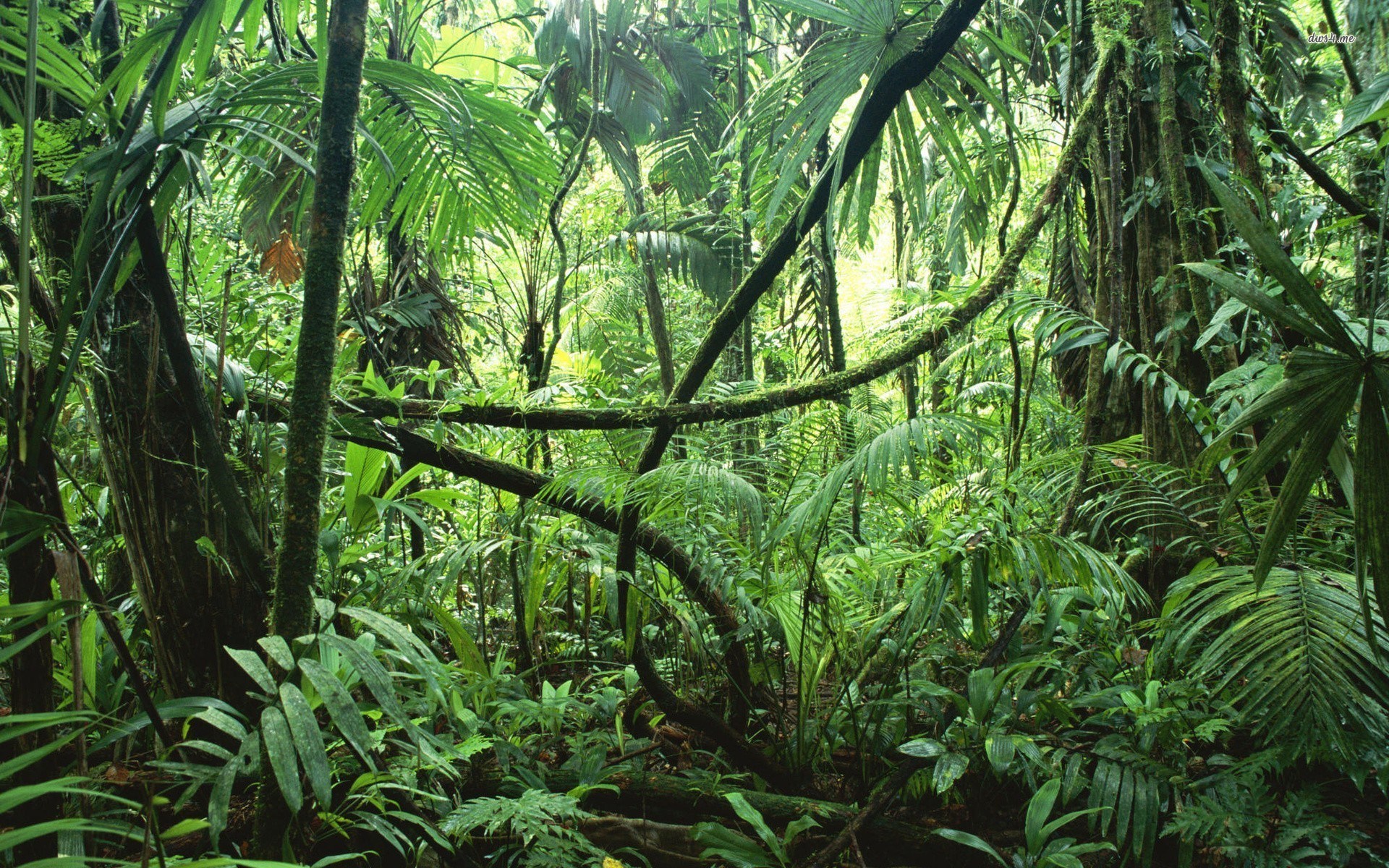
 What type of biome is pictured?
a)
Temperate Deciduous Forest
b)
Boreal Forest
c)
Tropical Rainforest
d)
Grassland
118.
Which biome has a climate is warm and moist throughout the year, and has more species of plants and animals than any other biome?
a)
Chaparral
b)
Tropical Rainforest
c)
Boreal Forest
d)
Tundra
119.

This biome contains American black bear, raccoon, porcupine, frog, and white tailed deer

a)

temperate deciduous forest

b)

chaparral

c)

taiga

d)

desert

120.
Which biome is characterized by low temperatures and low amounts of rainfall?
a)
tundra
b)
desert
c)
temperate deciduous forest
d)
tropical rain forest
121.
Which biome receives between 0 to 25 centimeters of rain per year, has a temperature range of 0 to 50 degrees Celsius, has poor soil, and is home to lizards, scorpions, and snakes?
a)
desert
b)
mountain
c)
taiga
d)
tundra
122.
Which city has the highest rainfall in July? 
a)
Iquitos ( Graph on Left)
b)
Monrovia (Middle Graph)
c)
Normanton (Graph on Right)
d)
None of the above
123.
Which city has the lowest rainfall in July? 
a)
Iquitos ( Graph on Left)
b)
Monrovia ( Middle Graph)
c)
Normanton (Graph on Right)
d)
None of the above
124.
Which month has the lowest average temperature?
a)
December
b)
November
c)
January
d)
February 
125.
This climate zone is located on the equator and is the hottest climate zone.
a)
Tropic
b)
Temperate
c)
Frigid
126.
The climate zone has mild temperatures and a half year long growing season.
a)
Tropic
b)
Temperate
c)
Frigid
127.

A climate graph measures:

a)

Temperature (A)

b)

Precipitation (B)

c)

Landforms

d)

A and B

128.

Which animal is found in a tundra?

a)

reindeer

b)

arctic wolf

c)

tawny owl

d)

gorilla

129.

On a climatogram, the bar graph represents _____________.

a)

precipitation

b)

temperature

130.

Which biome has the most yearly rainfall?

a)

tundra

b)

desert

c)

grasslands

d)

tropical rainforests

131.

Which biome has very hot days and very cold nights?

a)

tundra

b)

taiga

c)

tropical rainforest

d)

desert

132.
This type of aquatic ecosystem is a mix of fresh and salt water.
a)
estuary
b)
lake
c)
river
133.
The major abiotic factors that influence aquatic ecosystems include
a)
water temperature and amount of light
b)
plants and animals
c)
water and plants growing there
134.
One of the benefits of wetlands, is that they can
a)
replace lakes and ponds
b)
filter pollutants out of water
c)
provides land for housing developments
135.
Which is a fresh water ecosystem?
a)
river
b)
estuary
c)
ocean
136.
Aquatic ecosystem that has a thin layer of water covering soil that is wet most of the time is called ____.
a)
wetland
b)
estuary
c)
lake
d)
puddle
137.
Why does photosynthesis not occur in the deep ocean? 
a)
Lack of nutrients
b)
Low oxygen levels
c)
Excess sunlight
d)
Sunlight does not penetrate
138.
The largest freshwater marsh in the United States.
a)
Louisiana swamp
b)
Mississippi river
c)
Texas coastline
d)
Florida everglades
139.
Which two biomes have the least precipitation?
a)
tropical rain forest and temperate grasslan
b)
savanna and tropical dry forest
c)
tundra and desert
d)
boreal forest and temperate woodland
140.

The photic zone

a)

extends to the bottom of the open ocean

b)

extends to a depth of about 100 meters

c)

is deep, cold, and permanently dark

d)

is where chemosynthetic bacteria are the producers

141.
phytoplankton are
a)
tiny autotrophic organisms in water
b)
large plants 
c)
tiny heterotrophic organisms in water
d)
large animals
142.

Which zone in this pond would be classified as benthic?

a)

A

b)

B

c)

C

143.

Which zone in the pond would you expect the greatest amount of biological diversity?

a)

A

b)

B

c)

C

144.

Which ecosystem is sometimes referred to as a “marine desert,” due to its lack of life?

a)

Coastal zone

b)

Benthic zone

c)

Open ocean

d)

Tidal zone

145.

Of the three types of inland freshwater wetlands, which one would you expect to find no trees, and a normal pH level?

a)

Swamp

b)

Marsh

c)

Bog

d)

All of these

146.

This is the most productive ecosystem in the ocean. It is formed as the result of a tiny animal and algae living in a mutualistic relationship.

a)

Mudflat

b)

Sandy shore

c)

Rocky shore

d)

Coral reef

147.

This diagram represents what type of coastal wetland?

a)

Sea grass bed

b)

Salt marsh

c)

Mangrove swamp

d)

Estuary