
Font size
 Worksheets
Marine Food Web Vocabulary #3
Total questions: 38
Worksheet time: 24mins
When do krill typically bloom?
During winter with decreasing sunlight hours
During spring with increasing warmth and sunlight hours
During autumn with stable temperatures
During summer with decreasing warmth
Which organisms are considered filter feeders?
Zooplankton and krill
Sharks and Swordfish
Baleen whales and manta rays
Phytoplankton and animal plankton
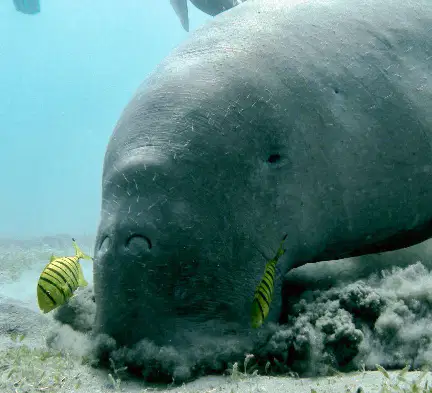
What type of organisms eat seagrasses and algae?
Predators
Grazers
Scavengers
Decomposers
Why are fat-soluble toxins harder to excrete?
Because they dissolve in water and are excreted through urine.
Because they accumulate in fat tissues and are not easily broken down.
Because they are broken down by enzymes in the liver.
Because they are absorbed by apex predators.
Where are toxin concentrations the highest in the food web?
In primary producers.
In apex predators.
In herbivores.
In water-soluble organisms.
How does mercury enter water from the atmosphere?
Through gas exchange with the atmosphere
Through direct absorption by aquatic animals
Through precipitation during rainfall
Through the melting of glaciers
What happens to mercury absorbed by plants?
It is passed up to the next level in the food chain
It is completely excreted by the plants
It is converted into oxygen during photosynthesis
It is stored in the roots and does not move further
What is the name of the toxin responsible for Ciguatera fish poisoning?
Saxitoxin
Ciguatoxin
Tetrodotoxin
Brevetoxin
What is one way PCBs affect marine mammals like orcas and polar bears?
They improve their ability to hunt prey.
They disrupt immune and reproductive systems.
They increase their lifespan.
They make them resistant to diseases.
What is biomagnification in the context of plastics?
The process by which plastics are recycled into new products
The accumulation of plastics in the food web, affecting species at higher levels
The breakdown of plastics into harmless substances
The use of plastics to create artificial ecosystems
What are microplastics?
Plastics larger than 5 mm
Plastics smaller than 5 mm that absorb toxins from water
Plastics that are biodegradable
Plastics used in construction materials
What is one of the effects of microplastics on marine animals?
Microplastics provide nutrients to marine animals
Microplastics can be ingested by marine animals, potentially harming them
Microplastics help marine animals grow faster
Microplastics protect marine animals from predators
producers
organisms that create their own food through photosynthesis
consumers
organisms that consume other organisms
decomposers
organisms that break down matter such as the remains of organisms
Select the 3 organisms that would cause the greatest disruption of the food web if they were removed.
producers
make their own food
1st level consumers
eat producers
2nd level consumers
eat 1st level consumers
3rd level consumers
eat 2nd level consumers
4th level consumers
eat 3rd level consumers
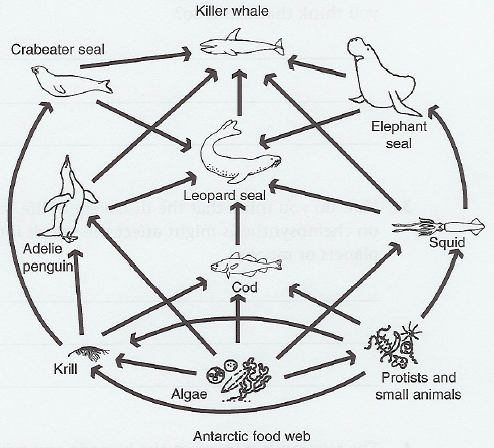

Mice might grow in population and destroy the community by eating all of the berry bushes if
wolves and snakes were removed from the food web
another predator migrated in to the community
the snake population grew
none of these
What is the position an organism fills in its food web called?
Food chain level
Trophic level
Energy level
Nutritional level
Which organisms are found in Trophic Level 1?
Herbivores
Primary producers
Zooplankton
Grazers
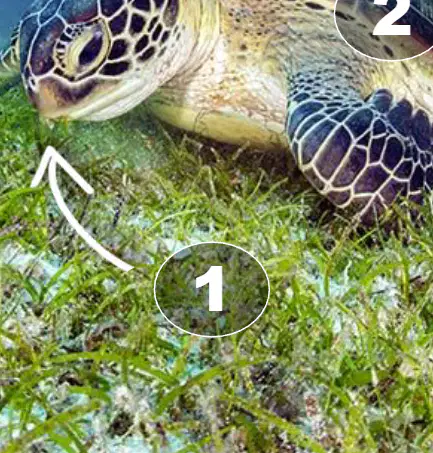
What type of organisms are included in Trophic Level 2?
Autotrophs
Primary producers
Primary consumers
Macroalgae
Which of the following is an example of a primary producer?
Zooplankton
Kelp
Urchins
Snails
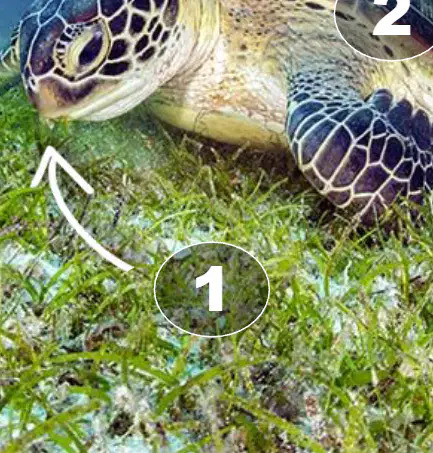
What do primary consumers in Trophic Level 2 primarily eat?
Other consumers
Plants and algae
Macroalgae and kelp
Phytoplankton
What type of consumers are found at Trophic Level 3 in a food chain?
Primary consumers
Secondary consumers
Tertiary consumers
Apex predators
Which trophic level contains tertiary consumers in a food chain?
Trophic Level 2
Trophic Level 3
Trophic Level 4
Trophic Level 5 or 6
What is the role of apex predators in a food chain?
They are primary producers.
They regulate the population of organisms below them.
They are secondary consumers.
They occupy Trophic Level 2.
What is a characteristic of species within a food web?
They only occupy one trophic level.
They have a varied diet and occupy different levels.
They are always apex predators.
They are always primary consumers.
What role do decomposers play in an ecosystem?
They produce energy for primary consumers.
They break down dead organisms and release nutrients.
They consume primary producers directly.
They store energy for higher trophic levels.
Which type of organism is most commonly found as decomposers in the ocean?
Fish
Bacteria
Algae
Crustaceans
Why do trophic levels rarely exceed five in an ecosystem?
Energy is lost at each step, leaving only 10% to pass on.
Organisms at higher levels are less efficient.
There is a lack of primary producers.
Predators consume all available energy.
What percentage of energy is typically transferred from one trophic level to the next in a food chain?
10%
50%
25%
90%
Which of the following is an example of a primary producer in the ocean that drifts in the photic zone?
Phytoplankton
Mangroves
Marsh grasses
Seagrasses
Seaweeds, such as kelp and sargassum, can be described as:
Drifting only
Benthic or drifting
Found only in shallow estuaries
Microalgae
Microscope organisms that produce their own energy from sunlight ?
Photosynthesis
Autotrophs
Cyanobacteria
Phytoplankton
What is the pigment found in chloroplasts?
Colors
Nitrogen
Chlorophyll
Green
Fill in the equation for photosynthesis:
(a) + Water + (b) --> (c) + Glucose
A student is collecting the gas given off from a plant in bright sunlight at a temperature of 27°C. The gas being collected is probably ________.
oxygen
carbon dioxide
nitrogen
glucose
The chemical equation for photosynthesis is
Carbon dioxide + Water + Light --> Glucose + Oxygen
Glucose + Carbon Dioxide + Light --> Oxygen + Water
Oxygen + Carbon Dioxide --> Light + Glucose + Water
Light + Carbon Dioxide --> Oxygen + Water + Glucose

