
Font size
 Worksheets
Quantum Chemistry
Total questions: 91
Worksheet time: 1hrs 3mins
Foundational Principles: Fill in the blank. The Hamiltonian Operator represents the total ______ (kinetic and potential) of the electrons and nuclei in the system.
energy
charge
mass
velocity
Foundational Principles: Fill in the blank. The Wavefunction describes the quantum ______ of the system, from which all measurable properties can be derived.
state
energy
particle
force
Foundational Principles: Fill in the blank. The Eigenvalue represents the allowed total ______ of the system.
energy
mass
charge
momentum
Fill in the blank: Predicting stable bond lengths and angles (optimization) is an application of _________
Molecular Geometry
Thermodynamics
Electrochemistry
Quantum Numbers
Fill in the blank: Mapping out the energy landscape of a reaction to find the transition state and activation energy is called _________.
Reaction Mechanisms
Stoichiometry
Catalysis
Equilibrium Analysis
Fill in the blank: Calculating vibrational frequencies (IR/Raman), electronic excitation energies (UV-Vis), and NMR shifts is an application of _________
Spectroscopy
Chromatography
Electrochemistry
Crystallography
Fill in the blank: Determining properties like dipole moments, polarizability, and ionization potentials is an application of _________
Molecular Properties
Chemical Reactions
Thermodynamics
Spectroscopy
Fill in the blank: Designing new materials with specific electronic or optical properties is an application of _________
Material Science
Botany
Astronomy
Psychology
Fill in the blank: The state of a quantum mechanical system is completely specified by a ________ or wavefunction, which depends on the coordinates of the particle(s) and on time.
state function
probability density
energy level
quantum number
Fill in the blank: The quantity represents the probability of finding the particle within the ________ and location.
volume element
energy level
time interval
mass region
To every measurable physical observable in classical mechanics (like position, momentum, or energy) there corresponds a unique linear, ________ operator in quantum mechanics. Fill in the blank.
Hermitian
Unitary
Symmetric
Orthogonal
Mathematical Significance of Postulate 2: The Hermitian property ensures that the calculated expectation values (Postulate 4) and eigenvalues (Postulate 3) are ________ numbers, as all physically observable quantities must be. Fill in the blank.
real
complex
imaginary
negative
In any measurement of an observable associated with the operator, the only values that will ever be observed are the ________ that satisfy the eigenvalue equation. Fill in the blank.
eigenvalues
quantum numbers
probabilities
amplitudes
Physical Significance of Postulate 3: What does this postulate formalize in quantum mechanics?
Postulate 4: Expectation Values If a system is in a state described by the normalized wavefunction, the average value (or expectation value) of the observable corresponding to operator is given by:
The time evolution of the state function of a system is governed by the ________ equation.
time-dependent Schrödinger
Heisenberg
Maxwell
Boltzmann
If a measurement of the observable yields the eigenvalue, the wavefunction of the system instantaneously ________ from its initial state into the corresponding eigenfunction associated with that eigenvalue.
collapses
expands
oscillates
disperses
Fill in the blank: The relationship is defined by the Eigenvalue Equation: {A}psi = _____ psi.
lambda
alpha
beta
gamma
Fill in the blank: The role of the eigenfunction (psi) is that it is the function that is ______ in form by the operation.
unchanged
altered
multiplied
reversed
Fill in the blank: The eigenvalue (lambda) is the ______ result of the operation.
characteristic numerical
random
approximate
variable
Fill in the blank: An eigenfunction is a function whose ______ is preserved under a specific operation, and the eigenvalue is the ______ by which it's scaled.
form, factor
shape, multiplier
value, constant
structure, coefficient
What does the Hamiltonian operator represent in the Schrödinger Equation?
The total energy of the system.
The probability density of the system.
The position of the particle.
The wave function of the system.
What does the wavefunction (psi) describe in quantum mechanics?
The quantum state or atomic/molecular orbital.
The speed of an electron.
The mass of a proton.
The color of a photon.
What do the eigenvalues (E) represent in quantum mechanics?
The allowed energy levels.
The position of particles.
The speed of light.
The charge of an electron.
In quantum mechanics, what are the only possible values that can be measured for the energy of the system?
Eigenvalues (E)
Wavefunctions (ψ)
Quantum numbers (n)
Probability densities (|ψ|²)
What are the specific stationary states the system occupies when that energy is measured called?
Eigenfunctions (psi)
Wave packets
Probability densities
Quantum numbers
Every measurable physical property (an observable) has a corresponding ______ operator.
Hermitian
Unitary
Symmetric
Skew-Hermitian
The discrete, quantized values (e.g., position, momentum, angular momentum) that can result from a measurement are called:
Eigenvalues
Wavefunctions
Probabilities
Operators
In the context of Vibration and Resonance in Engineering, what is a System?
A mechanical structure, like a bridge, wing, or building.
A type of vibration measurement device.
A mathematical equation used in engineering.
A chemical compound used in construction.
In the context of Vibration and Resonance in Engineering, what is an Operator?
An operator derived from the physical equations of motion.
A device used to measure vibrations.
A person who operates machinery.
A mathematical constant used in resonance calculations.
In the context of Vibration and Resonance in Engineering, what do Eigenvalues (lambda) represent?
The natural frequencies (or resonant frequencies) of the structure.
The damping ratio of the system.
The amplitude of vibration at resonance.
The mass of the vibrating structure.
In the context of Vibration and Resonance in Engineering, what do Eigenfunctions (psi) represent?
The corresponding mode shapes (the shape the structure takes when vibrating at that natural frequency).
The damping ratio of the vibrating system.
The external force applied to the system.
The frequency response of the system.
In the context of Vibration and Resonance in Engineering, what is the application of eigenvalues and eigenfunctions for engineers?
Engineers use this to design structures that avoid dangerous resonance with external forces (like wind or earthquakes).
Engineers use this to calculate the amount of paint needed for a structure.
Engineers use this to determine the color of materials used in construction.
Engineers use this to measure the temperature changes in a vibrating structure.
In the context of Data Analysis (Principal Component Analysis - PCA), what is a System?
A dataset with many variables (a covariance matrix).
A single variable measured repeatedly over time.
A method for visualizing categorical data.
A type of neural network used for classification.
In the context of Data Analysis (Principal Component Analysis - PCA), what is the Operator?
The Covariance Matrix of the data.
The Mean Vector of the data.
The Standard Deviation of the data.
The Eigenvalues of the data.
In the context of Data Analysis (Principal Component Analysis - PCA), what do Eigenvalues (lambda) represent?
The variance of the data along a specific dimension. The larger the eigenvalue, the more important that dimension is.
The mean of the data along a specific dimension.
The correlation between different principal components.
The number of principal components extracted from the data.
What do eigenvectors (the vector form of eigenfunctions) define in Principal Component Analysis (PCA)?
Principal Components (PCs)
Covariance Matrices
Singular Values
Regression Coefficients
In Google's PageRank Algorithm, what does the 'System' refer to?
The vast network of web pages and links (represented by a matrix).
The ranking of search results based on user clicks.
The algorithm used for sorting emails in Gmail.
The hardware infrastructure supporting Google servers.
In Google's PageRank Algorithm, what is the 'Operator'?
The Link Matrix derived from the structure of the web.
The number of search queries processed per second.
The total number of web pages indexed.
The algorithm used for ranking advertisements.
In Google's PageRank Algorithm, what is the 'Eigenvector'?
The PageRank vector.
The adjacency matrix.
The damping factor.
The transition probability.
In Google's PageRank Algorithm, what does the 'Application' of the eigenvector represent?
The relative importance (PageRank) of each web page.
The total number of links on a web page.
The frequency of keyword usage on a web page.
The loading speed of a web page.
What is a harmonic oscillator in physics?
A fundamental model in physics describing a system that, when displaced from its equilibrium position, experiences a restoring force that is directly proportional to the displacement and always directed back toward the equilibrium position.
A device used to measure temperature changes in a system.
A type of wave that only exists in liquids.
A system that does not experience any restoring force when displaced from equilibrium.
What is the equation for the restoring force in a harmonic oscillator according to Hooke's Law?
F = kx
F = ma
F = 21 kx^2
F = mg
What does the variable F represent in the context of the equation for a simple harmonic oscillator?
F is the restoring force.
F is the displacement.
F is the mass of the oscillator.
F is the spring constant.
What does the variable x represent in the equation for a simple harmonic oscillator?
x is the displacement from the equilibrium position.
x is the mass of the oscillator.
x is the spring constant.
x is the time period of oscillation.
What does the constant k represent in the equation for a simple harmonic oscillator?
k is a positive constant called the force constant (or spring constant), which represents the stiffness of the system.
k is the mass of the oscillator.
k is the amplitude of oscillation.
k is the frequency of oscillation.
What does the negative sign in the equation of motion for a simple harmonic oscillator indicate?
The negative sign indicates that the force is always directed opposite to the displacement (a restoring force).
The negative sign indicates that the force is always in the same direction as the displacement.
The negative sign indicates that the oscillator will never return to its equilibrium position.
The negative sign indicates that the motion is non-periodic.
By applying Newton's Second Law (F=ma), write the equation of motion for a simple, undamped harmonic oscillator.
m(dt2d2x)=−kx
m(dt2d2x)=kx
m(d2x/dt2)=−k/x
m(dt2d2x)=xk
What type of function describes the solution to the equation of motion for a simple harmonic oscillator?
A sinusoidal function (a sine or cosine wave).
A linear function.
An exponential function.
A polynomial function.
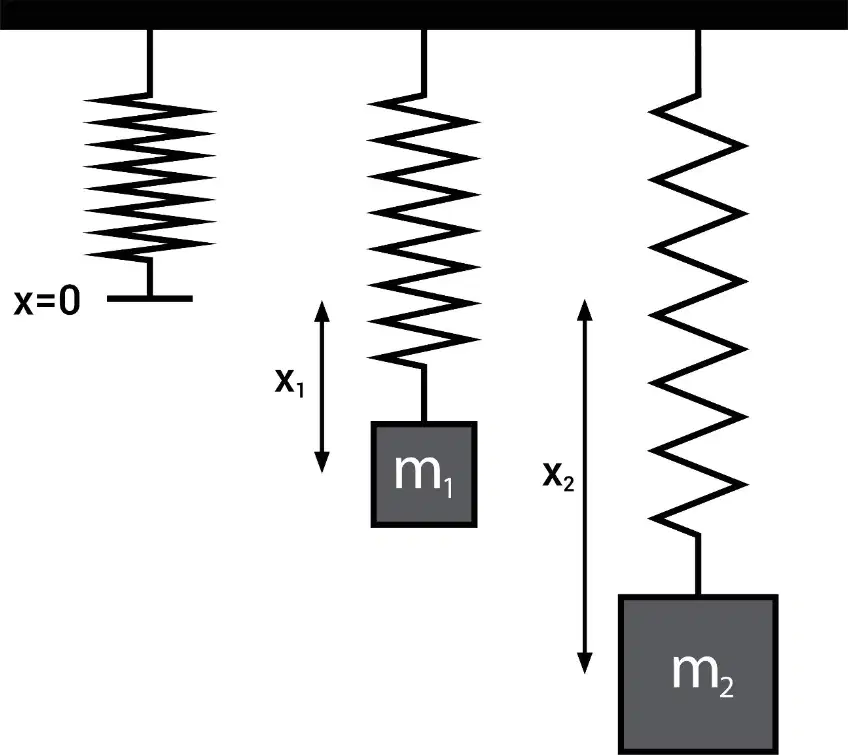
What does the variable x1 represent in the context of harmonic oscillators?
$x_1$ represents the displacement of mass $m_1$ from its equilibrium position.
$x_1$ represents the velocity of mass $m_1$.
$x_1$ represents the force acting on mass $m_1$.
$x_1$ represents the acceleration of mass $m_1$.
Explain what is meant by 'Mass on a Spring' as described in the worksheet.
What is a Simple Pendulum?
A small mass swinging at the end of a light string, provided the angle of displacement is small.
A heavy object attached to a thick rope, swinging at any angle.
A ball rolling down an inclined plane.
A rotating disc fixed at its center.
What is an Acoustic System?
The vibration of a guitar string or air molecules in an organ pipe.
The movement of electrons in a wire.
The rotation of wheels in a car.
The flow of water in a river.
What is an Electrical Circuit in the context of harmonic oscillators?
An ideal LC (Inductor-Capacitor) circuit, where the charge on the capacitor oscillates sinusoidally.
A circuit with only resistors, where current remains constant.
A DC circuit with a battery and a lamp, where voltage does not change.
A circuit with only capacitors, where energy is stored but not transferred.
What is the defining force in a Simple Harmonic Oscillator (SHO)?
Only the restoring force (F = -kx).
Only the gravitational force.
Only the frictional force.
Only the applied force.
What type of motion does a Simple Harmonic Oscillator exhibit?
Simple Harmonic Motion (SHM), where oscillations continue indefinitely with constant amplitude and frequency, as there is no energy loss.
Random Motion, where the oscillator moves unpredictably without any pattern.
Uniform Linear Motion, where the oscillator moves in a straight line at constant speed.
Damped Motion, where the amplitude of oscillations decreases over time due to energy loss.
What additional force is present in a Damped Harmonic Oscillator compared to a Simple Harmonic Oscillator?
A damping force (e.g., friction or air resistance), which is typically proportional to the velocity.
A gravitational force acting vertically downward.
A centripetal force directed towards the center.
A magnetic force due to a changing magnetic field.
In a Damped Harmonic Oscillator, what happens to the amplitude of oscillations over time?
The amplitude of the oscillations gradually decreases over time as energy is dissipated.
The amplitude of the oscillations remains constant over time.
The amplitude of the oscillations increases over time.
The amplitude of the oscillations fluctuates randomly over time.
What does 'Critically Damped' mean in the context of oscillators? Fill in the blank: Critically Damped returns to equilibrium as quickly as possible ______ oscillating.
without
while
by
after
Fill in the blank: In a driven harmonic oscillator, the system is forced to oscillate at the frequency of the ______.
external driver
natural oscillator
spring constant
damping force
Fill in the blank: If the driving frequency is close to the oscillator's natural frequency, the amplitude of the oscillations can become very large. This phenomenon is called ______.
resonance
diffraction
polarization
reflection
What is the expected value (or expectation value) of a physical quantity in quantum mechanics? Fill in the blank: The expected value is the probabilistic average of all possible measurement outcomes for that quantity on a ______ system.
quantum mechanical
classical
thermodynamic
macroscopic
In quantum mechanics, a physical quantity that can be measured, such as position, momentum, or energy, is called an ______.
observable
operator
wavefunction
eigenvalue
What is the expectation value for a system described by a normalized wavefunction Psi(x, t)?
The expectation value is ⟨A⟩=∫−∞∞Ψ∗(x,t)A^Ψ(x,t)dx
The expectation value is ⟨A⟩=∫−∞∞Ψ(x,t)A^Ψ∗(x,t)dx
The expectation value is ⟨A⟩=∫−∞∞Ψ∗(x,t)Ψ(x,t)dx
The expectation value is ⟨A⟩=∫−∞∞A^Ψ∗(x,t)Ψ(x,t)dx
The quantum mechanical operator for the observable is denoted by _______.
\hat{A}
A
\vec{A}
A∗
The infinitesimal element of space over which the integration is performed is denoted by _______.
dx
dt
dA
dV
Orthogonality of wave functions in quantum mechanics means that if two different wave functions are solutions to the same Hermitian operator, they must be mathematically _______ to each other in Hilbert space.
independent or perpendicular
parallel
identical
dependent
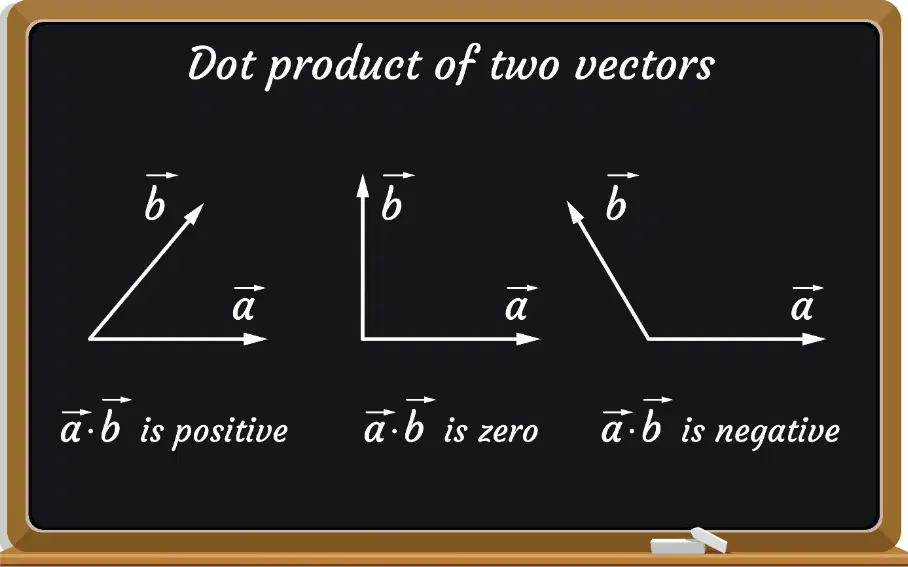
When the angle between vectors a and b is 90 degrees, what is the value of the dot product a·b?
a·b is zero
a·b is maximum
a·b is minimum
a·b is equal to the product of their magnitudes
What does it mean for two quantum states to be orthogonal in terms of probability?
There is zero probability of finding the system in one state if it is in the other orthogonal state.
There is a 50% probability of finding the system in either state.
The states have identical probabilities for all measurements.
Orthogonal states always have equal energy.
What does the Uniqueness of Measurement principle state about orthogonal eigenstates of an observable?
Orthogonal eigenstates of an observable correspond to different, unique values (eigenvalues) that can be measured for that observable.
Orthogonal eigenstates of an observable always have the same eigenvalue.
Orthogonal eigenstates of an observable cannot be measured simultaneously.
Orthogonal eigenstates of an observable are always degenerate.
What is a complete basis set in the context of orthogonal wave functions for a quantum system?
The set of all orthogonal wave functions for a given system forms a complete basis set, meaning any allowed quantum state for that system can be expressed as a linear combination of these orthogonal basis states.
A complete basis set consists only of the ground state wave function for a quantum system.
A complete basis set is a set of wave functions that cannot be combined to form other quantum states.
A complete basis set refers to a set of wave functions that are not orthogonal but span the quantum system.
According to the Orthogonality Theorem, what is guaranteed for the eigenstates of any observable?
The property of orthogonality is guaranteed for the eigenstates of any observable because all operators corresponding to physical observables are Hermitian operators.
The eigenstates of any observable are always degenerate.
The eigenstates of any observable have equal probabilities.
The eigenstates of any observable are always real-valued.
State the Orthogonality Theorem: Eigenfunctions of a Hermitian operator that correspond to different (nondegenerate) eigenvalues are always ________.
orthogonal
parallel
identical
complex
What is the orthonormality condition in quantum mechanics?
The orthogonality condition is often combined with the normalization condition to create a set of orthonormal wave functions.
It is the condition that all wave functions must be periodic.
It requires that all wave functions have zero energy.
It states that all wave functions must be real-valued.
What does the normalization condition ensure in quantum mechanics?
The normalization condition ensures the total probability of finding the particle somewhere in space is one.
The normalization condition ensures the energy of the particle is always positive.
The normalization condition ensures the particle moves in a straight line.
The normalization condition ensures the wave function is always zero.
What does the orthonormality condition combine in quantum mechanics?
It combines both orthogonality and normalization properties into a single expression using the Kronecker delta.
It combines only the normalization property using the Dirac delta.
It combines only the orthogonality property using the Pauli matrices.
It combines the uncertainty principle and normalization into a single expression.
Degeneracy in quantum mechanics refers to the situation where two or more distinct ______ of a quantum mechanical system have the same energy level.
stationary states
energy levels
quantum numbers
wave functions
The degree of degeneracy (or simply the degeneracy, g) is the number of linearly independent quantum states that all correspond to the same ______ level.
energy
temperature
pressure
volume
If an energy level E has g=1 , the state is ________.
non-degenerate
degenerate
excited
forbidden
If an energy level E has g>1 , the state is ________.
degenerate
excited
forbidden
singlet
Degeneracy usually arises from ______ in the system's potential.
symmetry
randomness
temperature
pressure
What is the process called when a degenerate energy level splits into multiple distinct energy levels due to an external influence breaking the symmetry?
lifting the degeneracy
quantum tunneling
energy absorption
wavefunction collapse
What is the Zeeman Effect?
The splitting of energy levels due to an external magnetic field.
The merging of atomic orbitals due to high temperature.
The emission of light from a heated filament.
The absorption of energy by electrons in a vacuum.
What is the Stark Effect?
The splitting of energy levels due to an external electric field.
The splitting of energy levels due to an external magnetic field.
The emission of light by a substance when exposed to radiation.
The absorption of light by a substance in the presence of a catalyst.
What does the three-dimensional box model illustrate in quantum mechanics?
Quantization, zero-point energy, and degeneracy.
Wave-particle duality and uncertainty principle.
Superposition and entanglement.
Classical trajectories and deterministic motion.
Inside the box, what is the value of the potential energy V(x, y, z)?
0
1
-1
V0
Outside the box, what is the value of the potential energy V(x, y, z)?
Infinity
Zero
-Infinity
1 Joule
Explain the method of separation of variables as used in solving the time-independent Schrödinger equation. Include how the total wave function is written as a product of three 1D wave functions.
Write the normalized wave function for a particle in a 3D box as given in the worksheet.
What are quantum numbers in the context of the 3D particle in a box, and what values can they take?
State the condition for the ground state of a particle in a 3D box as described in the worksheet.

