
 Worksheets
Cumulative 6th Grade Social Studies
Total questions: 109
Worksheet time: 2hrs 33mins
Which term describes a government where power is limited by laws and a constitution?
Totalitarian
Constitutional
Monarchy
Dictatorship
Which line of latitude is known as the Equator?
0∘
90∘
45∘
180∘
How does a constitutional government differ from a command (communist) government?
It has no laws.
It limits the power of leaders.
It is ruled by one person.
It controls all aspects of life.
Why is the location of the Ganges River significant to India?
It is a source of gold.
It is important for transportation and religion.
It separates India from China.
It is the longest river in the world.
How do religious ideas influence culture in India?
They have no influence.
They shape festivals, food, and daily life.
They only affect government.
They are not practiced.
How do the physical features of Russia affect its population distribution?
Most people live in the coldest areas.
Population is concentrated in the western part due to harsh climate in Siberia.
People live evenly across the country.
Everyone lives in Siberia.
A country has a government where leaders are elected and their powers are limited by a constitution. What type of government is this?
Unlimited government
Limited government
Monarchy
Dictatorship
Evaluate how the location of the Himalayan Mountains affects the climate and culture of India.
It has no effect.
It creates a barrier that influences weather and cultural practices.
It makes India a desert.
It is only important for tourism.
Strategically analyze why urban centers like Mumbai are located near water bodies.
For religious reasons only.
Access to trade, transportation, and resources.
To avoid mountains.
Because of climate.
Describe how the physical geography of China influences its population distribution.
Most people live in the mountains.
Population is concentrated in the eastern plains due to fertile land and rivers.
People live evenly across the country.
Everyone lives in the desert.
Using evidence, explain how the location of major water bodies has influenced the development of urban centers in Russia.
Urban centers developed far from water bodies.
Proximity to rivers like the Volga has supported trade and population growth.
Water bodies have no impact.
Urban centers are only found in Siberia.

The measure of how crowded a place is is known as __________.
economic recovery
population density
demographics
worldwide census

Any productive resource existing in nature, including wild plants, minerals, wind, oil, and water:
Unnatural Resources
Artificial Resources
Natural Resources
Essential Goods

The United States is part of which continent?
North America
South America
Europe
Asia


Tokyo, Japan resides where number 14 is on the image. What region is that?
East Asia
Southwest Asia
English North America
Austral-asia


Led by a king or queen.
Dictatorship
Monarchy

- Economic System
- No government interference
- Owners of capital are free to do as they like
Free Enterprise
Command Economy


This type of government claims to gain its power from their god; a mixture of government and religion.
Empire
Democracy
Monarchy
Republic
Theocracy

What does representative democracy mean?
A king and his family rule the country.
Nobody can choose their leaders.
The people vote for their leaders.
Existing leaders pass on their job to their family.


Type of government ruled by a small group of individuals, sometimes with one person who seems to be the main leader.
oligarchy
republic
monarchy
democracy


This landform is surrounded by water on 3 sides.
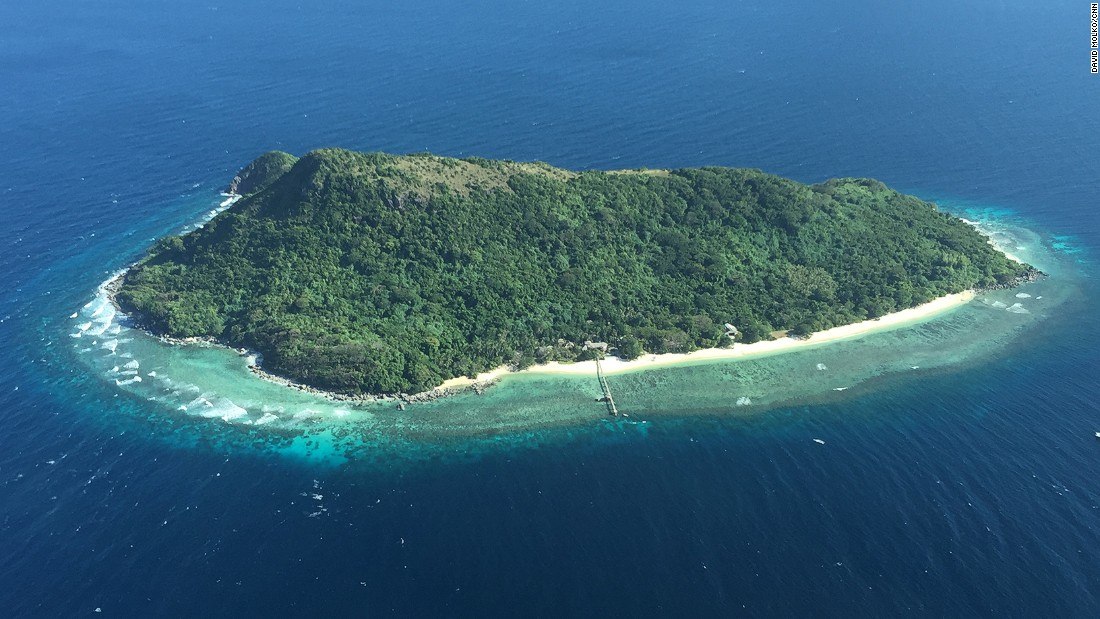
Island
Peninsula
Bay
Archipelago

What is an area of land completely surrounded by water?
Peninsula
Island
Volcano
River

What is a narrow strip of land with sea on either side, forming a link between two larger areas of land?
Strait
Desert
Gulf
Isthmus

What is a large body of fresh water that flows into other bodies of water?
River
Valley
Plain
Lake

What is a large group or chain of islands called?
Archipelago
Peninsula
Fjord
Island
What is a large group or chain of islands called?
Archipelago
Peninsula
Fjord
Island

What is an extremely dry area with little water and few plants?
Drought
Desert
Mesa
Glacier

What is a narrow passage of water connecting two larger bodies of water.
Ocean
Strait
Bay
River

What is a landform with steep sides that rises abruptly from the surrounding land, usually forming a peak.
Plateau
Mountain
Canyon
Glacier

What is an area of low flat land shaped like a triangle, where a river splits and empties into a large body of water.
Lake
Delta
Archipelago
River

What is a flat, elevated landform that rises sharply above the surrounding area on at least one side.
Valley
Plain
Mountain
Plateau





Which of the following statements is true about atheists?
They hate people who believe in God
They worship nature instead of God
They do not believe in a god or divine being
They worship many gods
Some beliefs of this religion are 4 Noble truths and Nirvana.
Buddhism
Islam
Hinduism
Christianity
This religion follows the 5 pillars.
Judaism
Christianity
Buddhism
Islam
This religion has polytheism.
Buddhism
Islam
Hinduism
Christianity
The Bible is their holy book.
Christianity
Judaism
Islam
Hinduism
The Qur'an is their holy book.
Islam
Buddhism
Christianity
Judaism
Belief in Allah.
Judaism
Buddhism
Islam
Hinduism
What was the religion of the Hebrews?
Judaism
Christianity
Buddhism
Islam
Hinduism
Which religion had the basic beliefs called th Four Noble Truths?
Judaism
Christianity
Buddhism
Islam
Hinduism
Which religion studies the Quran?
Judaism
Christianity
Buddhism
Islam
Hinduism
Which religion was founded by Abraham?
Judaism
Christianity
Buddhism
Islam
Hinduism


What is culture?
many cultures can be found together in one country
certain food and rituals that a country follows
the spreading of customs from one country to another
customs, religion, and language of a society

People moving from the rural areas to cities is called...
Ruralization
Urbanization
Colonization
None of these
The beliefs, customs, laws, art, and ways of living that a group of people share is...
Culture
Craziness
Living
Diffusion
Multiculturalism is...
A variety of animals in my house
A list of books to read
A variety of cultures within a community
A variety of vehicles within a community
The taking or borrowing of ideas, customs, and social behaviors from another culture is?
Cultural Diffusion
Perfume in the air
A new television show
stealing
An example of poverty is?
Buying a new outfit
Going to church
Not being able to afford shelter or clothing
Owning a mansion
What does it mean if a country has diversity?
it is a poor country
it is made up of only one culture
it is influenced by many different cultures
the people there only speak one language
All of the populations in a given area make up a ____________.
community
habitat
ecosystem
species
The size of a population compared to the amount of space available is called the _________________.
biotic potential
population density
limiting factor
carrying capacity

Which state has the greatest population density?
New Jersey
Rhode Island
Connecticut
Vermont

Which state has the largest population?
New Hampshire
Pennsylvania
New Jersey
New York

Which age group cohort has the largest # of males??
0-4
25-29
65-69
100+

Does the population pyramid of China have more males or females in the 5-9 age group?
Males
Females
Life Expectancy is...
the # of children per woman
how many people were born in a population
how many people died in a population
how long a person can expect to live

Is this country Developed or Developing?
Developed
Developing
Which of the following is true about the free enterprise/market economy?
There is competition.
People control and own businesses and private property.
People are motivated by profit.
All of the above

Number of people that can read and write is called
GDP
life expectancy
literacy rate
Longer life expectancy is associated with a(n)
developed country
underdeveloped country
The money made from all goods and services sold in a country in a year is called
life expectancy
GDP
infant mortality
Countries with high GDP, high literacy rate, and longer life expectancy are called
less developed
poor
developed

Supply and demand determines how much an item costs.
Traditional
Communist
Free Enterprise System
Socialist
Buyers and sellers make the decisions.
Traditional
Communist
Free Enterprise System
Socialist
Voting
Civic Duty
Civic Responsibility
Civic Obligation

Which Physical feature is located where the yellow star is on the map?
Appalachian Mountains
Mississippi River
Amazon River
Rocky Mountains
What is the process that brings water to the farm areas where farmers do not have access to water?
An extra long soaker hose
hydroelectric power
irrigation
desalination

What was the impact of industrialization?
The impact was generally positive; most people benefited from industrialization.
Industrialization was a zero-sum game.
The impact was mixed; the standard of living increased overall, but many people were exploited. There were more negatives.
The impact was more negative, mainly centered on exploiting people.

