
 Worksheets
Unit Test: Chapter 2, The First People
Total questions: 60
Worksheet time: 32mins
To learn about pre-history, archeologists study
writings from the time period.
first hand accounts, told by the people from the time.
artifacts to get hints about how people lived.
pictures from the time-period.
This word refers to "people who originally lived on the land before colonizers."
Prehistoric
Archeology
Indigenous
Indian
Check three correct answers that describe Paleo People. Paleo people ...
traveled in small family groups.
were nomadic.
were the first recorded farmers.
hunted and gathered their food.
Which ancient people came first?
Clovis
Folsom
When thinking of Clovis and Folsom people, how do we know who hunted larger animals?
The spear tips (points) for the Clovis people were larger, which means they hunted larger animals.
The spear tips (points) for the Folsom people were smaller, which means they hunted larger animals.
True or False: Both Clovis People and Folsom People count as Paleo People.
True
False
Which people came directly after Paleo people?
Clovis
Folsom
Archaic
Mogollon
This group of people traveled in larger groups, traded with other people, and built seasonal housing close to water.
Paleo
Clovis
Folsom
Archaic
True or false: Archaic people were less nomadic than Paleo people.
True
False
Which ancient people are considered the first farmers? (NOT full-time)
Paleo
Archaic
Mogollon
Ancestral Pueblan
What was the main method used by the first farmers to water their crops?
Used seasonal rainfall.
Dug ditches from the river to their crops.
Carried water in woven baskets.
Dry farming.
What have archeologists discovered happens when people have a stable food source and can stay in one place for longer periods of time rather than moving constantly?
The people become less intelligent and begin fighting.
The people develop society and culture, including creating new tools.
The populations significantly decrease.
The people split into smaller groups and avoid trade.
Which people were the first to develop the "pithouse" as a form of housing?
Paleo
Archaic
Mogollon
Ancestral Puebloan
Which of these best describes a pithouse?
A stone structure, built above ground.
An earthen structure, dug into the ground and made of a mix of tree, earth and animal skins.
Logs arranged in a cone shape and covered with animal skins.
Branches bent in a dome shape and covered with grass.
What tool allowed Archaic people to throw spears farther and faster?
Bow and Arrow
Javelin
Atlatl
Folsom Point
What did Archaic people use to create baskets, sandals, mats, ropes, string, and thread?
Animal Hair
Plant Fiber
Animal Skin
Metal
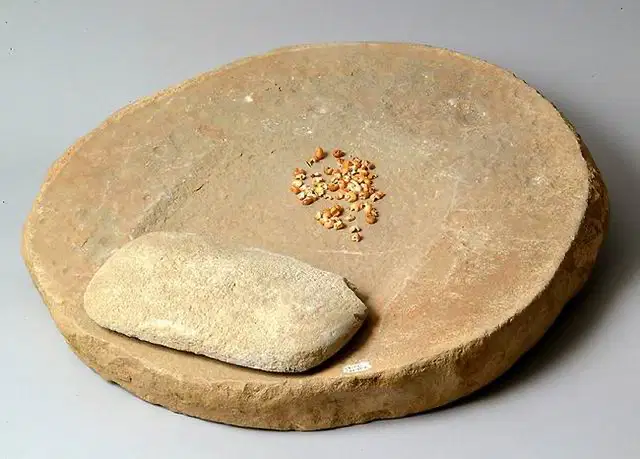
Which prehistoric people invented the metate and mano so they could grind seeds into flour?
Paleo
Archaic
Apache
Navajo
Which of these is NOT true about Archaic People?
First farmers.
Developed the Atlatl to throw spears further and faster.
Wove baskets to gather and store supplies.
Traveled in small family groups.
Which of these is NOT true about Paleo People?
Very nomadic.
Famous for the Folsom and Clovis points.
Hunted large animals and gathered other plants for food.
Dug ditches from the river to their crops.
What are the Mogollon people named after?
Their pottery.
The mountains where their pottery was found.
The river near their ancestral lands.
Choose the correct order of events:
Paleo people hunted with spears; Archaic people created the atlatl; Mogollon people invented the bow and arrow.
Archaic people created the atlatl; Paleo people hunted with spears; Mogollon people invented the bow and arrow.
Mogollon people invented the bow and arrow; Archaic people created the atlatl; Paleo people hunted with spears.
Which prehistoric people are considered the earliest full-time farmers?
Paleo
Archaic
Mogollon
Ancestral Puebloan
Which crops are part of the three sisters?
Corn, Beans, and Broccoli
Corn, Beans, and Squash
Corn, Berries, and Squash
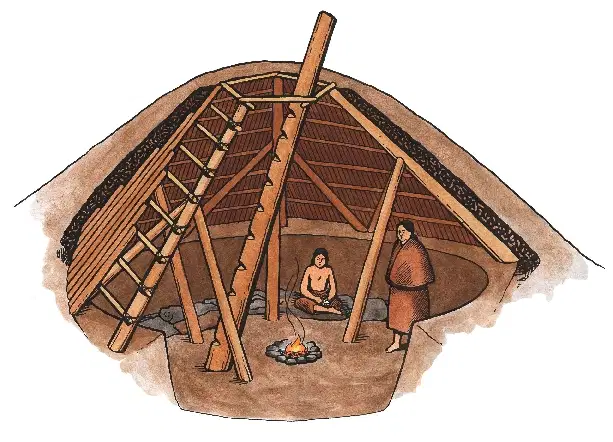
Which of the following people lived in pithouses at some point in their history? (select three)
Paleo
Archaic
Mogollon
Ancestral Puebloan
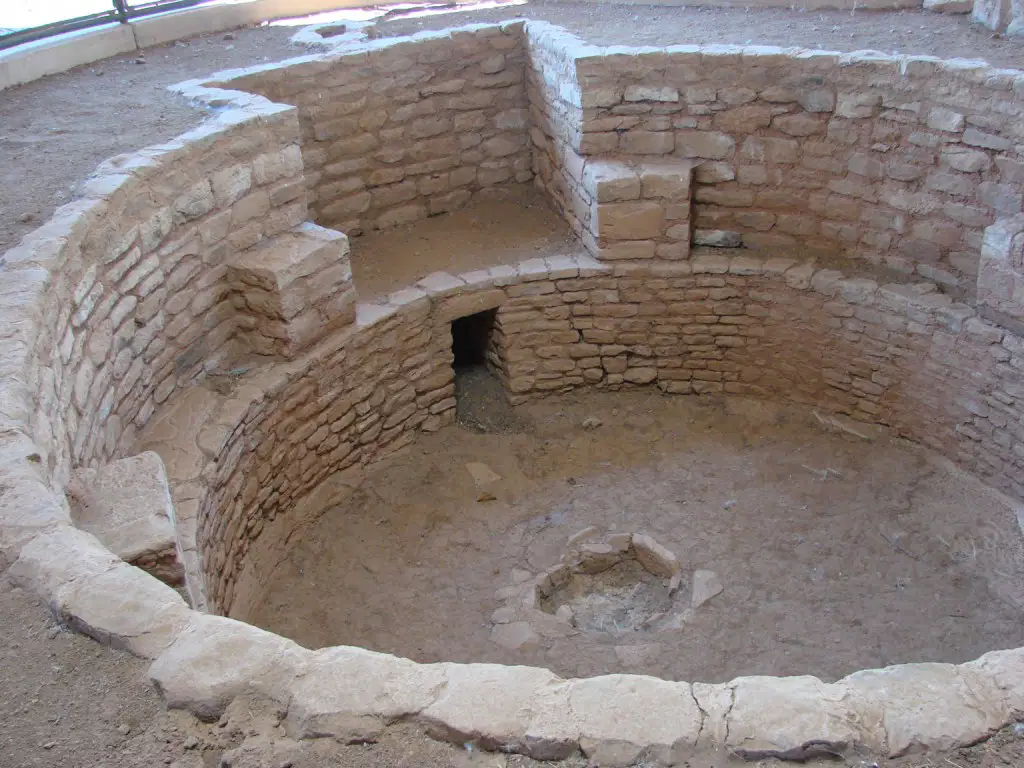
This pit dug into the ground was used for religious ceremonies by Pueblo Farming cultures.
Pueblo
Kiva
Sipapu
Pithouse
The Puebloan Farmers believed the __________ was a passageway to the spiritual realm. It was a hole in the center of a ceremonial pit.
Pueblo
Sipapu
Pithouse
Kiva
What are the main materials used by Puebloans to build pueblos?
Tree branches covered in fur.
Hand carved stone bricks and clay.
Logs, animal skin, and clay.
Bent tree branches, covered in grass.
Who do we believe taught the Mogollon people to build pueblos?
Paleo People
Archaic People
The Diné
Ancestral Puebloans
What are Mogollon people most famous for?
The invention of the bow and arrow.
The fact that they are considered the earliest full-time farmers.
Their pottery, which was crafted using rolled strips of clay. The interior of the pot was smoothed and painted. Many are black and white.
The Ancestral Puebloans were called (a) by the (b) which means (c) .
Ancient Ones
Anasazi
Dine
ancient enemy
Apachu
Mogollon
In what area of New Mexico did the Ancestral Puebloans live?
Southwestern area, in the Basin and Range.
Northwestern area, in the Colorado Plateau, near the Four Corners.
In the Eastern part of the state, in the Great Plains.
Which crop was the most important to the Ancestral Puebloans?
Sqash
Beans
Corn
When dry farming, what helps keep moisture in the ground?
The broad leaves of the squash plant.
Putting piles of dead leaves on top of moist soil.
Digging an irrigation ditch from the river to the crops.
Why did Ancestral Puebloans start to build the pueblo style of housing?
Their populations grew so they needed a new form of housing to their larger communities.
They could store food in the lower part of the building.
The way they were built provided protection from raiders.
All of the above.
Who owned property in the Ancestral Puebloan society?
Men
Women
Property belonged to everyone.
In general, what does matriarchal mean?
Women have the power in the society.
Men have the power in the society.
This is the largest and most well-known early puebloan community.
Mogollon
Chaco Canyon
Anasazi
Diné
Pueblo Bonito was the largest Ancestral Puebloan community in Chaco Canyon. The pueblo was 5 stories tall and had between 600-800 rooms facing a central plaza with over 30 kivas. What modern day buildings/living structures would you compare this Pueblo Bonito community to? (choose three)
apartment buildings
hotels
casino resorts
small, pitched roof homes
What did the Great Northern Road do? (select three)
Allowed the Chaco Canyon pueblos to trade with cultures from Arizona, Utah, Colorado, and Mexico.
Connected the Chaco Canyon communities to each other.
Improved technology and resources for the Ancestral Puebloans.
Prevented the Dine people from trading with the Puebloans.
Which people moved from mesas and canyon valleys to cliff dwellings?
Paleo
Archaic
Mogollon
Ancestral Puebloan
This is art carved into rock.
Pictograph
Petroglyph
Fresco
For Ancestral Puebloan homes, what was the room at ground level used for?
It was used as a living space.
It was used to store food and supplies.
It was used as a gathering place for religious ceremonies.
It was where the women would gather to make community decisions.
How would an Ancestral Puebloan enter their home?
Through the front door at ground level.
By climbing a ladder to the second floor.
By entering a hole in the top of the pithouse.
By climbing through a window at the ground floor.
Which two Native American groups call themselves "Diné"? (select 2 correct answers)
Navajo
Apache
Mogollon
Archaic
Paleo
What does the word "Diné" mean?
The Home Place
It's the name of the language that the Apache and Navajo share.
The People
What is the name of the language that the Dine share?
Dinetah
Hogan
Athabascan
Which is the largest group of Native Americans in New Mexico?
The Puebloans
The Apache
The Navajo
What does Navahu'u mean in the Tewa pueblo language?
Enemy
Farm Fields in the Valley
Sheep Herders
Warriors
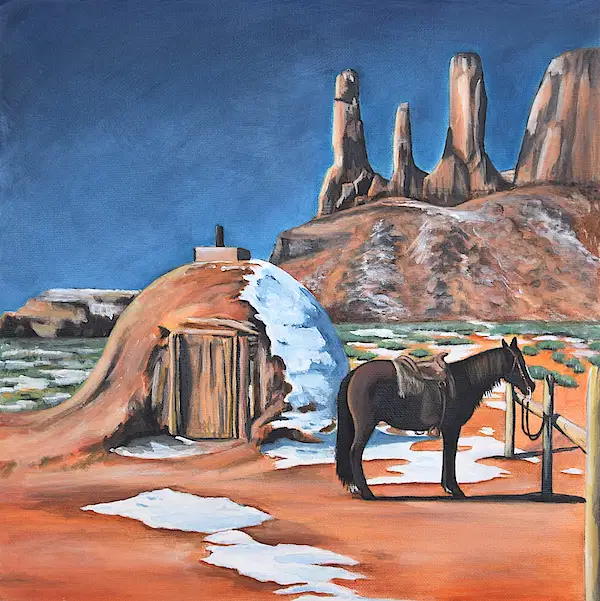
This type of Navajo home was built with five or more sides by stacking logs to create the walls and layering them with brush and mud.
Hogan
Teepee
Wickiup
Pithouse
What type of of art do the Navajo practice that also serves spiritual purposes and is used to help restore balance, for instance helping to cure the sick?
Red Pottery
Jewelry Making
Petroglyphs
Sand Paintings
Did the Diné peoples settle in one location like the Ancestral Puebloans and Mogollon people?
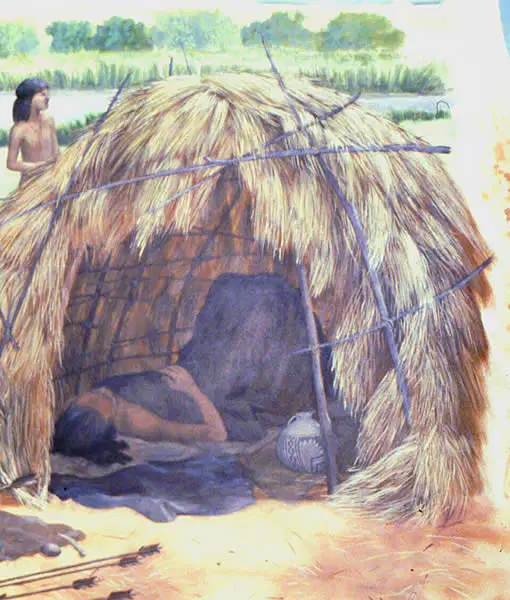
Pithouse
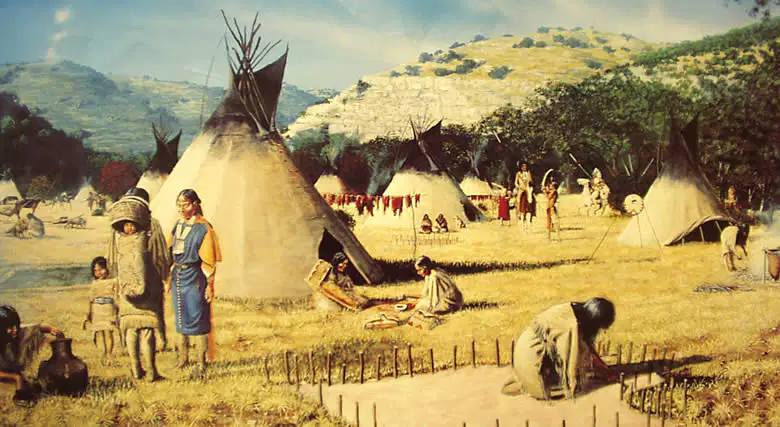
Pithouse

