
 Worksheets
Work at Height Safety Quiz
Total questions: 64
Worksheet time: 32mins
Why is working at height considered dangerous in the construction industry?
Because it can cause falls and injuries
Because it is easy to do
Because it is always safe
Because it does not require planning
What should be done before starting work at height according to the Work at Height Regulations 2005?
Work should be properly planned and organised
Work should be done quickly
Work should be done without any equipment
Work should be done without checking risks
Imagine you are asked to work on a fragile roof. What steps would you take to make sure you are safe? Use reasoning and planning to answer.
Assess risks, use proper equipment, and manage risks
Ignore risks and start working
Use any equipment without checking
Work alone without telling anyone
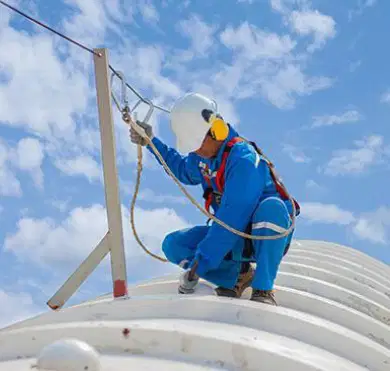
Why is it important to inspect and maintain equipment used for work at height?
To make sure it is safe to use
To make it look new
To avoid using it
To make it heavier
Which of the following is NOT a type of access equipment used in the building services industry?
Mobile elevated work platforms (MEWPs)
Ladders
Personal suspension equipment (harnesses)
Swimming pool
When using a mobile elevated work platform (MEWP), why is it important to check the ground conditions before starting work?
To make sure the platform looks nice
To ensure the MEWP is stable and safe to use
To see if there are any flowers
To find a place to sit
Imagine you are planning to use a MEWP near a busy road. What should you think about before starting?
The color of the MEWP
Put Barriers around for safety
The weather next week
The number of birds nearby
Why is training of operators important when using mobile elevated work platforms?
So they can drive fast
To make sure they use the equipment safely
To help them paint the MEWP
To teach them how to sing
If you see trees or cables above where you want to use a MEWP, what should you do?
Ignore them
Consider them as overhead hazards and plan carefully
Try to touch them with the MEWP
Decorate them
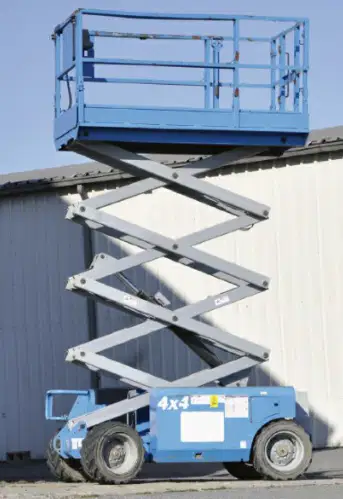
What is the equipment shown in the image commonly used for?
Lifting people to work at height safely
Making loud noises
Watering plants
Playing games
What is the name of the equipment shown in the image ?
Podium
Cherry picker
Extension plants
scissor Lift
Why is it important to maintain three points of contact when using a ladder?
To keep your hands free
To avoid falling from the ladder
To climb faster
To carry heavy materials
If you want to prevent slipping from the ladder, which of the following should you do?
Wear sandals and ignore the rungs
Keep the rungs clean and wear non-slip footwear
Use the ladder on a wet surface
Carry heavy tools while climbing
What should you do to make sure the ladder does not slip from its position?
Place the ladder on a soft surface
Position the ladder on a firm, level surface and secure it at the top and bottom
Use the ladder without checking it
Lean the ladder against a moving object
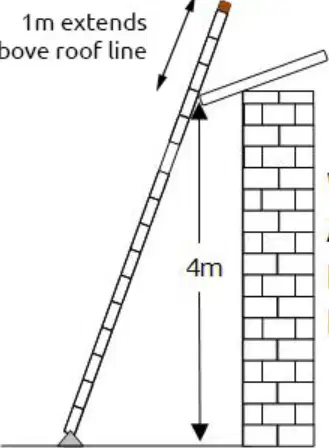
You need to use the 1:4 rule when positioning a ladder. If the ladder is 4 meters high, how far should the base be from the wall?
1 meter
2 meters
4 meters
8 meters
You need to use the 1:4 rule when positioning a ladder. If the ladder is 8 meters high, how far should the base be from the wall?
1 meter
2 meters
4 meters
8 meters
Imagine you are planning to use a ladder for a short task. What is the recommended duration for using a ladder for low-risk work?
Less than 5 minutes
Between 15 and 30 minutes
More than 1 hour
All day
Why should a ladder be inspected before every use?
To make sure it looks nice
To check if it is safe and strong enough for the job
To see if it is tall enough
To see if it matches your clothes
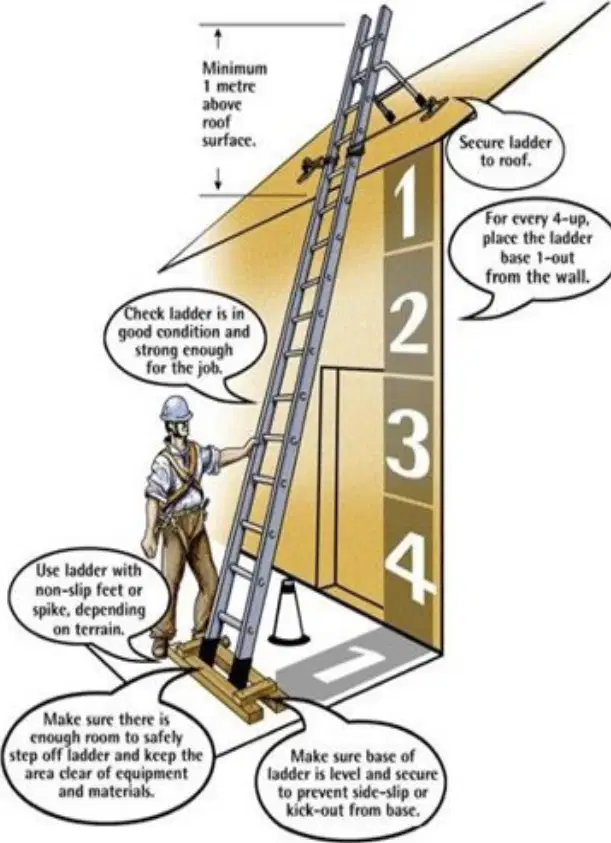
If a ladder is more than 3 meters long, what should you do to use it safely?
Paint it a bright color
Leave it unsecured
Secure it or have someone 'foot' it
Use it only on soft ground
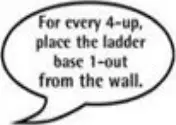
What is the correct angle or ratio for placing a ladder safely?
90° – ratio of 1:1
60° – ratio of 2:4
75° – ratio of 1:4
45° – ratio of 4:1
Why is it important to never overreach when using a ladder?
You might drop your tools
It can make you fall off the ladder
It will make the ladder dirty
It will make the ladder taller
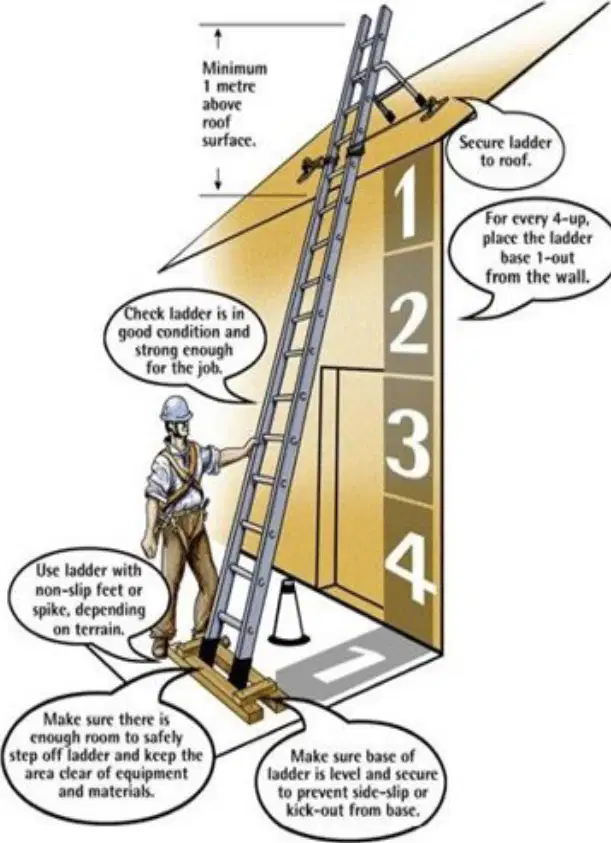
Imagine you need to use a ladder to reach a roof. How many rungs should the ladder extend above the landing platform?
At least five rungs
Only one rung
Ten rungs
No rungs
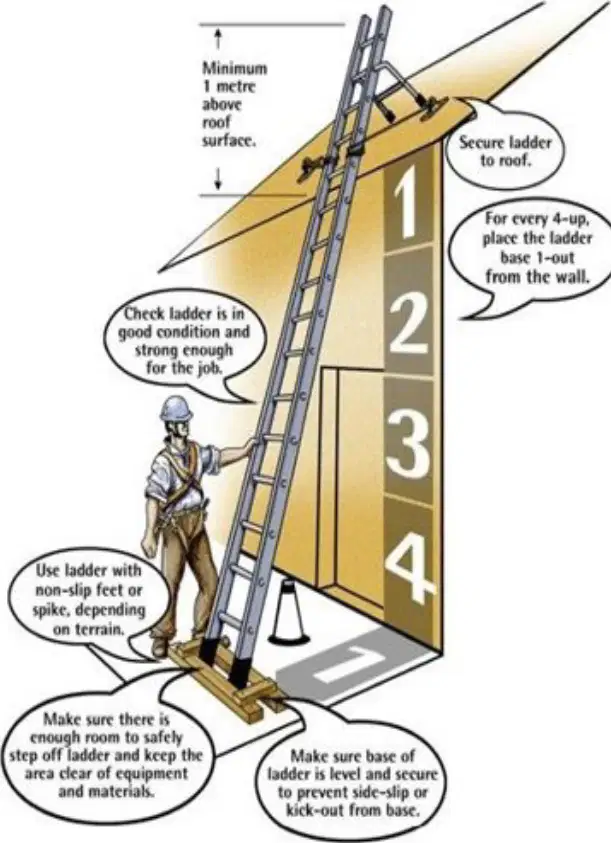
If you are planning to use a ladder, what kind of ground should you place it on?
Soft and muddy ground
Firm, hard ground
Sandy ground
Wet grass
Why should wooden stepladders or ladders not be painted?
Because paint may hide defects.
Because paint makes them slippery.
Because paint makes them heavier.
Because paint makes them look old.
What should you do before using a stepladder to work at height?
Check if it is suitable, in good condition, and inspected.
Use it without checking anything.
Paint it to make it look new.
Stand on the top tread with knees above it.
If you are using a stepladder, what is the safest way to position your knees?
Never have your knees above the top tread.
Always have your knees above the top tread.
Sit on the top tread.
Stand on the side of the ladder.
Why is it important to check that the feet of a ladder are not missing, loose, damaged, or worn?
To make sure the ladder is stable and safe to use.
To make the ladder look nice.
To make the ladder taller.
To make the ladder lighter.
What should you do to make sure a stepladder is safe before using it?
Check that rivets are in place and secure.
Ignore the rivets.
Paint over the rivets.
Remove the rivets.
How should a stepladder be set up before you climb it?
It should be open to the maximum.
It should be closed.
It should be leaning against a wall.
It should be upside down.
What is one thing you should check about the locking bars on a stepladder?
They are not bent or buckled.
They are painted.
They are missing.
They are loose.
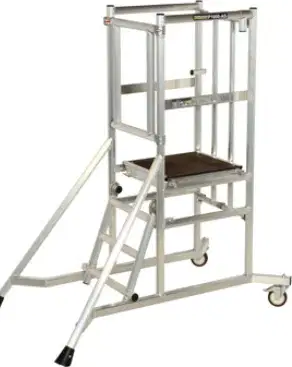
Why are podium steps considered better than step ladders?
Because they are heavier
Because they offer trouble-free and secure access and reduce the odds of falling
Because they are more colorful
Because they are taller than all ladders
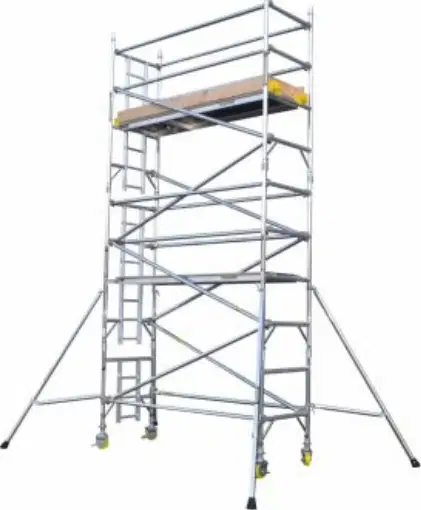
What is one important reason to use a tower scaffold when working at height?
To make the work look more professional
To prevent a fall when working at height
To work faster
To use more tools
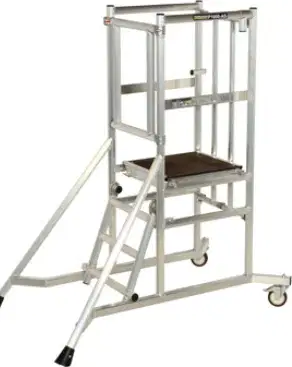
If you need to access a ceiling safely, which equipment would be the best choice based on the information?
Step ladder
Podium step
Rope
Chair
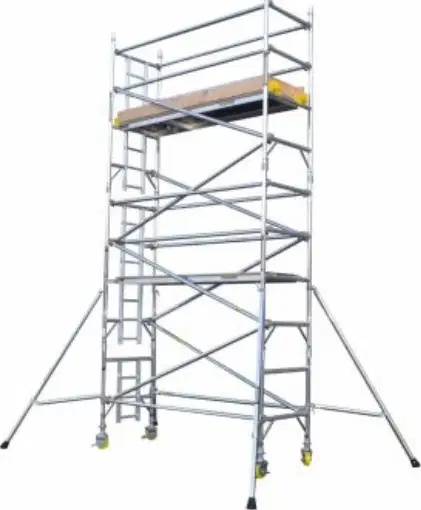
Why is it important that tower scaffolds are erected and dismantled by trained and competent people?
To make the scaffold look nice
To follow PASMA rules and ensure safety
To save time
To use less material
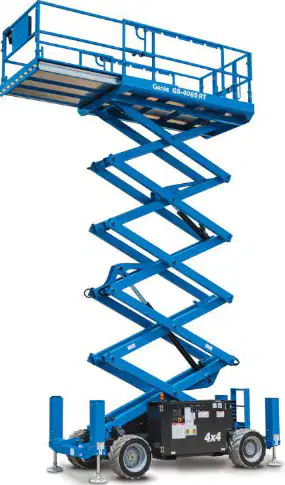
Which type of lift is best for applications where a straight vertical lift is needed?
Scissor lift
Cherry picker
Forklift
Escalator
Why might someone choose a scissor lift with fold-down guard rails?
To fit through low headroom doorways
To lift heavier objects
To move faster
To make more noise
What is a cherry picker also known as?
Boom lift
Forklift
Escalator
Crane
If you need to reach a high place outdoors and want a platform at the end of a hydraulic lifting system, which equipment would you use?
Cherry picker
Scissor lift
Ladder
Elevator
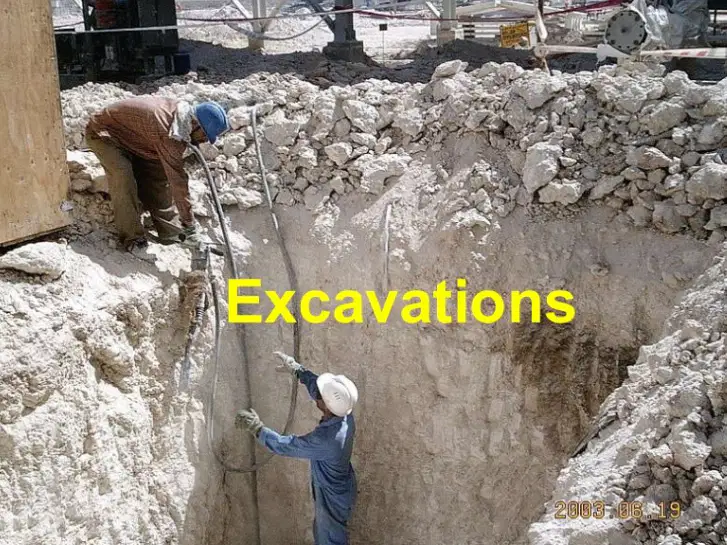
Why is it important to be careful when working in excavations?
Because collapses and falling materials can kill or injure people
Because excavations are always safe
Because excavations are only for fun
Because nothing can happen in excavations
Which of the following is a reason why excavations might be needed?
To install drains and soakaways
To plant flowers
To build playgrounds
To paint walls
If you were planning a ground source heating project, what might you need to do?
Make an excavation
Build a treehouse
Write a story
Bake a cake
Imagine you are working near an excavation. What should you think about to stay safe?
The risk of collapses and falling materials
The color of your clothes
The weather outside
The type of shoes you are wearing
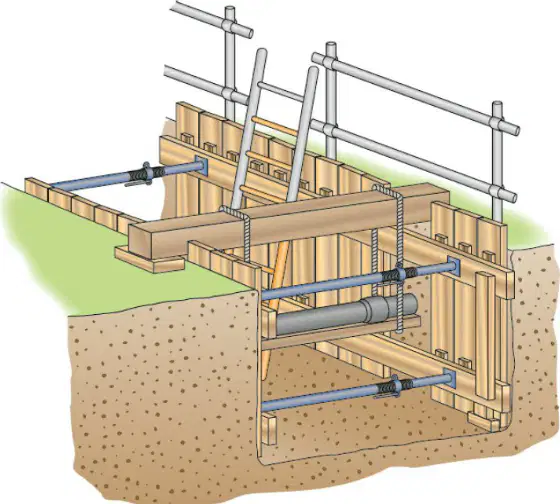
Which of the following is a hazard associated with excavations?
Excavations collapsing and burying people
Planting flowers in the excavation
Painting the walls of the excavation
Playing music near the excavation
Why is it important to be careful of underground services like electricity and gas when preparing excavations?
They can cause serious injuries if contacted
They make the excavation look nice
They help plants grow faster
They keep the excavation dry
If you are planning an excavation, what should you do to prevent material from falling into the excavation?
Build strong sides and barriers
Leave the sides open
Put toys on the edge
Ignore the sides
How can exhaust fumes from petrol or diesel engines be a hazard during excavations?
They can make the air unsafe to breathe
They make the excavation smell nice
They help plants grow
They keep the area cool
Imagine you are working near an excavation. What is a good plan to avoid people or equipment falling in?
Use barriers and warning signs around the excavation
Leave the area open for everyone
Put toys near the edge
Ignore safety rules
Which of the following is a way to make the edges of an excavation safe and prevent people from falling in?
By putting guard rails and toe boards next to the excavation side
By leaving the edges open
By covering the excavation with leaves
By painting the edges with bright colors
Why should a competent person inspect the excavation at the start of each shift?
To check for dangers and make sure it is safe
To count the number of rocks
To plant flowers around the excavation
To measure the temperature of the soil
If a fault is found during the inspection of an excavation, what should be done?
The fault should be corrected immediately
The fault should be ignored
The fault should be painted over
The fault should be hidden with soil
Which method is most effective for protecting the edge of an excavation?
Use guard rails and toe boards because they stop people from falling in
Leave the edge open because it looks better
Put up a sign but no physical barrier
Cover the excavation with a blanket
After a fall of rock or soil in an excavation, what should a competent person do?
Inspect the excavation for safety
Ignore the fall and continue working
Fill the excavation with water
Close the excavation permanently
Which of the following is an example of a confined space?
A chamber
An open playground
A classroom with windows open
A park bench
Why is it important to use the correct equipment, like PPE and a harness, when entering a confined space?
To look fashionable
To prevent serious injury from hazardous substances or conditions
To make the space bigger
To make it more comfortable
Imagine you need to go below ground into a confined space. What should you plan to use for safety?
A descent control and rescue system
A flashlight only
A pair of sunglasses
A water bottle
If someone is about to enter a tank, which is a confined space, what should they do first?
Enter quickly without any equipment
Make sure they have the correct equipment like PPE and a harness
Call their friends to watch
Paint the tank
Why is it important to avoid entry to confined spaces whenever possible?
Because confined spaces are always comfortable
Because confined spaces may have toxic substances or not enough oxygen
Because confined spaces are easy to work in
Because confined spaces are always clean
What should you do if you must enter a confined space to work?
Enter without any preparation
Follow a safe system of work with preparation, isolation, air testing, and a permit
Ignore safety rules
Work alone without telling anyone
Which of the following is a good emergency arrangement before starting work in a confined space?
Put in place adequate emergency arrangements
Do nothing and start working
Only bring snacks
Ignore emergency plans
Imagine you are planning work in a confined space. What steps would you take to make sure everyone is safe? Choose the best answer.
Enter quickly and finish the work fast
Prepare carefully, test the air, isolate the area, use a permit, and plan for emergencies
Let everyone enter at once without checking anything
Only use a permit and ignore other safety steps
Why is it important to have adequate ventilation, sufficient lighting, and emergency procedures in a confined space?
To make the space look nice
To ensure safety and prevent accidents
To keep the space warm
To allow more people to work together
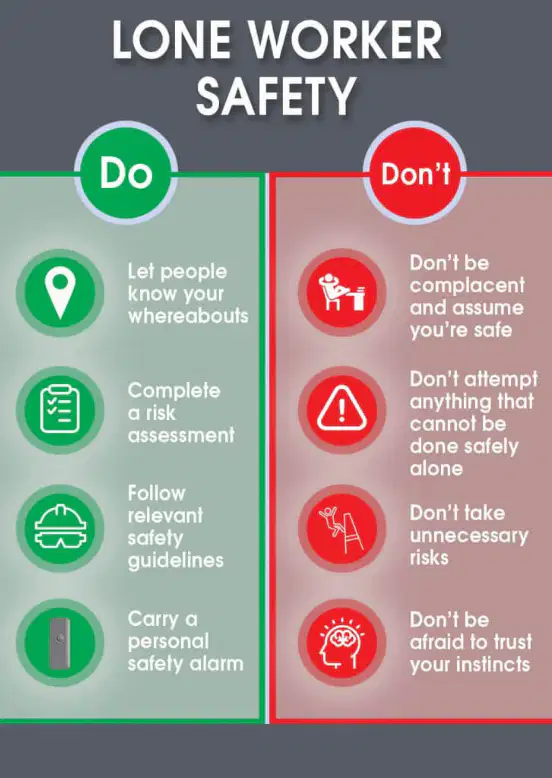
If someone is working alone in a confined space, what should they do to stay safe?
Let people know their whereabouts
Ignore safety guidelines
Take unnecessary risks
Attempt anything alone

According to the safety guidelines, which of the following is NOT recommended for lone workers in confined spaces?
Complete a risk assessment
Carry a personal safety alarm
Be complacent and assume you’re safe
Follow relevant safety guidelines
Imagine you are planning to work in a confined space with portable electrical equipment. What should you do before starting work?
Make sure you have the correct PPE and follow safety guidelines
Ignore emergency procedures
Work alone without telling anyone
Take unnecessary risks

