
 Worksheets
L1 Wk1 - Double-Entry Bookkeeping
Total questions: 92
Worksheet time: 46mins
What is double-entry bookkeeping?
A method of recording only one side of a transaction
A systematic method of recording business transactions where every transaction affects at least two accounts
A way to record transactions without accuracy
A method that ignores the accounting equation
Fill in the blank: Each transaction in double-entry bookkeeping has two sides: a ______ entry and a credit entry of equal value.
debit
asset
liability
expense
Which of the following ensures mathematical accuracy and provides a complete picture of financial activities?
Single-entry bookkeeping
Double-entry bookkeeping
Manual calculation
Ignoring transactions
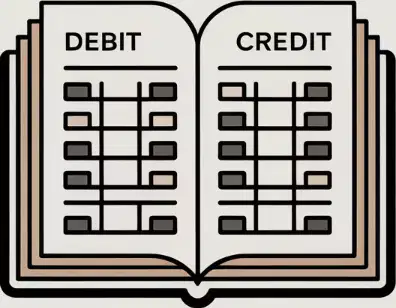
Refer to the diagram of the ledger book. What are the two columns labeled in double-entry bookkeeping?
Income and Expense
Debit and Credit
Assets and Liabilities
Profit and Loss
Fill in the blank: The dual aspect concept recognises that each business transaction has two effects: a ______ aspect and a receiving aspect.
giving
selling
paying
earning
Which of the following statements best describes 'Perfect Balance' in accounting?
Every debit entry must have an equal and opposite credit entry
Every transaction is recorded only once
Only credit entries are recorded
Debit entries are ignored
Built-in accuracy in the dual aspect concept means that any imbalance in the records indicates a mistake that needs correction.
True
False
What is the accounting equation?
A) Assets = Capital + Liabilities
B) Assets = Liabilities - Capital
C) Assets = Capital - Liabilities
D) Assets = Liabilities + Expenses
Fill in the blank: ______ are resources owned by the business that have economic value, such as cash, equipment, inventory, and amounts owed by customers.
Assets
Liabilities
Expenses
Revenues
Fill in the blank: ______ is the owner's investment in the business, representing the net worth. It increases with profits and additional investments, decreases with losses and drawings.
Capital
Liabilities
Revenue
Assets
Fill in the blank: ______ are amounts owed by the business to external parties, including loans, creditor balances, and other obligations requiring future payment.
Liabilities
Assets
Revenue
Equity

What is a sole trader? Fill in the blank: The business is owned entirely by one person who makes all decisions.
Single Ownership
Partnership
Corporation
Cooperative

What is a sole trader? Fill in the blank: The owner has full authority over business operations and strategy.
Complete Control
Limited Control
No Control
Shared Control
What is a sole trader? Fill in the blank: The owner is personally responsible for all business debts and obligations.
Unlimited Liability
Limited Liability
Joint Liability
No Liability
What is the nominal ledger also called? Fill in the blank.
The general ledger.
The cash book.
The trial balance.
The petty cash book.
Which of the following is NOT a key function of the nominal ledger?
A) Consolidates all financial information
B) Provides data for financial statements
C) Maintains the accounting equation balance
D) Issues payroll
Fill in the blank: The nominal ledger provides a complete record of _______, liabilities, capital, income, and expenses.
assets
debts
profits
transactions
Every transaction processed through the computerised accounting system posts to accounts within the nominal ledger, creating an audit trail and enabling financial reporting.
True
False
Fill in the blank: Each ledger account tracks a specific type of transaction, such as bank, sales, purchases, or expenses. They show all _______ and _______ related to that particular item.
debits, credits
assets, liabilities
income, expenditure
profits, losses
What does a running balance in an account show?
The total assets
The net debit or credit position at any point in time
The total income
The classification of accounts
Accounts are organised into categories for clear financial reporting. Which of the following is NOT a category mentioned?
Assets
Liabilities
Capital
Inventory

What are control accounts in the nominal ledger?
Accounts that show the total amounts owed by customers (debtors) and to suppliers (creditors)
Accounts that only track cash transactions
Accounts used for payroll only
Accounts that record only expenses
Fill in the blank: The ________ control account records total customer receivables and shows how much customers owe the business for goods or services supplied on credit.
debtor
creditor
sales
inventory
Fill in the blank: The ________ control account records total supplier payables and shows how much the business owes to suppliers for goods or services received on credit.
creditor
debtor
cash
sales
Which of the following best describes the purpose of control accounts?
To ensure subsidiary ledgers balance correctly
To calculate company profits
To record only cash transactions
To manage employee payroll

What information is typically included in individual customer files?
Contact details, credit terms, transaction history, and account balances.
Only the customer's favorite products and hobbies.
Just the customer's social media profiles and passwords.
Only the customer's birth date and favorite color.
Why are customer files essential in business management?
They are essential for managing sales and credit control.
They are used only for marketing campaigns.
They are only for storing employee records.
They are mainly for organizing office supplies.

What is the main purpose of supplier files?
To manage purchases and payments by keeping records of contact information, payment terms, purchase history, and outstanding balances for each supplier.
To store employee attendance records and payroll information.
To track customer feedback and complaints.
To maintain inventory levels and stock movement details.
Control accounts show summary totals in the nominal ledger, while subsidiary files provide detailed breakdowns.
True
False
What type of account is represented by the code range 0000-0999?
Current assets
Fixed assets
Liabilities
Sales income
What type of account is represented by the code range 1000-1999?
Current assets
Capital
Expenses
Fixed assets
What type of account is represented by the code range 2000-2999?
Liabilities
Sales income
Capital
Expenses
What type of account is represented by the code range 3000-3999?
Capital
Fixed assets
Current assets
Liabilities
What type of account is represented by the code range 4000-4999?
Sales income
Expenses
Liabilities
Capital
What type of account is represented by the code range 5000-9999?
Expenses
Fixed assets
Sales income
Current assets
What is the primary purpose of the trial balance?
To prepare tax returns
To verify that total debits equal total credits
To calculate net profit
To record daily transactions
Which of the following is NOT a purpose of the trial balance?
Error detection
Preparation step for financial statements
Regular checks for accuracy
Calculating employee salaries
Fill in the blank: The trial balance is a list of all nominal ledger accounts showing their debit or credit balances at a ________ date.
specific
random
future
weekly
The trial balance is typically prepared monthly to maintain accuracy and identify issues promptly.
True
False
What does error detection in the context of a trial balance help to identify?
Posting errors and ensures the accounting equation remains in balance.
Calculation of profit and loss for the year.
Preparation of financial statements.
Recording of cash transactions only.
Fill in the blank: One reason to reconcile bank statements is to identify timing differences such as ________ and uncleared deposits.
unpresented cheques
overdraft fees
interest payments
bank charges
Fill in the blank: Reconciling helps detect ________ or unauthorised transactions.
bank errors
customer complaints
marketing strategies
employee benefits
Fill in the blank: Ensuring accurate ________ reporting is a benefit of bank reconciliation.
cash position
inventory
sales
employee
Fill in the blank: Bank reconciliation maintains financial ________ and security.
control
confusion
instability
risk
Which of the following is a common reconciling item?
Outstanding cheques not yet cleared
Paid invoices
Loan repayments
Tax refunds
Which of the following is NOT listed as a common reconciling item?
Deposits in transit
Bank charges and interest
Direct debits and standing orders
Credit card rewards
Fill in the blank: ________ in transit is a common reconciling item.
Deposits
Withdrawals
Checks
Payments
Fill in the blank: Bank charges and ________ are common reconciling items.
interest
deposits
loans
assets
Fill in the blank: The audit trail records every transaction entered into the system with date, time, user, and ________.
details
location
amount
status
Which feature of the audit trail shows modifications, deletions, and corrections, creating accountability and transparency?
Complete Transaction History
Tracking Changes
Compliance Tool
Error Investigation
Fill in the blank: The compliance tool is essential for internal controls, external audits, and ________ compliance requirements.
regulatory
financial
technical
operational
Which audit trail feature enables tracing errors back to source and identifying who made entries for resolution?
Complete Transaction History
Tracking Changes
Compliance Tool
Error Investigation
What is the first step in the process from processing to financial statements?
Posted to Ledgers
Daily Transactions
Trial Balance Generated
Financial Statements Produced
Fill in the blank: Transactions automatically post to appropriate ______ ledger accounts.
nominal
general
personal
real
Which document is created from trial balance data?
Sales Report
Financial Statements
Receipts
Ledger
What does the system produce to show all account balances?
Trial balance
Ledger
Journal
Balance sheet
A computerized system automates the flow from daily transactions to financial statements, ensuring which of the following in financial reporting?
Speed, accuracy, and consistency
Manual data entry and slow processing
Increased errors and inconsistencies
Limited access to financial data
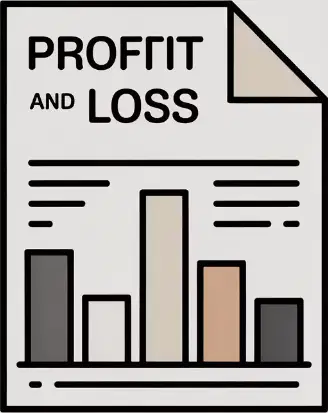
The Profit and Loss Account in a business shows:
the financial performance over a period
the assets and liabilities at a point in time
the cash inflows and outflows
the amount of capital invested
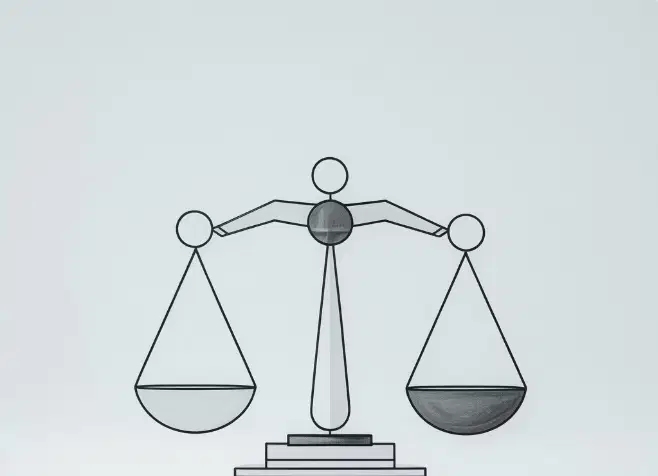
The Balance Sheet shows:
the financial position of a business at a specific point in time
the profit earned during a year
the cash flow over a period
the list of employees in a business
Fill in the blank: The key component of a Profit and Loss Account that represents the total income from sales is called ________.
Sales revenue
Gross profit
Net profit
Operating expenses
Fill in the blank: The key component of a Profit and Loss Account that represents the direct costs of producing goods sold is called ________.
Cost of sales
Gross profit
Net profit
Operating expenses
Fill in the blank: The key component of a Profit and Loss Account that is calculated as sales revenue minus cost of sales is called ________.
Gross profit
Net profit
Operating expenses
Revenue
Fill in the blank: The key component of a Profit and Loss Account that includes expenses not directly tied to production is called ________.
Operating expenses
Gross profit
Net sales
Direct costs
Fill in the blank: The key component of a Profit and Loss Account that shows the final profit or loss after all expenses is called ________.
Net profit or loss
Gross profit
Operating profit
Revenue
Fill in the blank: The key component of a Balance Sheet that represents long-term resources owned by the business is called ________.
Fixed assets
Current liabilities
Intangible assets
Share capital
Fill in the blank: The key component of a Balance Sheet that represents assets expected to be converted to cash within a year is called ________.
Current assets
Fixed assets
Intangible assets
Equity
Fill in the blank: The key component of a Balance Sheet that represents debts due within a year is called ________.
Current liabilities
Fixed assets
Shareholder's equity
Long-term liabilities
Fill in the blank: The key component of a Balance Sheet that represents debts due after more than a year is called ________.
Long-term liabilities
Current assets
Shareholder's equity
Short-term liabilities
Fill in the blank: The key component of a Balance Sheet that represents the owner's investment in the business is called ________.
Owner's capital
Owner's liability
Owner's revenue
Owner's expense
Fill in the blank: Locked doors, secure cabinets, and restricted areas prevent ________ personnel from accessing sensitive areas.
unauthorised
authorised
trained
technical
Fill in the blank: Issue electronic access cards or keys only to ________ staff, with logging systems tracking entry and exit.
authorised
temporary
external
untrained
Fill in the blank: Sign-in procedures, visitor badges, and escort requirements ensure ________ for all personnel on premises.
accountability
confidentiality
comfort
entertainment
Fill in the blank: Security cameras deter unauthorised access and provide ________ if breaches occur.
evidence
entertainment
confusion
distraction
What is the purpose of antivirus software in protecting systems from digital threats? Fill in the blank: Antivirus software is used to _______ and _______ malicious software that could corrupt data or steal information.
detect; remove
create; distribute
ignore; hide
encrypt; backup

Which security measure blocks unauthorised access attempts from hackers and predators trying to infiltrate the system remotely?
Antivirus Software
Firewalls
Regular Backups
Software Updates
Fill in the blank: Regular backups are performed to secure locations, enabling _______ if systems are corrupted or compromised.
recovery
delay
expansion
shutdown
Why is it important to keep operating systems and accounting software updated? Fill in the blank: Software updates protect against newly discovered _______.
vulnerabilities
features
licenses
interfaces
What is the primary method of restricting access to computerised accounting systems?
Passwords
Encryption keys
Firewall rules
Physical locks
Which of the following is NOT a recommended best practice for password protection?
Use complex passwords with letters, numbers, and symbols
Share passwords with colleagues
Change passwords regularly (every 30-90 days)
Use different passwords for different systems
Fill in the blank: It is recommended to change passwords every ______ days.
30-90
10-20
100-200
365
You should use the same password for all systems you access.
True
False
Which authentication method should be implemented where possible to enhance security?
Single-factor authentication
Multi-factor authentication
Password hint
Biometric only
What should you never do with your passwords according to best practices?
Write them down
Share them with colleagues
Use symbols
Change them regularly
What is the purpose of assigning different access levels based on job roles?
To limit who can authorise payments, delete transactions, or access salary information.
To allow everyone to access all company data freely.
To make the system more complicated for employees.
To ensure all employees have the same permissions regardless of their role.
Which of the following is NOT a key component of a comprehensive security framework?
Password Protection
System & Software Security
Physical Access Controls
Network Marketing

Fill in the blank: ________ controls ensure only authorised individuals can access sensitive financial information.
Password
Lighting
Furniture
Paint

Which layer of security protects against viruses, hackers, and corruption?
Password Protection
System & Software Security
Physical Access Controls
Staff Training

Physical security prevents unauthorised access to buildings and equipment.
True
False
Fill in the blank: Regular security audits, staff training, and ________ updates maintain robust protection as threats evolve.
policy
hardware
network
software
Fill in the blank: Every transaction in double-entry bookkeeping has two equal and opposite effects, ensuring ______ and enabling error detection.
accuracy
profitability
growth
simplicity
Which of the following is a benefit of computerised systems in financial processes?
Increased manual errors
Improved speed, accuracy, and reporting capabilities
Reduced automation
Limited data entry
Fill in the blank: Effective protection of financial information requires physical controls, digital safeguards, and ______ working together.
access restrictions
financial incentives
marketing strategies
customer feedback

