
 Worksheets
Ancient Egypt and Kush Study Guide
Total questions: 40
Worksheet time: 20mins
Choose the correct definition for the vocabulary word Afterlife.
life after death
section of the Nile River with rapids and rocky terrain
paper material made from the reeds of a plant along the Nile River
system of government ruled by religious leaders
Choose the correct definition for the vocabulary word Cataract.
section of the Nile River with rapids and rocky terrain
fan-shaped region created when soil is deposited at the end of a river
tall pillar with four sides and a point at the top
body preserved in a way to prevent it from decomposing
Choose the correct definition for the vocabulary word Delta.
fan-shaped region created when soil is deposited at the end of a river
large stone slab that was used to decode hieroglyphics
ruler of ancient Egypt
stone tomb with triangle-shaped sides that come together to form a point on top
Choose the correct definition for the vocabulary word Hieroglyphics.
Egyptian writing system that used symbols to communicate sounds, words, and ideas
paper material made from the reeds of a plant along the Nile River
tall pillar with four sides and a point at the top
system of government ruled by religious leaders
Choose the correct definition for the vocabulary word Mummy.
body preserved in a way to prevent it from decomposing
ruler of ancient Egypt
stone tomb with triangle-shaped sides that come together to form a point on top
life after death
Choose the correct definition for the vocabulary term Nile River.
traditionally considered the longest river in the world, with a length of over 4,000 miles, and made civilization possible in Egypt and Kush
section of the Nile River with rapids and rocky terrain
fan-shaped region created when soil is deposited at the end of a river
large stone slab that was used to decode hieroglyphics
Choose the correct definition for the vocabulary word Obelisk.
tall pillar with four sides and a point at the top
stone tomb with triangle-shaped sides that come together to form a point on top
paper material made from the reeds of a plant along the Nile River
Egyptian writing system that used symbols to communicate sounds, words, and ideas
Choose the correct definition for the vocabulary word Papyrus.
paper material made from the reeds of a plant along the Nile River
large stone slab that was used to decode hieroglyphics
system of government ruled by religious leaders
life after death
Choose the correct definition for the vocabulary word Pharaoh.
ruler of ancient Egypt
body preserved in a way to prevent it from decomposing
tall pillar with four sides and a point at the top
fan-shaped region created when soil is deposited at the end of a river
Choose the correct definition for the vocabulary word Pyramid.
stone tomb with triangle-shaped sides that come together to form a point on top
paper material made from the reeds of a plant along the Nile River
section of the Nile River with rapids and rocky terrain
system of government ruled by religious leaders
Choose the correct definition for the vocabulary term Rosetta Stone.
large stone slab that was used to decode hieroglyphics
Egyptian writing system that used symbols to communicate sounds, words, and ideas
tall pillar with four sides and a point at the top
ruler of ancient Egypt
Choose the correct definition for the vocabulary word Theocracy.
system of government ruled by religious leaders
life after death
paper material made from the reeds of a plant along the Nile River
stone tomb with triangle-shaped sides that come together to form a point on top
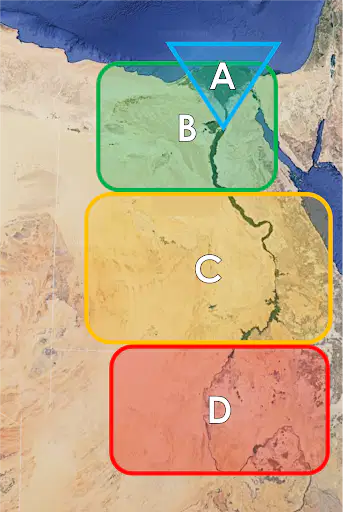
Directions: Which letter on the map marks Kush?
A
B
C
D
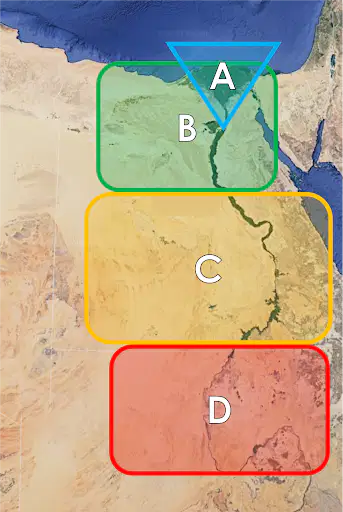
Directions: Which letter on the map marks Lower Egypt?
A
B
C
D
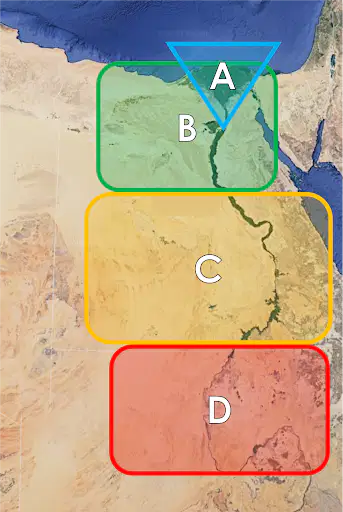
Directions: Which letter on the map marks the Nile Delta?
A
B
C
D
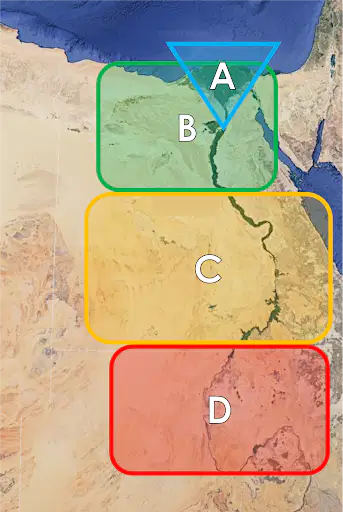
Directions: Which letter on the map marks Upper Egypt?
A
B
C
D
What is the direction of the river flow in the Nile River?
It starts in the south and flows to the north
It starts in the north and flows to the south
It flows east to west
It flows west to east
Why did the majority of the ancient Egyptians settle around the Nile Delta?
The buildup of soil made the land great for agriculture
It had the best hunting grounds
High mountains provided protection
The climate was cooler than the desert
Write in the answer to each of the following short answer questions. Why did the ancient Egyptians live along the Nile River?
They lived in the desert and could not depend on rainfall
It gave easier access to the Mediterranean Sea
It was a religious requirement
They wanted to avoid other tribes
Why was the pharaoh considered the most important leader in ancient Egypt?
The people believed the pharaoh was a god
The pharaoh owned all farmland
The pharaoh led all battles personally
The pharaoh collected all taxes alone
What was the primary reason for mummification in ancient Egypt?
The belief that a person’s body must still exist so the spirit can go to the afterlife
To preserve bodies for medical study
To keep pests away from tombs
To decorate tombs with art
Why were the pyramids filled with gold, jewelry, and other valuable possessions of the pharaoh?
They were storage so the pharaoh’s spirit could enjoy them in the afterlife
They were offerings for temple priests
They were displayed to impress foreign visitors
They were payment for pyramid workers
How did the ancient Egyptians construct the pyramids?
Thousands of paid laborers used sleds and ramps to move heavy stones
They used steam-powered cranes
They transported stones with wheeled trucks
They built with iron scaffolds and modern machines
How were historians able to use the Rosetta Stone to decode hieroglyphics?
It had the same statement written in both hieroglyphics and Greek
It contained a dictionary of Egyptian words
It was discovered next to a library of scrolls
It showed pictures with labels for every symbol
What is the name of the writing system developed by Kush that included both an alphabet and hieroglyphics?
Meroitic script
Cuneiform
Demotic
Phoenician alphabet
How does the transfer of power work in a dynasty?
The title of pharaoh is passed down to a younger relative or another chosen successor
Leaders are elected by popular vote every few years
A council of priests selects a new ruler from any family
The army chooses a general after each pharaoh dies
What were the three periods of time when Egypt’s government was strong and stable?
Old Kingdom, Middle Kingdom, New Kingdom
Bronze Age, Iron Age, Stone Age
First, Second, and Third Intermediate Periods
Archaic, Classical, Hellenistic
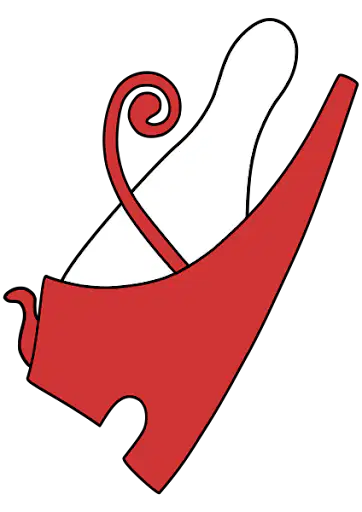
What is the artifact pictured in this image?
A crown that symbolized the unity between Upper Egypt and Lower Egypt
A ceremonial dagger used by priests
A headdress worn by soldiers
A mask used in mummification rituals
Why did ancient Egypt expand its territory and become an empire during the New Kingdom?
They feared future invasions and wanted to block all possible routes
They needed more land for hunting
They wanted to escape flooding of the Nile
They hoped to discover gold mines in distant deserts
Which position in Egypt’s social hierarchy included builders, carpenters, jewelers, metalworkers, painters, sculptors, and stonecutters?
Artisans
Farmers
Soldiers
Nobles
Which statement correctly identifies the locations of Egypt’s two kingdoms?
Lower Egypt was in the northern half and Upper Egypt was in the southern half
Upper Egypt was in the northern half and Lower Egypt was in the southern half
Both kingdoms were only in the Nile Delta
Both kingdoms were only south of the First Cataract
What was the most common job in ancient Egypt?
Farmer
Scribe
Soldier
Merchant
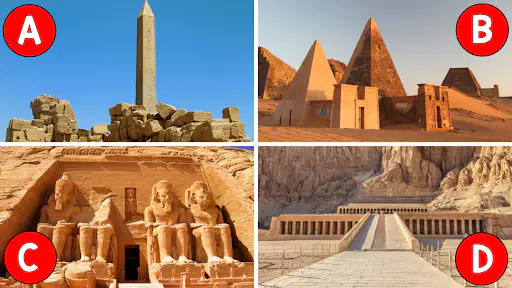
Which image shows the temple that was built in honor of the pharaoh Hatshepsut?
A
B
C
D
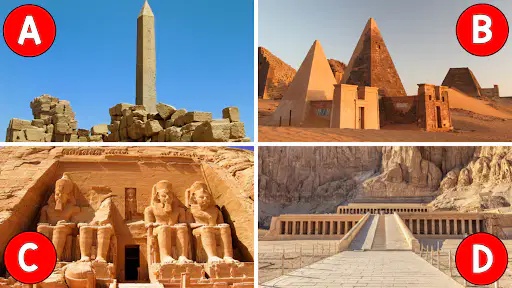
Which image shows Abu Simbel, a temple built in honor of the pharaoh Ramesses II?
A
B
C
D
Who was the god of the sun that created the world and people in Egyptian mythology?
Ra
Osiris
Horus
Anubis
Who was the god of the underworld and agriculture who determined if spirits of the dead could enter the afterlife at the Hall of Judgment in Egyptian mythology?
Osiris
Ra
Set
Thoth
During mummification, which organ was kept inside the body because it was thought to be the spirit’s center of intelligence, and which organ was destroyed because it was believed to be useless?
Heart kept; brain destroyed
Brain kept; heart destroyed
Lungs kept; stomach destroyed
Liver kept; kidneys destroyed

Which of the following images shows an example of hieroglyphics? Choose the correct letter.
A
B
C
D
Which pharaoh significantly increased ancient Egypt’s wealth through trade, built many monuments and temples, and overcame adversity to become one of the first women to serve as pharaoh?
Hatshepsut
Tutankhamun
Akhenaten
Ramesses II
Which pharaoh ruled Egypt for about 66 years, expanded its borders through several military campaigns, and ordered construction of landmarks at Karnak and Luxor?
Ramesses II (Ramesses the Great)
Thutmose III
Sneferu
Djoser

