
 Worksheets
Pediatric Emergency Management Quiz
Total questions: 15
Worksheet time: 8mins
2 yrs old girl full in pond , pulselles 25 min, intubated good chest movement ,now no pulse vf, fixed dilated pupil , rectal temp 26 , PH= 6.96 , co2 = 9.4, HCO3= 8.3 , BE= -28 , 3 DC shocks 4 J 2 min apart then 1 dose adrenaline , on life support for 40 mins>>vf , next step ??
Withdraw life support and give amiodarone
Rewarm with saline bolus and gastric lavage
Continue defibrillate every 2 min with adrenaline every 4 min
Perform a CT scan
Give bicarbonate
3 yrs old unwitnessed fall, buckle fracture radius in x ray, her parents were in wedding, the girl says clearly (I fall from table on my hand) the fracture was manged adequate, what to do?
Perform a CT scan
Skeletal survey & vit d & FBC & coagulation
Administer IV antibiotics
Nothing
Compare X-rays of both arms
A 2-year-old child from Egypt presents with 2 days of vomiting and diarrhoea and is initially tachycardic (PR 120), tachypnoeic (RR 28), mildly hypoxic (SpO₂ 94%), febrile at 37.5°C, with delayed capillary refill (4 seconds), reduced GCS (10), and low glucose (3 mmol/L). After 30 minutes, the child deteriorates with worsening tachycardia (PR 160), irregular breathing, higher fever (38°C), GCS 8, and SpO₂ 92%. What is the next step?
Administer bolus D10
Administer bolus NS
Secure airways
Perform urgent CXR
IV antibiotics
A 3-year-old child is brought to the Emergency Department after accidentally swallowing a small button battery while playing at home. The parents witnessed the ingestion and came to hospital immediately. The child is currently well, with no drooling, vomiting, respiratory distress, or abdominal pain.
An urgent X-ray confirms the battery is in the stomach. What is the most appropriate next step?
Discharge home with safety-netting and expectant management
Repeat abdominal X-ray again in 12 hours
Start proton pump inhibitors and continue observation
Urgent endoscopic removal of the foreign body
Give laxatives to help move the battery through the bowel
A 4-year-old child falls from a chair and is found by parents to be drowsy, unsteady, and difficult to rouse. On arrival at the Emergency Department, the child’s GCS is 6, raising concern for a significant head injury. A CT brain is performed and is completely normal. Within a short time, the child returns to full consciousness, What is the diagnosis?
Vasovagal
Skull fracture
Brain hemorrhage
Seizure
Brain concussion
A 6-year-old boy is brought to the Emergency Department after possibly swallowing a small object while playing. He is well, has no choking, drooling, or respiratory distress. A chest and abdominal X-ray shows no visible foreign body, but the parents report he was playing with the contents of a toolbox. The team considers using a hand-held metal detector to help identify the swallowed object.
Which type of material may not be visible on an X-ray but can be detected by a metal detector?
Steel
Aluminium
Copper
Lead
Plastic
A 7-year-old child has been intubated in the Emergency Department for severe respiratory distress secondary to pneumonia. During ambulance transfer to a tertiary centre, the child suddenly becomes pulseless and unresponsive. The paramedic team quickly confirms that the ET tube is in place and there is equal air entry bilaterally. What is the next step in management?
15 chest compressions and 2 breaths, then repeat
30 chest compressions and 1 breath
Uninterrupted chest compression and breath
Recovery position
Drive fast to the hospital
A 17-year-old teenager is brought to the Emergency Department unresponsive after a party, with bradycardia, slow respirations, and dilated pupils. Arterial blood gas shows severe metabolic acidosis (pH 7.2). Which substance is most likely responsible?
Amphetamine
Aspirin
Cocaine
Amitriptyline
Ecstasy
An 8-year-old on a ventilator has high CO2, high O2, inspiratory time of 0.8, VR 20, PIP 28, PEEP 6, PO2 20, and PCO2 15. What is the recommended action?
Increase rate
Increase PEEP
Decrease PEEP
Change inspiratory time
Decrease FIO2
What is the best initial management for a neonate with SVT (HR=300) who is not shocked?
Ice back to the face
IV adenosine
Oral beta-blockers
Immediate defibrillation
Observation only
A 5-year-old child presents with partial-thickness burns covering 15% of total body surface area and is unable to tolerate oral fluids due to discomfort. Vital signs show mild tachycardia but stable blood pressure, and the child is alert. What is the best fluid?
0.9% Sodium Chloride (Normal saline)
D5% with normal saline
D10% with 0.18 normal saline
Oral rehydration solution
Ringer's Lactate (Hartman solution)
A 16-year-old adolescent presents to the Emergency Department with 3 days of excessive urination (polyuria), extreme thirst (polydipsia), and fatigue. Which investigation is most appropriate for acute management of this patient?
Lab glucose level
Blood gas
HbA1c
GTT (Glucose Tolerance Test)
C-peptide
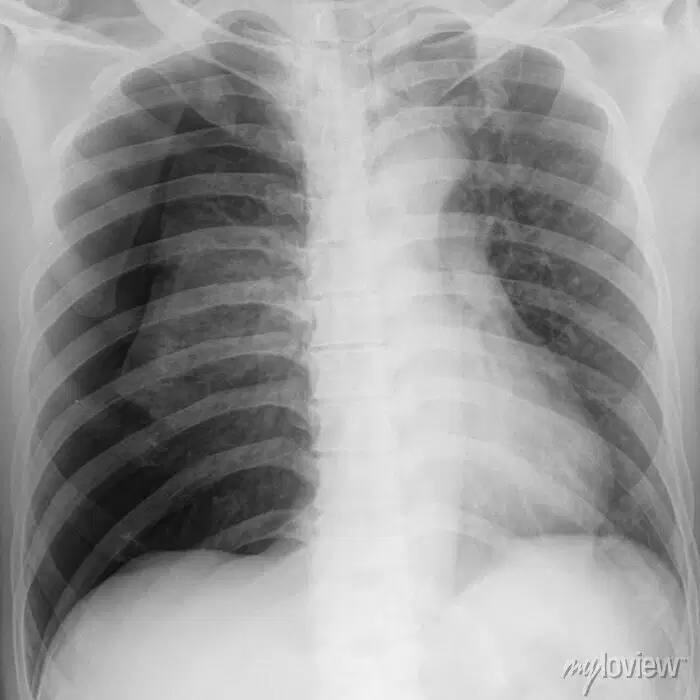
A 3-week-old term infant admitted with respiratory distress from bronchiolitis was initially managed on CPAP. After six hours, the infant deteriorated, showing increased work of breathing with nasal flaring and subcostal retractions, SpO₂ dropped to 85% despite FiO₂ 0.6, and episodes of apnea were noted. CXR was done, what is the immediate action?
IV antibiotics
Lung US
Needle thoracocentesis
Intubation
Echo

Where is the tip of the central line typically located?
Internal Jugular Vein
Left subclavian vein
Superior vena cava
Right atrium
Right subclavian artery
What is the appropriate fluid management for a baby with meningitis, BP 71/45, CRT of 3 seconds, and on 50ml/kg maintenance?
10ml/kg NS
20ml/kg NS
PRBCS 20ml/kg
20% albumin
20 ml/kg hypertonic saline

