
 Worksheets
A&P Ch 7: Muscular System
Total questions: 34
Worksheet time: 19mins
Which type of muscle is voluntary?
Skeletal muscle
Cardiac muscle
Smooth muscle
None of the above
Skeletal muscles are also known as ______ muscles because of their striped appearance.
Striated
Smooth
Non-striated
Intercolated
Which type of muscle(s) is/are involuntary and not under our conscious control?
Smooth muscle
Skeletal muscle
Cardiac muscle
Both smooth and cardiac
Which of the following is NOT a characteristic of smooth muscles?
A) Involuntary
B) Striped appearance
C) Found in organs
D) Not under conscious control
What type of muscle allows for internal movement of food?
Smooth muscles
Skeletal muscles
Cardiac muscles
Voluntary muscles
Which type of muscle is involuntary, specialized with a striated appearance, and found solely in the heart?
Skeletal muscle
Smooth muscle
Cardiac muscle
Tendon
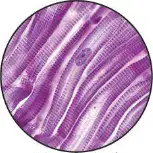
Summarize which muscle type promotes more efficient contractions through the use of intercalated discs.
cardiac muscle
skeletal muscle
smooth muscle
connective tissue
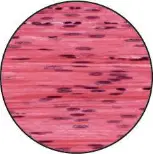
Summarize the muscle type found in the walls of hollow organs and vessels, which helps perform peristalsis and maintain the diameter of blood vessels and airways.
smooth muscle
skeletal muscle
cardiac muscle
striated muscle
What is the general term for muscle disease or disorder?
Myopathy
Arthritis
Neuropathy
Osteopathy
Summarize tendons and their function.
Tendons are fibrous tissues that attach skeletal muscles to bones.
Tendons are fibrous tissues that transmit signals from the brain to muscles.
Tendons are blood vessels that supply oxygen to muscles.
Tendons are cartilaginous tissues that connect bone to bone.
A patient comes into the clinic with knee pain. An MRI shows a tear in one of the ligaments in the knee. What function does the ligament serve in the body?
Ligaments attach bone to bone.
Ligaments attach muscle to bone.
Ligaments attach skin to muscle.
Ligaments attach tendon to bone.
Some muscles attach directly to bone or soft tissue without tendon use. What type of connective is this referring to?
Aponeurosis
Ligament
Cartilage
Fascia
Which of the following is NOT a function of skeletal muscles?
Responsible for movement
Giving body its shape and form
Maintaining body posture
Producing hormones
Heat generation
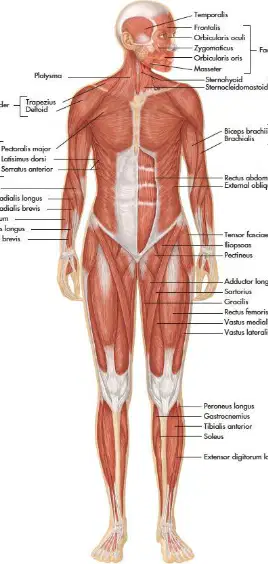
What is the name of the muscle labeled at the forehead region?
Frontalis
Temporalis
Masseter
Orbicularis oculi
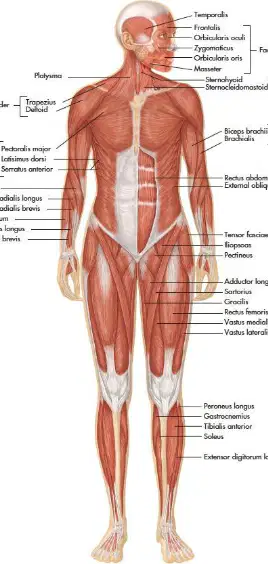
What is the name of the muscle labeled at the chest region?
Pectoralis major
Deltoid
Biceps brachii
Rectus abdominis
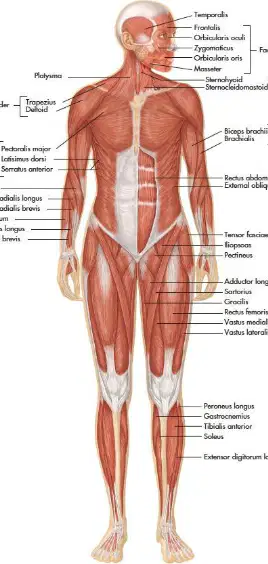
What is the name of the muscle labeled at the upper arm?
Biceps brachii
Triceps brachii
Deltoid
Pectoralis major
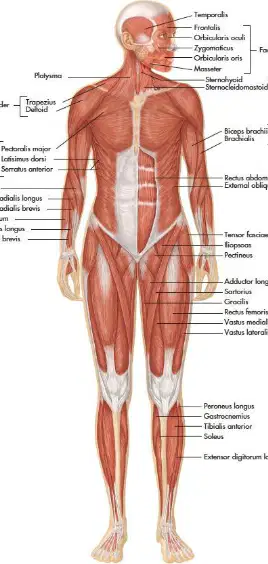
What is the name of the muscle labeled at the thigh region?
Quadriceps femoris
Biceps brachii
Trapezius
Gastrocnemius
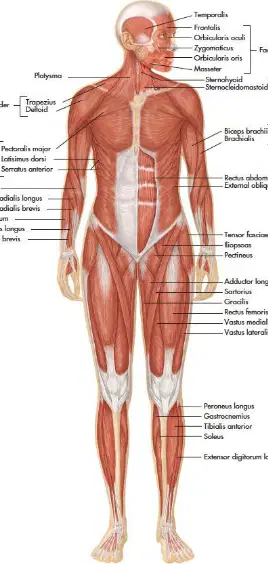
What is the name of the muscle labeled at the lower leg?
Tibialis anterior
Gastrocnemius
Soleus
Peroneus longus
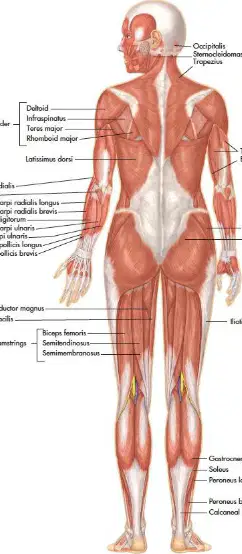
What is the name of the muscle located at the back of the head/neck??
Occipitofrontalis (occipital belly)
Sternocleidomastoid
Splenius capitis
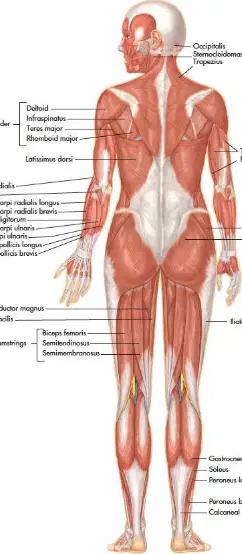
What is the name of the muscle located at the shoulder?
Deltoid
Biceps brachii
Gluteus maximus
Pectoralis major
Which of the following best describes the difference between acute and chronic injuries?
A) Acute injuries result from trauma, while chronic injuries result from overuse or disease.
B) Acute injuries result from overuse, while chronic injuries result from trauma.
C) Acute injuries result from infection, while chronic injuries result from poor nutrition.
D) Acute injuries result from disease, while chronic injuries result from lack of exercise.
Which of the following is a treatment option for muscle tendon injuries?
RICE
Chemotherapy
Radiation therapy
Insulin therapy
What does RICE stand for in terms of treatment for a muskuloskeltal injury?
Rest, Ice, Compress, Elevate
Rotate, Ice, Compare, Elevate
Resuscitate, Ice, Complete, Endure
Rest, Ignore, Contusion, Endoscopy
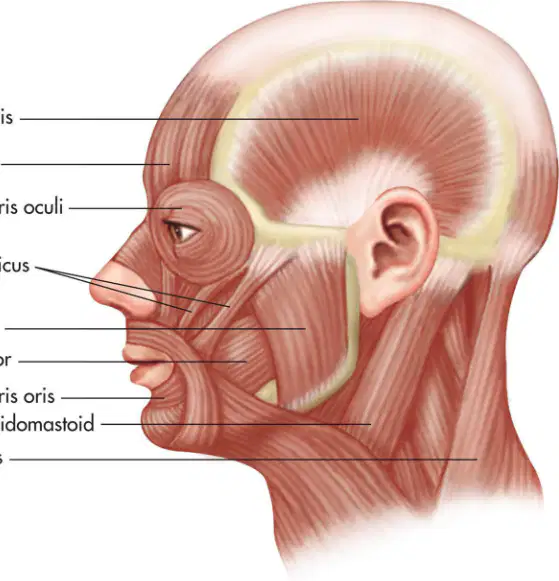
What is the name of the muscle crossing over the temporal bone?
Temporalis
Masseter
Sternocleidomastoid
Orbicularis oculi
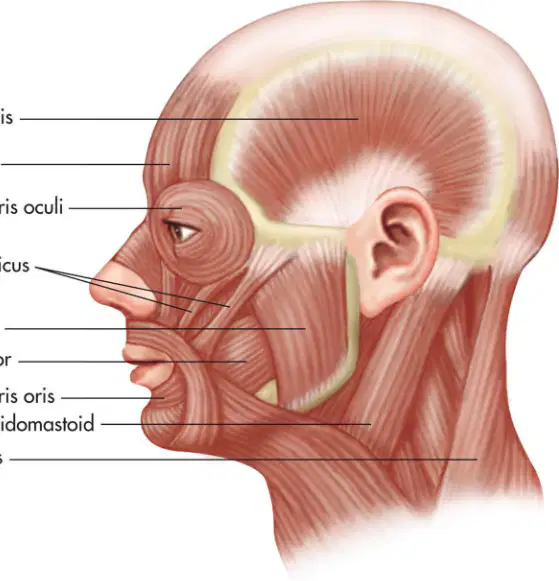
What is the name of the muscle on the front of the forehead?
Frontalis
Temporalis
Masseter
Occipitalis
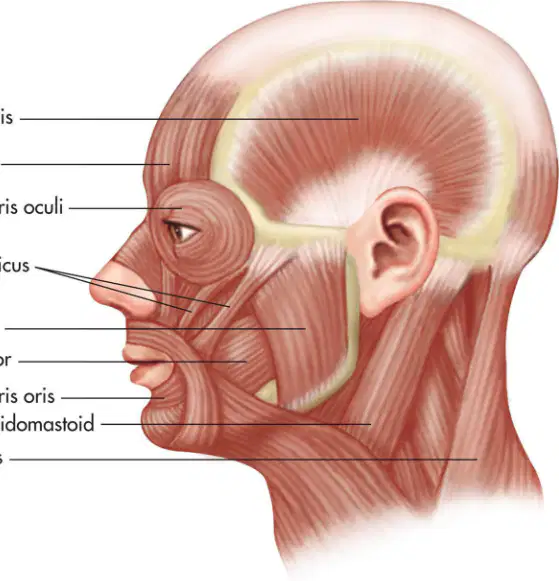
What is the name of the muscle surrounding the eye?
Orbicularis oculi
Masseter
Temporalis
Sternocleidomastoid
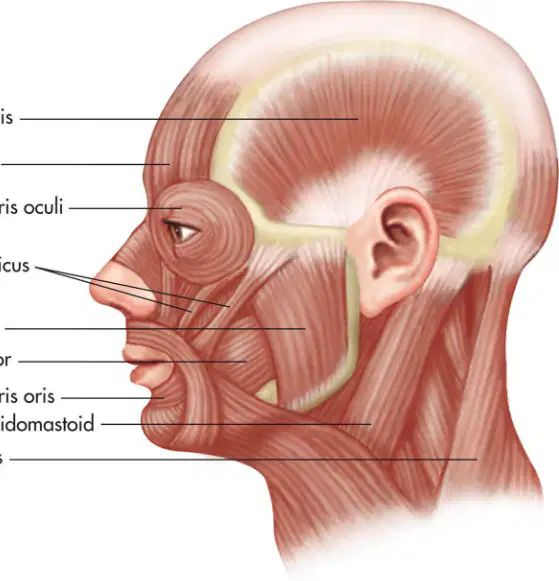
What is the name of the muscle that is across the front part of the cheek?
Zygomaticus
Masseter
Temporalis
Orbicularis oculi
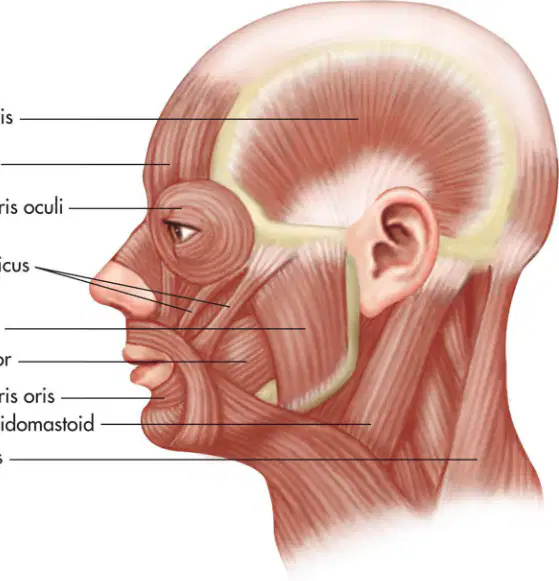
What is the name of the muscle following along the side of the cheek?
Buccinator
Masseter
Temporalis
Orbicularis oculi
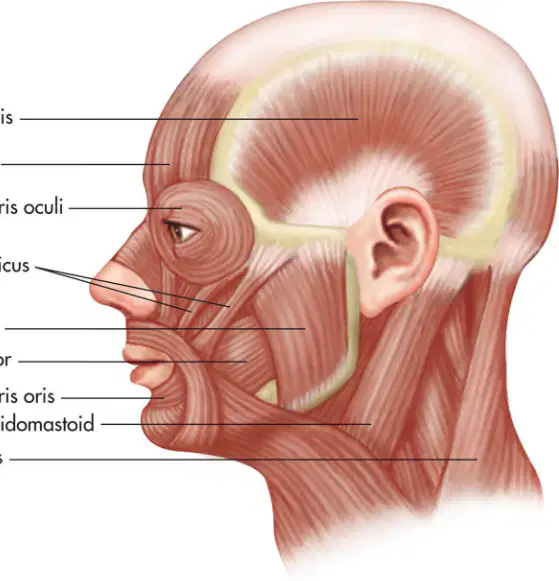
What is the name of the muscle running down the side of the neck somewhat across the back of the jaw area?
Sternocleidomastoid
Trapezius
Masseter
Platysma
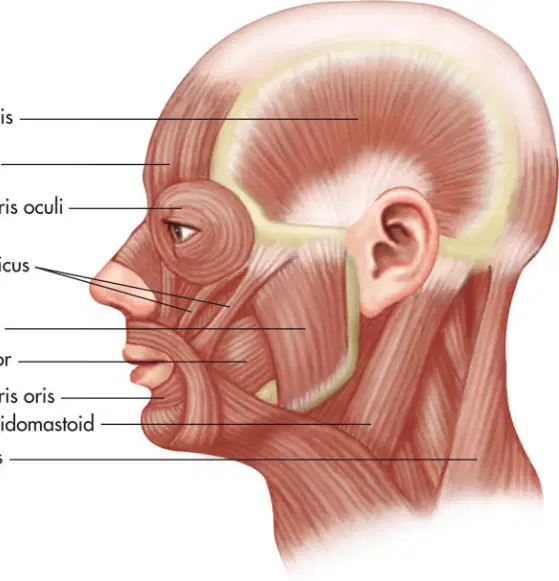
What is the name of the muscle starting at the back of the neck and going down across the top of the shoulder?
Trapezius
Sternocleidomastoid
Masseter
Platysma
Label the front section of the muscular system
Gastronemious
Quadracept Group
Deltoid
Abdominal Rectis
Bicep
Please label the back image of the muscular system.
Trapezius
Gluteus Maximum
External Oblique
Soleus
Deltoid
Summarize the point of origin of a muscle.
muscle end attached to another muscle
muscle end attached to a piece of cartiladge
muscle end attached to stationary bone.
muscle end attached to moving bone
Summarize the point of insertion of a muscle.
muscle end attached to moving bone
muscle end attached to stationary bone

