
 Worksheets
L1 Wk4 - VAT Overview Topics
Total questions: 93
Worksheet time: 47mins
Fill in the blank: ______ is the government agency responsible for VAT oversight and enforcement.
HMRC (Her Majesty's Revenue and Customs)
FCA (Financial Conduct Authority)
OFGEM (Office of Gas and Electricity Markets)
DEFRA (Department for Environment, Food & Rural Affairs)
Fill in the blank: Understanding input tax, output tax, and essential concepts is part of ______ terminology.
Key VAT terminology
Basic accounting terminology
General business terminology
Tax evasion terminology
Fill in the blank: Different rates, exemptions, and tax code applications are covered under ______.
VAT rates & codes
Income tax slabs
Customs duties
Payroll systems
Fill in the blank: Prompt payment discounts, VAT accounts, and calculations are examples of ______.
Practical applications
Financial statements
Legal requirements
Tax evasion
HMRC is the UK government department responsible for administering and collecting VAT. What does HMRC stand for?
Her Majesty's Revenue and Customs
Her Majesty's Royal Council
Her Majesty's Revenue Commission
Her Majesty's Regulatory Committee
Which of the following is NOT a responsibility of HMRC?
A) VAT registration
B) Returns processing
C) Inspections
D) Manufacturing goods
HMRC provides guidance and ensures businesses comply with VAT legislation.
True
False
What is the responsibility of HMRC regarding VAT registration?
Processing applications and maintaining the VAT register for businesses exceeding the £85,000 threshold
Setting VAT rates for all businesses
Collecting income tax from VAT-registered businesses
Auditing all VAT returns submitted by businesses
What does HMRC do as part of compliance monitoring for VAT?
Reviewing VAT returns, conducting audits, and ensuring businesses follow regulations correctly
Providing tax refunds to all businesses automatically
Setting VAT rates for individual companies
Exempting small businesses from VAT registration
What kind of guidance and support does HMRC provide for VAT?
Providing clear guidance, updates on legislation, and assistance to taxpayers and agents
Offering only telephone support for VAT queries
Limiting support to large corporations exclusively
Providing guidance only during tax season
What actions does HMRC take as part of VAT enforcement?
Investigating fraud, imposing penalties for non-compliance, and taking legal action when required
Providing tax refunds to all businesses automatically
Setting VAT rates for other countries
Offering free accounting services to VAT-registered businesses
What is input tax?
The VAT you pay when your business purchases goods or services from VAT-registered suppliers
The VAT you charge your customers
The total cost of goods before VAT
The amount you receive from HMRC
Input tax can typically be reclaimed from HMRC if your business is ______ and the purchases are used for ______ purposes.
VAT-registered; business
VAT-exempt; personal
Non-registered; charitable
VAT-registered; personal
If you buy office supplies for £100 plus £20 VAT, what is your input tax?
£20
£100
£120
£10
What is output tax?
The VAT you pay when you buy goods
The VAT you charge when your business sells goods or services to customers, assuming you're VAT-registered
The VAT you reclaim from HMRC
The VAT on imported goods
Output tax must be paid to _______.
HMRC
The Bank of England
Companies House
The Financial Conduct Authority
If you sell goods for £500 plus £100 VAT, what is your output tax?
£100
£500
£600
£50

What is the first step in the VAT flow?
Record Transactions
Purchase Goods/Services
Sell Goods/Services
Submit VAT Return

When you purchase goods or services, you pay VAT to suppliers. What is this tax called?
Output Tax
Input Tax
Net Tax
Credit Tax

Fill in the blank: When you sell goods or services, you charge VAT to customers. This is called _________.
Output Tax
Input Tax
Sales Tax
Purchase Tax

What do you do when you submit a VAT return?
Track input and output tax
Pay net VAT to HMRC or reclaim credit
Charge VAT to customers
Pay VAT to suppliers
What is the standard VAT rate in the UK?
0%
5%
20%
15%
What is the reduced VAT rate in the UK?
0%
5%
20%
10%
What is the zero VAT rate in the UK?
0%
5%
20%
10%
Which VAT rate applies to electronics and appliances in the UK?
Standard rate (20%)
Reduced rate (5%)
Zero rate (0%)
Which VAT rate applies to domestic fuel and power in the UK?
Standard rate (20%)
Reduced rate (5%)
Zero rate (0%)
Which VAT rate applies to most food and drink in the UK?
Standard rate (20%)
Reduced rate (5%)
Zero rate (0%)
Clothing and footwear in the UK are subject to the ______ VAT rate.
Standard rate (20%)
Reduced rate (5%)
Zero rate (0%)
Exempt
Children's car seats in the UK are subject to the ______ VAT rate.
Reduced rate (5%)
Standard rate (20%)
Zero rate (0%)
Exempt rate
Books and newspapers in the UK are subject to the ______ VAT rate.
Zero rate (0%)
Standard rate (20%)
Reduced rate (5%)
Exempt rate
Restaurant meals in the UK are subject to the ______ VAT rate.
Standard rate (20%)
Reduced rate (5%)
Zero rate (0%)
Exempt
Mobility aids for elderly in the UK are subject to the ______ VAT rate.
Reduced rate (5%)
Standard rate (20%)
Zero rate (0%)
Exempt rate
Public transport in the UK is subject to the ______ VAT rate.
Zero rate (0%)
Standard rate (20%)
Reduced rate (5%)
Exempt rate
Which of the following is an example of an exempt supply under VAT rules?
Wages and salaries
Insurance services
Dividends from shares
Statutory fees
Which of the following is considered outside the scope of VAT?
Health services
Education and training
Activities outside the UK
Financial services
Fill in the blank: Transactions that don't have VAT charged on them and don't count towards your VAT taxable turnover are called _________.
Exempt supplies
Zero-rated supplies
Taxable supplies
Standard-rated supplies
You can reclaim input VAT on exempt supplies.
True
False
Which of the following is NOT an exempt supply?
Insurance services
Postage stamps
Wages and salaries
Health services
Which of the following is NOT outside the scope of VAT?
Dividends from shares
Non-business activities
Education and training
Statutory fees
Fill in the blank: Transactions that fall completely outside the UK VAT system and aren't counted in VAT calculations are called ___________.
Outside the scope
Zero-rated
Exempt
Standard-rated
Statutory fees are considered outside the scope of VAT.
True
False
Which of the following is an exempt supply?
Financial services
Wages and salaries
Non-business activities
Dividends from shares
Which of the following is outside the scope of VAT?
Postage stamps
Health services
Activities outside the UK
Insurance services
What are VAT tax codes?
VAT tax codes are shorthand identifiers used in accounting software to categorise transactions and apply the correct VAT treatment automatically.
VAT tax codes are used to calculate income tax for individuals.
VAT tax codes are only used for international transactions.
VAT tax codes are codes for tracking employee attendance.
What is the VAT code used for zero-rated sales and purchases such as most food, books, and children's clothing?
T0 - ZERO RATE
T1 - STANDARD RATE
T2 - REDUCED RATE
T9 - OUTSIDE SCOPE
What is the VAT code used for standard-rated sales and purchases at 20% VAT?
T1 - STANDARD RATE
T2 - REDUCED RATE
T5 - EXEMPT
T9 - OUTSIDE THE SCOPE
What is the VAT code used for exempt supplies like insurance, education, or health services?
T2 - EXEMPT
T1 - STANDARD
T3 - ZERO RATED
T4 - OUT OF SCOPE
What is the VAT code used for wages, dividends, or non-business transactions?
T4 - TRANSACTIONS OUTSIDE SCOPE
T1 - STANDARD RATE
T2 - REDUCED RATE
T3 - ZERO RATE
What is the VAT code used for reduced-rate sales and purchases at 5% VAT?
T5 - REDUCED RATE
T1 - STANDARD RATE
T0 - ZERO RATE
T2 - EXEMPT
What is the VAT code used for sales to VAT-registered businesses in other EU countries?
T29 - EC SALES
T1 - Standard Rate
T2 - Reduced Rate
T0 - Zero Rate
According to HMRC rules, when businesses offer prompt payment discounts, how must VAT be calculated?
On the full amount
On the discounted amount
On the amount paid by the customer
On the original invoice amount
Fill in the blank: The key principle is that VAT is always calculated on the ________ amount, even if the customer doesn't take advantage of the discount.
discounted
total
net
gross
According to the rule since 1 April 2015, HMRC requires businesses to calculate VAT based on which price?
Full price
Discounted price
Invoice price
Retail price
Why does HMRC require VAT to be calculated on the discounted price?
To increase tax revenue
To prevent businesses from overcollecting VAT and ensure fairness
To simplify accounting
To encourage early payment
Fill in the blank: If the goods value is £1,000 and a 2% discount is offered if paid within 10 days, the discounted value is _____
£980
£990
£970
£1,020
Fill in the blank: VAT calculation is £980 × 20% = _____
£196
£198
£186
£206
Even if the customer pays after the discount period, how much VAT do you remit to HMRC?
£196
£180
£210
£250
Fill in the blank: According to the invoice requirements for discounts, under 'CLEAR DISCOUNT TERMS', you should state the ______ percentage and payment timeframe explicitly on the invoice.
discount
tax
shipping
handling
Fill in the blank: According to the invoice requirements for discounts, under 'VAT ON DISCOUNTED AMOUNT', always show VAT calculated on the price after ______, not the full price.
discount
tax
invoice
payment
Fill in the blank: According to the invoice requirements for discounts, under 'SEPARATE LINE ITEMS', show the net amount, VAT amount, and ______ total separately for clarity.
gross
net
discounted
final
Fill in the blank: According to the invoice requirements for discounts, under 'RECORD KEEPING', maintain clear records of whether discounts were taken and ______ received.
payments
invoices
orders
receipts
What are VAT control accounts used for?
To track all VAT transactions
To record employee salaries
To manage inventory
To calculate profit and loss
Name the two main accounts maintained for VAT control accounts.
Sales Tax Control Account and Purchase Tax Control Account
Cash Account and Bank Account
Debtors Account and Creditors Account
Inventory Account and Expense Account
The Sales Tax Control Account is used for ______ VAT, and the Purchase Tax Control Account is used for ______ VAT.
output, input
input, output
input, input
output, output
What is the purpose of the VAT Sales Tax Control Account?
To record all input VAT paid to suppliers
To record all output VAT charged on sales to customers
To record all business expenses
To record all income tax payments
The VAT Sales Tax Control Account is credited when:
Credit notes are issued to customers
VAT return payments are made to HMRC
Standard-rated sales are made
Business expenses are paid
Fill in the blank: The VAT Sales Tax Control Account is debited when ________ are issued to customers.
credit notes
invoices
receipts
purchase orders
Which of the following is NOT a reason for crediting the VAT Sales Tax Control Account?
Making standard-rated sales
Issuing VAT invoices
Charging VAT to customers
VAT return payments to HMRC
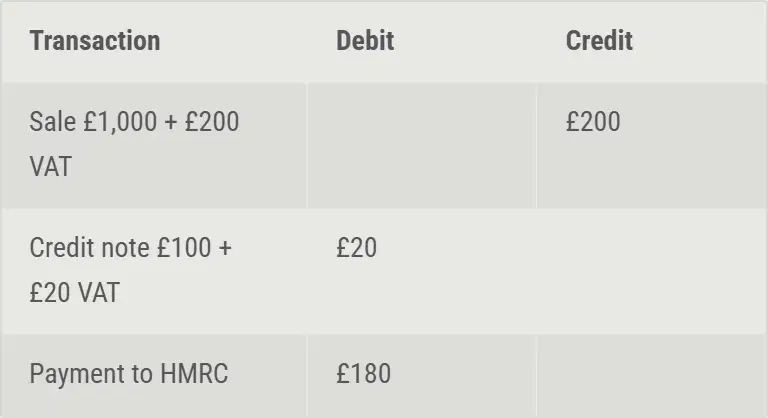
In the example entries table, what is the credit amount for a sale of £1,000 + £200 VAT?
£1,000
£200
£1,200
£180
Fill in the blank: The credit balance in the VAT Sales Tax Control Account shows VAT owed to ______ at any point in time.
HMRC
the supplier
the customer
the accountant
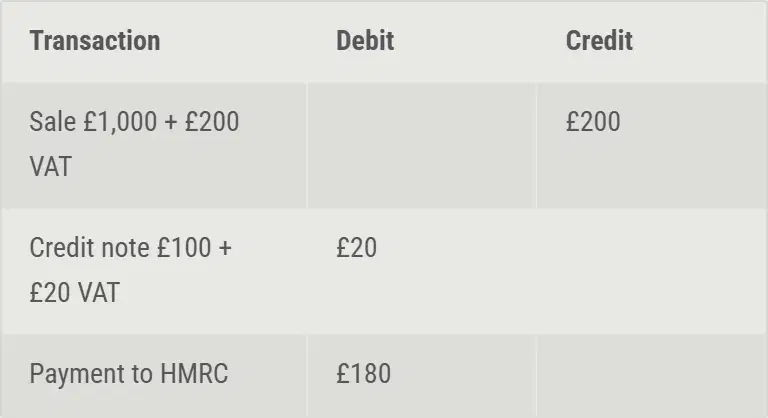
In the example entries, what is the debit amount for a payment to HMRC?
£20
£200
£180
£1,000
What is the purpose of the VAT Purchase Tax Control Account?
To record all output VAT collected from customers
To record all input VAT paid on purchases from suppliers
To record all sales transactions
To record all business expenses
The VAT Purchase Tax Control Account is debited when:
Receiving credit notes
VAT refunds from HMRC
Purchasing goods or services
Both A and B
The VAT Purchase Tax Control Account is credited when:
Receiving VAT invoices
Paying VAT to suppliers
Receiving credit notes
Purchasing goods or services
Fill in the blank: The debit balance shows VAT ________ from HMRC at any point in time.
reclaimable
payable
charged
exempt
According to the example entries, what is the debit amount for a purchase of £500 + £100 VAT?
£100
£500
£600
£0
According to the example entries, what is the credit amount for a refund from HMRC?
£90
£120
£75
£50
What is the first step in calculating your VAT return? Fill in the blank: The first step is to sum all VAT charged on sales from the _________?
Sales Tax Control Account
Purchase Ledger
Cash Book
Expense Account
What is the second step in calculating your VAT return? Fill in the blank: The second step is to sum all VAT paid on purchases from the _________?
Purchase Tax Control Account
Sales Ledger
Petty Cash Book
Bank Statement
What do you do to calculate the net position in your VAT return? Fill in the blank: Subtract ________ from ________ to find amount owed or reclaimable.
input VAT; output VAT
output VAT; input VAT
sales VAT; purchase VAT
purchase VAT; sales VAT
Which step involves submitting your VAT return online through HMRC's Making Tax Digital portal by the deadline?
Complete VAT Return
Register for VAT
Pay VAT bill
Update business details
What should you do if your output VAT exceeds your input VAT when calculating your VAT return? Fill in the blank: Pay HMRC if output exceeds input, or receive refund if ________ exceeds ________.
input; output
output; input
VAT; tax
refund; payment
Fill in the blank: To comply with VAT regulations, you must maintain detailed records of all transactions, invoices, and VAT calculations for at least ____ years.
six
three
ten
eight
Fill in the blank: VAT returns should be submitted quarterly (or monthly if applicable) by the deadline to avoid _____.
penalties
discounts
rewards
bonuses
Fill in the blank: Apply appropriate tax codes consistently to ensure accurate VAT _____
treatment
collection
refund
reporting
Fill in the blank: Issue compliant invoices with all required information including VAT number and _____
amounts
colors
addresses
signatures
Fill in the blank: Always calculate VAT on the _____ amount when prompt payment terms are offered.
discounted
gross
net
total
Fill in the blank: Reconcile VAT control accounts regularly to catch and correct _____ promptly.
errors
profits
assets
revenues
Who administers the UK VAT system?
HMRC
Bank of England
Companies House
The Treasury
What determines what you owe or can reclaim from HMRC in VAT calculations?
The difference between input tax and output tax
The total amount of sales made during the year
The number of employees in your business
The amount of profit before tax
Which of the following is NOT a type of VAT rate or treatment?
Standard
Reduced
Zero-rated
Exempt
Income-based
VAT should always be calculated on the discounted amount, regardless of actual payment when prompt payment discounts are involved.
True
False
Why are VAT control accounts essential tools?
To maintain accurate sales and purchase tax accounts for proper record keeping and returns
To increase company profits directly
To avoid paying any taxes
To eliminate the need for financial audits

