
 Worksheets
Settling the West
Total questions: 150
Worksheet time: 1hrs 15mins
Opening the West: During the ______ through the early _______, the West saw a huge _______ as hundreds of thousands moved to the frontier.
Gold Rush; 1860s; migration
Civil War; 1870s; decline
Industrial Revolution; 1820s; recession
Progressive Era; 1910s; urbanization
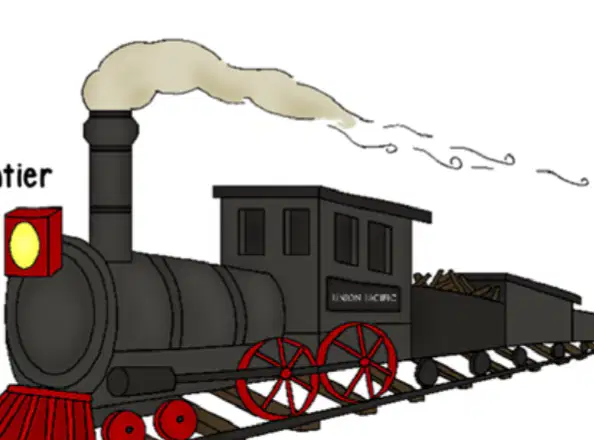
What led to the growth: ________ made western travel easier and quicker than wagon trains.
steamboats
transcontinental railroads
stagecoaches
canals
What led to the growth: There was a lot of ______ available for __________ (Homestead Act, 1862).
money; speculators
land; homesteaders
timber; railroads
water; miners
What led to the growth: _________ of precious minerals like __________.
shortages; coal
discoveries; gold
imports; iron
deposits; salt
Railroads & the West: In 1862, Congress passed the __________ to help private companies build ________ (across the country) railroads.
Homestead Act; local
Pacific Railway Act; transcontinental
Morrill Act; urban
Sherman Antitrust Act; coastal
Railroads & the West: Railroad companies were given __________ and square miles of ________ to construct railroads across the nation.
loans; land
taxes; timber
ships; water
bonds; cattle
Railroads & the West: The ______ Railroad Companies that built the 1st Transcontinental Railroad received ______ square miles of land for every mile of track laid in territories and ______ square miles for every mile laid in existing states.
Pacific; 20; 10
Atlantic; 10; 5
Midwest; 15; 8
Mountain; 30; 12
Railroads & the West: The companies could then __________________________ to people wanting to settle in that area to help cover the cost of ___________.
lease tracks; operations
sell the land; building the railroad
offer free rides; tickets
trade cattle; construction camps
What was going on in 1862 that would make the federal government cash strapped?
The Civil War was underway
The Great Depression had begun
World War I had just ended
The War of 1812 was ongoing
Some companies held onto the land _________________________.
for speculation until prices rose
because it could not be sold
to avoid taxes forever
to turn it into national parks
The companies used it as ____________________________.
collateral for loans
free housing for workers
public roads
military bases
Since they owned the land's _______________________ (the ownership of all minerals — _____________, etc. — beneath their property), it was more valuable to keep (most __________________ still own those rights today).
water rights; timber; railroads
mineral rights; oil and gas; landowners
air rights; crops; cities
hunting rights; livestock; counties
The railroad companies received an approximate __________________________ of land (about __________ square miles).
20 million acres; 31,250
60 million acres; 93,750
180 million acres; 282,000
400 million acres; 640,000
This land in the Western territories was owned by the government BUT the land was home to __________________ (including the Arapaho, Blackfoot, Cheyenne, Comanche, Crow, Kiowa, Kiowa Apache, Lakota, and Ute).
immigrant farmers
Native American tribes
European soldiers
missionaries
In ______, the first Transcontinental Railroad was completed.
1854
1869
1883
1896
In ______, the __________ Pacific & __________ Pacific Transcontinental Railroads were completed.
1877; Eastern; Western
1883; Northern; Southern
1890; Union; Central
1901; Atlantic; Pacific
Railroad Towns: As the __________ grew, towns sprang up along the railroads throughout the Great Plains.
railroads expanded
telegraph lines were removed
homestead law ended
buffalo herds vanished
Railroad Towns — What brought these settlers to the towns? __________ like working on the railroads or opening their own businesses.
jobs
military drafts
church missions
school closures
Railroad Towns — What brought these settlers to the towns? __________ and the hope of striking it rich.
gold discoveries
cheap timber
new voting rules
weather changes
Railroad Towns — What brought these settlers to the towns? __________.
free land
mandatory service
declining farm prices
scarcity of water
Railroad Towns — Where did the people come from? __________.
the eastern United States
the Arctic Circle
only coastal California
small Pacific islands
Railroad Towns — Other countries like __________.
Ireland and China
Peru and Chile
Iceland and Greenland
Morocco and Sudan
Railroad Towns — The Irish & Chinese helped __________.
build the railroads
write the Homestead Act
organize cattle drives
establish national parks
Railroad Towns — Foreigners often made up __________ of the populations of the new towns.
a large share
almost none
exactly half
only temporary visitors
Railroad Towns — __________ prohibited further immigration of people from China to the U.S.
the Chinese Exclusion Act
the Dawes Act
the Homestead Act
the Missouri Compromise
Mining & the West: __________ strikes in Colorado, Nevada, Montana, Arizona, and Idaho brought thousands of __________ to the West.
mineral; prospectors
oil; ranchers
timber; loggers
water; engineers
Gold near Pike's Peak (1859): In 1859, __________ was discovered near Pike's Peak.
gold
silver
coal
oil
Gold near Pike's Peak (1859): Over __________ flocked to Colorado to try to strike it rich—hundreds of newcomers arrived each day.
100,000 people
5,000 people
1,000 people
20,000 people
Gold near Pike's Peak (1859): Most were __________ and most were born in the __________.
young men; United States
children; Canada
retired miners; Mexico
immigrant families; South America
Gold near Pike's Peak (1859): About __________ were from Western Europe.
a significant number
a handful
none
everyone
Gold near Pike's Peak (1859): Most __________ and returned home.
failed to find rich strikes
became wealthy overnight
joined the army
moved to the East Coast
Impact on Native Americans: The newcomers settled on land where the __________ lived.
Cheyenne and Arapaho
Spanish colonists
Mormons
Russian traders
Impact on Native Americans: According to the __________, the gold was inside Cheyenne and Arapaho territory.
Fort Laramie Treaty
Treaty of Paris
Monroe Doctrine
Adams-Onís Treaty
Impact on Native Americans: The treaty gave travelers permission to __________ this territory and for the U.S. government to build __________ for the travelers.
pass through; roads and forts
settle permanently in; schools
purchase; factories
divide; private railways
Impact on Native Americans: But, it did not __________.
allow permanent settlement
ban wagons
set up elections
require churches
Impact on Native Americans: The new settlers __________ hunting grounds, __________ buffalo, cut down trees, __________, and made life difficult for Native Americans.
trespassed on; hunted; polluted streams
protected; avoided; planted forests
ignored; fed; cleaned rivers
left; studied; restored
Impact on Native Americans: Native American leaders __________ with the Federal government, but the United States failed to abide by the treaties.
signed treaties
launched political parties
built factories
held elections
Impact on Native Americans: The Ute, Cheyenne, and Arapaho were forced to __________ and live on __________.
move; reservations
vote; town councils
work; railroads
sail; coastal ports
Impact on Native Americans: The Cheyenne under their leader, Black Kettle, were forced to the __________ reservation in the Colorado Territory.
Sand Creek
Pine Ridge
Standing Rock
Wounded Knee
Sand Creek Massacre (1864): In 1864, the __________ massacred over __________ under U.S. government protection on the Sand Creek reservation.
Colorado militia; 150 Cheyenne and Arapaho
railroad workers; dozens of settlers
U.S. Navy; 20 miners
outlaws; 10 sheriffs
COMSTOCK LODE (1859) In 1859, _______ was discovered __________________________ in the United States
gold was discovered in California
silver ore was discovered in Nevada
coal was discovered in Pennsylvania
copper was discovered in Arizona
COMSTOCK LODE (1859) in Virginia City, ___________
Montana
Utah
Nevada
Colorado
COMSTOCK LODE (1859) Known as the __________________, it became one of the most significant mining discoveries in the country - hundreds of millions of dollars worth of ___________________________ were mined between ________________________
Comstock Lode; coal and iron; 1850–1870
Comstock Lode; silver and gold; the 1860s and 1870s
Mother Lode; gold only; 1849–1855
Klondike Strike; gold and copper; the 1890s
COMSTOCK LODE (1859) It created an __________________ when the __________________________ increased
economic boom; population
labor shortage; number of mines
depression; costs of equipment
political crisis; number of states
COMSTOCK LODE (1859) As a result of the influx of settlers, ____________ became a _____________ in 1861 and a _____________ in 1864
Arizona; territory; state
Colorado; territory; state
Nevada; territory; state
Utah; territory; state
WORKING IN MINES _______________________________ strikes in Arizona, Idaho, Montana, along with the strikes in Colorado and Nevada helped mining become _______________________ in the West
coal; a local craft
gold and silver; a major industry
iron; a small trade
copper; a seasonal activity
WORKING IN MINES Instead of individual prospectors, companies __________________________ and ___________________________ to mine it for them
sold claims; closed mines
bought claims; hired miners
ignored deposits; raised prices
leased land; shipped ore overseas
WORKING IN MINES Miners received _________________________ for very dangerous work
high salaries
government pensions
low wages
stock options
WORKING IN MINES Miners created a union, _______________________________, to help increase wages and improve working conditions
Western Federation of Miners
American Railway Union
Knights of Labor
Industrial Workers of the World
ENVIRONMENTAL IMPACT __________________ hurt the environment
farming
ranching
mining
railroading
ENVIRONMENTAL IMPACT ____________ (everything dug out that wasn't wanted) was dumped ______________ filling them with sediment
ore; into tunnels
tailings; into rivers and streams
timber; onto roads
slag; into mine shafts
ENVIRONMENTAL IMPACT Mercury and other ____________________________ were used in the mining process and made its way into the ____________________
metals; mountains
fertilizers; soil only
toxic chemicals; water
nutrients; crops
ENVIRONMENTAL IMPACT It led to deforestation, ____________________________, and _________________________________
urbanization; immigration
erosion; water pollution
industrialization; taxation
tourism; rail expansion
BOOM TOWNS & GHOST TOWNS A Boom Town was a town that __________________________ and was usually located by a _______________________
declined quickly; fort
grew rapidly; mining site
stayed the same size; courthouse
moved often; wagon trail
BOOM TOWNS & GHOST TOWNS These new towns grew so fast that they ______________________________________________
were carefully planned by engineers
often lacked law and basic services
built universities first
stopped migration entirely
BOOM TOWNS & GHOST TOWNS When the miners could no longer find the precious ore, people who could, left and _______________________________
the town became a ghost town
the town became a capital city
the mine turned into a museum
the settlement was absorbed by a reservation
INFAMOUS OUTLAWS & LAWMEN People back East loved to __________________________ about the West
plant crops
read stories
take trains
work as cowhands
INFAMOUS OUTLAWS & LAWMEN ____________________________ were full of adventures of the lawless and those trying to tame the "wild west"
dime novels
scientific journals
school textbooks
court records
INFAMOUS OUTLAWS & LAWMEN Billy the Kid, ________________________, Butch Cassidy and the Sundance Kid, Wild Bill Hickock, ________________________________, William Cody (Buffalo Bill), and _____________________________ are just a few of the people that the West made famous (or infamous!)
Jesse James; Wyatt Earp; Annie Oakley
Doc Holliday; Ulysses S. Grant; Clara Barton
John D. Rockefeller; Theodore Roosevelt; Susan B. Anthony
Geronimo; Sitting Bull; Sacagawea
Cattle in the West: __________ from Texas to California were __________.
cattle ranches … expanding rapidly
grasslands … ideal for grazing
towns … linked by railroads
mountain ranges … barriers to travel
Cattle in the West: Ranchers used the __________ (public lands) in Kansas, __________, Wyoming, __________, Montana, and __________.
open range … Nebraska … Colorado … the Dakotas
open range … Oklahoma … Colorado … Idaho
free range … Nebraska … Utah … the Dakotas
open pasture … Missouri … Colorado … New Mexico
Cattle Drives: When the cattle were ready __________, cowboys __________ and drove the cattle hundreds of miles to __________ where they could be sold.
for market … rounded up the herd … railheads
to brand … built corrals … river ports
to breed … separated steers … local towns
for winter … sheltered them … mining camps
Cattle Drives: Cattle drives lasted from the __________ to the __________.
1860s … 1880s
1840s … 1860s
1880s … 1900s
1820s … 1840s
Cattle Drives: The cattle drives could take __________ depending where they started and where they were going.
several months
a few days
half a day
less than a week
Chisolm Trail: __________ and drove along the Chisolm Trail.
Cowboys moved cattle
Railroad workers laid track
Farmers hauled crops
Miners transported ore
Chisolm Trail: The trail was about __________ from __________ through Oklahoma to __________.
800 miles … Texas … Kansas
200 miles … New Mexico … Colorado
1,500 miles … Arizona … Nebraska
500 miles … Texas … Colorado
Chisolm Trail: __________ like Abilene, Ellsworth, Wichita, Dodge City, and Cheyenne had __________ where cattle would be held until they could __________.
Cow towns … stockyards … be shipped by rail
Forts … corrals … be branded
Ranches … barns … be milked
Reservations … camps … be counted
The Cowboy: The American Cowboy was influenced by the __________.
Mexican vaquero tradition
European knightly code
Chinese horse-archers
Polynesian navigators
The Cowboy: Cowboys worked for __________ on the ranches and performed dangerous work.
low wages
government salaries
shares of the herd
free housing only
The Cowboy: __________ to what is shown on television and in the movies, approximately __________ of cowboys were Mexican, Native American, and Black.
Contrary … one-third
Similar … one-half
Identical … one-fifth
Because … two-thirds
Famous Black Cowboys: __________ was a Texas ranch hand in the late 1800s.
Bill Pickett
Nat Love
Buffalo Bill Cody
Bass Reeves
Famous Black Cowboys: He invented __________ (steer wrestling) to catch cattle straying from the herd.
bulldogging
lasso looping
bronco busting
barrel racing
Famous Black Cowboys: He traveled around with his brothers performing __________ and __________.
trick roping … riding
mining … prospecting
farming … fencing
canoeing … fishing
Famous Black Cowboys: __________ was born a slave and moved to the West once he was emancipated.
Nat Love
Bill Pickett
Jesse Chisholm
Wild Bill Hickok
Famous Black Cowboys: He worked on __________ in Kansas and Arizona.
cattle ranches
railroad gangs
lumber camps
riverboats
Famous Black Cowboys: In 1907, he wrote his __________ — Life and Adventures of Nat Love, Better Known in the Cattle Country as 'Deadwood Dick'.
autobiography
novel
atlas
poetry collection
Fence Wars: Ranchers __________.
cut fences to open grazing land
built more fences to protect crops
moved east to avoid conflict
sold cattle herds and became miners
Fence Wars: __________ (1883–1884) — vigilantes in Montana killed over 100 people.
Montana vigilantes
Lincoln County War
Fence Cutting War
Johnson County War
Fence Wars: __________ (1889–1893) — ranchers in Wyoming hired Texas gunmen to kill opponents.
Johnson County War
Lincoln County War
Montana vigilantes
Range Riders War
Sheep Wars: __________ was a hot button issue and tensions ran high.
grazing rights
railroad routes
mining claims
timber prices
Sheep Wars: During the 1870s–early 1900s, __________ clashed (often violently) over whether cattle or sheep had grazing rights.
cattlemen and sheepherders
miners and farmers
town sheriffs and outlaws
railroad workers and ranchers
End of the Open Range: Ranching on the __________ tapered off in the __________.
open range; late 1880s
Great Plains; early 1860s
Rocky Mountains; 1900s
Pacific Northwest; mid‑1870s
Why? Landowners __________ with barbed wire.
fenced off land
built irrigation canals
planted pine windbreaks
moved cattle to reservations
Why? __________.
drought reduced grass
railroads banned cattle cars
gold prices fell
statehood ended ranching
Why? The "Great or Big Die‑Up" — the __________ of 1886–1887 killed __________ of the cattle.
winter; hundreds of thousands
summer; dozens
drought; a few hundred
spring flood; a small number
The Homestead Act, 1862: The Homestead Act of 1862 offered __________ of land in the Western Territories to any family who settled on it for __________ years.
160 acres; 5
40 acres; 2
320 acres; 10
80 acres; 3
The Homestead Act, 1862: The law remained in effect until __________ and during that time __________ homesteads were claimed and about __________ of government lands were settled.
1976; about 1.6 million; roughly 10%
1865; about 50,000; roughly 1%
1900; about 250,000; roughly 5%
1986; about 3 million; roughly 25%
Homesteaders: Homesteaders in the Great Plains built __________ or soddies.
dugouts
log cabins
adobe casas
stone forts
Homesteaders: The __________ were built with bricks of sod.
soddies
dugouts
teepees
blockhouses
Homesteaders: They used __________ to fence off their homestead claim.
barbed wire
split‑rail fences
rope lines
stone walls
Hardships: __________ of hot and cold.
extremes
glimpses
echoes
drizzles
Hardships: Scarce __________.
water
timber
railroads
silver mines
Hardships: __________ (locust) destroyed crops.
grasshoppers
mosquitoes
beetles
dragonflies
Hardships: Homesteads were very __________.
isolated
crowded
urban
connected
Hardships: __________ was not enough land for a successful farm.
160 acres
10 acres
500 acres
1,000 acres
Hardships: Many people __________ 5 years and left their claim.
did not last
extended beyond
celebrated
prospered for
New States: 1861 — __________ (34th state).
Kansas
Oregon
Nevada
Colorado
New States: _____ — Nevada (36th state).
1864
1861
1876
1890
New States: 1876 — __________ (38th state).
Colorado
Wyoming
Utah
Oklahoma
New States: 1889 — North Dakota (39th state); _____ — South Dakota (40th state).
1889
1876
1890
1912
New States: 1889 — Montana (41st state); 1889 — __________ (42nd state).
Washington
Idaho
Wyoming
Arizona
New States: 1890 — Idaho (43rd state); _____ — Wyoming (44th state).
1890
1889
1907
1912
New States: 1896 — Utah (45th state); 1907 — __________ (46th state).
Oklahoma
New Mexico
Arizona
Alaska
New States: 1912 — New Mexico (47th state); _____ — Arizona (48th state).
1912
1907
1896
1867
In the 1830s, Eastern Native American nations like the ________ were forced to leave their land on the East and live on ________ reservations in the West.
Cherokee; Indian Territory
Sioux; Great Basin
Iroquois; New England
Nez Perce; Pacific Northwest
In ________, there were Native Americans from ________ living on the ________.
the Southwest; Navajo and Apache; desert canyons
the Midwest; Cherokee and Creek; Great Lakes
New England; Wampanoag and Pequot; coastal villages
the Northwest; Tlingit and Haida; rainforests
In 1851, Congress passed the ________ which created the Indian Reservation System.
Indian Appropriations Act
Homestead Act
Dawes Act
Kansas-Nebraska Act
The U.S. government ________ Native Americans living on the Great Plains to ________.
relocated; reservations
taxed; townships
enlisted; federal militias
excluded; urban districts
In the 1860s, the ________ fought against the settlers on their lands by ________ on the settlers (stealing their sheep, etc.).
Navajo; raiding
Cherokee; petitioning
Sioux; trading
Pueblo; farming
________ was a Navajo leader who led the Navajo raids against the settlers.
Manuelito
Geronimo
Sitting Bull
Red Cloud
In retaliation, the ________ against the Navajos and Apache killing their livestock and burning their crops.
U.S. Army launched campaigns
settlers formed peace councils
tribal leaders signed treaties
railroad companies built depots
Then, in an attempt ________, the U.S. Army moved to a ________.
to force surrender; scorched‑earth strategy
to open trade; frontier market
to protect settlers; coastal fort
to recruit scouts; boarding school
Whenever the Army found Navajo settlements, they ________.
destroyed homes and fields
collected census records
built mission churches
granted land titles
In ________, U.S. Commander Kit Carson and his troops entered the ________, a place where many ________ called home.
1864; Canyon de Chelly; Navajo
1851; Black Hills; Sioux
1830; Everglades; Seminole
1862; Little Bighorn; Cheyenne
As the U.S. Army moved through the canyon, ________.
most of the Navajo hid in caves
they established trading posts
the troops avoided local farms
commanders negotiated peace
But, as the Army moved through the canyon, they ________, ________, they filled ________ up with dirt and rocks, and killed ________.
burned crops; cut down orchards; food stores; livestock
signed treaties; marked boundaries; maps; leaders
built roads; dug wells; canals; wildlife
taught classes; opened schools; classrooms; teachers
By the time the U.S. Army left the canyon, ________ and most were convinced to ________.
supplies were destroyed; surrender
new towns were founded; settle
railroads were built; migrate
schools were opened; enroll
The Navajo who surrendered were forced to leave their land and ________ to a reservation called ________ that was already occupied by many Apache.
march; Bosque Redondo
sail; Alcatraz
ride; Fort Laramie
fly; Fort Sumner Airfield
Over ________ would eventually be captured and forced to Bosque Redondo.
8,000 Navajo
500 soldiers
20,000 settlers
1,200 Apaches
Bosque Redondo — Identify who lived there and the years of their confinement: The _____ lived at Bosque Redondo from _____.
The Navajo; 1863–1868
The Apache; 1858–1861
The Lakota; 1866–1868
The Cheyenne; 1870–1873
Bosque Redondo — Evaluate conditions created by U.S. policy: _____ by the U.S. government left the Navajo starving, _____ stricken, and without the necessary supplies to survive.
Neglect; disease
Protection; wealth
Treaties; well-fed
Assistance; drought
Bosque Redondo — Water quality: The _____ of the _____ River caused many diseases and illnesses.
Alkaline water; Pecos
Cold rapids; Rio Grande
Floodwaters; Colorado
Salty springs; San Juan
Bosque Redondo — Capacity: The 40 square miles that made up Bosque Redondo was _____ to support the population contained there.
insufficient
ideal
expansive
fertile
Bosque Redondo — Mortality: About _____ of the Navajo people _____ while living at Bosque Redondo.
one‑fourth; died
one‑half; emigrated
one‑tenth; were born
two‑thirds; enlisted
Return Home — Recognition: As a result of their suffering, the _____ acknowledged the _____.
U.S. government; Navajo’s right to return to their homeland
Navajo; forts’ authority
Army; need to expand Bosque Redondo
Territorial governor; plan to keep the Navajo confined
Return Home — Permission: In 1868, they were allowed _____.
to return to their homeland
to remain at Bosque Redondo permanently
to relocate to Kansas
to enlist in the U.S. Army
Return Home — Restitution: To apologize, the U.S. government gave the Navajo _____, 15,000 _____, and _____ head of cattle.
sheep; sheep; 500
horses; rifles; 200
wagons; corn; 50
mules; blankets; 1,000
Red Cloud’s War (1866–1868) — Duration: Red Cloud’s War lasted from _____.
1866 to 1868
1863 to 1868
1854 to 1856
1876 to 1877
Red Cloud’s War — Combatants: The _____ (Sioux was a disrespectful name given to them by their enemies), Northern Cheyenne, and Northern Arapaho fought against the _____.
Lakota; United States Army
Apache; Mexican Army
Navajo; Texas Rangers
Crow; Confederate Army
Red Cloud’s War — Location: The war was fought in modern day _____ _____ along the Powder River Basin.
Wyoming and Montana
Arizona and New Mexico
North Dakota and South Dakota
Colorado and Utah
Causes — Trails and forts: The _____ and U.S. Army forts were _____.
Bozeman Trail; encroaching on Indigenous lands
Santa Fe Trail; closed to traders
Oregon Trail; abandoned
Pony Express route; expanded
Causes — Land claim: Red Cloud and the Lakota _____ it as their land, but they had _____.
claimed; no recognition from the U.S. government
sold; treaties guaranteeing payment
ignored; access to the forts
mapped; federal survey crews on site
Causes — Government view: The U.S. government considered it _____ which made _____ difficult.
public domain; negotiations
Lakota territory; travel
private property; settlement
reservation land; hunting
Causes — Source of anger: Anger over the _____ drove conflict.
Bozeman Trail
Homestead Act
California gold rush
Transcontinental Railroad
Battle of 100 Slain (December 1866) — Alternate name and site: Also known as the _____ or Battle of the Hundred‑in‑the‑Hands, the Battle of 100 Slain occurred along the _____ in December 1866.
Fetterman Fight; Bozeman Trail
Little Bighorn; Yellowstone River
Sand Creek; Arkansas River
Washita; Canadian River
Battle of 100 Slain — Leadership and tactic: Led by Oglala Lakota leader _____, a group of Lakota, Cheyenne, and Arapaho led Captain William Fetterman and his men _____.
Crazy Horse; into an ambush
Red Cloud; to safety
Sitting Bull; back to the fort
Spotted Tail; onto the open plains
Battle of 100 Slain — Orders: Fetterman _____.
disobeyed orders not to pursue beyond the safety line
followed orders to remain within sight of the fort
negotiated a truce before engaging
retreated immediately upon contact
Battle of 100 Slain — Significance: At its time, it was the _____ during the Frontier Wars.
worst defeat of the U.S. Army
first victory for the U.S. Army
largest cavalry muster
longest siege
War Ends — Treaty: The war ended with the _____.
Treaty of Fort Laramie (1868)
Treaty of Guadalupe Hidalgo
Medicine Lodge Treaty
Fort Bridger Agreement
War Ends — Aftermath: The U.S. _____ the Bozeman Trail and Ft. Phil Kearny (the Cheyenne burned the fort as soon as it was abandoned).
abandoned
expanded
fortified
privatized
Treaties between the United States and Native American groups attempted to end conflict by offering Native Americans reservations — annuities.
build permanent forts — roads
reservations — annuities
freedom of travel — voting rights
statehood — land grants
The Medicine Lodge Treaties were a series of treaties signed in 1867 between the U.S. government and the Kiowa, Comanche, Kiowa-Apache, Cheyenne, and Arapaho.
1851
1867
1874
1880
Treaty with the Kiowa, Comanche, and Kiowa-Apache: The Native Americans gave up tribal land for reservations and the U.S. government would build houses, barns, and schools.
kept tribal land for hunting; dismantle forts
gave up tribal land for reservations; build houses, barns, and schools
sold tribal land for cash; close trails
shared tribal land with settlers; create towns
Treaty with the Northern Cheyenne and Arapaho: The Northern Cheyenne refused to sign.
Northern Cheyenne
Southern Cheyenne
Oglala Lakota
Crow
Treaty with the Northern Cheyenne and Arapaho: The reservation land given to the Cheyenne and Arapaho was in Indian Territory but they were given the right to hunt off of their reservation.
in the Black Hills; to mine gold
along the Bozeman Trail; to trade with forts
in Indian Territory; to hunt off of their reservation
near Denver; to vote in local elections
The 1868 Treaty of Fort Laramie was an agreement between the U.S. Government and the Lakota and Arapaho.
Medicine Lodge
Fort Laramie
Fort Sill
Fort Phil Kearny
It established the Great Sioux Reservation.
Oregon Trail
Great Sioux Reservation
Oklahoma Territory
Santa Fe Trail
The Powder River Country of Montana, Wyoming, South Dakota and Nebraska could not be settled.
Mississippi Delta
Powder River Country
Sacramento Valley
Appalachian Plateau
The Bozeman Trail was closed and the forts were abandoned.
Bozeman Trail; forts
Chisholm Trail; ranches
Santa Fe Trail; missions
Oregon Trail; wagon trains
Between 1874-1875, the Southern Plains tribes fought against the U.S. Army in Texas.
Northern Plains tribes
Southern Plains tribes
Pacific Northwest tribes
Eastern Woodland tribes

