
NEW
Font size
 Worksheets
Prestress Losses
Total questions: 16
Worksheet time: 8mins
What is the primary reason early attempts to produce prestressed concrete were not successful?
Lack of proper materials
Loss of prestress transferred to concrete after a few years
Inadequate construction techniques
High cost of production

What is a common type of prestress loss found in both pre-tensioning and post-tensioning methods?
Relaxation of stress in steel
Anchorage slip
Friction
Elastic shortening
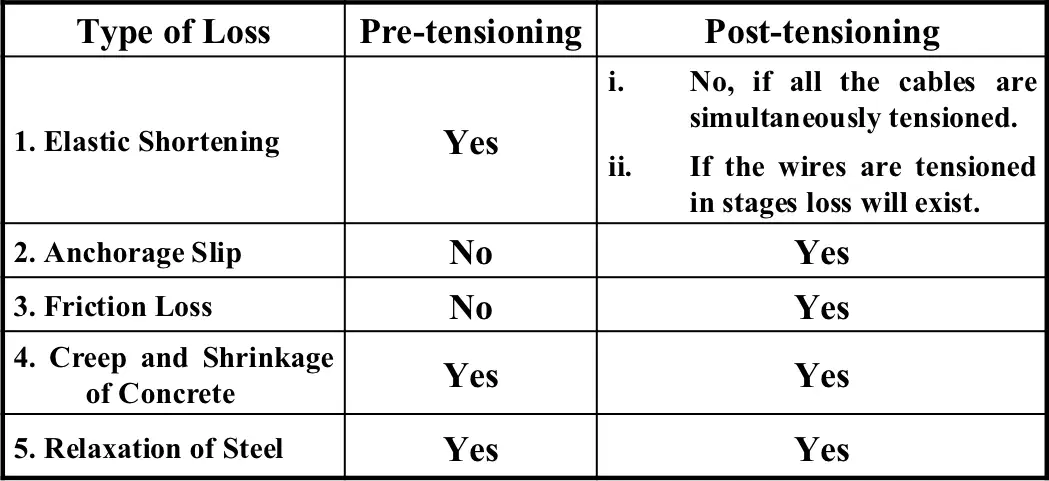
Which type of loss is present in both pre-tensioning and post-tensioning systems?
Anchorage Slip
Friction Loss
Relaxation of Steel
Elastic Shortening
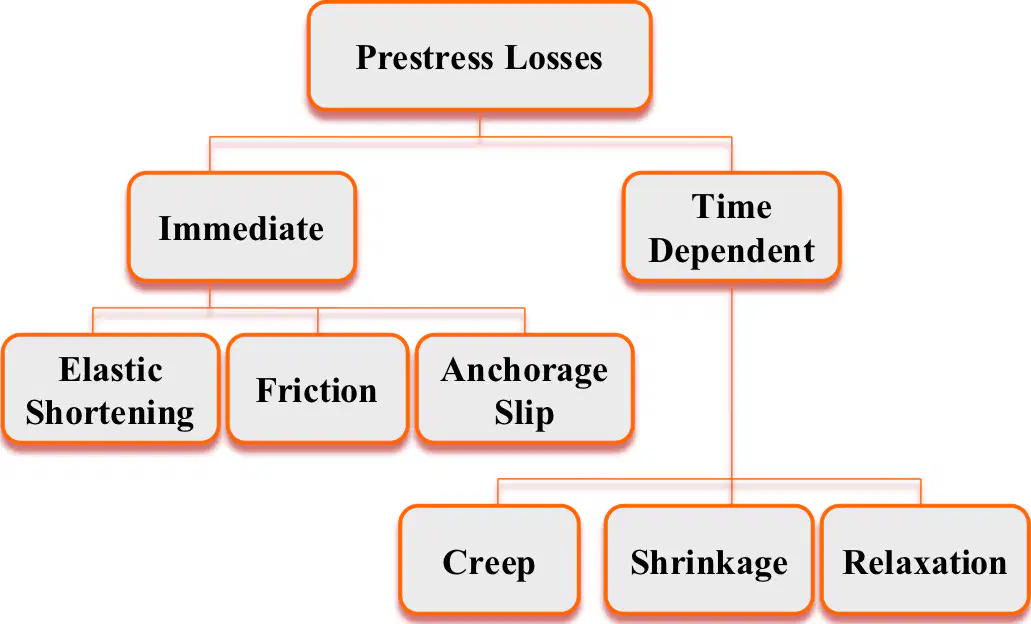
Which of the following is an example of an immediate prestress loss?
Elastic Shortening
Shrinkage
Relaxation
Creep
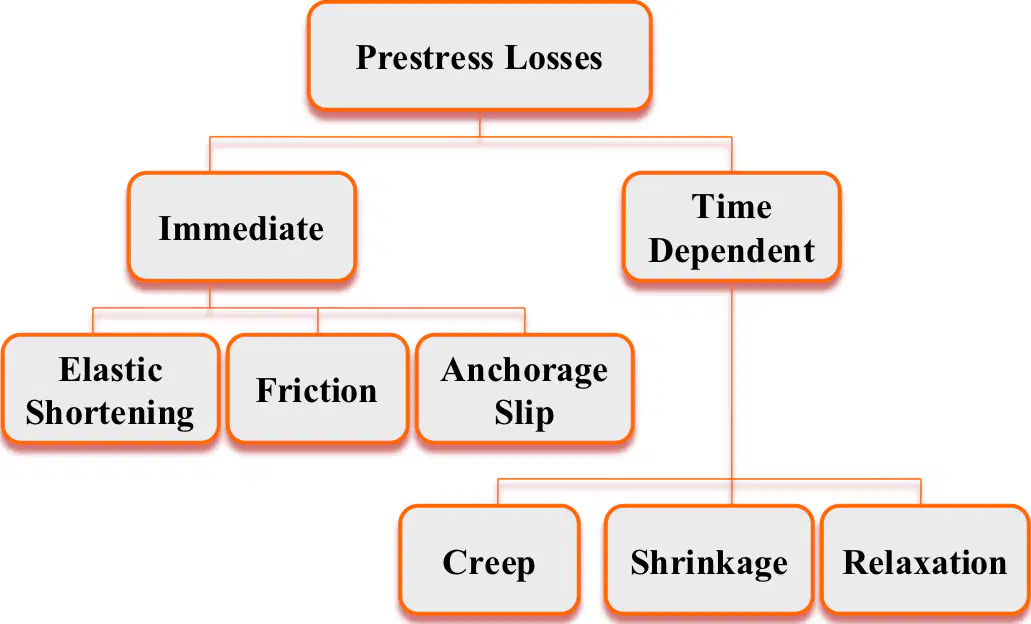
Which prestress loss occurs due to the movement of tendons at the anchorage point?
Anchorage Slip
Elastic Shortening
Shrinkage
Relaxation

What is the formula for the mean value of the prestress force Pm,t(x) at time t > t0?
Pm,t(x) = Pm0(x) + ΔPc+s+r(x)
Pm,t(x) = Pm0(x) - ΔPc+s+r(x)
Pm,t(x) = Pm0(x) × ΔPc+s+r(x)
Pm,t(x) = Pm0(x) ÷ ΔPc+s+r(x)
Time-dependent losses of prestress ΔPc+s+r(x) are caused by which of the following factors?
Elastic deformation of concrete and anchorage slip
Friction and short-term relaxation
Creep and shrinkage of concrete and long-term relaxation of prestressing steel
Anchorage slip and short-term relaxation
What type of loss occurs during the stressing process in pre-tensioning?
Loss due to relaxation of the tendons
Loss due to elastic deformation of concrete
Loss due to friction at the bends and wedge draw-in of anchorage devices
Loss due to shrinkage and heat curing
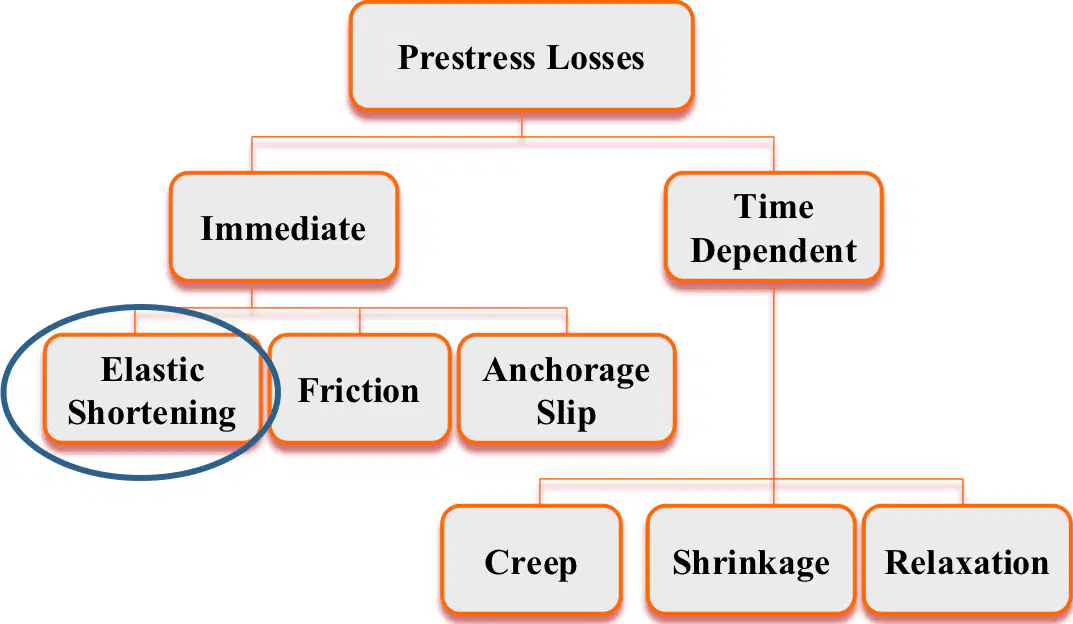
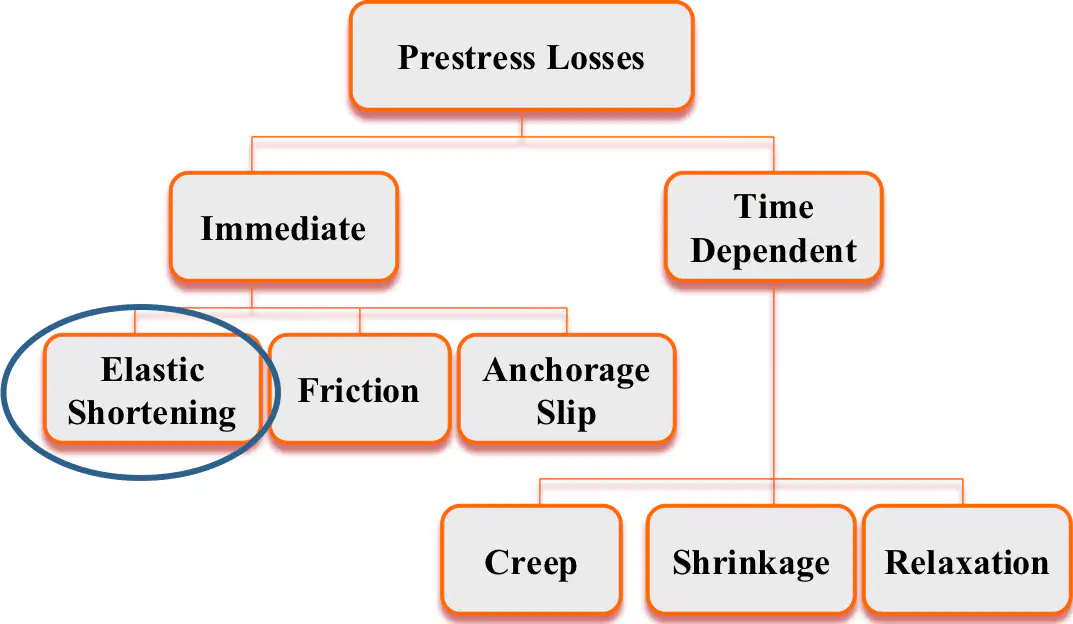
What are the two main categories of prestress losses?
Immediate and Long-Term
Immediate and Time Dependent
Elastic and Frictional
Anchorage and Shrinkage
Which prestress loss is associated with the reduction in volume due to moisture loss?
Relaxation
Shrinkage
Friction
Anchorage Slip
What happens when cables are tensioned sequentially in post-tensioning?
There is no loss in a tendon.
There is loss in a tendon during subsequent stretching of other tendons.
The cables elongate uniformly.
The cables remain unaffected.
What is the change in strain in tendon equal to?
The strain in concrete (εc) at the level of tendon due to prestressing force
The modular ratio
The stress in concrete at the same level
The drop in prestress (Δfp)

What does "P₀" represent in the context of pre-tensioned axial members?
Initial prestress applied to the member
Final prestress after elastic shortening
Original length of the member
Force applied during prestressing
What is the modulus of elasticity of steel used in the pre-tensioned concrete beam?
210 kN/mm²
35 kN/mm²
188 kN/mm²
143 kN/mm²
What are tendons housed in within post-tensioned members?
Beams
Ducts or sheaths
Columns
Plates
What happens when a post-tensioning cable is stressed?
It remains stationary within the duct.
It moves relative to the duct and friction resists this movement.
It increases the effective prestress force at the jacking point.
It eliminates the need for friction in the duct.

