
 Worksheets
Common Tumors and Polyps in Gynecology
Total questions: 74
Worksheet time: 37mins
What is the most common benign cervical neoplasm?
Adenomyosis
Cervical Polyp
Leiomyoma
Fibroid
Cervical polyps occur more frequently in which group?
Nulligravidas
Adolescents
Multigravidas
Postmenopausal women
The most common symptom of endometrial polyps is
Pelvic pain
excessive menstrual bleeding
amenorrhea
dysmenorrhea
The most common tumor of the female pelvis is
Endometrioma
Fibroadenoma
Leiomyoma
Dermoid cyst
The most common type of fibroid is
Submucosal
Subserosal
Intramural
Pedunculated
The imperforate hymen is the most common congenital abnormality of the
GI tract
Female genital tract
Urinary tract
placenta
An imperforate hymen may lead to obstruction resulting in accumulation of
air, fluid, pus
Blood, fluid, pus
Urine
Blood, air, water
Rhabdomyosarcoma most commonly occurs in which population?
Postmenopasual
Pre menopausal
Children
Babies
Which uterine condition is most associated with perimenopausal women aged 40–49?
Endometrial Polyps
Cervical Stenosis
Vaginal Cysts
Cervical Myoma
Which fibroid type grows within the myometrium
Pedunculated
Submucosal
Intramural
Cervical
Nabothian cysts are also known as
Inclusion Cyst
Functional cysts
follicular cysts
paraovarian cysts
Nabothian cysts form in response to
Hormonal imbalance
Inflammation of the endocervical glands
cervical trauma
ovarian hyperstimulation
Nabothian cysts are commonly found after:
Menopause
Pregnancy
Ovulation
Puberty
Nabothian cysts are filled with
Blood
Mucus
Pus
Fluid
Nabothian cysts develop on the surface of which structure?
Cervix
Uterus
Fallopian tube
Ovary
Gravidity refers to
Number of pregnancies carried to term
Number of miscarriages
Number of live births
Number of times a woman has been pregnant
Cervical stenosis is usually
Aquired
Congenital
Rare and genetic
Only at birth
Cervical stenosis may cause
Fluid retention in uterus
Ovarian torsion
Vaginal Prolapse
Fallopian blockage
Cervical stenosis involves obstruction at which location?
Ovarian Hilum
External or internal OS
Bladder outlet
Uterine fundus
Which of the following is a possible cause of cervical stenosis?
Radiation Therapy
Cone biopsy
Cervical Atrophy
Tubal Ligation
Postmenopausal cervical stenosis most often causes:
Heavy bleeding
dysmenorrhea
infertility
no symptoms
Premenopausal patients with cervical stenosis may experience all EXCEPT:
Oligomenorrhea
Amenorrhea
Dysmenorrhea
Excessive lactation
Hydrometra refers to:
Accumulation of pus in the uterus
Accumulation of fluid in the uterus
Retention of blood in the vagina
Fluid in the fallopian tubes
Hematometra is defined as:
Pus in the cervix
Retention of menstrual blood in the uterus
Blood in the peritoneal cavity
Retained blood in the vagina
Pyometra describes:
Accumulation of pus in the uterus
Retention of blood in the vagina
Accumulation of serous fluid in the cervix
Absence of cervical mucus
Hematocolpos refers to:
Blood in the fallopian tubes
Retention of blood in the uterus
Retention of blood in the vagina
Blood in the peritoneum
Hematometrocolpos indicates retention of menstrual blood in the:
Cervix only
Uterus only
Vagina only
uterus and vagina
During SHG, fluid infusion helps with visualization of:O
Ovarian Cysts
Cervical Myoma
Vulvar Lesions
Adenomyosis
Cryosurgery (cryotherapy) destroys abnormal tissue using:
Extreme Heat
Extreme Cold
Electrical Current
Radiation
Endometrial polyps grow in response to circulating:
Progesterone
Estrogen
LH
FSH
Many patients with endometrial polyps are
Symptomatic
Asymptomatic
Painful
Infertile
The most common symptom of endometrial polyps is:
Dysmenorrhea
Amenorrhea
Menometrorrhagia (excessive, irregular bleeding)
Postcoital spotting
Menometrorrhagia is best defined as:
Light bleeding at regular intervals
Prolonged or excessive uterine bleeding that occurs irregularly and more frequently than normal
Absence of menstruation
Spotting only after intercourse
In postmenopausal patients taking tamoxifen, the normal endometrial thickness is:
<5
<8
>8
>5
What percentage of women with adenomyosis experience excessive uterine bleeding or irregular bleeding?
50%
25%
60%
10%
Adenomyosis is most commonly diagnosed in women over the age of:
40
50
60
70
Which imaging modality is most commonly used to confirm adenomyosis?
CT
MRI
Ultrasound
X-Ray
The most common presentation of adenomyosis includes:
Small, well-defined uterus
Diffuse uterine enlargement with indistinct endometrium-myometrium border and myometrial cysts
Isolated ovarian cysts
Cervical Stenosis
Adenomyosis is commonly misdiagnosed as:
Endometrial polyp
Leiomyoma (fibroid)
Nabothian cyst
Ovarian torsion
Metrorrhagia is defined as:
Heavy bleeding only during menstrual periods
Irregular uterine bleeding, especially between menstrual periods
Absence of menstruation
Painful menstruation without bleeding
What percentage of patients with adenomyosis experience dysmenorrhea (pelvic pain during menstruation)?
10%
25%
50%
60%
MRI is useful in patients with adenomyosis because it:
Treats adenomyosis non-surgically
Confirms diagnosis and differentiates adenomyosis from leiomyoma
Detects Nabothian cysts
Measures cervical stenosis
Which type of fibroid is the most common?
Submucosal
Intramural
Subserosal
Pedunculated
Intramural fibroids develop in which location?
Endometrium
Myometrium
Subserosal
Cervical Canal
Subserosal fibroids are located:
Within the endometrium
Close to the peritoneal surface of the uterus
Inside the cervical canal
Only on the cervix
Submucosal fibroids are notable for:
Being the least symptomatic
Distorting the endometrial stripe and causing the most symptoms
Growing away from the uterus on a stalk
Always causing infertility
Pedunculated fibroids arise from:
Submucosal Fibroids
Subserosal Fibroids
Intramural Fibroids
Cervical Polyps
Complications of pedunculated fibroids can include:
Regression without symptoms
Torsion, pain, infarction, degeneration, and necrosis
Excess estrogen production
Formation of Nabothian cysts
Cervical myomas may cause:
Hydrometra
Hematometra
Pyometra
Hematocolpos
Metrorrhagia refers to:
Prolonged or excessive uterine bleeding that occurs irregularly and more frequently than normal
Irregular uterine bleeding, especially between menstrual periods
Absence of menstruation
Heavy, regular menstrual bleeding
Menometrorrhagia is defined as:
Bleeding only between menstrual periods
Normal menstruation
Prolonged or excessive uterine bleeding that occurs irregularly and more frequently than normal
Irregular uterine bleeding, especially between menstrual periods
A patient has irregular bleeding only between her periods, but the total volume of menstrual bleeding is normal. This is most consistent with:
Menometrorrhagia
Metrorrhagia
Hypermenorrhea
Amenorrhea
A patient has both prolonged heavy bleeding during periods and irregular spotting between periods. The correct term is:
Metrorrhagia
Menometrorrhagia
Dysmenorrhea
Hypomenorrhea
Menometrorrhagia is a common sign of
Cervical Myoma
Endometrial Polyps
Adenomyosis
Leiomyoma
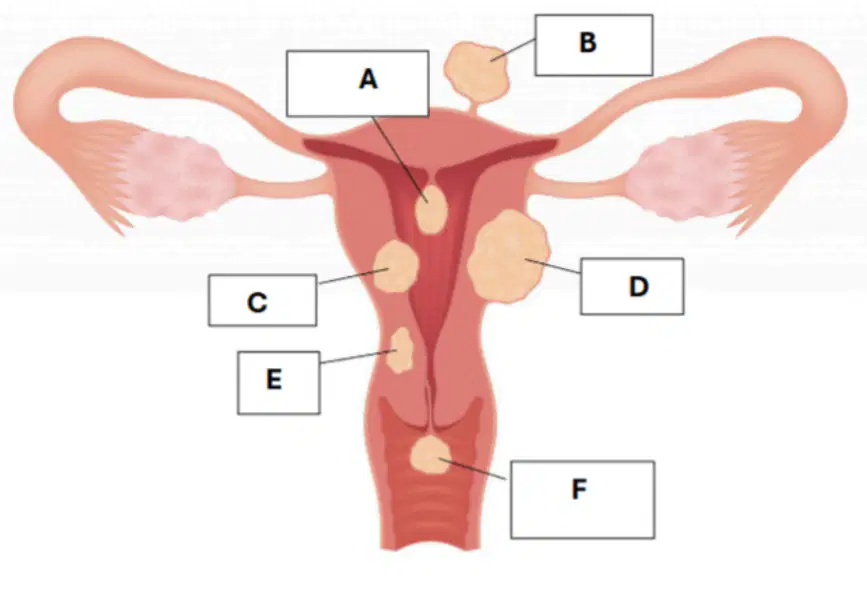
What type of fibroid does letter A represent?
Intramural
Pedunculated
Fundal Subserosal
Submucosal
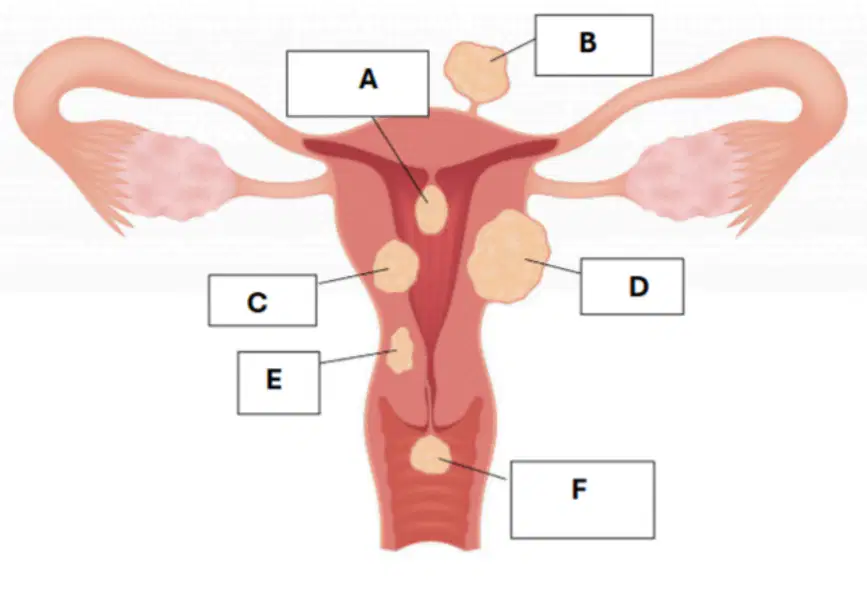
What does letter B represent?
Pedunculated
Fundal Subserosal
pedunculated subseroal
Submucosal
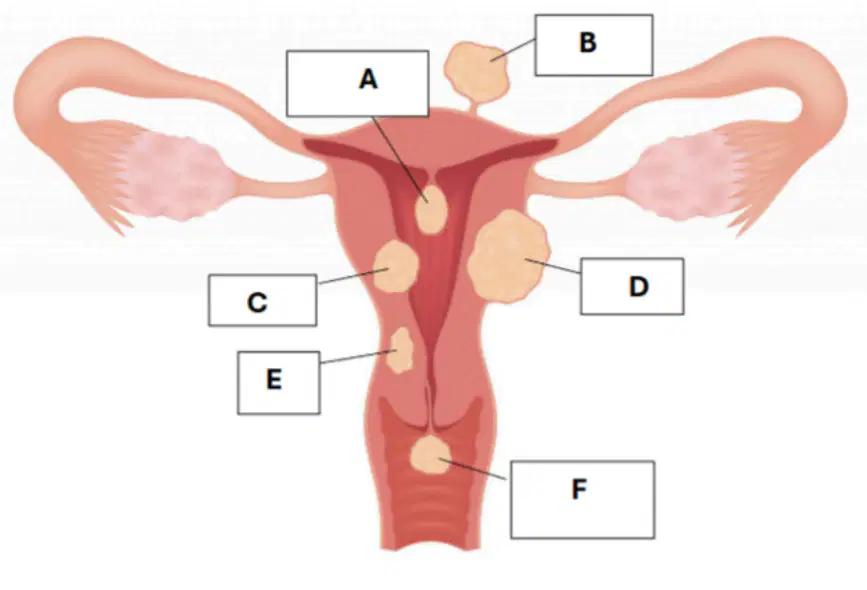
What type of fibroid does letter C represent?
Submucosal
Intramural
Subserosal
Pedunculated
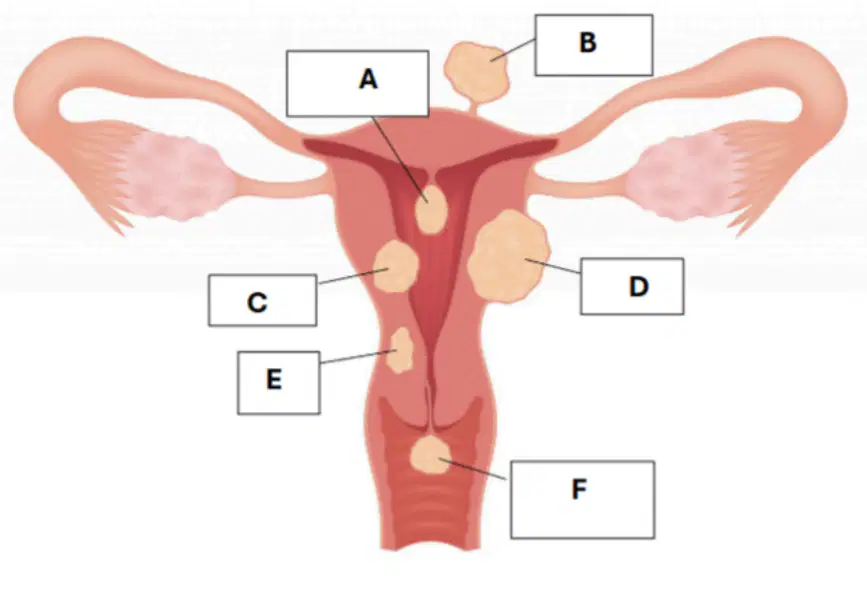
What type of fibroid does letter E represent?
Pedunculated
Subserosal
Submucosal
Intramural
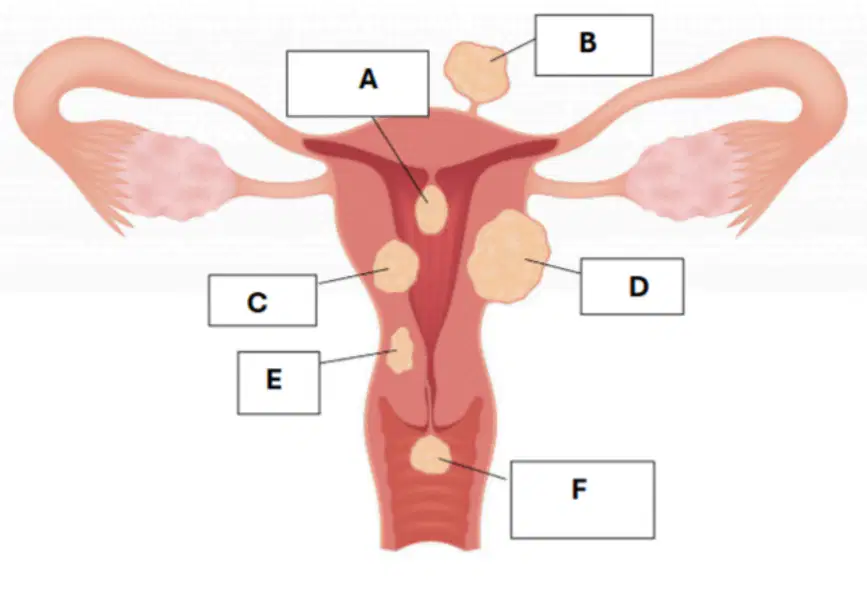
What type of fibroid is letter D?
Submucosal
Subserosal
Pedunculated
Intramural
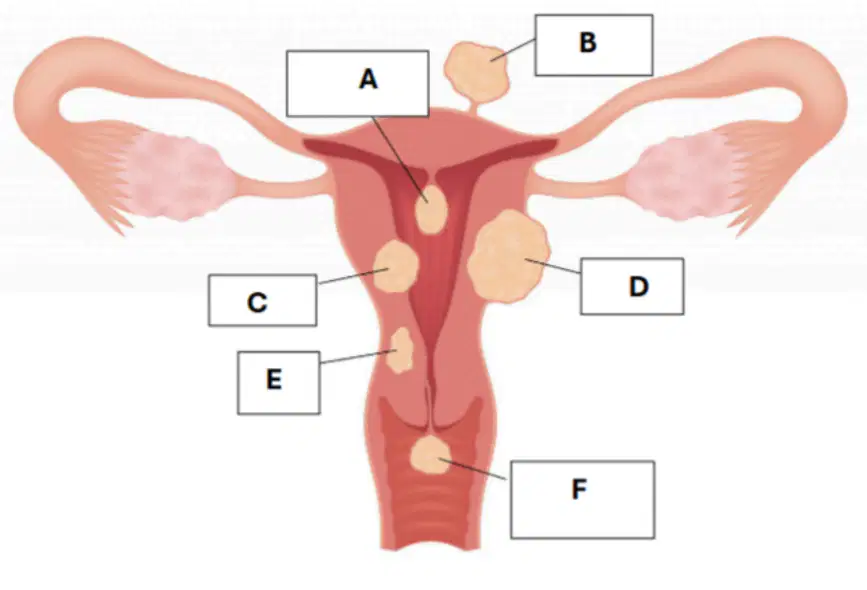
What type of fibroid is letter F
Pedunculated
Pedunculated submucosal
submucosal
Suberosal
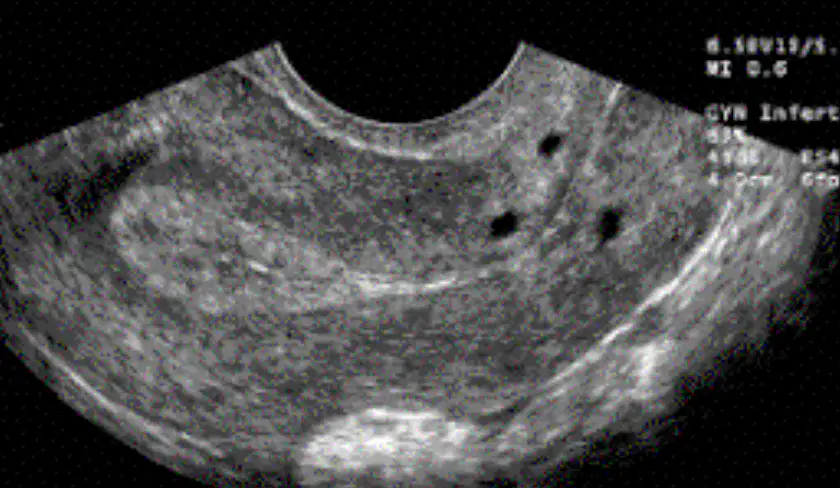
What pathology does this represent
Cervical Myoma
Nabothian Cyst
Endometrial Polyp
Leiomyoma
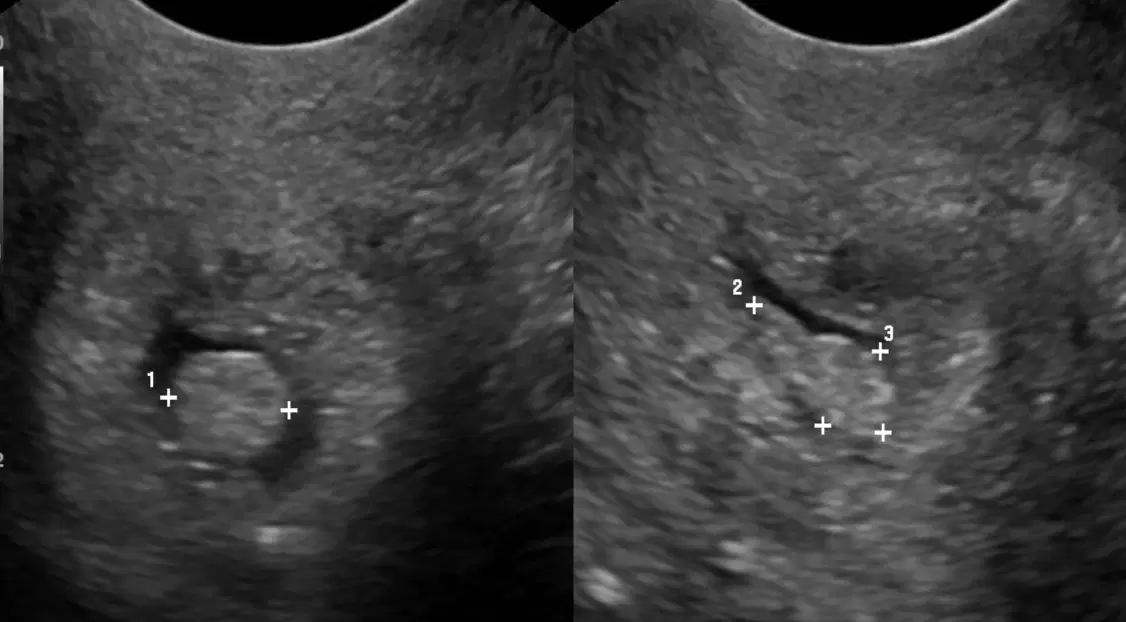
What pathology is represented
Nabothian Cyst
Cervical Polyp
Adenomyosis
Leiomyoma
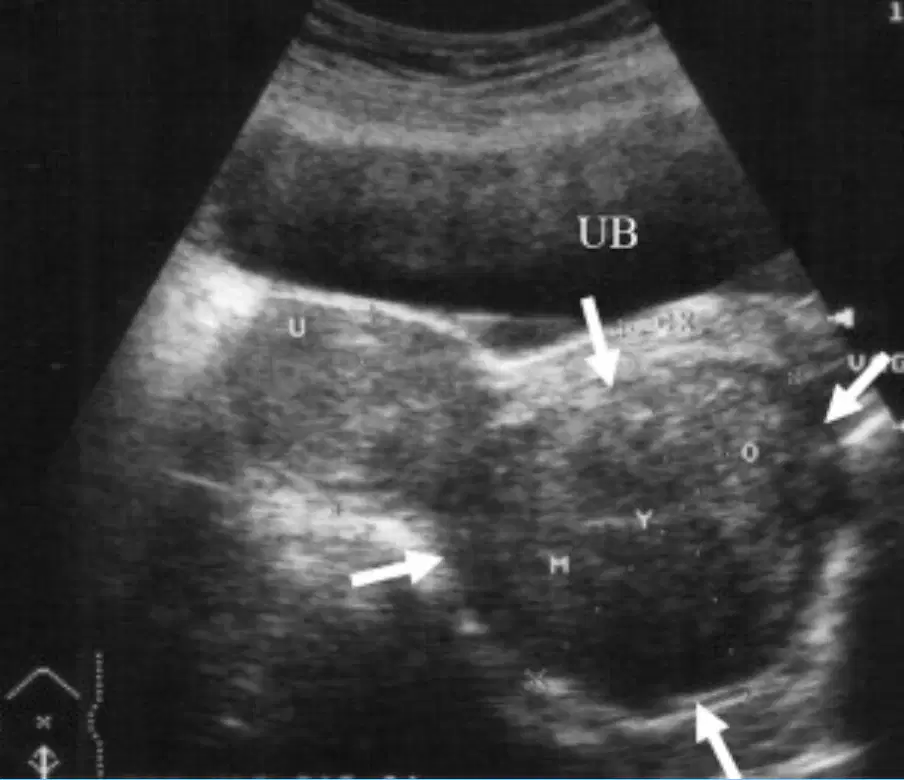
What pathology is represented
Cervical Polyp
Cervical Myoma
Endometriosis
PCOS
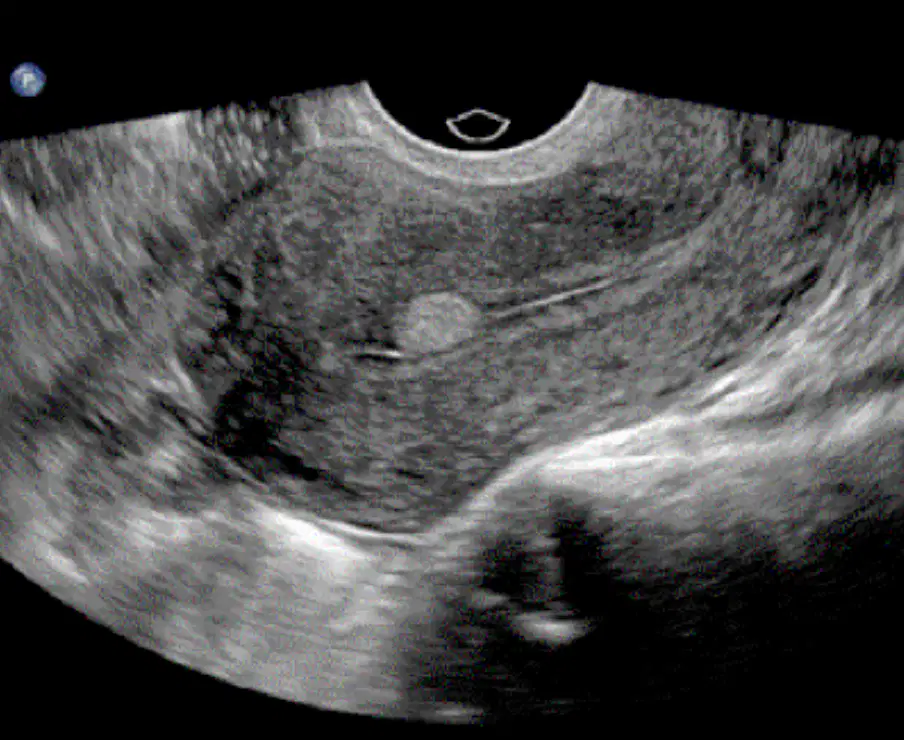
What pathology is represented
Cervical Myoma
Cervical Polyp
Endometrial Polyp
Adenomyosis
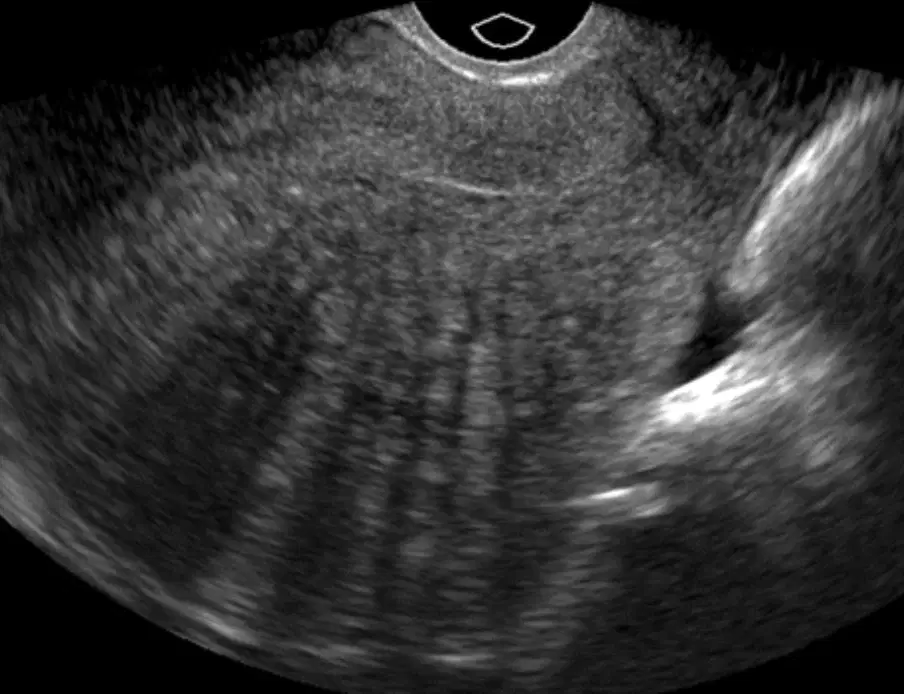
What pathology is represented
Adenomyosis
Endometrial Polyp
Cervical Polyp
Cervical Neoplasm
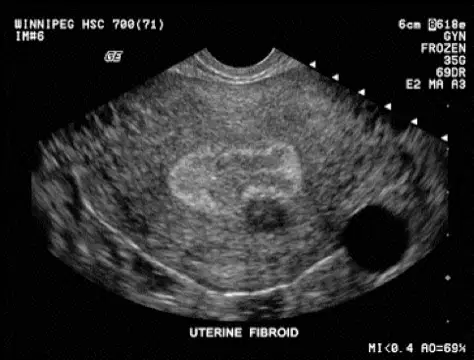
What type of fibroid is shown
Submucosal
Subserosal
Pedunculated
Intramural
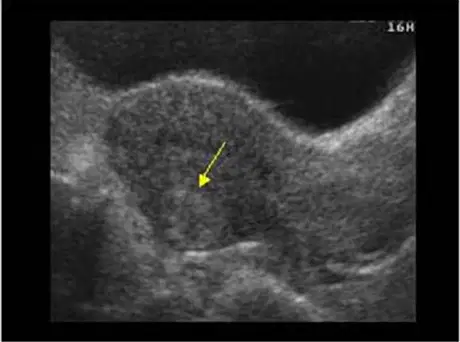
What type of fibroid is this
Subserosal
Submucosal
Pedunculated
Pedunculated Subserosal
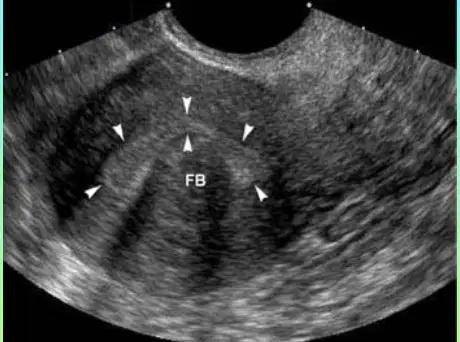
Subserosal
Submucosal
Intramural
Pedunculated
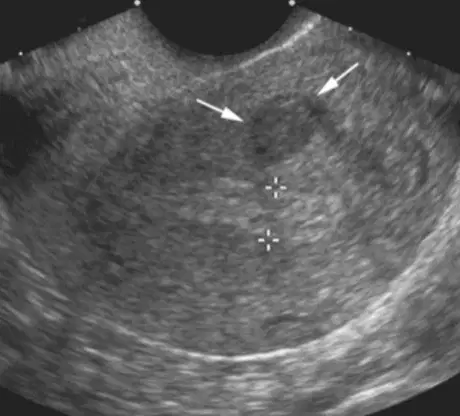
What fibroid is this
Intramural
Pedunculated
Subserosal
Submucosal
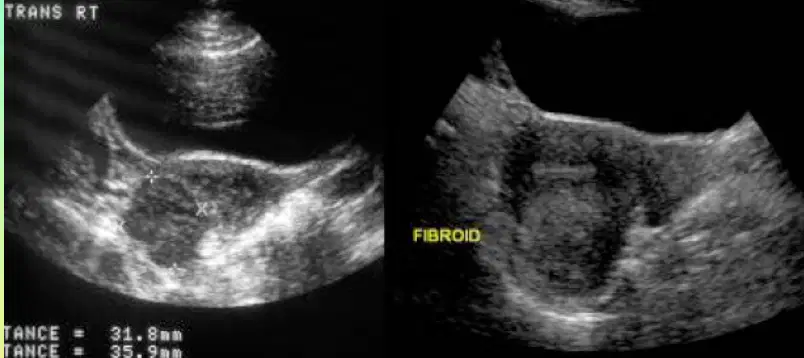
What type of fibroid is this
Subserosal
Submucosal
Pedunculated
Intramural
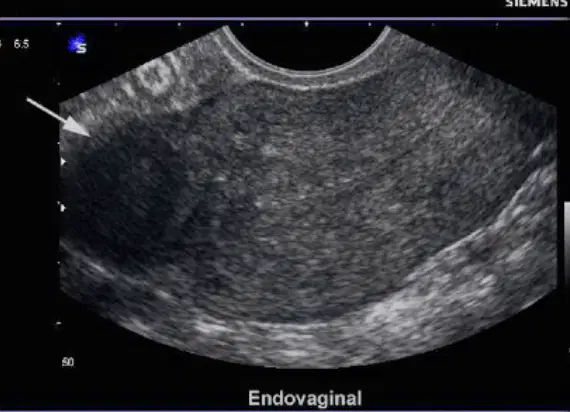
What fibroid is this
Pedunculated
Intramural
Submucosal
Subserosal
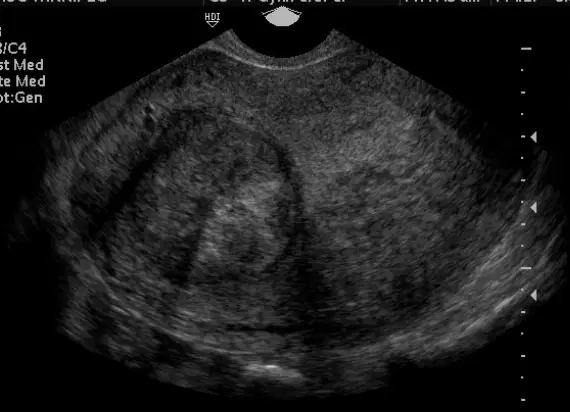
What type of fibroid is this
Pedunculated in the fundus
Subserosal in the fundus
Submucosal In the fundus
Subserosal in the cervix
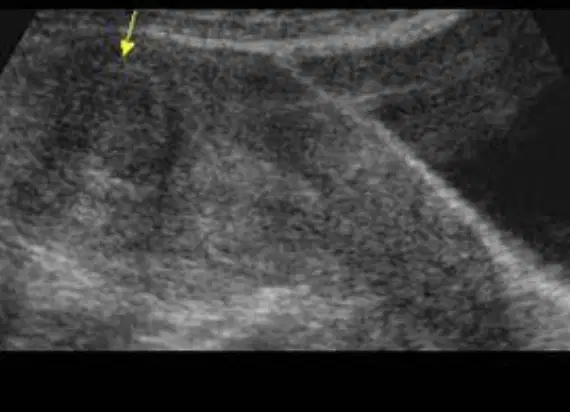
Pedunculated
Intramural
Submucosal
Subserosal
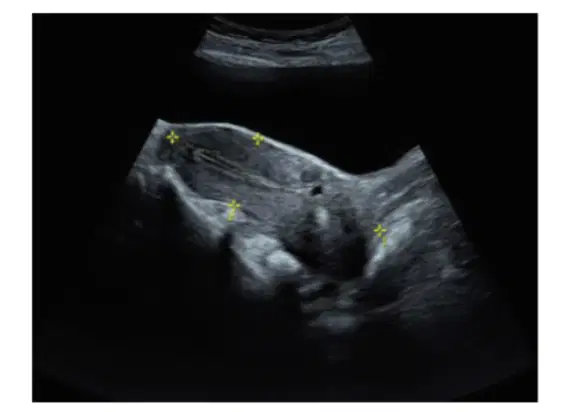
What is this?
Cervical Myoma (Tissue distorted on posterior wall)
Cervical Myoma (tissue distortion on anterior wall)
Endometrial Cyst (not tissue distortion)
Cervical Polyp

