
 Worksheets
Y12 HL GEOG
Total questions: 116
Worksheet time: 1hrs 7mins
What does the core-periphery model primarily explain?
Population growth trends
The distribution of natural resources
Economic relationships between regions
Cultural differences across countries
Which region is considered a core in the context of the core-periphery model?
Central Asia
Eastern Europe
Sub-Saharan Africa
Western Europe
What term is used for areas that develop around the core?
Sub-core
Periphery
Semi-periphery
Core
Which is the name for a new core forming in another region?
Satellite
Discoball
Radial
Neosphere
What effect suggests that innovations in the core will eventually benefit the periphery?
Trade effect
Backwash effect
Dependency effect
Globalization effect
Which country's core-periphery is very pronounced, along the Heihe-Tengchong line?
India
Brazil
South Africa
China
Who developed the World System Theory that relates to the core-periphery model?
John Smith
Immanuel Wallerstein
David Harvey
Andre Gunder Frank
What does FDI stand for in the context of economic geography?
Free Trade Investment
Fiscal Dependency Initiative
Financial Development Index
Foreign Direct Investment
Which of the following is NOT a characteristic of core regions?
Higher standards of living
More tax money for infrastructure
Lower population density
Higher profit margins
What does the term 'brain drain' refer to?
Decrease in population growth
Reduction in educational opportunities
Loss of skilled labor to other regions
Migration of unskilled workers
Which of the following countries is considered part of Singapore's semi-periphery?
South Africa
Brazil
Japan
Vietnam
What is the primary criticism of HIC-LIC aid programs according to Wallerstein?
They create dependency
They are ineffective
They promote inequality
They are too expensive
What does NIDL stand for?
National Icy Day Laws
New International Division of Labour
Never Invest Dollars Lawlessly
Nasty Iguanas Don’t Lie
Which countries are referred to as the original NICs or Tiger Economies?
Brazil, Russia, India, China
Singapore and South Korea
Vietnam and Malaysia
Germany and Kenya
The NIDL has resulted in (a) in HIC cities
(Hint: D)
Which technological advancement is credited with aiding the pace of NIDL shifts?
3D printing
Aeronautics
Internet & mobile communications
Biotechnology advancements
What industry did the Tiger Economies focus on after moving away from manufacturing?
Primary industry
High-tech and tertiary (service) industries
Heavy industry
Agriculture
Which countries are part of the BRIC group?
Brazil, Russia, India, China
Bahrain, Russia, Israel and Canada
Bangladesh, Rwanda, Iceland and Chad
Bhutan, Rwanda, Indonesia and Cambodia
What is a potential consequence of not having primary industry focused countries?
Decrease in food and raw material prices
Increase in food and raw material prices
What event highlighted the risks of depending on a global supply chain?
2008 Financial Crisis
2020 Covid Toilet Paper Crisis
2011 Tsunami in Japan
2015 European Migrant Crisis
What does the acronym HIC stand for?
High Income Countries
Highly Industrialized Cities
Hyper interrelated concepts
High Investment Capitals
Think about links between GDP and development.
Which country has the highest % of tertiary industry:
Germany
China
Kenya
Brazil
What is a characteristic of semi-periphery countries that attracts TNCs?
High environmental standards
Large labor forces looking for work
High cost of living
Advanced technological infrastructure

What is a reason for the shift of manufacturing to semi-periphery countries?
High demand for luxury goods in the host market
Lower wages and less strict environmental laws
Greater access to advanced technology
Political stability
India is unusual for MICs, as it reached Rostow's take-off stage by focusing on...
Commercial farming
Service industries and offshoring
Hi-tech manufacturing

Which level of development are the 'Cubs' countries considered to be part of?
LDC
LIC
MIC
HIC

What is the main difference between offshoring and outsourcing?
A) Offshoring involves a third party, outsourcing does not.
B) Offshoring is done within the same country, outsourcing is international.
C) Offshoring involves your own brand's services abroad, outsourcing involves a third party.
D) Offshoring is cheaper than outsourcing.
What is one reason companies are reshoring according to the text?
Lower labor costs abroad
Better quality control
Increased outsourcing
Higher taxes in home country
Some companies reshore due to issues with ______ control, which makes consumers lose faith in the company's output.
quality
cost
time
labor
What is a potential downside of offshoring mentioned in the text?
Increased local employment
Loss of control over quality
Higher profits
Easier management
Which of the following is a benefit of offshoring for LIC/NIC host countries (especially those in DTM stage 3)?
Decreased employment
Better skilled workforce
Lower tax rates
Increased environmental standards
The offshoring of jobs in one industry can lead to the loss of jobs in another due to the negative ------- effect.
(a)
What trend has made reshoring a more attractive option recently?
Decreased oil costs
HIC workers accepting lower wages
Increased global shipping costs
Lower home country taxes

Which company moved its headquarters to Singapore in 2017?
Dyson
Apple
Samsung
Sony
Which model (4 letter acronym) does reshoring appear to run counter to?
(a)
What is the estimated share of U.S. manufacturing jobs reshored from China between 2010 and 2021?
44%
30%
20%
10%
The invention of which technology reduced global circumnavigation to 3 days?
Steam engines
Sailing ships
Turboprop engines
Internet
Cultural homogenisation leads to all the world's cultures becoming more SIMILAR.
True or False?
True
False
What is a POSITIVE aspect of the shrinking world phenomenon?
Cultural attrition
Greater awareness of other cultures
Climate anxiety as people know more about what is happening globally
Reduced cultural hetereogeniety
The paradox of choice suggests that too much choice leads to what?
Satisfaction
Paralysis and dissatisfaction
Increased happiness
Better decision-making
What is an example of hybrid cuisine?
Sushi
Chicken tikka masala
Beef tacos
Margarita pizza
Which well-known historical event led to the creation of steam engines?
Hint: I R
(a)
Fill in the blank: The shrinking world phenomenon can lead to cultural ______, where interacting cultures form NEW cultural practices.
imperialism
hybridity
homogenisation
assimilation
The _______ (Hint: P) suggests that the more options we have, the less happy we are.
This is thought to be because it puts pressure on the individual to select an action / product.
Paradigm
Paradox
Parable
Pigeon
The shrinking world phenomenon means you influenced of cultural trends and happenings around the world, which leads to cultural ______, where a NEW culture is created from a mix of others.
diversity
homogenisation
fragmentation
isolation
Word which means being more accomodating about others' cultural preferences because you have a deeper understanding of why issues matter to them?
Tolerance
Ignorance
Belligerence
Aberrance
What is the first stage of the Rostow Model?
Pre-Industrial
High Mass Consumption
Economic Take Off
Traditional Society
Which stage of the Rostow Model is associated with Newly Industrialised Countries?
Stage 1
Stage 2
Stage 3
Stage 4
What does DTM stand for?
Demographic Transition Model
Development Transition Model
Development Theory Model
Demographic Theory Model
What is a key characteristic of Stage 2 in the Rostow Model?
High birth and death rates
Offshoring of industries
Mechanisation of farming
Focus on knowledge economy
Which stage of the DTM corresponds with Rostow's Stage 3?
Stage 2
Stage 1
Stage 4
Stage 3
What is a significant factor in Stage 2 of the Rostow Model?
High disposable income
Globalisation
TNC input
Urbanisation
What happens in Stage 4 of the Rostow Model?
Countries have low education levels
Countries focus on primary industries
Countries gain international power
Countries experience high birth rates
What is the focus of the Rostow Model?
Environmental sustainability
Economic development
Social indicators
Cultural development
Which stage of the Rostow Model is characterized by a knowledge economy?
Stage 1
Stage 5
Stage 4
Stage 2
What issue was faced by Stage 5 countries during the Covid lockdowns?
Overpopulation
Shortages of basic goods
High birth rates
Lack of education
What is a result of the demographic dividend in DTM Stage 3?
Economic Take Off
High birth rates
Increased death rates
Traditional Society
What is a characteristic of Stage 1 in the DTM?
Mechanised agriculture
High birth and death rates
Knowledge economy
Urbanisation
What does FDI stand for in the context of economic development?
Foreign Direct Investment
Financial Direct Investment
Financial Development Initiative
Foreign Development Index

What is the primary purpose of protectionism?
Reduce the carbon footprints through reduced shipping distances
Shield domestic industries from foreign competition
Promote international trade
Reduce risk of international conflict
What might happen if a country imposes high tariffs on imports?
It will lead to increased imports
Other countries may retaliate with their own tariffs
It will decrease domestic production
Which income level tend to have less leverage in international trade deals and get worse terms?
HICs
MICs
LICs
What do Neo-liberals suggest regarding quotas, tariffs, and subsidies?
Increase them to protect local industries
Remove them to let market forces balance things
Maintain them at current levels
Use them for political leverage on other issues
Word which means only allowing a limited amount of a good to be imported:
Q U O T A
T A R I F F
E M B A R G O
What is the desired trade effect of a country deliberately lowering its currency value?
It makes imports more expensive
It makes exports cheaper and more competitive
It increases domestic inflation
It reduces foreign investment
What is trade without tariffs called?
Free trade
Fair trade
Focused trade
Forward trade
What is a potential consequence of oversupply in a market according to Neoliberalism?
Prices of the product will increase
People will stop making the product
Demand will rise sharply
Supply will remain constant

What role does the IMF play in relation to LICs and protectionism?
It encourages LICs to increase tariffs
It encourages HICs to lower or remove tariffs on LICs
It discourages any form of trade
It promotes isolationist policies
What is one argument against protectionism?
It ensures fair trade
It can lead to job losses in other industries
It promotes global economic stability
It reduces domestic competition
Word beginning with T which describes taxes on imports.
T A R I F F
T A R I F
T A R R I F
T A R R I F F
What is the effect of a high tariff on imported products?
It makes the product cheaper
It makes the product more expensive
Government financial support for local industries to increase skilled labour pools, reduce overhead costs or undercut the production cost is called (Hint: S)
(a)
Which country recently imposed 145% tariffs on China in an attempt to increase domestic production?
USA
France
Japan
India
What is a trade bloc?
A group of countries that block trade with each other
A group of countries that agree on policies to reduce trade barriers
A type of economic sanction
A military alliance
What do Free Trade Areas agree to abolish?
Foreign investments
Labor laws
Import quotas and tariffs
Export taxes
Which type of poverty is this?
Living below the UN poverty line (currently $2.15 a day)
(a)
Non-government agencies, including UN branches and global grouping such as the FAO and IMF, but also NGO charities, lobby groups and local initiatives.
Civil society
TNCs
Trade blocs
SEZs
The combination of the formal and informal sectors. One individual may operate in both at once, especially in LICs.
The difficulty in measuring the informal profit can make indicators such as GDP per capita inaccurate.
D___ E_______
(a)
A composite indicator which uses 4 socioeconomic strands: GNI per capita, life expectancy at birth, mean years of schooling of adults and expected years of schooling for children.
(a)
Number of consumers required to support the provision of a good or service.
Threshold population
Portal population
Borderline population
Requisite population
Growth of city income from high-tech industries, SMEs and service industries after the loss of secondary manufacturing.
Differs from traditional urbanisation as it tends to happen on greenfield sites on city periphery, focuses on tertiarization and is less polluting.
Reindustrialisation
Deindustrialisation
Industrialisation
Counter-industrialisation
Living on less than 50% of the average wage in your country.
Relative poverty
Absolute poverty
Draw to migrate to big cities due to the glamorous or luxurious lifestyle portrayed as being common there by word of mouth, traditional media or social media.
HINT: B L S
(a)
The loss of the most mobile sections of an urban area's population resulting in a higher dependency ratio and less tax income.
Brain drain
Gloss loss
Rich ditch
Flutter gutter
Name this missing concept:
Spatial integration, place, power, possibilities, processes
(a)
Which stage is Singapore on the Clark Fisher Model?

What does the Clark-Fisher Model illustrate?
A) Changes in employment sectors as a country industrializes
B) Changes in population growth
C) Changes in climate patterns
D) Changes in political systems.
Who developed the World System Theory that relates to the core-periphery model?
John Smith
Immanuel Wallerstein
David Harvey
Andre Gunder Frank
What does FDI stand for in the context of economic geography?
Free Trade Investment
Fiscal Dependency Initiative
Financial Development Index
Foreign Direct Investment
Which of the following countries is considered part of Singapore's semi-periphery?
South Africa
Brazil
Japan
Vietnam
What does the term 'brain drain' refer to?
Decrease in population growth
Reduction in educational opportunities
Loss of skilled labor to other regions
Migration of unskilled workers
Fill in the blank: The concept that explains why there are fewer big settlements and more small settlements is known as the ______.
Sphere of influence
Prism of influence
Cylinder of influence
Cube of influence
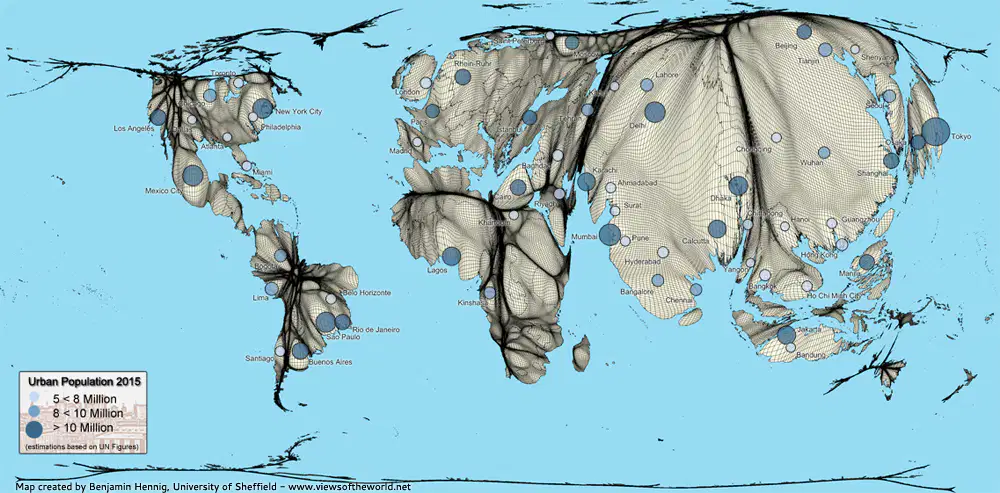
Which of the following IS a megacity?
London
Kuala Lumpur
Seoul
Sydney
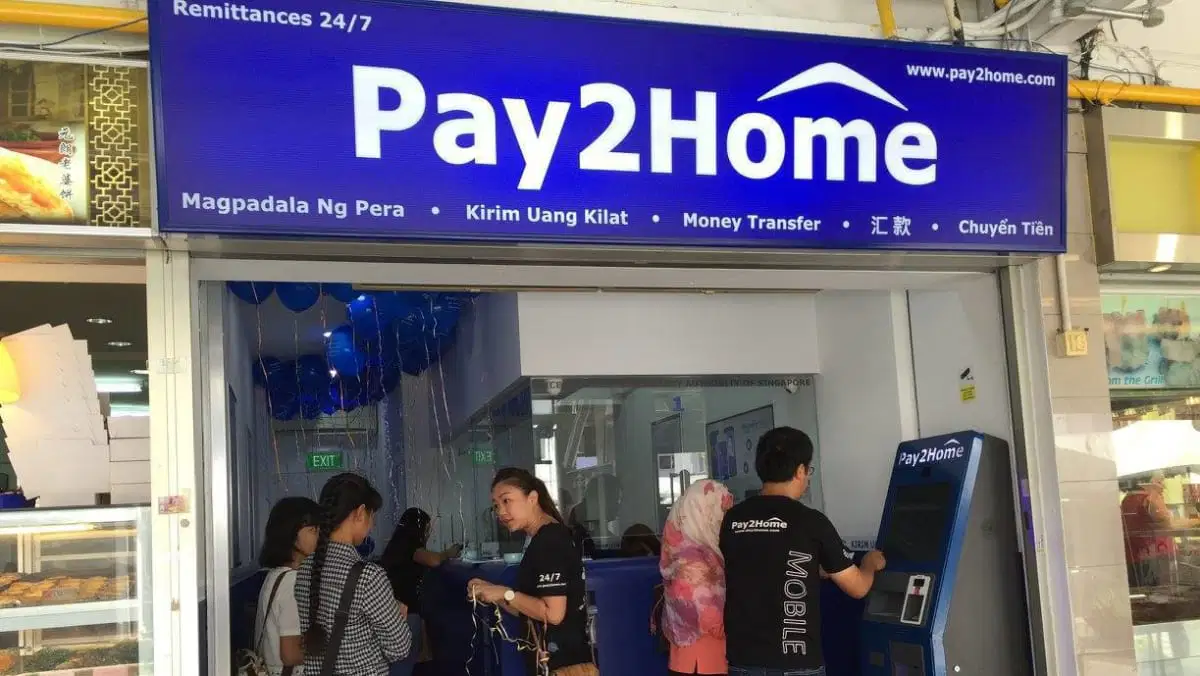
Name for flow of money home from migrants, which can help raise individual families out of the cycle of poverty
(a)
Which industry category includes services like bus drivers and surgeons?
Primary
Secondary
Tertiary
Quaternary
Which industry is focused on research and design?
Primary
Secondary
Tertiary
Quaternary
What is a key feature of the best-paying service jobs?
Physical labor
Knowledge-based expertise
Low skill requirement
High environmental impact
What percentage of the world's population is employed in quaternary industries?
Less than 0.5%
10-15%
25-40%
More than 50%

What type of industry might involve vaccine developers?
Primary
Secondary
Tertiary
Quaternary

Which industry is likely to involve a software developer?
Primary
Secondary
Tertiary
Quaternary
Higher employment rates means more consumer spending as people have more ... income
(hint D)
(a)
How do you spell the name of the phenomenon where jobs in one industry generate jobs in another?
Multyplier effect
Multyplier affect
Multiplier effect
Multiplier affect

It is harder to break out of the cycle of poverty if you suffer from multiple...
(a)
Match the following
Formal economy and informal economy combined
Dual economy
Street hawkers, shoe-shiners, beggars, thieves, prostitutes
Street economy
Small trade, service establishments and craft workshops that are not officially registered
Informal economy
Large and legally registered business engaged in globalisation.
Formal economy
What is the revolutionary idea behind containerization?
Using different sized containers for each type of cargo
Building ships that can carry only one type of container
Using the same size containers for easy transfer between transport modes
Employing more stevedores to handle cargo
In what year did Malcom McLean first have the idea of containerization?
1937
1956
1980
1965
Fill in the blank: Containerization became a global standard size in the year ____.
1937
1956
1980
1965
Which is the real disadvantage of employing stevedores before containerization?
(the rest are made up lies!)
They required long apprenticeships to learn the necessary skills
It was costly and time-consuming
They had high wages
It required large amounts of fossil fuel energy
What job did Malcolm McLean do that led him to his idea?
A ship captain from Dublin
A New Jersey truck driver
A Boston crane operator
A London dock manager
Fill in the blank: The idea of containerization was to allow goods to 'roro' or ____.
A) Roll on, roll off
B) Run over, run out
C) Rotate, revolve
D) Rest on, rest off
What does 'NIDL' stand for in the context of the document?
National Industrial Development League
New International Division of Labour
National Institute of Dock Labour
New Industrial Docking Logistics
The loss of dockland jobs as a result of containerisation is part of the process of...
Deindustrialisation
Suburbanisation
Protectonism
Gentrification
Name for the employees who had previously loaded and unloaded cargo manually (hint: S)
(a)
Fill in the blank: The idea of containerization took decades to catch on because ____.
Companies did not replace ships and trucks often
It was too expensive
It was not efficient
What is the primary purpose of protectionism?
Reduce the carbon footprints through reduced shipping distances
Shield domestic industries from foreign competition
Promote international trade
Reduce risk of international conflict
The invention of which technology reduced global circumnavigation to 3 days?
Steam engines
Sailing ships
Turboprop engines
Internet

