
 Worksheets
Ancient Egypt
Total questions: 35
Worksheet time: 18mins
Name
Class
Date
1.
Which of these words best describes the environment of the Nile?
a)
sea
b)
marshy delta
c)
desert
d)
mountain
2.
Because one physical feature was so important to ancient settlers of Egypt and Kush, most of their settlements were...
a)
on hills.
b)
in a desert.
c)
near a river.
d)
around trees.
3.
How did the desert help the people of Egypt and Kush?
a)
It had fertile land for crops.
b)
It made trade and travel easy.
c)
It was grassy for grazing sheep.
d)
It gave protection from invaders.
4.
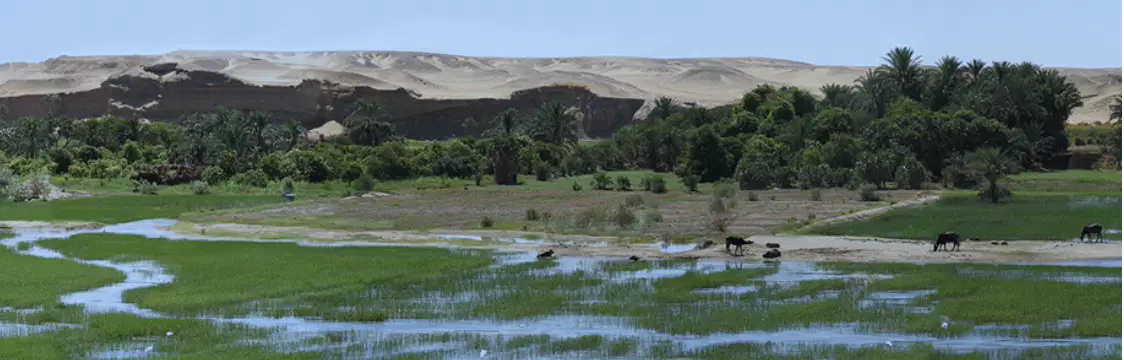
How did the yearly flooding of the Nile River affect the people of Egypt and Kush?
a)
It isolated the settlements.
b)
It left silt that improved the soil.
c)
It spread diseases that destroyed whole empires.
d)
D. It attracted hunters and gatherers looking for wildlife.
5.
Useful vegetation along the Nile River included
a)
ducks and geese
b)
barges and boats
c)
reeds and papyrus
d)
canals and ditches
6.
Why is King Tut one of the most well-known pharaohs?
a)
Tut lived and ruled for more than 70 years.
b)
Amazing arfacts were found in Tut's tomb.
c)
Tut was the first woman to claim power over Egypt.
d)
Trade expeditions helped Tut learn about faraway lands.
7.
Why did the ancient Egyptians make mummies?
a)
to decorate palaces of the pharaohs
b)
to preserve dead bodies of the pharaohs
c)
to transport goods up and down the Nile
d)
to educate and protect the royal children
8.
What was a major purpose for building the pyramids?
a)
temples for religious worship
b)
storehouses for reserves of grain
c)
homes for the pharaohs' servants
d)
tombs for pharaohs when they died
9.
Which period is oen called the Golden Age, a time when Egypt had reached the height of its power?
a)
the Old Kingdom
b)
the Middle Kingdom
c)
the New Kingdom
d)
after the New Kingdom
10.
It was built from more than 2 million stone blocks. It had tunnels and chambers inside. What was it?
a)
the Sphinx
b)
the White Chapel
c)
the temple at Abu Simbel
d)
the Great Pyramid at Giza
11.
Hatshepsut was one of the first pharaohs who was
a)
a god
b)
a priest
c)
a child
d)
a woman
12.
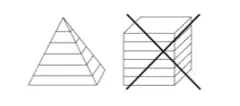
Why are the social classes of ancient Egypt described by the shape at the left, rather than the shape at the right?
a)
The triangle represented the three seasons of the Nile.
b)
Most people were in the bottom classes, and the fewest people were at the top.
c)
Scientists like to use a pyramid to keep the layers apart.
d)
Many structures of that design were built in the desert.
13.
Who built the giant temples of the pharaohs?
a)
scribes who kept poor records
b)
government officials out of favor
c)
peasant farmers during the flood season
d)
priests hoping to get jobs at the temples
14.
Why did it take many years to become a scribe?
a)
Papyrus was very difficult to write on.
b)
There were hundreds of hieroglyphs to learn.
c)
Students had to save money to buy a posion.
d)
Teachers were so harsh that students ran away.
15.
Skilled scribes wrote on papyrus, which was made from
a)
a plant
b)
soft clay
c)
cotton rags
d)
animal skins
16.
Of these four groups, which one had the lowest social status?
a)
priests
b)
scribes
c)
artisans/skilled workers
d)
government officials
17.
In the life of a peasant, which season came next after the flooding season?
a)
the festival season
b)
the harvest season
c)
the planting season
d)
the building season
18.

The ancient Egyptians settled in what part of Africa?
a)
along the eastern coast of the Mediterranean Sea.
b)
to the south of the Kushites along the southern Nile River.
c)
in southwestern Asia in the Fertile Crescent.
d)
in the northeast corner of Africa along the Nile River.
19.
The Age of Pyramids was also known as the
a)
Old Kingdom.
b)
New Kingdom
c)
Middle Kingdom
d)
Late Kingdom
20.
In ancient Egypt, religion strengthened the Pharaoh's position at the top of the social pyramid because they
a)
were also official priests.
b)
performed mummification.
c)
were believed to be gods.
d)
often wrote religious texts.
21.
Ancient Egypt's power reached its height during the
a)
Old Kingdom
b)
New Kingdom
c)
Middle Kingdom
d)
Late Kindom
22.
What ancient Egyptian group made up the largest social class?
a)
priests
b)
scribes
c)
artisans/skilled workers
d)
peasants/slaves
23.
Pharaohs functioned as
a)
kings
b)
generals/commanders of soldiers
c)
religious leaders
d)
all of the above
24.
The pyramids were built
a)
as military fortresses, where Egyptians could seek protection during times of invasion.
b)
as great tombs for pharaohs, who were thought to enter an afterlife that would never end.
c)
as centers of religious worship, where Egyptians gathered inside to honor their gods.
d)
as massive homes for the pharaohs, who enjoyed every luxury known to ancient Egyptians.
25.
What was a right women enjoyed in ancient Egyptian society?
a)
They were allowed to have their own land.
b)
They were the heads of their household.
c)
They were in charge of Egyptian society.
d)
They usually trained their sons to work.
26.
The most important environmental factor in early human settlement was
a)
vegetation
b)
climate
c)
water
d)
flat land
27.
The pharaoh Khufu is best known as
a)
a patron of the arts.
b)
a great military commander.
c)
the first female pharaoh.
d)
the builder of the Great Pyramid at Giza.
28.
An ancient farmer would have been most likely to settle in which of the following areas?
a)
a hillside
b)
a forest
c)
a valley
d)
a desert
29.
Which of the following was a physical feature in ancient Egypt and Kush?
a)
a wet climate
b)
farms
c)
grassy plains
d)
the Nile River
30.

How did the desert help the people of Egypt and Kush?
a)
It gave protection from invaders.
b)
It provided fresh water for drinking.
c)
It had rich farmland for growing wheat.
d)
It provided a pleasant climate.
31.
Ancient Egyptians believed that the afterlife was similar to this world, so they often
a)
kept all body organs inside of mummies.
b)
left bodies unburied so they could get sun.
c)
buried food and other goods with the dead.
d)
dressed the dead in their favorite clothing.
32.
How did the yearly flooding in the Nile River valley affect farming in Egypt and Kush?
a)
It caused damage to crops.
b)
It destroyed villages.
c)
It created inland seas.
d)
It left silt that improved the soil.
33.
One extraordinary Egyptian invention was paper they made from
a)
linen cloth
b)
papyrus
c)
marble
d)
leather
34.

Which pharaoh's tomb was uncovered in 1922, revealing a wealth of ancient treasures?
a)
Khufu
b)
Senusret I
c)
Hatshepsut
d)
King Tut
35.
This land was not good for farming.
a)
Red Land
b)
Black Land
c)
Gold Land
d)
Neverland
100 %

