
Font size
 Worksheets
8.1 Overview & 8.2 Being an entrepreneur
Total questions: 100
Worksheet time: 50mins
Which term best describes a person who starts, operates, and assumes the risk of a business venture?
Intrapreneur
Entrepreneur
Shareholder
Manager
Which is a realistic disadvantage of being self-employed?
Constant paid vacations
Guaranteed stable income
Hard work and long hours
No customer obligations
Identify the entrepreneurial attribute most linked to seeing and taking advantage of opportunities.
Complacency
Initiative
Delegation
Compliance
If a new business owner wants more control over their work life, which benefit of self-employment matches this goal?
Increase personal wealth
Develop creative ideas
Independence as own boss
Employ family members
Which statement best defines a shared vision in a business team?
A private dream held by the founder alone
A clear direction everyone commits to achieve
A slogan used only in marketing campaigns
A financial forecast for quarterly sales
What does initiative most directly involve for an entrepreneur?
Waiting for instructions to act
Acting independently to seize opportunities
Delegating tasks to subordinates
Reducing risks through insurance
Innovation is best described as which of the following?
Copying existing competitors’ products
Creating a new or improved offering
Lowering prices to attract buyers
Expanding to more retail locations
Resilience in business primarily means the ability to
Avoid failure at all costs
Manage ups and downs and adapt
Predict all market changes
Eliminate competition completely
Which practice helps managers build commitment to goals?
Keeping the vision confidential
Explaining where the business is headed
Outsourcing communication duties
Focusing only on short-term tasks
Choose the best example of learning from failure.
Ignoring why a product flopped
Studying decisions and improving
Blaming customers for results
Quitting after the first setback
Atlassian’s early success most strongly illustrates the importance of
Vision differentiating similar skills
Large starting capital investment
Aggressive price undercutting
Government subsidies for tech

The Bitcoin ATM invention showcases which entrepreneurial quality most clearly?
Resilience during market downturns
Innovation creating new solutions
Shared vision with large teams
Initiative in routine maintenance

Christopher Lu’s CLU. Living grew by focusing on which customer need?
Luxury furniture for mansions
Space-saving solutions for compact homes
Outdoor recreational equipment
Office cubicle customization
Which method did Christopher Lu use to build a loyal customer base?
Ignoring competitor offerings
Conducting market research and listening
Outsourcing all customer service
Only importing high-end foreign brands
What distinguishes successful entrepreneurs in the face of failure?
Contemplating giving up quickly
Embracing lessons and persisting
Avoiding risks entirely
Delaying decisions indefinitely
Which statement best defines a social entrepreneur?
An owner focused solely on personal profit
An innovator addressing a social or environmental issue
A manager who reduces costs through layoffs
An investor who maximizes returns from capital
What is the main ownership difference between for-profit and not-for-profit organisations?
Shareholders own services in both models
Individuals own the business in for-profits, not in not-for-profits
Government owns assets in for-profits only
Customers own profits in not-for-profits
In a not-for-profit structure, where do profits primarily go?
Directly to individual owners
Distributed to external investors
Reinvested to grow services and impact
Paid as bonuses to senior managers
Which statement best describes a ‘business opportunity’?
A random idea without market need
A chance to meet customer needs profitably
A risky decision with no planning
A government grant without product
How can failure contribute to an entrepreneur’s success?
It proves the idea will never work
It provides learning and resilience for future attempts
It eliminates the need for customer research
It guarantees investor support next time
Which step helps achieve sustainable competitive advantage for a social venture?
Ignoring beneficiary feedback entirely
Designing services with input from intended users
Setting prices far above market rates
Reducing quality to cut costs
What personal qualities are commonly associated with successful social entrepreneurs?
Complacency and risk avoidance
Empathy, initiative and perseverance
Detachment and rigid thinking
Profit maximization at any cost
What is the main purpose of a cost–benefit analysis in business decisions?
To see if benefits exceed costs
To calculate quarterly tax liabilities
To set employee performance targets
To determine market share annually
Which step comes first when applying cost–benefit analysis to a new opportunity?
Identify opportunities in the market
Compare benefits with costs
Choose the best alternative
Estimate sales revenue projections
When considering selling or imitating overseas products, which non-monetary cost was identified?
Customer dissatisfaction with overseas designs
Improved brand image among local customers
Access to new research opportunities
Positive perception among potential buyers
Which step would come first when completing a cost–benefit analysis?
Add up all costs and benefits for each alternative
Identify opportunities that the business can pursue
Compare benefits against costs for each alternative
Decide which alternative to recommend overall
When comparing alternatives, what is the main decision rule in cost–benefit analysis?
Choose the option with the most listed benefits
Select the alternative with lower non‑monetary costs
Recommend the option where benefits outweigh the costs
Pick the choice with the highest projected sales figure
Which step of market research defines what needs to be measured and the issues involved?
Determining information needs
Collecting primary and secondary data
Analysing and interpreting results
Designing marketing strategies
What is the main purpose of conducting market research before starting a business?
Reduce risk of failure
Guarantee instant profits
Avoid any competition
Eliminate marketing costs
Which data source is collected directly through surveys and focus groups?
Primary data sources
Secondary data sources
Tertiary data sources
Indirect data sources
Loyalty cards primarily help businesses by enabling them to do what?
Profile customer buying habits
Replace traditional advertising
Control competitor pricing
Increase store rent income

For a retail ‘bricks and mortar’ store, which location factor most strongly supports sales?
Constant pedestrian traffic
High warehouse capacity
Remote industrial zoning
Exclusive staff parking
Which statement best describes demographic factors for marketing decisions?
Population characteristics like age and income
Company financial ratios and margins
Government trade policies and tariffs
Natural resource availability and climate
Why must managers monitor competitors as well as potential newcomers?
Actions can affect sales and market share
It guarantees patent approvals
It replaces customer service training
It ensures tax refunds each year
A sustainable competitive advantage is best defined as
Long-term strategies giving an edge
Short-term discounts for quick sales
Random innovation without planning
Seasonal promotions during holidays
Identifying a target market mainly answers which crucial question for entrepreneurs?
Who will buy my product?
Where are my suppliers?
How many staff to hire?
Which taxes must I pay?
Which step of market research involves turning facts into actionable meaning?
Analysing and interpreting data
Determining information needs
Collecting from primary sources
Collecting from secondary sources
When choosing a business location, owners typically seek to
Maximise revenue and minimise costs
Increase fixed expenses and taxes
Avoid all customer foot traffic
Locate far from competitors
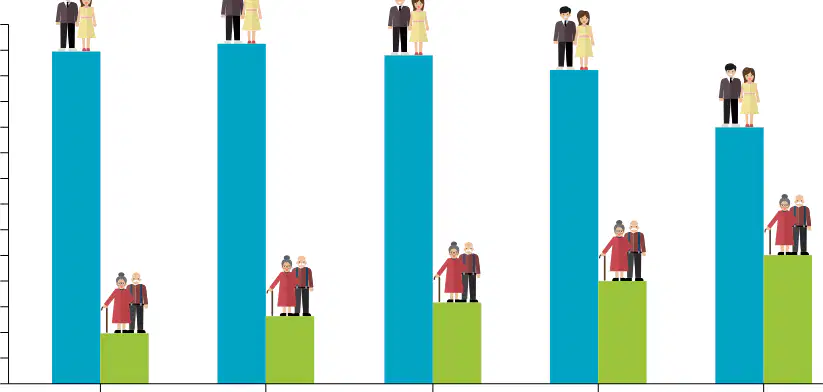
The ratio chart of working-age to pension-age people suggests marketers should
Track demographic shifts over time
Ignore age when segmenting markets
Base decisions only on price data
Focus solely on short-term promotions
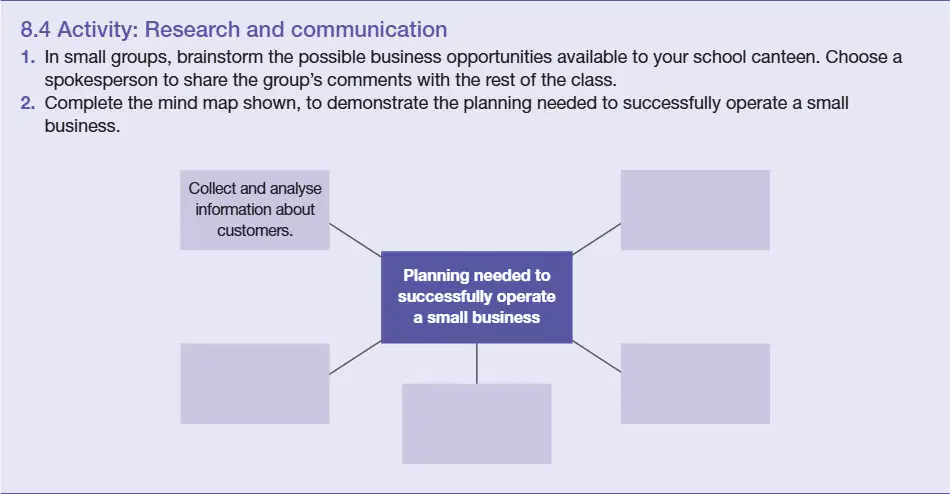
Which activity is part of market research for a small business?
Estimating tax rates for future profits
Collecting and analysing information about customers
Choosing a legal name for registration
Negotiating leases with property owners
A sustainable competitive advantage most likely arises when a business
Uses short-term discounts without planning
Copies rival products with minor changes
Offers unique value difficult for rivals to match
Relies solely on ageing population trends
Which factor is most relevant when selecting a business location?
Proximity to target customers and transport access
Owner’s favourite holiday destination choice
The most distant suburb from competitors
Areas with no demographic data available
Maintaining a competitive advantage is essential for long-term success. Which action helps a business stay ahead of competitors?
Regularly updating products using customer feedback
Avoiding any changes to established processes
Reducing staff training to cut all costs
Ignoring market research after initial launch
Which statement best describes an unincorporated business entity?
It has separate legal identity from owners
It exists only as long as owners remain alive
It issues shares to raise capital publicly
It has perpetual succession regardless of ownership
Which legal structure typically has unlimited liability for the owner?
Private company shareholders
Public company shareholders
Sole trader owner
Incorporated association members
What is the main advantage of limited liability for shareholders?
Personal assets are protected from business debts
Dividends are guaranteed regardless of profits
Voting rights increase automatically each year
Tax rates are lower than for partnerships
A business with between two and twenty owners who share profits and losses is best described as which structure?
Partnership arrangement
Private company format
Public company model
Incorporated association type
Which requirement applies to a private company’s name in Australia?
Include the word Limited after its name
Include the words Proprietary Limited or Pty Ltd
Include the state where it is registered
Include the owners’ surnames in sequence
A public company’s shares are listed and can be bought by the general public. What implication does this have for ownership?
Ownership is restricted to family members
Ownership can expand to an unlimited number
Ownership must stay between two and fifty
Ownership is legally tied to original founders
Which scenario best fits an incorporated association?
A large mining firm selling shares worldwide
A solo florist operating from home
A local sports club registered for non-profit
A national logistics company with many shareholders
A company continues to exist even if original owners leave. Which concept explains this?
Unlimited liability principle
Perpetual succession concept
Joint and several responsibility
Mutual agency of partners
Which statement best describes debt financing for a small business?
Owner sells shares to raise funds
Business borrows money to be repaid with interest
Profits are retained to fund operations
Owners contribute personal savings and capital
What is a key advantage of equity financing compared with debt financing?
Lower interest rate over the loan term
No repayment unless owners leave the business
Taxation deductions on interest paid
Collateral requirement reduces lender risk
Which option lists common sources of debt finance for small businesses?
Shareholders and retained profits
Banks, finance companies, trade suppliers
Ordinary shares and capital raising
Crowdfunding and venture capital firms
In a secured loan, what gives the lender the right to sell an asset?
Variable interest agreement terms
Borrower offers collateral as security
Equity contribution by shareholders
Fixed-rate clause in the contract
Which statement accurately contrasts secured and unsecured loans?
Secured loans need no assets, higher rates
Unsecured loans require collateral, lower rates
Secured loans use assets, often lower rates
Unsecured loans use assets, fixed repayments
Which step should you complete first when preparing to apply for a loan?
Check your credit rating with the lender
Decide the loan type and interest rate
Work out whether you can afford to borrow
Fill in the loan application form
During the loan application, what does the credit provider typically request to verify your ability to repay?
Product brochures and fee schedules
Payslips, tax returns, bank statements
Letters of recommendation from suppliers
A list of preferred repayment dates
Why might a borrower choose a fixed interest rate instead of a variable rate?
To lock in the rate for the loan term
To allow rate to rise and fall monthly
To guarantee no fees for early repayment
To obtain approval without income proof
Which statement best describes a prospectus in business finance?
A marketing brochure for new products
A legal document issued when offering securities
An internal report for board meetings
A tax return submitted to regulators
What key purpose does a prospectus serve for potential investors?
Eliminates all investment risks
Provides information to make informed decisions
Guarantees fixed dividend payments
Sets the company’s share price
A sole trader faces which liability exposure?
Limited liability for business debts
Unlimited liability using personal assets
No liability due to incorporation
Shared liability with silent partners
A private company typically has how many shareholders and what liability?
Over fifty shareholders and unlimited liability
Between two and fifty shareholders with limited liability
Exactly one shareholder with limited liability
Between twenty and fifty shareholders with unlimited liability
Why does disclosure protect a company issuing securities?
Prevents future claims of inadequate information
Ensures tax refunds on capital raised
Removes the need for external audits
Guarantees oversubscription of the offer
A sole trader invites a full-time cook to take a 40 per cent partnership. Which change best describes what the owner gains that he does not have as a sole trader?
Shared decision-making authority
Unlimited liability alone
Complete control over operations
Exclusive rights to profits
Starting from scratch is usually better than purchasing when which condition applies?
A unique invention needs a market
The buyer wants immediate goodwill
There is strong existing customer loyalty
Access to supplier credit is guaranteed
Which is an advantage of starting a business from scratch?
High risk with uncertainty
Freedom to set up as wished
Difficulty securing finance
Time needed to build a customer base
Which is a disadvantage of starting a business from scratch?
No goodwill payment required
Flexibility in location choices
Harder to attract customers early
Objectives matched closely to business
When purchasing an existing business, what should a buyer do before signing a contract of sale?
Ignore the seller’s reasons for sale
Rely solely on the seller’s claims
Obtain financial and legal advice
Assume problems will resolve later
Which term describes the additional value of an established business due to its reputation, customer base and brand recognition?
Inventory turnover
Owner’s equity
Goodwill value
Operating leverage
A main advantage of purchasing an existing business is that
stock is already acquired and ready for sale
branding must be developed from the beginning
all staff will definitely stay after the sale
the image can be changed easily without risk
Which is a likely disadvantage when buying an established business?
Instant access to existing customers and revenues
Immediate use of equipment and premises
Difficulty assessing whether goodwill is worth the price
Assistance from experienced existing employees
In franchising, which pairing correctly matches the parties?
Franchisee sells the system; franchisor buys the rights
Franchisor owns the brand; franchisee buys the right to use it
Franchisee licenses trademarks to the franchisor
Franchisor pays a fee to operate a local outlet
Which is commonly an advantage for a franchisee compared with starting independently?
Lower support and training from head office
Established products, marketing and premises
Complete control over suppliers and pricing
No fees shared with the brand owner
Which statement best explains why profits may be lower in a franchise than in an independent business?
The franchisee must share profits or pay service fees to the franchisor
The franchisor guarantees all losses for the franchisee
The franchisee keeps all revenue without ongoing costs
The franchisor cannot set any operational rules or contracts
A salon owner buys an existing studio because the business has a strong reputation and regular customers. Which risk is reduced by this decision?
Uncertainty about initial customer demand
Legal accountability for daily operations
Control by a franchisor over suppliers
Stress of making solo decisions
Gelatissimo switched from company-owned stores to franchising to scale quickly. Which strategic benefit does this illustrate?
Franchising spreads capital and brings motivated owner-operators
Franchising eliminates all training needs for new staff
Franchising guarantees product quality without procedures
Franchising removes the need for brand management
Which staffing activity directly focuses on bringing new people into a business?
Training existing employees for new roles
Recruiting suitable candidates for vacancies
Maintaining morale through staff events
Separating underperforming staff respectfully
Why is retaining a high-performing employee considered a priority for business owners?
It reduces legal liability in disputes
It protects competitive advantage and service quality
It guarantees lower payroll taxes annually
It ensures faster equipment maintenance schedules
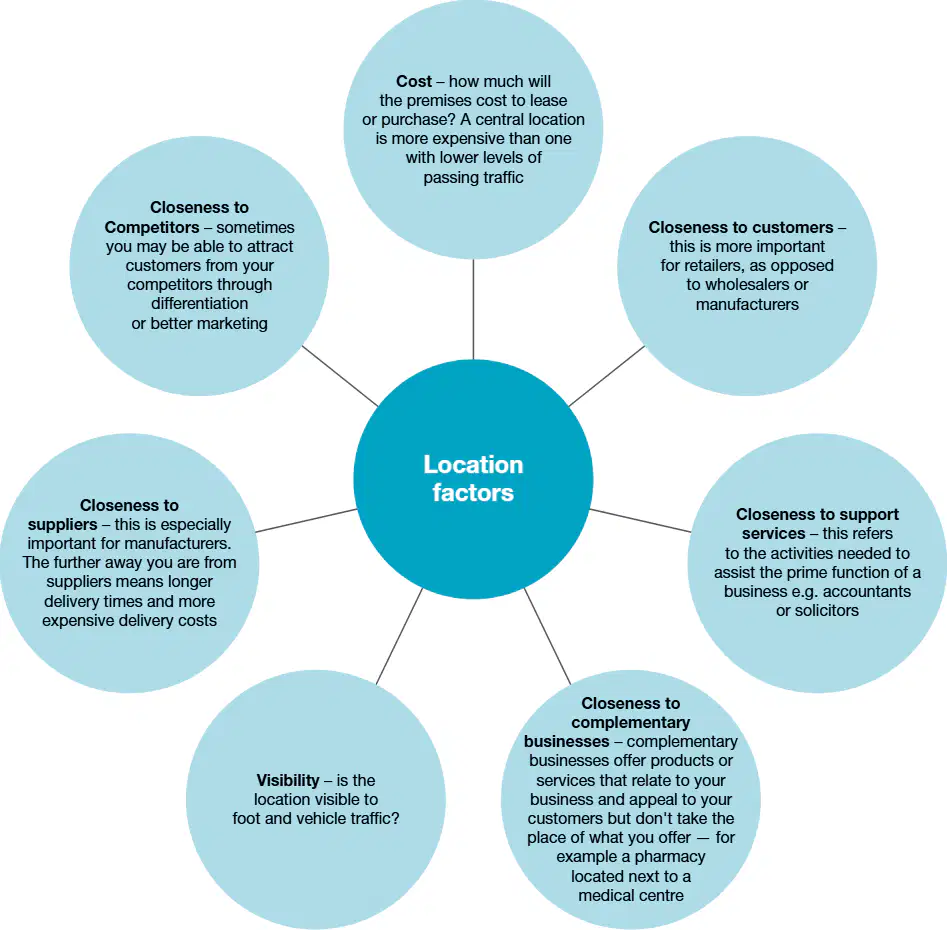
A retailer choosing a site should prioritise which location factor most?
Closeness to heavy manufacturing plants
Closeness to customers and foot traffic
Closeness to tax offices and courts
Closeness to long-haul distribution hubs
Which location factor helps lower delivery times and costs for manufacturers?
Visibility to passing pedestrians and cars
Closeness to suppliers and logistics
Closeness to complementary retailers
Closeness to professional support services
What is a key consideration when equipping premises after securing a location?
How to calculate staff income tax weekly
Whether to rent, lease or purchase equipment
Which social media platform to advertise on
When to schedule annual shareholder votes
Which professional could assist a visually driven store with shopfitting decisions?
External auditor specialising in tax returns
Architect or interior designer expert
Patent attorney for intellectual property
Freight broker for export permits
Which item would you seek when obtaining a realistic valuation for an existing business?
Employee lunch roster archives
Financial statements for past years
Private social media chat logs
Customer selfies on store walls
In asset-based valuation, which assets should be included in the calculation?
Only physical items like equipment and stock
Only intangible items like trademarks and goodwill
Both tangible assets and intangible assets
Only cash held in bank accounts
What does the high failure rate within the first five years suggest for new owners?
They should skip market research entirely
They must undertake thorough planning upfront
They should avoid hiring any full-time staff
They must operate only as online businesses
A café owner wants to boost competitive advantage where staff meet customers daily. Which staffing focus best supports this goal?
Automating all customer interactions
Developing strong relationships and motivation
Reducing training to cut short-term costs
Hiring only temporary staff seasonally
Which factor is commonly linked to entrepreneurial success?
Prior work experience in the industry
Avoiding feedback from customers
Relying only on personal savings
Keeping plans entirely informal
Which barrier most directly limits starting capital for a new venture?
Difficulty raising finance for the venture
Hiring too many skilled workers early
Overestimating future customer demand
Focusing on long‑term branding only
Negative cash flow most likely means a business is
Spending more cash than it receives
Earning higher revenue than costs
Holding large amounts of inventory
Experiencing rapid brand awareness
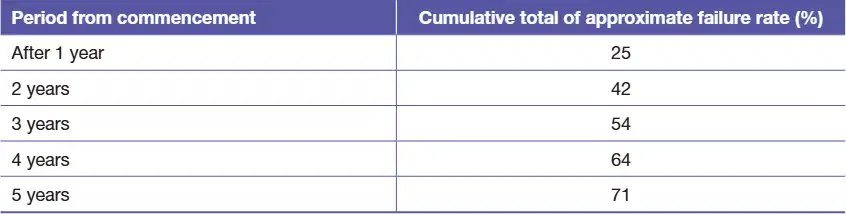
SME cumulative failure rate after two years is approximately
42 percent of businesses
25 percent of businesses
64 percent of businesses
71 percent of businesses
Which description best matches a franchisor?
Owner licensing brand and systems
Local buyer of the franchise unit
Independent supplier to franchisees
Consultant who values the franchise
Which description best matches a franchisee?
Individual purchasing rights to operate
Head office managing brand strategy
Government regulator of the network
Independent auditor of franchisees
Which is a typical advantage for a franchisee?
Established brand and operating systems
Total freedom to change the brand
No ongoing fees or royalties due
Exclusive supply from any vendor
Which is a typical benefit for a franchisor?
Rapid expansion with shared capital
Guaranteed profits in every outlet
No training or support obligations
Full control over local staffing
Which item is most essential to obtain a realistic business valuation?
Accurate, up‑to‑date financial statements
Social media follower engagement
Customer anecdotes about service
Supplier promotional brochures
Which choice is a strength of buying an existing business rather than starting new?
Immediate customer base and revenue
Unlimited ability to rebrand quickly
No need to review any legal issues
Lower price than starting from zero
Which is a drawback of buying an existing business?
You may inherit hidden liabilities
There is no historical performance
Customers already know the brand
Systems are already established
Which staffing action helps build a sustainable competitive advantage?
Hiring the right people and training
Cutting all training to save costs
Avoiding performance management
Using only short‑term contractors
Which reason explains why franchises often show higher success rates than independent startups?
Proven systems and ongoing support
No fees and no contractual limits
Unlimited product line flexibility
Guaranteed exclusive territories

