
 Worksheets
Cellular Respiration Quiz 2025
Total questions: 23
Worksheet time: 12mins
Name
Class
Date
1.
When the body needs to exercise for longer than 90 seconds, it generates ATP by carrying out:
a)
alcoholic fermentation
b)
glycolysis
c)
cellular respiration
d)
lactic acid fermentation
2.
Lactic acid fermentation occurs in
a)
any environment containing oxygen
b)
muscle cells
c)
mitochondria
d)
bread dough
3.
How do organisms get the energy they need?
a)
by using the sun’s energy to break down food molecules and form chemicals
b)
by breathing oxygen into the lungs and combining it with carbon dioxide
c)
by burning food molecules and releasing their energy as heat
d)
by breaking down food molecules gradually and capturing their chemical energy
4.
The starting molecule for the Krebs cycle is
a)
glucose
b)
pyruvic acid
c)
NADH
d)
coenzyme A
5.
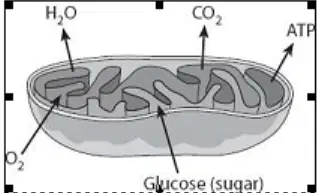
What process do the arrows for oxygen going in and water coming out represent in the diagram above
a)
glycolysis
b)
fermentation
c)
electron transport
d)
the Krebs cycle
6.
The Krebs cycle does NOT occur if
a)
carbon dioxide is present
b)
oxygen is present
c)
oxygen is not present
d)
glycolysis occurs
7.
Cellular respiration is called an aerobic process because it requires
a)
exercise
b)
glucose
c)
light
d)
oxygen
8.
If you want to burn all of your glycogen reserves (and start burning fat), how long should you exercise aerobically each time that you exercise?
a)
15-20 minutes
b)
less than 15 minutes
c)
more than 60 minutes
d)
at least 90 seconds
9.
Cellular respiration releases energy by breaking down
a)
carbon dioxide
b)
ATP
c)
food molecules (such as glucose)
d)
water
10.
Which of the following is one of the ways that cellular respiration and photosynthesis are opposite processes?
a)
Photosynthesis releases energy, and cellular respiration stores energy.
b)
Photosynthesis removes oxygen from the atmosphere, and cellular respiration puts it back
c)
Photosynthesis removes carbon dioxide from the atmosphere, and cellular respiration puts it back
d)
Photosynthesis consumes glucose, and cellular respiration produces glucose.
11.
Photosynthesis is to chloroplasts as cellular respiration is to
a)
chloroplasts
b)
mitochondria
c)
nuclei
d)
cytoplasm
12.
The Krebs cycle produces
a)
oxygen
b)
carbon dioxide
c)
glucose
d)
lactic acid
13.
Glycolysis provides a cell with a net gain of
a)
4 ATP molecules
b)
36 ATP molecules
c)
18 ATP molecules
d)
2 ATP molecules
14.
Which of these processes takes place in the cytoplasm of a cell (select all thay apply)?
a)
glycolysis
b)
electron transport
c)
Krebs cycle
d)
fermentation
15.
What is the correct equation for cellular respiration?
a)
CO2 + 6H2O ->6O2 + C6H12O6 + Energy
b)
6O2 + C6H12O6 -> 6CO2 + 6H2O + Energy
c)
6CO2 + 6H2O + Energy -> 6O2 + C6H12O6
d)
6O2 + C6H12O6 + Energy -> 6CO2 + 6H2O
16.
Glycolysis requires (to get the process going)
a)
oxygen
b)
sunlight
c)
ATP
d)
NADP+
17.
Breathing heavily after running a race is your body’s way of
a)
stopping the electron transport chain
b)
repaying an oxygen debt
c)
restarting glycolysis
d)
making more citric acid
18.
Which statement mainly explains why even well-conditioned athletes have to pace themselves for athletic events that last several hours?
a)
Cellular respiration releases energy more slowly than fermentation does
b)
Heavy breathing is needed to get rid of lactic acid
c)
Lactic acid fermentation can cause muscle soreness
d)
Alcoholic fermentation produces carbon dioxide
19.
Which of the following is the correct sequence of events in cellular respiration?
a)
glycolysis -> fermentation ->Krebs cycle
b)
Krebs cycle -> electron transport -> glycolysis
c)
glycolysis -> Krebs cycle ->electron transport
d)
Krebs cycle -> glycolysis ->electron transport
20.
The starting molecule for glycolysis is
a)
pyruvic acid
b)
glucose
c)
citric acid
d)
ADP
21.
Cellular respiration uses 1 molecule of glucose to produce approximately
a)
28 ATP molecules.
b)
36 ATP molecules
c)
4 ATP molecules
d)
2 ATP molecules
22.
When microorganisms in milk produce acid under certain conditions, yogurt results. Which of these processes would you expect to be key in the production of yogurt?
a)
the Krebs cycle
b)
alcoholic fermentation
c)
photosynthesis
d)
lactic acid fermentation
23.
The two main types of fermentation are called.
a)
lactic acid and anaerobic
b)
alcoholic and aerobic
c)
alcoholic and lactic acid
d)
aerobic and anaerobic
100 %

