
 Worksheets
Psych Dino
Total questions: 102
Worksheet time: 54mins

Who studied unconscious and conscious behavior?
Sigmund Freud
B.F. Skinner
Ivan Pavlov
John B. Watson
Estimating the likelihood of events based on their availability in memory; if instances come readily to mind, we presume such events are common.
availability heuristic
representativeness heuristic
functional fixedness
mental set
Which of these is the most accurate definition of the discipline of psychology?
the scientific study of behavior and mental processes
the scientific study of mental processes
the scientific study of behavior
the scientific study of human behavior and mental processes
What did Sigmund Freud consider as the key to understanding the nervous disorders he observed?
the unconscious mind
free will
brain psychology
external consequences
The part of the brain associated with Decision Making and Social Judgments
Frontal Lobe
Amygdala
Striatum
Hippocampus
The part of the brain associated with the formation of Memories.
Frontal Lobe
Amygdala
Striatum
Hippocampus
The teenage brain is known to have a structure that includes...
A Highly Developed Frontal Lobe and Under Developed Striatum
An Underdeveloped Frontal Lobe and Highly Developed Striatum
An Underdeveloped Frontal Lobe and Underdeveloped Striatum
A Highly Developed Frontal Lobe and Highly Developed Striatum
Myelination is the process where...
Fat builds around neural pathways to speed them up when they are used repeatedly.
When neural networks are eliminated because they are not used.
New neurons are developed in the brain.
a person has lost the functioning of one part of their brain.
Which controls personality, short term memory, & speech
frontal lobe
parietal lobe
temporal lobe
occipital lobe


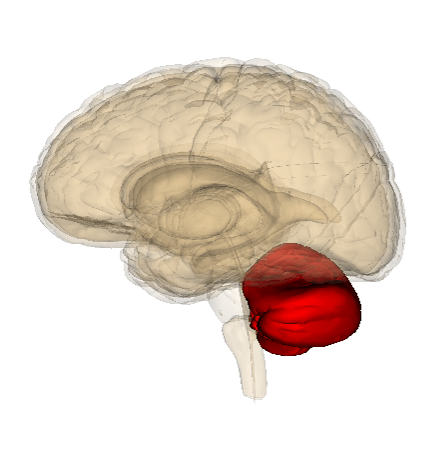

Which part of the brain controls your blood pressure and heart rate?
brain stem
occipital lobe
cerebellum
frontal lobe

Who has a bigger frontal lobe?


Who has bigger olfactory bulbs?

Which of these is a physical
response to fear?
drowsiness
hunger
rapid breathing
thirst

A phobia is a fear that is ...
about something life threatening.
easy to overcome.
out of proportion to the danger.
only mildly upsetting.

The amygdala ...
keeps track of experiences that trigger strong emotions.
calms people down.
relaxes our muscles.
helps people overcome fears.

What is the unreasonable fear of spiders?
Aerophobia
Arachnophobia
Agoraphobia
Claustrophobia

What's the name of the most common treatment for phobias?
Shock Therapy
Group Therapy
Exposure Therapy
Psychoanalysis
A fear can be healthy if
it stops someone for doing something that would not harm them.
it cautions a person to stay safe around something that could be dangerous.
it is unnecessary and causes more caution that the situation calls for.
doesn't allow you to overcome it.
Fill in the blank with the correct words:
"___________ just make you feel slightly nervous, while __________ are intense and can make you feel sick and out of control."
Fears, phobias
Phobias, fears
Anxiety, fears
Anxiety, phobias


Personality is best defined as an individual's
characteristic pattern of thinking, feeling, and acting.
most noticeable characteristics.
biologically inherited temperament.
hidden thoughts and emotions.
"Methods used to avoid recognizing ideas or emotions that may cause personal anxiety" is the definition for...
Fighting
Defense mechanisms
Thinking
Creative solutions
What is the most important stage in the hierarchy of needs according to Maslow?
Self-Esteem
Love and Belonging
Self-Actualization
Safety and Security
Putting someone down and making them feel awful, when you really feel bad about yourself is an example of which defense mechanism?
Compensation
Projection
Rationalization
Undoing
Which of the following best describes the circadian rhythm?
the pattern of emotional ups and downs we routinely experience
a pattern of biological functioning that occurs on a roughly 24-hour cycle
the cycle of five distinct stages that we experience during a normal night's sleep
Why is REM sleep considered a paradox?
our heart rate is slow and steady, while our breathing is highly irregular
we are deeply asleep but can be awakened easily
our nervous system is highly active, while our voluntary muscles hardly move
During which stage of the sleep cycle do humans dream?
NREM-1
NREM-2
NREM-3
REM
When would someone typically walk or talk in their sleep?
NREM-1
NREM-2
NREM-3
REM
How often does the human sleep cycle repeat itself?
About every 90 minutes
About every 4 hours
Every 1.5 days
Which of the following describes the hidden underlying meaning of a dream, according to Freud?
Manifest Content
Latent Content
Which sleep disorder is characterized by temporary cessations of breathing during sleep and repeated momentary awakenings?
Insomnia
Sleep Apnea
Narcolepsy
Night Terrors
Which sleep disorder is characterized by persistent problems of falling asleep and/or staying asleep?
Insomnia
Sleep Apnea
Narcolepsy
Night Terrors

Somnambulism, or sleep walking, is a fairly common form of parasomnia. In what stage would this NOT occur?
Stage 2
Stage 1
Stage 3
REM
Caffeine, cocaine, and amphetamines speed up the central nervous system. These would be labeled as...
stimulants
depressants
opiates
hallucinogens
Consciousness is...
A state of awareness.
A state of total inactivity.
A state of denial.
A state of existence.
An altered state of consciousness when you become highly suggestible...
Biofeedback
Hypnosis
Posthypnotic Suggestion
Dreaming
Bad dreams that the sleeper does not remember, but startles them awake...
Nightmares
Daydreaming
Night Terrors
Sleep Walking
Bad dreams that have a vivid, movie-like quality.
Nightmares
Daydreaming
Night Terrors
Sleep Walking
Permanent feelings of sleepiness and fatigue...
Insomnia
Narcolepsy
Night Terrors
Sleep Apnea
True or False: daydreaming is a myth.
True
False
True or False: dreams occur in real time.
True
False
True or False: we rarely incorporate our lives into our dreams.
True
False
True or False: lack of dreaming can be the result of not enough sleep.
True
False.

Which level of Maslow's hierarchy of needs deals with satisfying one's hunger, thirst, and other bodily needs?
psychological
social
esteem
physiological
Motivation is defined by psychologists as
an impulse to accomplish something of significance.
rigidly patterned behavior characteristic of all people.
a need or desire that energizes and directs behavior toward a goal.
the cause of behavior.
For a thirsty person, drinking water serves to reduce
a drive.
an instinct.
an incentive.
homeostasis.
Positive and negative environmental stimuli that motivate behavior are called
needs.
incentives.
instincts.
drives.
According to this theory, the announcement of a snow day simultaneously triggers the student's physiological responses and the subjective experience of happiness.
James-Lange Theory
Cannon-Bard Theory
Schachter-Singer Theory
Lazarus Appraisal Theory

These are all examples of extrinsic motivation except for:
Pizza party
Blue 1st place ribbon
Knowing you did what was best
Gift card
What is an example of intrinsic motivation?
Ice Cream Party
Proud of yourself knowing you tried your hardest
Being first in line
Allowance (money for doing chores)
Identifying your strengths is important so that you:
can brag to everyone about how awesome you are.
use them to help you be successful and meet your goals.
What are the two broad categories of motivational forces?
Direct and Indirect
Intrinsic and Extrinsic
Internal and External
Positive and Negative
What is intrinsic motivation?
Motivation that is imposed by others
Motivation that comes from within, finding an activity satisfying or interesting
Motivation driven by external rewards
Motivation that only lasts for a short period
What does years of psychology research suggest about intrinsic motivation?
It is only effective in educational settings
It has no impact on long-term engagement
It is more likely to keep you engaged in the long run
It is less important than extrinsic motivation
Where was the damage to Phineas' brain located?
cerebellum
brain stem
occipital lobe
frontal lobe
Why was Phineas' closest companion an iron rod?
He traveled too frequently.
He was determined to work with metal.
He loved horses and animals.
He lost the ability to be social.
What could Phineas still do immediately after the accident?
He can speak.
He can write.
He can climb stairs.
All of the above.
Why does Dr. Harlow declare that "Phineas fully recovered?"
Harlow doesn't want to make Phineas feel bad.
Phineas can walk, count, dress himself, and speak mostly like a normal person.
Phineas didn't suffer any lasting damage from the accident.
Harlow doesn't notice some of Phineas's unusual symptoms.
What is the term used to describe patients who have undergone a corpus callosotomy?
split-brain patients
brain-dead patients
hemispherectomy patients
lobotomy patients
What is the primary function of the right hemisphere of the brain?
To control the left side of the body and process visual and spatial information.
To control the right side of the body and process auditory information.
To control the right side of the body and process visual and spatial information.
To control the left side of the body and process auditory information.
What is the primary function of the left hemisphere of the brain?
Motor control and coordination
Visual processing and spatial awareness
Emotional processing and creativity
Language processing and logical reasoning
What was the primary aim of the Milgram Shock Experiment?
To study the effects of punishment on learning
To measure obedience to authority
To compare obedience levels between genders
To test the effects of peer pressure
What was the role of the 'learner' in the Milgram experiment?
A volunteer from the audience
A researcher observing the experiment
An actor pretending to receive shocks
A real participant receiving shocks
What was the maximum voltage labeled on the shock generator?
150 volts
300 volts
450 volts
600 volts
What percentage of participants administered the maximum shock level in the original experiment?
80%
95%
65%
50%
What was a key ethical concern raised about the Milgram experiment?
Lack of participant compensation
Use of deception
Unclear instructions
Inadequate sample size
What was the main conclusion of the Milgram experiment?
People are likely to obey authority figures
People are naturally disobedient
People are unaffected by authority
People are inherently aggressive
What was the role of the 'experimenter' in the Milgram study?
To instruct the teacher to continue
To observe silently
To act as a learner
To administer shocks
Milgram rigged the "draw" so that the real participant in each trial was always given which role?
Learner
Experimenter
Teacher

