
 Worksheets
Creatine Kinase (CK)
Total questions: 56
Worksheet time: 28mins
Which statement best describes the primary source of creatine kinase in the body?
Mainly from striated muscle cells
Primarily from hepatocyte cytoplasm
Mostly from renal tubular cells
Largely from pancreatic acinar cells
Exclusively from cardiac fibroblasts
Why is creatine kinase considered one of the most organ‑specific enzymes in clinical evaluation?
It is largely restricted to striated muscle
It circulates with very long half‑life
It is produced equally by many tissues
It is bound to serum albumin tightly
It is only present during fetal growth
In a dog with increased ALT greater than AST and no increase in CK, what is the most likely interpretation?
Predominant liver injury present
Primary cardiac muscle disease
Acute renal tubular necrosis
Generalized endocrine disorder
Severe hemolytic anemia
In a cat showing increased AST greater than ALT with an accompanying increase in CK, which process is most consistent with these results?
Skeletal muscle injury likely
Isolated hepatocellular disease
Cholestatic liver pathology
Glomerular basement damage
Pancreatic exocrine failure
For horses and ruminants, which pattern suggests liver injury rather than muscle injury?
Increased AST without CK increase
Increased AST with marked CK increase
CK peak followed by ALT increase
ALT higher than AST and CK
CK and ALT both within reference
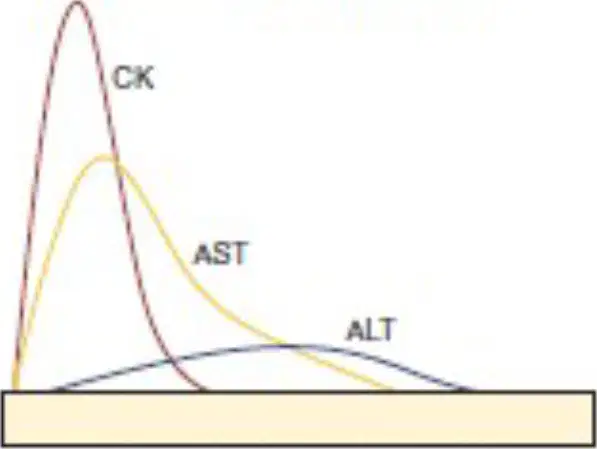
Place each enzyme with its typical temporal behavior after severe skeletal muscle injury resolves, as shown in the curve figure.
CK shows sharp early peak
Peaks by ~1–2 days, falls quickly
AST rises later and declines slower
Peaks around days 2–4, gradual fall
ALT shows small broad increase
Low amplitude over days 3–8
Which statement best explains the clinical significance of cardiac troponins (CTns)?
They regulate ventricular filling pressures directly
They rise in blood when cardiac muscle is damaged
They are hormones that lower systemic blood pressure
They are markers of skeletal muscle training adaptation
A patient presents with dyspnea and edema. Which laboratory pattern most strongly supports decompensated heart failure?
Low BNP with normal cardiac troponins
Elevated BNP with stable cardiac troponins
Low BNP with elevated cardiac troponins
Normal BNP with elevated skeletal troponins
Match each biomarker with its primary role or implication.
Cardiac troponins (CTns)
Indicator of cardiac muscle injury
Brain natriuretic peptide (BNP)
Hormone assisting blood pressure regulation
Skeletal muscle troponins
Protein initiating skeletal muscle contraction
Which statements are accurate about BNP? Select all that apply.
Secreted by cardiac myocytes as a hormone
Helps in maintenance of blood pressure
Diagnostic marker primarily for myocardial infarction
Elevated levels may aid heart failure diagnosis
Which process most directly increases lactate production in tissues?
Aerobic oxidative phosphorylation during rest
Anaerobic glycolysis under limited oxygen
Beta-oxidation of long-chain fatty acids
Gluconeogenesis in hepatocytes
In a horse with suspected colic, which finding best supports intestinal hypoxia based on lactate testing?
Low plasma lactate with high peritoneal lactate
Equal plasma and peritoneal lactate values
High cerebrospinal fluid lactate alone
High plasma lactate with low peritoneal lactate
Select all sites where lactate measurement can aid diagnosis.
Plasma samples from venous blood
Peritoneal fluid from abdominal tap
Cerebrospinal fluid from lumbar puncture
Synovial fluid from joint aspiration
Match each concept to the most accurate description.
Hypoxia
Insufficient tissue oxygen availability
Hypoperfusion
Reduced blood flow delivering oxygen
Equine colic application
Peritoneal lactate rise from hypoxic bowel
Anaerobic metabolism
Generates lactic acid from pyruvate
Which statement best describes the biochemical role of lactate dehydrogenase (LD) in serum?
Catalyzes lactate to pyruvate conversion
Catalyzes pyruvate to acetyl‑CoA conversion
Transports lactate across plasma membranes
Buffers serum pH during intense exercise
Match each tissue with its relevance as a source of serum LD.
Liver
Major source of LD
Skeletal muscle
Major source of LD
Red blood cells
Major source of LD
Neurons
Not listed as a major source
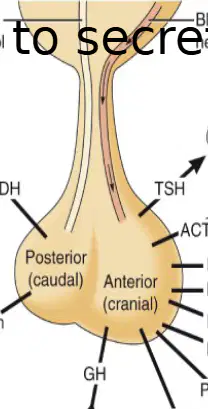
Which structure initiates the hypothalamus–pituitary–adrenal axis by releasing corticotropin-releasing factor (CRF)?
Hypothalamus releases CRF to start the axis
Anterior pituitary releases CRF to start the axis
Adrenal cortex releases CRF to start the axis
Posterior pituitary releases CRF to start the axis
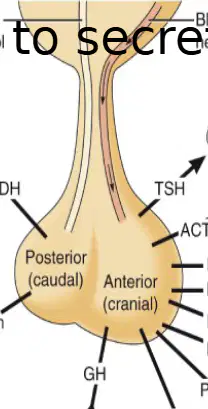
CRF stimulates which gland to secrete adrenocorticotropic hormone (ACTH)?
Anterior pituitary secretes ACTH when stimulated
Adrenal medulla secretes ACTH when stimulated
Hypothalamus secretes ACTH when stimulated
Posterior pituitary secretes ACTH when stimulated
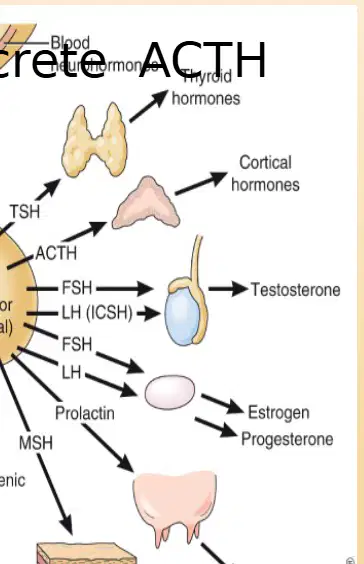
In the adrenal axis, which hormone is the primary glucocorticoid released into circulation in most animals?
Cortisol is the primary glucocorticoid released
Aldosterone is the primary glucocorticoid released
Adrenaline is the primary glucocorticoid released
Thyroxine is the primary glucocorticoid released
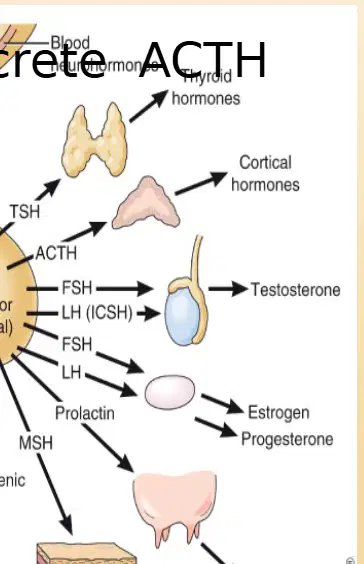
Negative feedback in the adrenal axis primarily involves cortisol acting on which two secretagogues?
CRF from the hypothalamus
ACTH from the anterior pituitary
TSH from the anterior pituitary
GH from the anterior pituitary
Which statement best explains why adrenocortical function tests are frequently ordered in clinical practice?
Adrenal dysfunction is increasingly common clinically
They are cheaper than all other blood tests
They replace physical exam in all endocrine cases
They diagnose thyroid disease more accurately
Misuse of which drug class can contribute to adrenocortical dysfunction and necessitate testing?
Corticosteroids can cause dysfunction when misused
Beta-blockers can cause dysfunction when misused
Antibiotics can cause dysfunction when misused
Opioid analgesics can cause dysfunction when misused
Which endocrine organs listed are classic sources of hormones released into the bloodstream?
Adrenal glands
Thyroid gland
Parathyroid gland
Pituitary gland
Exocrine pancreas
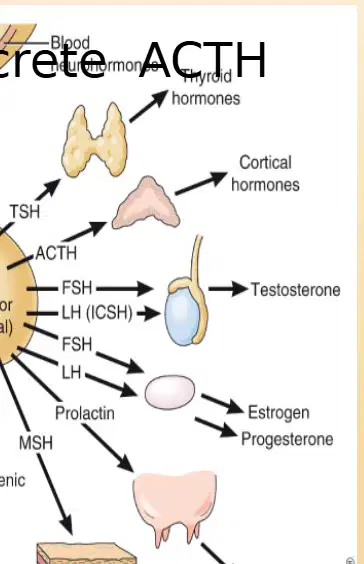
Match each adrenal axis component to its primary role.
Hypothalamus
Secretes CRF to initiate axis
Anterior pituitary
Releases ACTH upon CRF signal
Adrenal cortex
Produces glucocorticoids like cortisol
Cortisol
Exerts negative feedback on CRF and ACTH
A patient with hyperadrenocorticism (Cushing's syndrome) due to an ACTH-secreting pituitary adenoma will most likely show which laboratory pattern before therapy?
High ACTH with high cortisol levels
Low ACTH with high cortisol levels
High ACTH with low cortisol levels
Low ACTH with low cortisol levels
Primary adrenal insufficiency (Addison's disease) is most consistent with which basal hormone pattern?
High ACTH with low cortisol levels
Low ACTH with high cortisol levels
High ACTH with high cortisol levels
Normal ACTH with high cortisol levels
Excessive cortisol production leading to hyperadrenocorticism is most commonly associated with which scenarios?
Pituitary adenoma increasing ACTH secretion
Adrenal carcinoma autonomously secreting cortisol
Chronic glucocorticoid therapy causing iatrogenic changes
Autoimmune destruction of adrenal cortex
Primary hypothalamic failure reducing CRH
A patient presents with decreased cortisol levels. Which condition best fits this finding?
Hyperadrenocorticism, often called Cushing disease
Hypoadrenocorticism, also termed Addison disease
Primary hyperthyroidism with excess TSH
Iatrogenic Cushing due to steroid therapy
In typical endocrine feedback, what ACTH level pattern is expected with an adrenal cortisol-secreting tumor?
High ACTH from pituitary stimulation
Low ACTH due to negative feedback
Normal ACTH with circadian variation
Variable ACTH independent of cortisol
Differentiate primary from secondary (iatrogenic) Addison’s disease in terms of ACTH levels.
Both show high ACTH concentrations
Primary shows low ACTH, secondary shows high
Primary shows normal or increased ACTH, secondary shows low
Both show suppressed ACTH due to feedback
Primary use of the ACTH stimulation test in clinical practice is to:
Measure endogenous ACTH secretion directly
Evaluate adrenal response to exogenous ACTH
Confirm pituitary tumor imaging findings
Assess thyroid hormone production levels
Which statement about ACTH stimulation testing and hyperadrenocorticism is accurate?
It distinguishes iatrogenic from spontaneous Cushing
It replaces all other endocrine screening tests
It is designed to diagnose primary hypothyroidism
It cannot be used in Addison’s evaluation
Which hormone directly stimulates the thyroid gland to grow and release thyroxine?
Thyrotropin-releasing factor from hypothalamus
Thyroid-stimulating hormone from pituitary
Cortisol from adrenal cortex
Epinephrine from adrenal medulla
In the thyroid regulatory cycle, which event provides negative feedback to the hypothalamus and pituitary?
Rising TSH concentration in circulation
Rising thyroxine (T3 or T4) levels
Rising TRF secretion from hypothalamus
Rising iodine intake from diet
Which statement best distinguishes hypothyroidism and hyperthyroidism across common domestic species?
Hypothyroidism predominates in cats, hyperthyroidism in dogs
Hypothyroidism predominates in dogs, hyperthyroidism in cats
Both conditions predominately affect horses equally
Hyperthyroidism predominates in ruminants and swine
Match each regulatory factor to its primary role in thyroid function.
TRF
Triggers pituitary to release TSH
TSH
Stimulates thyroid growth and hormone release
T3/T4
Provides negative feedback to axis
Which in-house thyroid assays are commonly performed as screening tests?
Total T4 concentration measurement
Free T4 concentration measurement
Baseline TSH response without stimulation
Serum thyroglobulin autoantibody test
Which cause is a plausible etiology for thyroid dysfunction in domestic animals listed?
Dietary iodine deficiency or excess
Dietary vitamin D excess alone
Acute bacterial sepsis alone
Low adrenal cortisol production
A comprehensive thyroid panel for further assessment most appropriately includes which analytes?
T3, T4, and TSH together
TRF, ACTH, and cortisol
TSH, insulin, and glucagon
Free T3 only, no other tests
Which best differentiates maldigestive from malabsorptive malassimilation?
Impaired enzyme activity and altered gastric secretion
Loss of brush border transporters from birth
Autoimmune attack on parietal cell receptors
Increased intestinal motility without inflammation
Primary hepatic failure with bile stasis
A patient with pancreatic insufficiency often remains asymptomatic until what approximate threshold is reached?
About ninety percent of pancreas malfunctioning
About fifty percent of pancreas malfunctioning
About twenty percent of pancreas malfunctioning
Near complete pancreatic functional recovery
Around ten percent of pancreas malfunctioning
Which condition is most consistent with malabsorptive malassimilation?
Acquired disease of the intestinal wall or bacterial overgrowth
Decreased gastric acid with pepsin hypersecretion
Isolated colon dysbiosis without nutrient loss
Enhanced bile acid reabsorption in the ileum
Accelerated gastric emptying after a large meal
Select the correct pairing of bleeding sign and description.
Melena
Black feces with heavy blood loss
Hematochezia
Frank fecal blood
Subtle bleeding
Low-level loss from ulcers or neoplasia
Which statement about fecal occult blood testing is most accurate?
Dietary hemoglobin and myoglobin can cause positives
Red meat intake reduces test sensitivity markedly
The assay detects only visible gross bleeding
Three days of high-meat diet is recommended
Testing cannot detect chronic iron loss anemia
Which scenarios can explain iron deficiency anemia related to GI blood loss? Select all that apply.
Low-level bleeding from GI ulcers or neoplasia
Occult blood loss despite no visible melena
Brief hematochezia after a minor abrasion
Dietary myoglobin causing a false positive
Chronic parasitism with intermittent bleeding
Regarding serum folate and cobalamin in malabsorption, which is true?
Both tend to decrease during malabsorption states
Folate rises while cobalamin is unchanged
Cobalamin increases with ileal inflammation
Only folate is a reliable systemic marker
Both typically increase with steatorrhea
Which action most directly reduces false negatives when investigating suspected poisoning?
Obtain a precise exposure history from caregivers
Delay sampling until stable vital signs occur
Rinse containers with tap water before use
Pool all specimen types into a single jar
In toxicology casework, why should you consult the laboratory before submitting specimens?
To confirm handling, packaging, and transport requirements
To request faster turnaround without documentation
To avoid labeling each container individually
To replace an exposure history with lab screening
Select all practices that help prevent contamination of toxicology samples.
Use clean containers with tight seals
Avoid environmental debris during collection
Label each sample with complete identifiers
Combine food and tissue into one container
Match each item with its correct role in toxicology diagnosis.
Accurate history
Establishes exposure timeline and agents
Proper labeling
Links specimens to the correct patient
Sample types
Includes food, tissue, fluids, vomitus
Which source is a realistic exposure route for lead poisoning in animals?
Old paint and car batteries in barns
Fresh hay and clean groundwater
Table salt and vitamin supplements
Silage inoculants and probiotics
In animals with lead toxicity, which hematologic finding is most characteristic?
Basophilic stippling with nucleated erythrocytes
Macrocytosis with hypersegmented neutrophils
Spherocytosis with Howell–Jolly bodies
Heinz bodies with reticulocytosis
Lead poisoning most commonly produces clinical signs involving which systems?
Gastrointestinal and central nervous systems
Endocrine and reproductive systems
Dermatologic and musculoskeletal systems
Renal and respiratory systems
Match the toxicant to the key mechanism or effect.
Lead
Inhibits enzymes; neurologic and GI signs
Nitrate
Accumulates in plants as fertilizer byproduct
Nitrite
Oxidizes hemoglobin to ferric form
Methemoglobin
Reduced oxygen-carrying pigment in blood
Which statements are accurate about nitrate/nitrite toxicosis in ruminants? Select all that apply.
Rumen microbes reduce nitrate to nitrite
Nitrite converts hemoglobin to methemoglobin
Fresh water oxidizes nitrite back to nitrate
Brown mucous membranes suggest methemoglobinemia
Primary source is paint chips and solder debris
A cow shows chocolate-brown blood and dyspnea after grazing heavy-fertilized forage. What is the most likely pathophysiologic explanation?
Nitrite-induced methemoglobinemia reducing oxygen delivery
Cyanide binding cytochrome oxidase in mitochondria
Carbon monoxide forming carboxyhemoglobin in blood
Lead inhibiting heme synthesis causing anemia

