
 Worksheets
sem test Review
Total questions: 150
Worksheet time: 1hrs 15mins
Name
Class
Date
1.
A measurement standard is defined as ____.
a)
a system of prefixes
b)
the distance between two points
c)
the exact quantity people agree to use for comparison
d)
the interval between two events
2.
The prefix kilo- means ____.
a)
1,000
b)
100
c)
0.01
d)
0.001
3.
The prefix milli- means ____.
a)
1,000
b)
100
c)
0.01
d)
0.001
4.
The correct symbol for the SI unit of temperature is ____.
a)
ºC
b)
ºF
c)
K
d)
s
5.
The SI unit that is used to measure time is the ____.
a)
kelvin
b)
kilogram
c)
second
d)
meter
6.
The variable plotted on the horizontal or x-axis is called the ____.
a)
dependent variable
b)
independent variable
c)
variable with the largest range
d)
variable with the smallest range
7.
How many meters are there in 1,865 cm?
a)
0.1865
b)
1.865
c)
18.65
d)
186.5
8.
In a graph showing temperature change of a material over time, temperature change is the ____.
a)
dependent variable
b)
independent variable
c)
variable with the largest range
d)
variable with the smallest range
9.
The best type of graph to use to show how some fixed quantity is broken down into parts is ____.
a)
bar graph
b)
line graph
c)
circle graph
d)
scatter graph
10.
One benefit of the SI system is that it is ____.
a)
based on units of 100
b)
not used to measure temperature
c)
based on multiples of ten
d)
not used in the United States
11.
A beaker contains 0.32 L of water. What is the volume of this water in milliliters?
a)
320 mL
b)
3.2 mL
c)
32 mL
d)
0.32 mL
12.
A box is 25 cm long, 6 cm wide, and 4 cm high. How many cubic centimeters of water can it hold?
a)
600
b)
25
c)
150
d)
24
13.
When designing an experiment, the first step is to ____.
a)
analyze the data
b)
list a procedure
c)
state a hypothesis
d)
state the problem
14.
A rule or principle that describes what happens in nature is a ____.
a)
hypothesis
b)
problem
c)
scientific law
d)
theory
15.
An explanation of an event that is based on repeated observations and experiments is a ____.
a)
hypothesis
b)
scientific law
c)
problem
d)
theory
16.
An idea, event, or object can be represented by a ____ to help people better understand it.
a)
constant
b)
hypothesis
c)
law
d)
model
17.
A standard for comparison that helps to ensure that the experimental result is caused by the condition being tested is the ____.
a)
constant
b)
control
c)
dependent variable
d)
hypothesis
18.
A factor that is manipulated in an experiment to change the dependent variable is the ____.
a)
constant
b)
dependent variable
c)
control
d)
independent variable
19.
What is the name of the compound with the formula NaCl?
a)
chlorine sodiate
b)
sodium chlorate
c)
sodium chloride
d)
sodium dichloride
20.
Why do the noble gases NOT form compounds readily?
a)
They have empty outer energy levels.
b)
They have no electrons.
c)
They have seven electrons in the outer energy levels
d)
Their outer energy levels are completely filled with electrons
21.
What is the number of potassium atoms compared to oxygen atoms in a binary compound made from these two elements?
a)
One potassium atom to two oxygen atoms.
b)
One potassium atom to three oxygen atoms.
c)
Two potassium atoms to one oxygen atom.
d)
Three potassium atoms to one oxygen atom.
22.
What is the name of a binary compound made up of lithium and chlorine?
a)
chlorine lithiate
b)
chlorine lithium
c)
lithium chloride
d)
lithium chlorate
23.
Which of the following is the correct formula for magnesium nitrate?
a)
MgNO3
b)
Mg2NO3
c)
Mg(NO3)2
d)
Mg2(NO3)2
24.
Which of the following is a balanced chemical equation?
a)
AgNO3 + NaCl → 4AgCl + 2NaNO3
b)
2AgNO3 + 2NaCl → 3AgCl + 2NaNO3
c)
AgNO3 + NaCl → AgCl + NaNO3
d)
AgNO3 + 2NaCl → AgCl + 3NaNO3
25.
The energy required to break the original bonds is less than the energy release when new bonds form in a(n) ____ reaction.
a)
endergonic
b)
exergonic
c)
precipitate
d)
aqueous
26.
If heat must be added to a chemical reaction for the reaction to take place, the reaction is ____.
a)
balanced
b)
endothermic
c)
exothermic
d)
reactant
27.
What type of reaction is shown in the following chemical equation: NH3 + HCl → NH4Cl?
a)
decomposition
b)
double-displacement
c)
single-displacement
d)
synthesis
28.
Which of the following could represent a decomposition reaction?
a)
compound = element + element
b)
compound + compound = compound + compound
c)
element + compound = element + compound
d)
element + element = compound
29.
In a chemical equation, the symbol that means dissolved in water is ____.
a)
(aq)
b)
(s)
c)
(dw)
d)
(I)
30.
When one element replaces another element in a compound, the reaction is a ____ reaction.
a)
decomposition
b)
double–displacement
c)
single–displacement
d)
synthesis
31.
A substance that speeds up a chemical reaction without being permanently changed itself is a(n) ____.
a)
catalyst
b)
coefficient
c)
inhibitor
d)
reactant
32.
The breaking down of a substance into two or more simpler substances is ____.
a)
decomposition
b)
displacement
c)
a catalyst
d)
synthesis
33.
Each substance to the right of the arrow in a chemical equation is a(n) ____.
a)
catalyst
b)
inhibitor
c)
reactant
d)
product
34.
Substances that prevent, or slow down, chemical reactions are called ____.
a)
catalysts
b)
endothermics
c)
inhibitors
d)
products
35.
A chemical reaction in which heat energy is released is ____.
a)
endothermic
b)
exothermic
c)
flammable
d)
a formula
36.
Numbers that precede (are in front of) symbols and formulas in a chemical equation are ____.
a)
catalysts
b)
coefficients
c)
superscripts
d)
subscripts
37.
According to the law of conservation of mass, how does the mass of the products in a chemical reaction compare to the mass of the reactants?
a)
There is no relationship.
b)
The mass of the products is greater.
c)
The mass of the reactants is greater.
d)
The masses are equal.
38.
What is an insoluble compound that forms during a chemical reaction?
a)
aqueous
b)
catalyst
c)
inhibitor
d)
precipitate
39.
A chemical reaction in which two or more substances combine to form another substance is called a ____.
a)
synthesis reaction
b)
decomposition reaction
c)
product
d)
reactant
40.
According to the law of conservation of mass, if two atoms of hydrogen are used as a reactant, how many atoms of hydrogen must be part of the product?
a)
0
b)
1
c)
2
d)
4
41.
What type of reaction is shown in the following chemical equation: 2H2O → 2H2 + O2?
a)
decomposition
b)
double–displacement
c)
single–displacement
d)
synthesis
42.
The burning of wood in a campfire that produces heat and light would be both an ____ and an ____ reaction.
a)
endergonic, exothermic
b)
exergonic, endothermic
c)
endergonic, endothermic
d)
exergonic, exothermic
43.
When most chemical reactions take place, some ____ in the reactants must be broken, a process that requires energy.
a)
compounds
b)
chemical bonds
c)
precipitates
d)
products
44.
What is the charge of phosphate in K3PO4?
a)
7-
b)
3-
c)
1+
d)
4+
45.
What is the correct name for K2SO4?
a)
potassium disulfide
b)
potassium sulfate
c)
potassium sulfide
d)
potassium(II) sulfate
46.
What is the correct formula for magnesium oxide?
a)
MgO
b)
MgO2
c)
Mg2O2
d)
Mg2O
47.
A(n) ____ chemical equation has the same number of atoms of each element on each side of the equation.
a)
balanced
b)
complex
c)
simple
d)
unbalanced
48.
Each substance on the left side of the arrow in a chemical equation is a ____.
a)
catalyst
b)
coefficient
c)
product
d)
reactant
49.
Three examples of physical change are ____.
a)
boiling of water, bursting of a balloon, and crumpling a piece of paper
b)
burning of gasoline, rotting of an egg, and exploding fireworks
c)
freezing of water, evaporation of gasoline, and rusting a nail
d)
sawing of wood, crushing a can, and toasting a marshmallow
50.
The shape of an apple is a ____.
a)
chemical change
b)
chemical property
c)
physical change
d)
physical property
51.
Fog is an example of a ____.
a)
colloid
b)
compound
c)
solution
d)
substance
52.
When a log burns in a fire, ____.
a)
a physical change has occurred
b)
mass is gained
c)
mass is lost
d)
new substances are formed
53.
When two or more substances are combined so each substance can be separated by physical means, the result is a(n)____.
a)
chemical change
b)
compound
c)
element
d)
mixture
54.
A ____ is NOT a mixture.
a)
colloid
b)
compound
c)
suspension
d)
solution
55.
The scattering of light by colloids is called ____.
a)
air pollution
b)
conservation
c)
suspension
d)
The Tyndall effect
56.
Each inner energy level of an atom has a maximum number of ____ it can hold.
a)
electrons
b)
neutrons
c)
quarks
d)
protons
57.
Dot diagrams are used to represent ____.
a)
atomic numbers
b)
atomic mass
c)
isotopes
d)
outer level electrons
58.
Particles of matter that make up protons and neutrons are ____.
a)
electrons
b)
isotopes
c)
quarks
d)
atoms
59.
A chemical symbol represents the ____ of an element.
a)
name
b)
reaction
c)
group
d)
structure
60.
Horizontal rows of the periodic table are called ____.
a)
clusters
b)
families
c)
groups
d)
periods
61.
Atoms of the same element with different numbers of neutrons are called ____.
a)
isotopes
b)
metals
c)
metalloids
d)
radioactive elements
62.
A particle that moves around the nucleus is a(n) ____.
a)
electron
b)
proton
c)
neutron
d)
quark
63.
Elements that are gases, are brittle, and are poor conductors at room temperature are ____.
a)
metals
b)
nonmetals
c)
metalloids
d)
isotopes
64.
A ____ is used to accelerate protons in the study of subatomic particles.
a)
tevatron
b)
termanite
c)
technology
d)
television
65.
A certain atom has 26 protons, 26 electrons, and 30 neutrons. Its mass number is ____.
a)
26
b)
30
c)
52
d)
56
66.
In a chemical formula, the number of each type of atom in the compound is shown by numbers called ____.
a)
superscripts
b)
chemical symbols
c)
oxidation numbers
d)
subscripts
67.
A group of covalently bonded atoms that acts together as one charged atom is a ____.
a)
crystal
b)
molecule
c)
negative ion
d)
polyatomic ion
68.
The elements that make up a compound and the exact number of atoms of each element in a unit of the compound can be shown in a ____.
a)
Chemical formula
b)
chemical symbol
c)
subscript
d)
superscript
69.
A chemical bond that occurs when atoms share electrons is a(n) ____ bond.
a)
covalent
b)
ionic
c)
magnetic
d)
polyatomic
70.
The ____ tells you how many electrons an atom must gain, lose, or share to become stable.
a)
atomic mass
b)
atomic number
c)
ionic number
d)
oxidation number
71.
The sum of the oxidation numbers in a neutral compound is always ____.
a)
a negative number
b)
one
c)
a positive number
d)
zero
72.
The oxidation number of an atom is shown with a ____.
a)
negative number
b)
positive number
c)
subscript
d)
superscript
73.
Which of the following correctly shows the formula for a hydrate?
a)
H2O
b)
H2O2
c)
MgSO4(H2O)7
d)
MgSO4 × 7H2O
74.
How many electrons are needed in the outer energy levels of most atoms for the atom to be chemically stable?
a)
2
b)
4
c)
6
d)
8
75.
What kind of chemical bond is formed when an equal exchange of electrons occurs?
a)
covalent
b)
hydrate
c)
ionic
d)
magnetic
76.
What is the total number of atoms in the compound Ca(ClO3)2?
a)
2
b)
3
c)
5
d)
9
77.
How many hydrogen atoms are present in one molecule of ammonium acetate, NH4C2H3O2?
a)
4
b)
7
c)
11
d)
12
78.
A factor in an experiment that changes from the manipulation of the independent variable is the ____.
a)
constant
b)
control
c)
dependent variable
d)
hypothesis
79.
A factor that does NOT change in an experiment is the ____.
a)
constant
b)
control
c)
dependent variable
d)
hypothesis
80.
Studying the effect of one thing on another in order to test a hypothesis is a(n) ____.
a)
exercise
b)
experiment
c)
constant
d)
problem
81.
Amount of material in an object
a)
mass
b)
milli-
c)
kilo-
d)
centi-
e)
kelvin
82.
SI unit of time
a)
second
b)
milli-
c)
kilo-
d)
centi-
e)
mass
83.
SI unit of length
a)
meter
b)
milli-
c)
kilo-
d)
centi-
e)
mass
84.
SI prefix meaning .001
a)
milli-
b)
kilo-
c)
centi-
d)
mass
e)
kelvin
85.
Worldwide system of measurement
a)
SI
b)
milli-
c)
kilo-
d)
centi-
e)
mass
86.
SI prefix meaning 1,000
a)
kilo-
b)
milli-
c)
centi-
d)
mass
e)
kelvin
87.
plotted on the vertical or y-axis
a)
dependent variable
b)
milli-
c)
kilo-
d)
centi-
e)
mass
88.
SI unit of temperature
a)
kelvin
b)
milli-
c)
kilo-
d)
centi-
e)
mass
89.
SI unit of mass
a)
kilogram
b)
milli-
c)
kilo-
d)
centi-
e)
mass
90.
SI prefix meaning 0.01
a)
centi-
b)
milli-
c)
kilo-
d)
mass
e)
kelvin
91.
Derived unit of volume
a)
cubic centimeter
b)
milli-
c)
kilo-
d)
centi-
e)
mass
92.
What part of the experiment was the food?
a)
independent variable
b)
dependent variable
c)
constant
d)
control
93.
What part of the experiment was the Heartbeat?
a)
independent variable
b)
dependent variable
c)
constant
d)
control
94.
What part of the experiment was the Water Temperature?
a)
independent variable
b)
dependent variable
c)
constant
d)
control
95.
What part of the experiment was population Two?
a)
independent variable
b)
dependent variable
c)
constant
d)
control
96.
What part of the experiment was the Caffeine?
a)
independent variable
b)
dependent variable
c)
constant
d)
control
97.
Composition variable
a)
element
b)
mixture
c)
substance
d)
compound
e)
matter
98.
has mass, takes up space
a)
element
b)
mixture
c)
substance
d)
compound
e)
matter
99.
two or more elements combined
a)
element
b)
mixture
c)
substance
d)
compound
e)
matter
100.
all atoms the same
a)
element
b)
mixture
c)
substance
d)
compound
e)
matter
101.
composition definite
a)
element
b)
mixture
c)
substance
d)
compound
e)
matter
102.
Single-Displacement
a)
Option 1
b)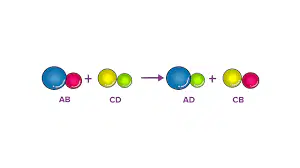
Option 2
c)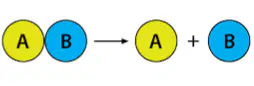
Option 3
d)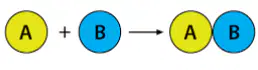
Option 4
103.
Decomposition
a)
Option 1
b)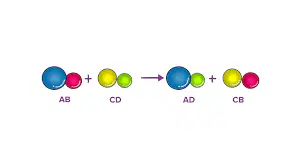
Option 2
c)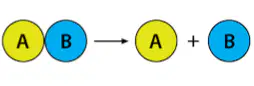
Option 3
d)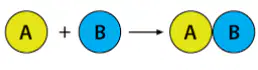
Option 4
104.
Double-Displacement
a)
Option 1
b)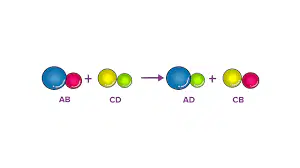
Option 2
c)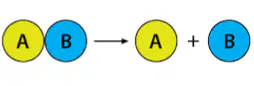
Option 3
d)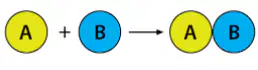
Option 4
105.
Synthesis
a)
Option 1
b)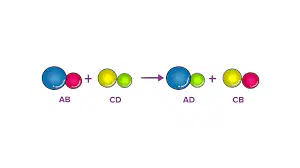
Option 2
c)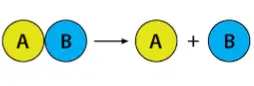
Option 3
d)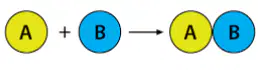
Option 4
106.
Substances are either elements or mixtures
a)
True
b)
False
107.
The color of a substance is a physical property
a)
True
b)
False
108.
Smoke is a compound
a)
True
b)
False
109.
Distillation is a way to separate a mixture using the physical property of boiling point.
a)
True
b)
False
110.
The law of conservation of mass states that the mass of all substances before a physical change equals the mass of all the substances after the change.
a)
True
b)
False
111.
Colloids are mixtures.
a)
True
b)
False
112.
The freezing of water is a chemical change.
a)
True
b)
False
113.
Homogeneous mixtures include colloids, solutions, and suspensions.
a)
True
b)
False
114.
When lightning converts oxygen gas, O2, into ozone, O3, it is a physical change.
a)
True
b)
False
115.
A fruit salad is a homogeneous mixture.
a)
True
b)
False
116.
Flammability is a physical property.
a)
True
b)
False
117.
When a firecracker explodes, mass is lost
a)
True
b)
False
118.
If a mixture scatters light and does not settle upon standing, it is a suspension.
a)
True
b)
False
119.
A suspension is a homogeneous mixture.
a)
True
b)
False
120.
The breaking of a glass window is a physical change.
a)
True
b)
False
121.
Using oxygen to separate molten copper sulfide into copper and sulfur dioxide is a physical change.
a)
True
b)
False
122.
The central core of an atom is called the hub.
a)
True
b)
False
123.
The chart showing the classifications of elements according to their properties and increasing atomic numbers is called the periodic table.
a)
True
b)
False
124.
The mass of an electron is about equal to the mass of a proton
a)
True
b)
False
125.
Elements arranged in vertical columns in the periodic table are called periods.
a)
True
b)
False
126.
The region around the nucleus occupied by the electrons is called the negative zone.
a)
True
b)
False
127.
The maximum number of electrons in the second energy level of an atom is 4
a)
True
b)
False
128.
Two isotopes of carbon are carbon-12 and carbon-14. These isotopes differ from one another by two protons.
a)
True
b)
False
129.
Metals are good conductors of heat and electricity.
a)
True
b)
False
130.
Scientists believe that naturally occurring elements are manufactured within Mars.
a)
True
b)
False
131.
So far, scientists have confirmed the existence of six different quarks
a)
True
b)
False
132.
In 1926, scientists developed the Bohr model of the atom that is in use today.
a)
True
b)
False
133.
The sum of the number of protons and neutrons in an atom is the mass number.
a)
True
b)
False
134.
The symbol for fluorine is Fe.
a)
True
b)
False
135.
A very stable electron arrangement in the outer energy level is characteristic of noble gases.
a)
True
b)
False
136.
One proton and one electron are added to each element as you go across the periodic table.
a)
True
b)
False
137.
Electron cloud models are used to show how electrons in the outer energy level are bonded when elements combine to form compounds.
a)
True
b)
False
138.
The atomic number of an element is determined by its number of protons.
a)
True
b)
False
139.
According to present atomic theory, the location of an electron in an atom cannot be pinpointed exactly.
a)
True
b)
False
140.
Moving from left to right in a row of the periodic table, metallic properties increase.
a)
True
b)
False
141.
The properties of a compound are the same as the properties of the elements making up the compound.
a)
True
b)
False
142.
Because a water molecule has a slight positive charge at one end and a slight negative charge at the other end, it is a nonpolar molecule.
a)
True
b)
False
143.
Particles formed from the covalent bonding of atoms are called ions.
a)
True
b)
False
144.
Molecules are neutral.
a)
True
b)
False
145.
A term that means "without water" is anhydrous.
a)
True
b)
False
146.
When an atom gains or loses electrons, the charged particle that results is called a molecule.
a)
True
b)
False
147.
The formula SO42- stands for ammonium.
a)
True
b)
False
148.
An atom is chemically unstable when its outer energy level contains all the electrons it can hold.
a)
True
b)
False
149.
The chlorine atoms in hydrogen chloride have a stronger attraction for the electrons than the hydrogen atoms do. The hydrogen chloride molecule is therefore a nonpolar covalent molecule.
a)
True
b)
False
150.
An element's oxidation number indicates how many electrons the element must gain, lose, or share to become stable.
a)
True
b)
False
100 %

