
 Worksheets
Earthing and Bonding in Electrical Installations
Total questions: 15
Worksheet time: 8mins
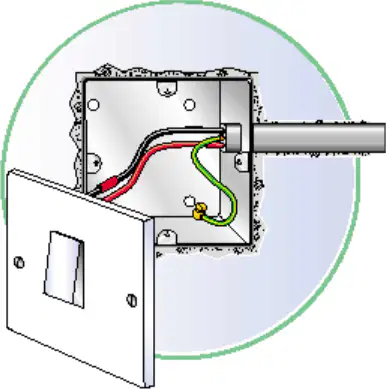
Given the visual similarities between earthing and bonding, what should an electrician do to avoid confusion during installation?
Carefully identify and label each connection
Ignore the differences and treat them the same
Use only one method for all installations
Rely solely on wire color for identification
Discuss the reasons why BS 7671 mandates both earthing and bonding in electrical systems, and explain how their separate functions work together to protect people and property.
Both are required because they provide identical protection against electrical faults
Both are required because they address different risks and work in combination to enhance safety
Bonding alone is sufficient for compliance, earthing is not necessary
Earthing alone is sufficient for compliance, bonding is not necessary
If you wanted to reduce how long a person is exposed to a dangerous voltage, which method would you use?
Bonding
Insulation
Earthing
Circuit breaking
Which of the following situations can lead to the danger of electric shock due to touch voltage?
Voltages between exposed-conductive-parts and Earth
Voltages between two insulated wires
Voltages between a plastic cover and Earth
Voltages between a wooden surface and a metal surface
Why is it important to consider voltages between extraneous-conductive-parts in an electrical installation?
Because they can contribute to the risk of electric shock during an earth fault
Because they improve the efficiency of the installation
Because they reduce the need for insulation
Because they increase the lifespan of electrical components
What is the main purpose of earthing in electrical installations when used for protective purposes?
To limit the duration of the voltages during fault conditions
To increase the current flow in the circuit
To reduce the resistance of the wires
To enhance the brightness of electrical bulbs
Explain how earthing contributes to electrical safety in installations. Use evidence from protective device operation.
Earthing allows protective devices like fuses or circuit-breakers to operate quickly under earth fault conditions, limiting the duration of dangerous voltages.
Earthing increases the voltage in the system, making devices more efficient.
Earthing prevents any current from flowing in the system.
Earthing is only used to power electrical devices.
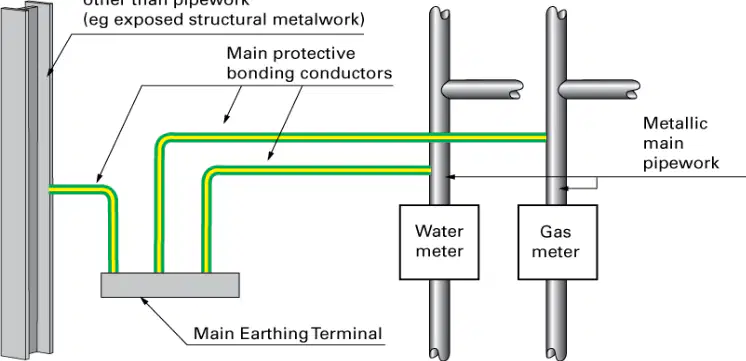
What is the main purpose of bonding in electrical systems?
To limit the magnitude of voltages between conductive parts
To increase the voltage in the system
To disconnect conductive parts from each other
To insulate conductive parts from the ground
How is bonding achieved in an electrical system?
By electrically connecting together conductive parts
By painting conductive parts
By physically separating conductive parts
By using non-conductive materials
Explain why electrically connecting conductive parts together helps limit the magnitude of voltages in an electrical system.
It equalizes the potential between parts, reducing voltage differences
It increases the resistance between parts
It creates a short circuit
It isolates the parts from each other
What is the main safety benefit of adequate bonding in electrical systems?
It ensures that voltages between accessible conductive parts under earth fault conditions are insufficient to cause danger before the protective device disconnects the supply.
It increases the voltage between conductive parts to improve efficiency.
It allows the protective device to operate without disconnecting the supply.
It prevents any faults from occurring in the circuit.
Why is it important for the magnitude of voltages between exposed-conductive-parts and extraneous-conductive-parts to be low during earth fault conditions?
To prevent danger before the protective device disconnects the supply.
To increase the current in the circuit.
To allow the circuit to operate at higher voltages.
To reduce the need for protective devices.
Suppose an earth fault occurs and the bonding is inadequate. What could be a possible consequence before the protective device disconnects the supply?
Dangerous voltages may exist between accessible conductive parts, posing a risk of electric shock.
The circuit will automatically repair itself.
The protective device will disconnect instantly, regardless of bonding.
The voltage will remain at zero between all conductive parts.
Explain why the reduction in touch voltage duration occurs when additional conductive paths are provided by bonding in an electrical installation. Use reasoning based on the arrangement of these paths.
Because parallel conductive paths allow fault current to dissipate more quickly, reducing the duration of touch voltages.
Because series conductive paths increase resistance, prolonging the duration of touch voltages.
Because isolated paths prevent any current flow, eliminating touch voltages.
Because looped paths concentrate current, increasing the duration of touch voltages.
According to the provided information, can bonding alone be relied upon to satisfy the disconnection time requirements of BS 7671?
No, bonding must not be relied upon
Yes, bonding is sufficient
Only in emergency situations
Only if earthing is not available

