
 Worksheets
Multiple Choice Questions (MCQs) and True/False on Labour
Total questions: 105
Worksheet time: 59mins
Labour refers to:
Only physical work
Only intellectual work
Any manual or mental effort in production
Only work done by machines
Which of the following is un-skilled labour?
Doctor treating a patient
Carpenter making furniture
Farmer working in the field
Architect designing a building
Demand for labour is also known as:
Direct demand
Derived demand
Compulsory demand
Indirect supply
According to the demand schedule, when wage rate decreases:
Demand for labour increases
Demand for labour decreases
Supply of labour remains constant
Supply of labour decreases
Equilibrium wage rate is determined at the point where:
Labour supply is greater than demand
Labour demand equals labour supply
Wage rate is maximum
Employers hire all available workers
Labour is an active factor of production.
True
False
Skilled labour requires no training or experience.
True
False
Supply of labour increases when wage rate increases.
True
False
Productivity of labour has no effect on demand for labour.
True
False
Dignity of labour means all jobs are equally respectable.
True
False
The person who provides labour services is called a ___________.
labourer
manager
entrepreneur
consumer
Labour that requires advanced study and special training is called __________ labour.
professional
manual
unskilled
casual
The marginal revenue product (MRP) is calculated as MR × ___________.
marginal product (MP) or marginal product of labour (MPL)
average product (AP)
total product (TP)
fixed cost (FC)
Supply of labour refers to the number of people willing and able to work at the prevailing ___________.
wage rate
interest rate
inflation rate
exchange rate
The wage rate at which quantity of labour demanded equals quantity supplied is called __________ wage rate.
equilibrium
minimum
maximum
nominal
In economics, rent is paid for factors that have:
Elastic supply
Inelastic supply
Unlimited supply
Variable supply
Which of the following is investment according to the textbook?
Buying groceries
Depositing money in wallet
Purchasing machinery and buildings
Spending income on travel
Hoarding refers to:
Money deposited in bank to earn interest
Unspent income stored without earning interest
Money invested in fixed deposits
Money saved for future investment
Net interest is obtained by subtracting:
Interest on savings from wages
Gross interest from taxes paid
Management and risk expenses from gross interest
Loan amount from total deposit
Profit is defined as:
Total cost - total revenue
Total revenue - total cost
Wages + interest
Selling price - market price
Rent for a house increases when demand for houses is greater than supply.
True
False
Current deposit accounts usually earn high interest.
True
False
Compound interest is also called “interest on interest.”
True
False
When interest rate increases, investment also increases.
True
False
Profit motivates entrepreneurs to take risks and start businesses.
True
False
The payment received for the use of land or property is called ___________.
rent
interest
wages
commission
Saving is the difference between disposable income and ___________.
consumption expenditure
gross investment
government spending
net exports
Deposits made for a fixed period that earn higher interest are called __________ deposits.
fixed
recurring
savings
current
Gross interest - (risk cost + management cost) = __________ interest.
net
gross
simple
compound
FILL IN THE BLANKS 5. Profit = Total Revenue - ___________.
cost
sales
assets
liabilities
Bhutan’s economy is best described as a:
Socialist economy
Mixed economy
Capitalist economy
Traditional economy
Which sector contributes the most to Bhutan’s GDP?
Primary sector
Secondary sector
Tertiary sector
Agricultural sector
Capital formation refers to:
Increase in household consumption
Creation of more capital goods
Borrowing money from other countries
Decrease in investment
Consumption + Saving equals:
GDP
Income
Capital formation
Investment
Which dzongkhag has the lowest mean monthly household consumption expenditure (according to the graph)?
Thimphu
Gasa
Zhemgang
Trongsa
The economic growth of a country is measured by its _____________________.
GDP per capita
Population density
Literacy rate
Inflation rate
The sector that contributes the most to Bhutan’s GDP is the ____________________ sector.
tertiary
primary
secondary
quaternary
An increase in consumption expenditure leads to a ____________________ in savings.
decrease
increase
no change
doubling
Roads, schools and hospitals are provided mainly by the ____________________ sector.
public
private
corporate
individual
Lowering interest rates on borrowing leads to an increase in _______________________.
investment
taxes
imports
unemployment
Bhutan’s population growth rate between 2005 and 2017 was high compared to many countries.
True
False
Hydropower and tourism are two major sectors that Bhutan’s economy depends on.
True
False
Private sector alone can fully support the economic growth of Bhutan without public sector support.
True
False
High interest rates on savings encourage people to save more.
True
False
Economic diversification means depending on only one sector for growth.
True
False
Public finance mainly deals with:
Only private income
Only household expenditure
Government income and expenditure
Business profits
Which of the following is a direct tax in Bhutan?
Sales tax
Import duty
Corporate Income Tax (CIT)
Entertainment tax
Capital expenditure includes:
Payment of salaries
Construction of roads and bridges
Purchase of medicine
Routine office maintenance
Revenue from fees such as land transaction fees and birth registration fees are called:
Tax revenue
Non-tax revenue
Grants
Borrowing
A supplementary budget is required when:
There is excess revenue
There is surplus in government accounts
Unexpected situations increase government expenses
Elections are held
Public finance is concerned with the income and ____________________ of the government.
expenditure
population
territory
constitution
Taxes paid on goods and services are called ____________________ taxes.
indirect
direct
property
income
The government receives ____________________ from international organisations as voluntary contributions.
grants
loans
taxes
fees
Spending on salaries, maintenance and routine operations is known as ____________________ expenditure.
current
capital
development
contingency
The annual financial statement of estimated revenue and proposed expenditure is called a ____________________.
budget
audit report
invoice
balance sheet
The burden of direct tax can be shifted from one person to another.
True
False
Sales tax and import duty are examples of indirect taxes.
True
False
Borrowing is a source of government revenue when there is a gap between revenue and expenditure.
True
False
Capital expenditure is spent regularly every year for daily functioning of the government.
True
False
Budget helps ensure transparency and accountability in government spending.
True
False
Goods that can be seen and touched are called:
Services
Public goods
Goods
Non-economic goods
Public goods are:
Excludable and rival
Non-excludable and non-rival
Private property
For individual use only
National product includes income earned by:
Only foreigners
All citizens of the country
An economic indicator is a:
Type of tax
Statistic that provides information about the economy
Who are the consumers in an economy?
Only government employees
All citizens of the country
Only those living inside the country
Only business firms
The flow of goods and services between households and firms is called:
Money flow
Real flow
Saving
Investment
Economic growth in the short run is measured by the increase in:
GNP
GDP
Savings
Public goods
Goods that are produced using scarce resources and have a price are called __________ goods.
Economic
Free
Luxury
Inferior
The income received by households for providing factor services is called __________.
Factor income
Transfer income
Gross income
Net income
Intermediate goods are also known as __________ goods.
Semi-finished
Consumer
Capital
Durable
When savings equal investment, the circular flow of income is in __________.
Equilibrium
Deficit
Surplus
Stagnation
Economic development focuses on improving people's __________ of life.
Quality
Speed
Color
Size
Services are tangible items that can be touched.
True
False
Private goods must be purchased to be consumed.
True
False
Domestic product only includes income earned by Bhutanese citizens living abroad.
True
False
Public goods can be consumed by many people without reducing availability for others.
True
False
Economic growth alone ensures overall development of a country.
True
False
HDI stands for:
Human Development Index
Human Development Indicator
Government law
Type of currency
A favourable current account means:
Imports are more than exports
Exports are more than imports
No trade with other countries
Only services are exported
HDI includes all the following except:
Longevity
GDP per capita
Education
Inflation rate
GNH was introduced by:
The Third King
The Fourth King
The Prime Minister
The National Assembly
Which is NOT a pillar of GNH?
Good governance
Environmental conservation
Rapid industrialisation
Preservation of culture
The rate of unemployment shows the economy’s __________ stance.
production
monetary
fiscal
technological
The current account records exports and __________ of goods and services.
imports
exports
production
consumption
HDI is measured on a scale from __________ to 1.
0
0.5
10
100
4. GNH balances material and __________ values.
non-material
economic
political
technological
The Constitution of Bhutan mandates maintaining __________% forest cover.
60
40
75
50
Lower unemployment rate indicates better economic performance.
True
False
GDP per capita measures the total income of the government only.
True
False
GNH is a holistic approach that focuses only on economic growth.
True
False
Environmental conservation is one of the pillars of GNH.
True
False
Income inequality refers to equal distribution of income among all people.
True
False
Balance of Payments (BoP) is a record of economic transactions between a country and
Its local businesses
Only neighbouring countries
The rest of the world
Only foreign tourists
Which of the following is included in the current account?
Savings and investments
Imports and exports of goods and services
Borrowing from foreign banks
Foreign investment in factories
A country has a surplus BoP when:
Imports are more than exports
Payments exceed receipts
Receipts are more than payments
It has no trade with the world
Balance of Trade refers to:
Only capital transactions
Only movement of foreign currency
Exports and imports of goods and services
Investments abroad
When a currency increases in value compared to another, it is called:
Borrowing
Appreciation
Depreciation
Inflation
The balance of payments includes all __________ made to and received from the rest of the world.
transactions
decisions
agreements
investments
The capital account records movements of __________, saving, and borrowing.
investment
consumption
production
trade
If a country imports more than it exports, it has an __________ balance of trade.
unfavourable / deficit
favourable / surplus
neutral / balanced
positive / surplus
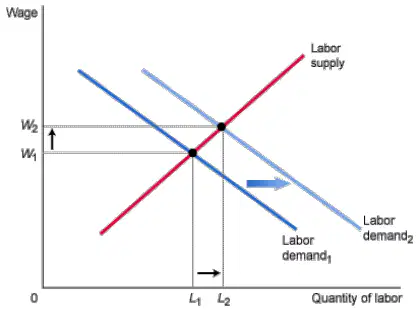
The above image shows:
Contraction of supply
Extension of supply
Increase in supply
Decrease in supply
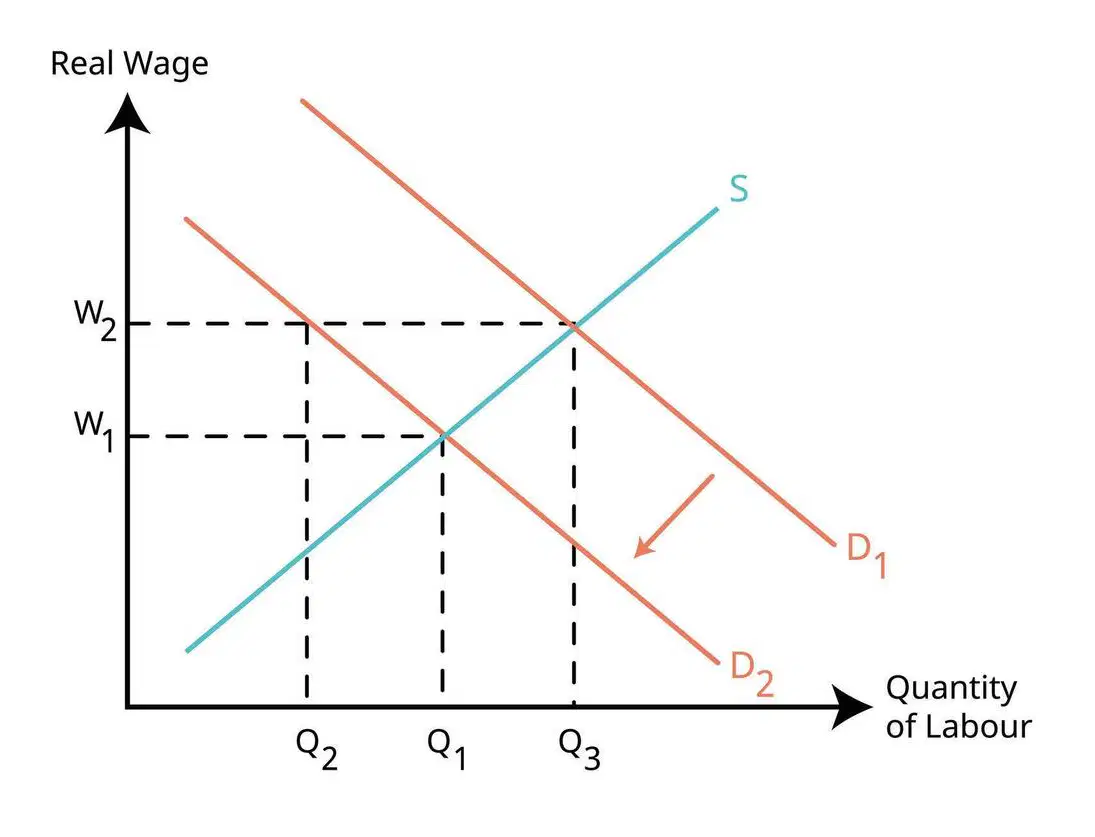
The above image shows:
Decrease in demand
Increase in demand
Extension of demand
Contraction of demand
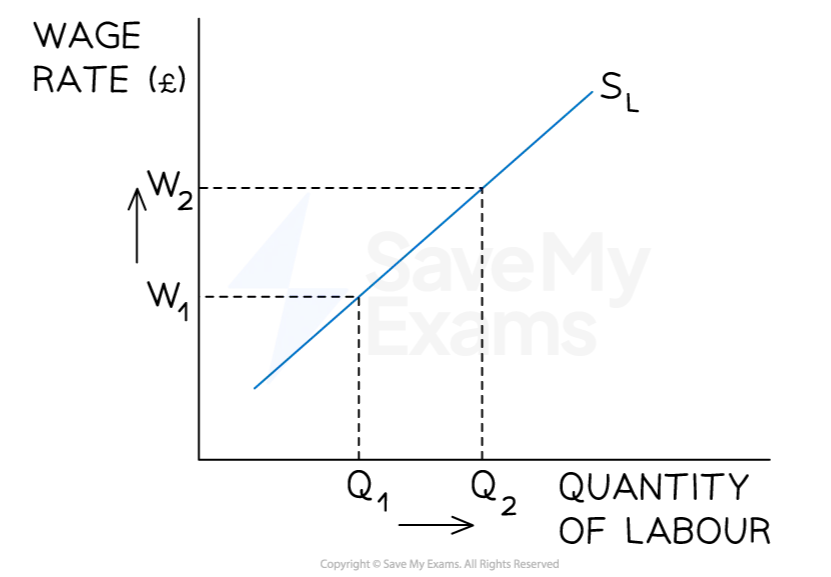
The above image shows:
Extension of supply
Contraction of supply
Increase in supply
Decrease in supply
Sangay earns Nu 25,000 per month. He spends 60% on consumption and saves the rest. If he also receives Nu 2,000 as interest on his savings, what is his total saving for the month?
Nu 8,000
Nu 10,000
Nu 12,000
Nu 14,000
A sum of Nu 12,000 is lent at 6% per annum simple interest. If the total amount received after 4 years is Nu 14,880, what is the principal?
Nu 12,000
Nu 11,200
Nu 10,800
Nu 12,800

