
 Worksheets
food chain
Total questions: 105
Worksheet time: 1hrs 14mins

A Model that shows how energy flows between living things is call a __________.
Food Web
Ecosystem
Food Chain
Environment


What are the organisms that break down dead things?
Producers
Consumers
Decomposers
Organisms


The process by which plants turn sunlight into food is know as ___________.
Photosynthesis
Solar Energy
Energy
Biomass
Herbivores are also know as ____________.
Primary Consumers
Consumers
Secondary Consumers
Tertiary Consumers
Carnivores that eat other Carnivores are also know as ____________.
Primary Consumers
Consumers
Secondary Consumers
Tertiary Consumers
Carnivores are also know as ____________.
Primary Consumers
Consumers
Secondary Consumers
Tertiary Consumers
Decomposers are also know as ____________.
Primary Consumers
Consumers
Detrivores
Tertiary Consumers
What are humans?
Carnivores
Omnivores
Herbivores
Decomposers
The main source of energy for all of earth's food chains is the...
sun
water
nutrients
producers
Plants produce their own food through...
symbiosis
photosynthesis
genetics
magic
All food chains begin with a...
grass
producer
consumer
decomposer
The second link in a food chain is a...
consumer
producer
herbivore
carnivore
A herbivore is a...
consumer that eats both plants and other animals
consumer that only eats other animals
consumer that only eats plants
A herbivore is also known as...
primary consumer
secondary consumer
tertiary consumer
The second consumer in the food chain is called...
primary consumer
secondary consumer
tertiary consumer
The secondary consumer is a carnivore which means...
a consumer that eats both plants and other animals
a consumer that eats only plants
a consumer that eats only other animals
The third consumer in the food chain is called...
primary consumer
secondary consumer
tertiary consumer
An omnivore is a...
consumer that eats both plants and other animals
consumer that eats only other animals
consumer that eats only plants
Animals that are not hunted and eaten by any animals are called...
herbivores
carnivores
omnivores
apex predators
The level of apex predators in the food chain is...
first
second
tertiary
top
Apex predators contribute to the food chain by...
being eaten by other animals
decomposers breaking down their bodies when they die
producing their own food
Examples of decomposers are...
plants
animals
bacteria and fungi
The level of humans in the food chain is...
first
second
tertiary
top
An organism that makes its own food
photosynthesis
producer
consumer
herbivore
An indiviual animal, plant or single-celled life form
producer
ominvore
organism
prey
The living and non-living things that interact and share an environment
ecosystem
food web
food chain
organism
An organism that obtains food by eating other organisms
predator
consumer
herbivore
carnivore
A consumer that only eats plants
consumer
omnivore
consumer
herbivore
A way of showing how the energy from food moves through populations of organisms in a community
food web
food chain
predator
prey
A way of showing how food chains are related
prey
food chain
food web
scavenger
A consumer that only eats meat
carnivore
ominvore
scavenger
herbivore
An animal that preys on other animals
prey
predator
scavenger
decomposer
An animal that is hunted and killed by another for food
scavenger
predator
prey
organism
Consumer that eats both plants and animals
herbivore
omnivore
carnivore
scavenger
The process by which plants (producers) make their own food.
photosynthesis
consumer
food web
prey
An animal that only eats dead organisms
consumer
prey
decomposer
scavenger
An organism that breaks down the waste or remains of other organisms
prey
consumer
scavenger
decomposer
All energy on Earth ultimately comes from what source?
Water
Consumers
Sun
Oxygen
An organism that needs to eat other organisms to obtain energy is known as a:
Autotroph
Consumer
Producer
Mutualist
An organism that uses sunlight to create its own food is known as a:
Producer
Heterotroph
Consumer
Decomposer
What does a food chain represent?
How all living organisms within a ecosystem are connected.
All of the things that a particular animal eats.
How plants create their own food.
A single path of energy transfer within a ecosystem.
Corn in a field is an example of
producer
consumer
decomposer
heterotroph
Cows are an example of
autotroph
herbivore
carnivore
decomposer
A lion is an example of
producer
decomposer
carnivore
autotroph
Organism that eats both producers and consumers
carnivore
omnivore
herbivores
autotroph
What is the role of decomposers in a food chain?
Use sunlight to make food
Eat other organisms to gain energy
Make the food for the whole food chain
Break down dead organisms and add nutrients to the soil
Example of a decomposer
frogs
mouse
fungus
plants
Molds, bacteria, and worms are ________.
decomposers
producers
food chains
consumers
Which food chain is in the correct order?
cat, grass, bird, snail
bird, snail, grass, cat
grass, cat, bird, snail
grass, snail, bird, cat
What is the main energy source in any food chain?
Moon
Earth
Sun
Plants
What are animals that get their energy from eating other things?
producer
consumer
decomposer
Energy goes from...............................
producers to consumers
consumers to decomposers
decomposers to producers
What is the role of a producer?
Use sunlight to make food
Gain energy from eating other organisms
Keep other species from overpopulating
Breaking down dead stuff
The arrows in a food chain or web represents what?
.
.
They point to the organism that is being eaten.
It shows how sunlight flows within an ecosystem
They show what direction the energy is flowing between organisms
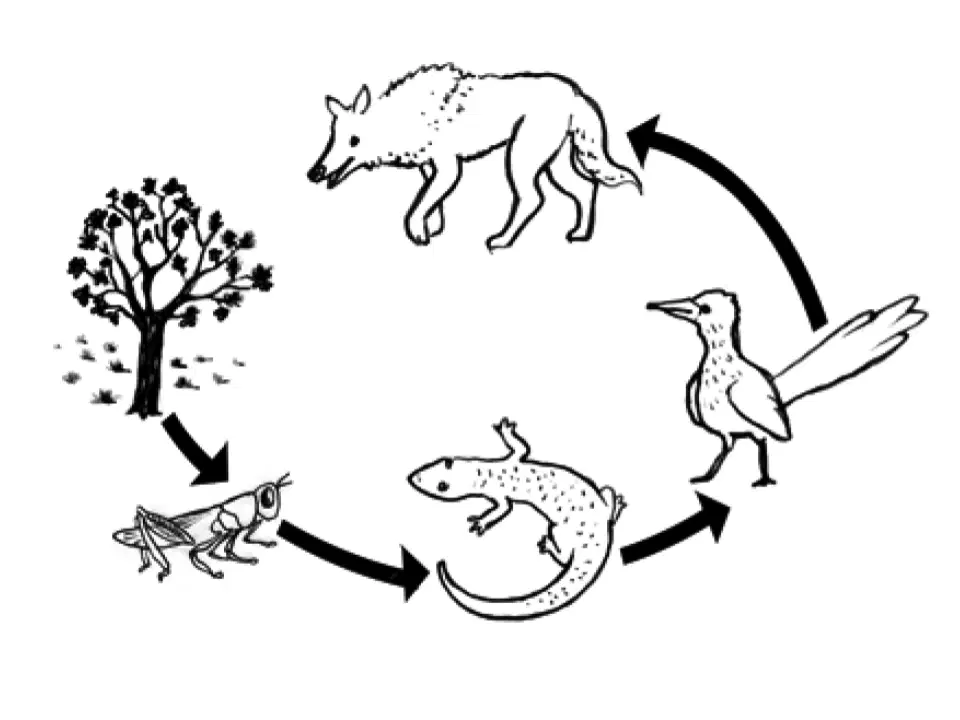
Look carefully at the image. Which organism is tertiary consumer?
grasshopper
lizard
bird
wolf
What is the primary source of energy for the food web?
sun
plant
consumers
decomposers
(a) is animal that hunts and eats
......................................... combine water and carbon dioxide to form sugar
sunlight
water
producer
Energy directly flows from producers to (a) consumer
.................................. is an area that living organisms and nonliving things interact together
ecosystem
food chain
food web
home


An ecosystem shows how each living thing gets food and how ________________ and energy are passed from organism to organism.
ecosystem
food chain
nutrients
prey
Choose all of the abiotic factors from the choices.
tree
oxygen
sun
soil
frog

If the snake population decreases, what would most likely happen to the hawk population?
The number of snakes would increase.
The number of hawks would increase.
The number of hawks would decrease.
The number of mice would decrease.
How are the living creatures in an ecosystem linked?
By what they eat
By how they breathe
By their size
By their species`
What can you infer from the fact that the disappearance of just one species can disrupt an entire food chain?
Every food chain depends entirely on a single species
Food chains are extremely fragile
Food chains can regenerate on their own
Food chains would not exist without humans
How is a food web different from a food chain?
Food webs contain only producers, not consumers.
Food webs do not include decomposers.
Food webs contain many different, linked food chains.
Food webs exist in aquatic environments; food chains exist in terrestrial environments.
Which of the following is a producer?


Through what process do producers make their own food?
Parthenogenesis
Photosynthesis
Meiosis
Mitosis
What role do you play in the food web?
Producer
Consumer
Decomposer
Human
How might a lack of sunlight disrupt the food web?
It would cause consumers to consume less.
It would prevent decomposers from decomposing matter
It would prevent producers from producing nutrients.
It would not disrupt the food web at all.
How are primary consumers different from secondary consumers?
Primary consumers eat only plants; secondary consumers eat other consumers.
Primary consumers eat other consumers; secondary consumers eat only plants.
Primary consumers eat plants and other consumers; secondary consumers eat plants and decompose matter.
Primary consumers eat plants and decompose matter; secondary consumers eat plants and other consumers.

This organism is most likely
A primary consumer
A secondary consumer
A decomposer
A producer
Sheep are herbivorous. What can you infer from this?
They are primary consumers.
They are producers.
They are secondary consumers.
They are decomposers.

