
 Worksheets
H Admin Theory 1.1 Effectiveness in the Workplace Quiz
Total questions: 95
Worksheet time: 48mins
Which of the following is an important quality for increasing effectiveness in the workplace?
Discretion
Laziness
Indecisiveness
Disorganization
Which skill is associated with effective time and task management in the workplace?
Overseeing
Procrastinating
Ignoring
Complaining
Which of the following best describes a person who is good at time and task management?
Organised and hardworking
Disorganised and careless
Unmotivated and passive
Impulsive and distracted
Why is the ability to monitor and manage priorities important in the workplace?
It helps increase effectiveness and efficiency.
It leads to more workplace conflicts.
It reduces the need for planning.
It encourages procrastination.
Which of the following best defines a "skill" as described in the context of administration?
Something you are competent in and can do well, which can be learned and developed.
A characteristic you are born with and cannot change.
A physical attribute that helps you in your job.
A random ability that does not require practice.
Which of the following is an example of a "quality" rather than a "skill"?
Communication skills
IT skills
Good-humoured
People-management skills
According to the material, which of the following would be considered both a skill and a quality?
Good motivator
Delegation
Well-presented
Punctual
Why is it important to distinguish between skills and qualities in an administrative role?
Because skills and qualities are the same and interchangeable.
Because understanding the difference helps in identifying areas for personal development and effective role performance.
Because only skills matter in administration.
Because qualities cannot be changed or improved.
A Senior Administrative Assistant is expected to have a higher level of which of the following compared to an Administrative Assistant?
Physical strength
Planning and management of administration within the organisation
Artistic ability
Manual labor skills
Which are most likely to be classified as skills?
Patient, Delegation, Able to work to deadlines
Calm, Organised, Patient
Delegation, Organised, Calm
Able to work to deadlines, Calm, Organised
If you were hiring for a senior administrative role, which combination of skills and qualities from the lists provided would you prioritize and why?
Calm, Hardworking, Well-presented, Delegation, Organised – because these cover both interpersonal and task management abilities.
Only IT competent and Punctual – because technology is all that matters.
Good-natured and Sense of Humour – because personality is more important than skills.
Outgoing and Patient – because being social is the only requirement.
Which of the following is a main duty of a Part Time Administration Assistant?
Carry out day to day administration tasks
Manage a team of staff
Organise publicity for courses
Liaise with management for budgeting
What is the weekly working hours for the Senior Administrator position?
35 hours weekly (+ overtime as required)
20 hours weekly
40 hours weekly
15 hours weekly
Which skill is specifically required for both the Administration Assistant and Senior Administrator positions?
Excellent communication skills
Ability to drive a company vehicle
Fluency in two foreign languages
Experience in graphic design
Which responsibility is unique to the Senior Administrator position compared to the Administration Assistant?
Manage and coordinate all aspects of administration including staff
Update and maintain information on client files
Dealing with client telephone enquiries
Assist with other ad hoc duties as required
What does the term 'pro rata' most likely refer to in the context of the Administration Assistant's salary?
The salary is adjusted according to the number of hours worked
The salary is paid weekly regardless of hours worked
The salary includes bonuses for overtime
The salary is only paid at the end of the year
Which of the following best describes the type of attitude expected from the Administration Assistant?
A "can do" attitude
A passive attitude
A critical attitude
A reserved attitude
Which of the following tasks would most likely require strategic thinking for the Senior Administrator?
Liaise with management to assist in forward planning and budgeting
Update and maintain information on client files
Dealing with client telephone enquiries
Assist with other ad hoc duties as required
If you were asked to explain the difference between 'ad hoc' duties and regular duties, which would be correct?
'Ad hoc' duties are performed as needed, while regular duties are routine and scheduled
'Ad hoc' duties are always scheduled in advance
'Ad hoc' duties are only performed by senior staff
'Ad hoc' duties are unrelated to the job description
Which of the following is a key skill required for a more senior Administrative Assistant or Manager?
Planning
Typing speed
Basic arithmetic
Graphic design
Which skill is most directly related to ensuring that staff and activities are working together efficiently in a senior administrative role?
The ability to coordinate staff/activities
Filing documents
Taking phone messages
Ordering office supplies
Why is the ability to manage time and resources effectively important for a senior administrative assistant?
It helps ensure tasks are completed efficiently and deadlines are met.
It allows the assistant to avoid using computers.
It is only necessary for entry-level positions.
It is not important in a team environment.
Which of the following best describes the role of "delegating" in a senior administrative position?
Assigning tasks to others to ensure work is completed efficiently
Completing all tasks personally
Ignoring team members' contributions
Focusing only on personal goals
A senior administrative assistant is faced with multiple urgent tasks and must decide which to address first. Which skill is most relevant in this situation?
Dealing with changing priorities
Typing quickly
Making coffee
Decorating the office
Which of the following is NOT typically listed as a key skill for a senior administrative assistant or manager?
Discretion
People-management skills
Motivation
Programming in Python
A senior administrative assistant must often work with other departments and monitor staff. Which skill is most important for this responsibility?
Overseeing
Photocopying
Data entry
Shredding documents
Which skill helps a senior administrative assistant maintain professionalism and confidentiality in the workplace?
Discretion
Public speaking
Event planning
Social media posting
Why is communication skill important for a senior administrative assistant?
It enables clear interaction with staff and departments to ensure smooth operations.
It is only needed for answering phones.
It is not important in written correspondence.
It is only useful for customer service roles.
A senior administrative assistant is under pressure to meet a tight deadline. Which skill is most relevant to help them succeed?
Staying calm under pressure
Ignoring the deadline
Delegating all tasks to others
Focusing only on long-term goals
Which of the following is NOT a tool for good time and task management?
Action Plan
Gantt Chart
Electronic Diary
Financial Statement
What is the main purpose of an Action Plan according to the material?
To record financial transactions
To manage a larger or longer term project or activity
To evaluate employee performance
To schedule personal appointments only
Which of the following is typically included in an Action Plan?
The tasks or activities to be completed
The company’s annual profit
The names of all employees in the organization
The weather forecast for the week

Which element is NOT typically found in an Action Plan as shown in the example?
Estimated time to complete each task
Actual time to complete each task
Responsible person for each task
Employee salary details
Why is it important for a senior administrator to manage time and tasks efficiently?
To ensure deadlines are met and coordinate team efforts
To increase company profits directly
To reduce the number of employees needed
To avoid using electronic diaries
Which of the following best describes a Priorities List?
A list that attaches a priority to each task, such as High, Medium, or Low.
A chart that plots actions on a timeline.
A diary used to schedule meetings.
A list of completed tasks.
What is the main purpose of a Gantt Chart?
To plot actions on a timeline and help manage workload and deadlines.
To list tasks in order of priority.
To record daily appointments.
To track employee attendance.
Which feature is commonly found in electronic diaries (e-diaries) but not in manual diaries?
Recurring entries for regular meetings or appointments.
Writing notes by hand.
Using paper to record appointments.
Storing physical documents.
Why is it important to tackle high priority tasks first according to a Priorities List?
It ensures the most important tasks are completed in good time.
It allows more time for low priority tasks.
It reduces the need for deadlines.
It increases the number of tasks completed.
How can a Gantt Chart help employees manage their workload?
By showing where tasks may conflict and when workload may increase or decrease.
By listing only high priority tasks.
By recording appointments for meetings.
By providing reminders for tasks.
Which of the following is NOT a feature of e-diaries?
Checking other staff members’ diaries online.
Setting reminders for tasks or appointments.
Attaching physical documents to entries.
Entering recurring meetings in one entry.
A manager wants to ensure that no urgent tasks are left incomplete due to time mismanagement. Which tool should they use and why?
Priorities List, because it helps focus on high priority tasks first.
Gantt Chart, because it only lists tasks.
Manual diary, because it records appointments.
E-diary, because it sends reminders.
If an employee needs to see when they might struggle with their workload, which tool would be most helpful?
Gantt Chart
Manual diary
Priorities List
To-Do List
What is one advantage of using e-diaries for scheduling meetings?
They allow checking other staff members’ diaries online.
They require manual entry for each meeting.
They can only be accessed in the office.
They do not support reminders.
Which statement best explains how Gantt Charts contribute to effective task management?
They help ensure employees are not overloaded and tasks can be delegated effectively.
They prioritize tasks as high, medium, or low.
They record appointments and meetings.
They send reminders for tasks.
Which of the following is a feature of an E-diary?
Entries can be searched for specific information or dates.
Entries can only be viewed by administrators.
Files cannot be attached to entries.
Double-bookings are not flagged.
What is the purpose of the address book facility in an E-diary?
To allow ease of contact with other staff members.
To store only personal contacts.
To restrict access to diary entries.
To delete old entries automatically.
How can double-bookings be managed in an E-diary?
They can be flagged up to avoid meetings or activities being booked at the same time.
They are ignored and not shown.
They are automatically deleted.
They are merged into one entry.
Which software is recommended for creating time and task management documents that are easy to edit and update?
Word-processing and spreadsheet software
Presentation software
Graphic design software
Database management software
You are planning an event at your school. Which tools should you use to organize the tasks and activities involved?
Action Plan, Priorities List, and Gantt Chart
Only a handwritten list
Only a calendar
Only a contact book
Why is it useful to set reminders in your e-diary for key dates such as assessments or homework assignments?
Reminders alert you to important dates and help you stay organized.
Reminders delete old entries automatically.
Reminders restrict access to your calendar.
Reminders only work for monthly events.
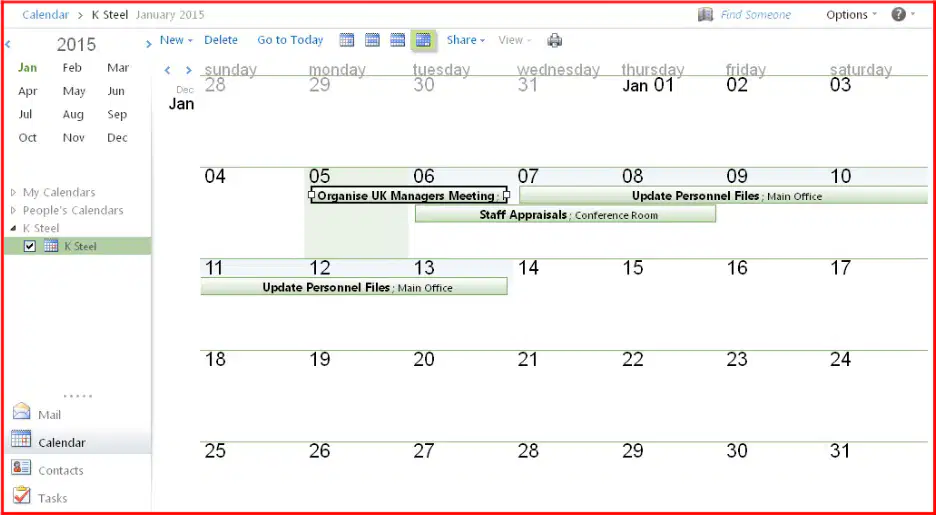
Which view options are typically available when printing an e-diary calendar?
Daily, weekly, and monthly
Only yearly
Only hourly
Only quarterly
What is the main purpose of a Personal Development Plan (PDP)?
To record areas of strength and weakness for future development
To schedule employee holidays
To manage company finances
To assign daily work tasks
Which of the following is NOT a benefit of completing a Personal Development Plan?
It helps identify training needs
It allows employees to focus on specific job aspects for development
It guarantees a promotion
It encourages positive discussion and feedback
Which question is NOT one of the three main questions a Personal Development Plan focuses on?
Where am I now?
Where do I want to be?
How can I get there?
Why do I need a job?
How can a Personal Development Plan help employees expand their role within an organisation?
By looking towards possible promotion through training and development
By reducing their workload
By eliminating the need for feedback
By assigning them to a different company
Which of the following is an example of a question that helps guide the creation of a Personal Development Plan?
What is my current level of skill or knowledge about a specific area of my job?
What is the company’s annual profit?
How many employees are in my department?
What is the dress code policy?
Why might an employee feel motivated by discussing areas of strength and planning future training with their manager?
Because it encourages positive discussion and feedback on performance and future targets
Because it reduces their salary
Because it eliminates the need for annual reviews
Because it allows them to avoid new responsibilities
Suppose an employee wants to share their expertise with others. According to the Personal Development Plan, what should they identify?
Skills they already have and can share with other employees
The company’s financial goals
The office layout
The number of vacation days available
What action is required for the future development of office organisation according to the Personal Development Plan?
Maintain this good standard
Record keeping
Delegation of office tasks
Use of online purchasing system
Who is responsible for assisting with training for the use of the online purchasing system?
HR Manager
Line Manager
Finance Office
Admin Team
Explain how sharing systems with other departments can benefit team work in an office environment.
It increases competition among departments.
It helps maintain good practice and improves collaboration.
It reduces the need for meetings.
It eliminates the need for training.
Evaluate the importance of delegating office tasks regularly and effectively to the Admin team.
It ensures that only one person is responsible for all tasks.
It can lead to confusion and inefficiency.
It helps distribute workload, improves efficiency, and develops team skills.
It is not necessary for office organisation.
What strategic benefit does improved use of planning tools provide when organising meetings and events?
It makes meetings longer.
It helps organise meetings and events more efficiently and effectively.
It reduces the number of meetings.
It eliminates the need for a line manager.
Which of the following is a benefit of good time and task management in an organisation?
Tasks are completed to deadline and are of good quality.
Tasks are always completed late.
Employees are more stressed.
Customer satisfaction decreases.
What is a consequence of poor time and task management?
Poor productivity – tasks are not completed on time.
Employees are less stressed.
Customer satisfaction increases.
Tasks are always completed to a high standard.
How does good time and task management affect employee stress levels?
It lowers stress levels, making employees happier and more productive.
It increases stress levels, making employees less productive.
It has no effect on stress levels.
It causes employees to be absent more often.
Explain how poor time and task management can impact customer service in an organisation.
Customer service may suffer and customer expectations may not be met.
Customer service always improves.
Customer service is unaffected.
Customer service is only affected in small organisations.
An organisation is experiencing increased costs and higher employee absence rates. Using evidence from the material, what might be the underlying issue and how could it be addressed?
Poor time and task management; it could be addressed by improving planning and allocating sufficient time for tasks.
Good time and task management; it could be addressed by reducing employee benefits.
High customer satisfaction; it could be addressed by hiring more managers.
Low stress levels; it could be addressed by increasing deadlines.
Which of the following is an example of a time stealer in the workplace?
Poor forward planning
High job satisfaction
Effective delegation
Clear communication
What is a possible consequence of poor forward planning in the workplace?
Tasks may not be managed in the best way
Employees will always finish work early
All tasks will be completed perfectly
There will be no need for planning
How can excessive telephone calls and visits from colleagues affect working time?
Working time is lost due to interruptions
Working time is increased due to collaboration
Working time is unaffected
Working time is only lost during lunch breaks
If an employee takes on too much work, what is a likely outcome?
Time may be wasted trying to fit tasks in around other tasks
All tasks will be completed efficiently
The workload will decrease
There will be no impact on time management
Why is clarifying priorities important in managing time effectively?
It ensures important tasks are tackled first
It allows more time to be spent on lower priority tasks
It makes all tasks equally urgent
It eliminates the need for planning
What can poor communication in the workplace lead to?
Tasks not being completed correctly
Tasks being completed faster
Improved relationships
Reduced need for clarification
Which of the following is a consequence of making unnecessary journeys at work?
Wasting time that could be spent on other tasks
Improving productivity
Reducing interruptions
Increasing efficiency
What is a result of poor organisation or untidiness in the workplace?
Time wasted searching for mislaid information or documents
Documents are always easy to find
Increased job satisfaction
Improved time management
What is a potential impact of failing to delegate tasks effectively?
Work overload for one person
All tasks are completed efficiently
Lower priority work is always completed first
No impact on workload
Strategic Thinking: If you were a manager noticing repeated time stealers such as poor organisation and failure to delegate, what steps could you take to improve time management in your team?
Implement clear organisational systems and encourage delegation
Ignore the issues and hope they resolve themselves
Assign all tasks to one person
Increase unnecessary meetings
Which of the following is a recommended solution to control time spent talking to colleagues in the workplace?
Make it clear that you are working and limit visits and calls.
Ignore colleagues and avoid all communication.
Increase the number of meetings with colleagues.
Allow unlimited visits and calls during work hours.
What is a good strategy to ensure priority work is completed each day?
Allow time each day to set out priority work and check what has been completed.
Only work on tasks as they come without planning.
Delegate all tasks to others without checking progress.
Focus only on non-priority tasks.
Why is it important to communicate clearly and check instructions in the workplace?
To make sure you have understood them.
To avoid all forms of communication.
To increase confusion among staff.
To ignore instructions given by managers.
If you have colleagues or staff, what is an effective way to manage workload?
Learn to delegate tasks to them.
Do all tasks yourself without help.
Ignore staff and colleagues.
Assign tasks randomly without considering skills.
Which of the following is a solution to reduce time spent on visits to other departments or the photocopier?
Group jobs so that visits are cut down per day.
Visit other departments as often as possible.
Avoid using the photocopier altogether.
Assign all visits to one person only.
What should you do if new tasks are piling up and you feel overwhelmed?
Learn to say ‘No’ to new tasks and ask for help from your line manager.
Accept all new tasks without question.
Ignore the new tasks completely.
Delegate all tasks to someone else without informing your manager.
How can you make better use of planning tools in the workplace?
Use Priority Lists and Action Plans and update them regularly.
Avoid using any planning tools.
Only use planning tools for personal tasks.
Use outdated lists and never update them.
What is a recommended way to keep your workspace organised?
Have clear places to store work and file work away when complete.
Leave work scattered around your desk.
Store all work in one pile without organisation.
Never file work away after completion.
If a staff member is absent, what is a likely impact on workplace priorities?
Tasks may need to be re-allocated to other staff members.
All tasks will be completed as usual.
No changes will occur in priorities.
The absent staff member’s tasks will be ignored.
What is a consequence of technical issues in an organisation?
Jobs may need to be completed in a different manner, possibly taking more time and involving more staff.
Technical issues have no impact on job completion.
All jobs will be completed faster.
Technical issues only affect non-priority tasks.
How can last-minute changes to organisation priorities affect employees?
Changes to deadlines or targets may result in changes to all employees’ workload.
Employees’ workload will remain the same.
Only managers’ workload will change.
Last-minute changes have no impact on employees.
Given a situation where technical issues have disrupted IT systems, what steps should an organisation take to ensure work continues efficiently?
Re-allocate tasks, involve more staff, and use planning aids to re-prioritise necessary and important tasks.
Ignore the technical issues and continue as normal.
Wait for the IT systems to be fixed before doing any work.
Assign all technical tasks to one person regardless of workload.
How can planning aids help when priorities change suddenly in an organisation?
They allow workload to be reviewed and re-prioritised so that necessary and important tasks are completed and new tasks are tackled logically.
They make it harder to manage new tasks.
They only help with personal tasks, not organisational ones.
They prevent any changes to priorities.
Which of the following is a possible consequence of poor time and task management for employees?
Increased stress
Improved productivity
Enhanced teamwork
Reduced workload
What does the 'M' in SMART targets stand for?
Manageable
Measurable
Motivational
Meaningful
Which of the following best describes 'Reactive working'?
Planning tasks ahead of time
Jumping from one task to another without completing them properly
Delegating tasks to others
Ignoring deadlines
Why is it important for targets to be 'Agreed' in the SMART framework?
So they can be ignored if necessary
To ensure both employee and manager understand and accept the target
To make targets more difficult
To allow for random changes

