
Font size
 Worksheets
8th Midterm Review (2025)
Total questions: 72
Worksheet time: 42mins

In an activity, a ball is dropped from a height of 100 cm onto five different materials. The rebound height of each drop is shown in the graph. Which of the following describes the hypothesis most likely being tested?
The mass of the ball affects the rebound height.
The material the ball is made of affects the rebound height.
The height the ball is dropped from affects the rebound height.
The surface the ball is dropped onto affects the rebound height.

Which material, in the bar graph above, seemed to produce the highest rebound height when the ball was dropped?
Tile
Carpet
Concrete
Asphalt
This experiment must have had some constants. Which of the following was probably NOT a constant in the experiment above?
The type of ball
The height the ball was dropped from
The type of material the ball was falling down to
The person actually dropping the ball
A student is describing their pet cat. Which statement represents qualitative data?
The cat weighs 8 pounds.
The cat is 3 years old.
The cat has a friendly personality.
The cat eats 2 cups of food daily.
A scientist is collecting data about plants. Which observation would be considered quantitative data?
The leaves feel smooth.
The flower smells sweet.
The plant is 15 cm tall.
The petals look wilted.
In an experiment where plant growth is measured based on the amount of sunlight it receives, which is the dependent variable?
Amount of sunlight
Type of plant
Plant growth
Room temperature
A student measures how long it takes to run different distances. What is the independent variable?
The time it takes to run
The distance run
The student's energy level
The running speed
Which of the following has the steps of the scientific method in the proper order?
Experiment, research, hypothesis, purpose, data analysis, conclusion
Purpose, research, hypothesis, experiment, data analysis, conclusion
Conclusion, data analysis, experiment, research, hypothesis, purpose
Purpose, research, hypothesis, data analysis, experiment, conclusion
What skill is a scientist using when she listens to the sounds that whales make?
making observations
interpreting data
making a hypothesis
drawing conclusions
Which of the following is NOT a rule when writing a hypothesis?
It must be testable.
It should represent the scientist's opinion.
It is a prediction.
It is based on prior knowledge, an educated guess.
Which of the following is NOT a valid hypothesis?
A frozen tennis ball will not bounce as high as a room temperature tennis ball.
Playing fetch with my dog increases his happiness.
The more plants in a fish tank, the more oxygen the fish will have available to breathe.
Plants without sunlight will not grow.
All the things in an experiment that must be the same to make it fair are called
controlled experiments
controlled variables or constants
hypotheses
conclusions
Which of the following is important when creating a graph in science?
Labels
Title
Neatness
All of the above
A scientist who wants to study the effects of fertilizer on plants sets up an experiment. Plant A gets no fertilizer, Plant B gets 5 mg of fertilizer each day, and Plant C gets 10mg of fertilizer each day. Which plant is the control group?
Plant A
Plant B
Plant C
All of them
A series of steps followed to solve problems is?
Investigations
standard procedures
the scientific method
experimental guidelines
Laboratory equipment is cleaned and properly stored after use primarily so that –
Chemical products can be measured and recorded as data
Time is saved in setting up the next experiment
Toxic materials can be kept in the laboratory
The possibility of contamination in the laboratory is minimized
The reason for wafting or fanning a small amount of chemical vapors toward the nose as a means to detect odors in a test tube is to ---
Avoid experimental error from excessive loss of mass of reactants or products
Avoid splashing chemicals into the face of any person
Protect the respiratory tract against potentially harmful vapors
Determine the relative strength of the odor before smelling directly
Approved eye protection devices (such as goggles) are worn in the laboratory
To avoid eye strain
To improve your vision
Only if you don’t have correctives glasses
Any time chemicals, heat or glassware are used
Horseplay and practical jokes in the laboratory are
Always against the rules
Okay
Not dangerous
Okay if you’re working alone
When you finish working with chemicals, specimen, or any other lab substance, always ________
Treat your hands with skin lotion
Wash your hands thoroughly with soap and water
Wipe your hands on a towel
Wipe your hands on your clothes
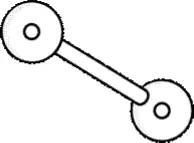
Which of the following correctly identifies and describes the molecule below?
This is an element, which is made up of only one type of atom.
This is an element, which is made up of two different types of atoms.
This is a compound, which is made up of only one type of atom.
This is a compound, which is made up of two different types of atoms.
Which statement is true about heterogeneous mixtures?
They are always chemically combined.
They contain only one type of material.
The composition is uniform throughout.
The composition is not uniform throughout.
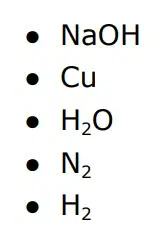
Provided is a list of 5 different substances. Highlight the ones that are elements.
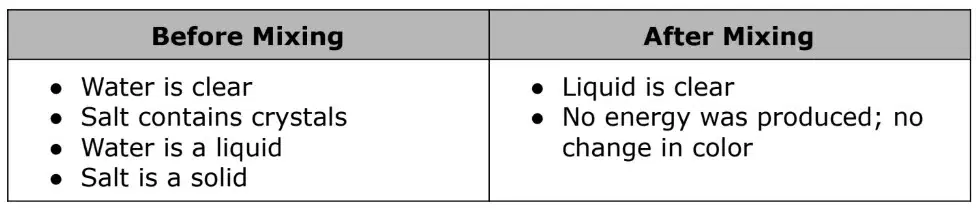
Based on the observations recorded by a student as they mixed salt and water, what type of substance was the student observing after they combined the salt and water?
Element
Compound
Homogeneous mixture
Heterogeneous mixture
Which statement is true about homogeneous and heterogeneous mixtures?
Heterogenous and homogeneous mixtures are pure substances.
Heterogenous mixtures are not uniform throughout, and homogeneous mixtures are uniform throughout.
Heterogenous and homogeneous mixtures are formed by chemical reactions.
Heterogenous and homogeneous mixtures are only made up of compounds.
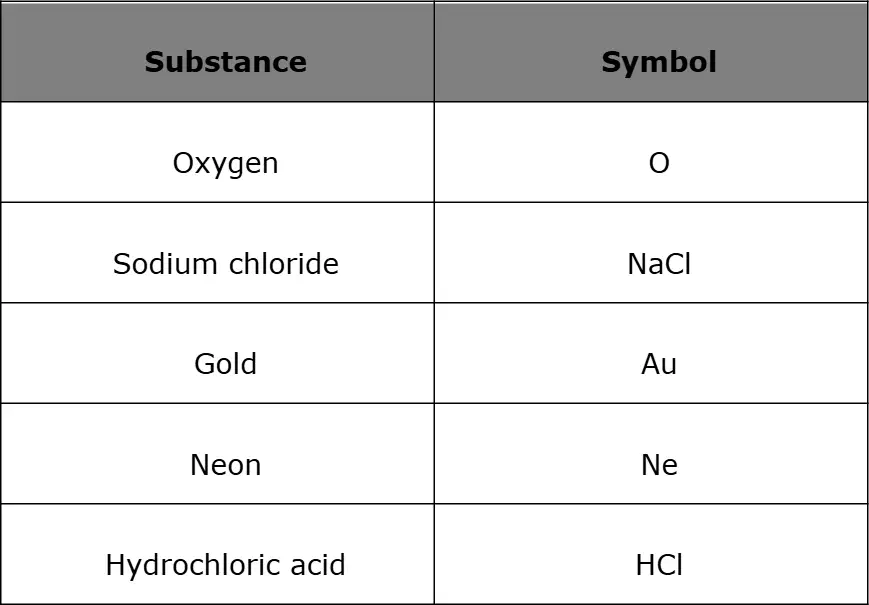
Which of the substances listed in the following chart are considered compounds? Selct two correct answers.
Oxygen
Sodium chloride
Gold
Neon
Hydrochloric acid
Match each diagram with its type of matter observed.
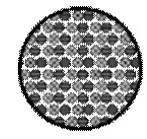
Compound
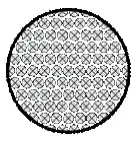
Element
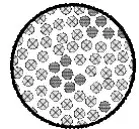
Heterogeneous Mixture
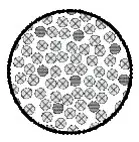
Homogeneous Mixture
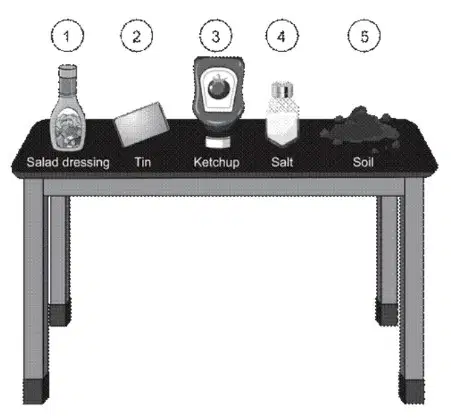
The image provided here shows examples of types of matter laid out on a table. Which of these types of matter are heterogeneous substances (Choose two)?
Salad dressing
Tin
Ketchup
Salt
Soil
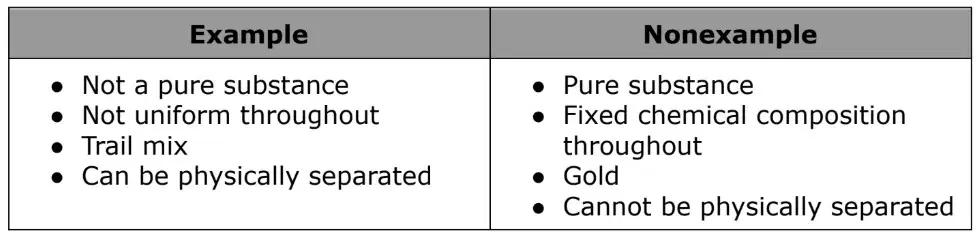
Which type of matter is represented in the “Example” section of the chart?
Element
Compound
Homogenous mixture
Heterogenous mixture
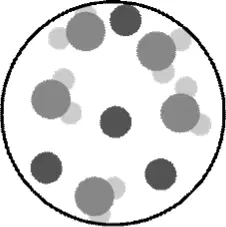
Identify the type of matter observed in the image below. Justify your answer.
Homogeneous mixture, because it is uniform throughout, could be separated by physical means, & it is distributed evenly
Heterogeneous mixture, because it is uniform throughout, could be separated by physical means, & it is distributed evenly
Element, because it is a pure substance.
Compound, because it i a pure substance.
13. Elements and compounds are considered pure substances because:
they consist of only one type of particle throughout.
they are always mixtures of different substances.
they can be separated by physical means.
they contain both metals and nonmetals.
Homogeneous and heterogeneous mixtures can be compared based on their composition. Which statement best describes how they are alike and how they are different?
Both are mixtures, but homogeneous mixtures have a uniform composition while heterogeneous mixtures do not.
Both are mixtures, but heterogeneous mixtures have a uniform composition while homogeneous mixtures do not.
Homogeneous mixtures are pure substances, while heterogeneous mixtures are mixtures.
Heterogeneous mixtures are pure substances, while homogeneous mixtures are mixtures.
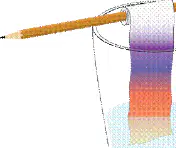
Write a scientific explanation that describes what type of matter ink can be classified as.
Ink is classified as a type of mixture. The black ink separated into several different colors. Elements and compounds are considered pure substances because they are chemically combined and cannot be easily separated. Mixtures are physically combined and can be separated. Because the black ink separated into differently colored pigments, it is considered a mixture. This is a homogeneous mixture because the components seem to be distributed uniformly throughout the solution.
Ink is classified as a pure substance. The black ink does not separate into different colors and is made up of only one type of molecule.
Ink is classified as an element. It consists of only one kind of atom and cannot be broken down into simpler substances.
Ink is classified as a compound. It is made up of two or more elements that are chemically combined in fixed proportions.
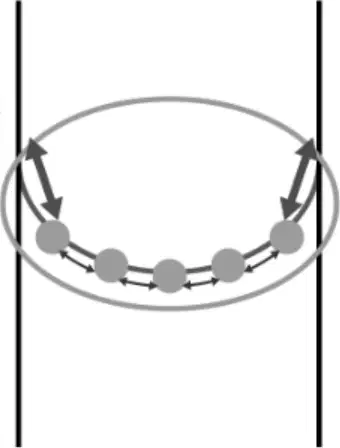
Below is an illustration of how water is transported up the stem of a plant. Which two properties of water are represented in the circled area?
Adhesion and cohesion
Adhesion and surface tension
Surface tension and cohesion
Surface tension and gravity
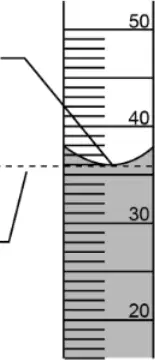
Which description best represents the phenomena represented in the image below?
The air has more mass and pushes down on the water.
Gravity pushes the water in the middle downward.
Water molecules are attracted to the molecules in the glass.
Water molecules are attracted to each other.
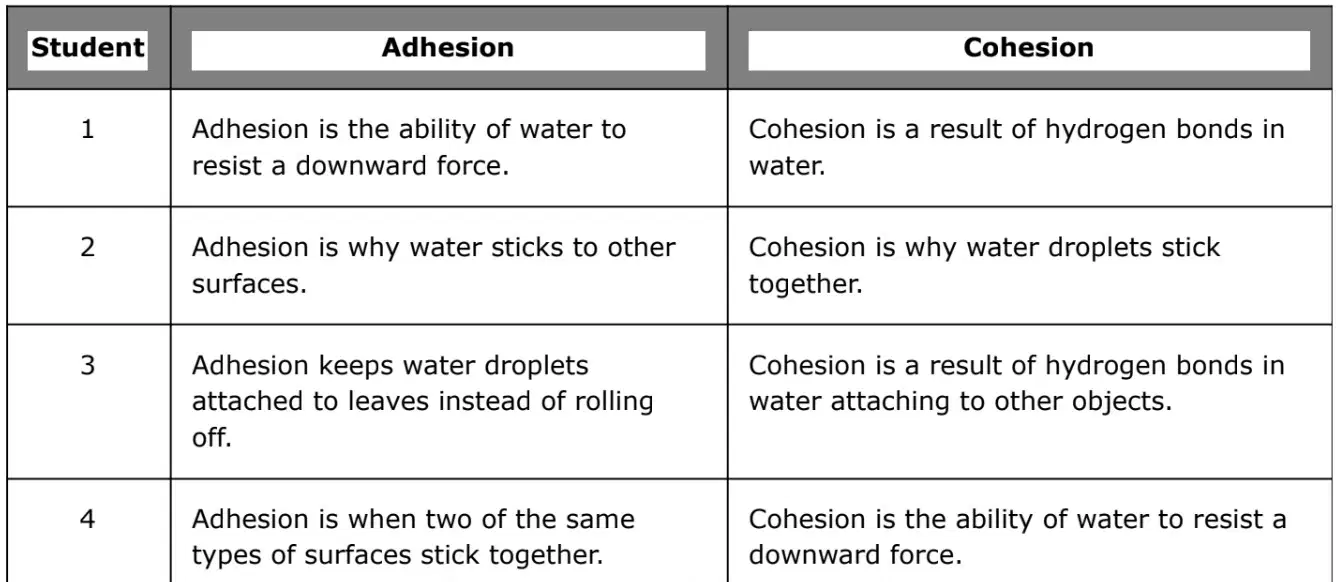
Students were asked to describe the difference between adhesion and cohesion. Their responses are found in the table below. Which student is correct?
Student 1
Student 2
Student 3
Student 4
Students are conducting experiments to observe properties of water. During one experiment, they observe a fly land on the surface of the water. What property of water are they observing and how do you know?
This is polarity because the charges of the molecules cancel each other out.
This is adhesion because the water molecules are attaching to the fly to hold it up.
This is cohesion because the water molecules are attracted to each other to form a surface for the fly to land.
Surface tension allows the fly to float on top of the water without being submerged because the water molecules are cohesive.
Plants are able to draw water up, against the pull of gravity, because of which of the following special properties of water?
Water resists changes in temperature.
Molecules of water stick together.
Liquid water is more dense than solid water.
Water is a universal solvent.
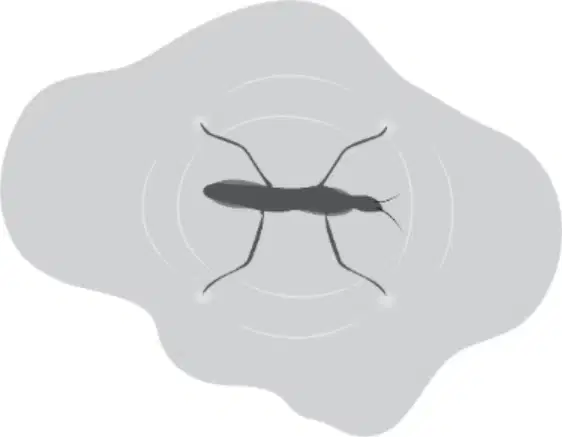
Which properties of water work together to help this insect float on water? Select two correct answers.
Adhesion allows the water molecules to repel each other.
Capillary action allows the water molecules to be pulled up to the surface.
Cohesion allows the water molecules to form strong bonds below the surface.
Cohesion allows the water molecules to stick to the insect’s legs.
Surface tension allows the water to support small objects.
The properties of acids and bases that would help you identify them include:
Taste and pH level
Color and shape
Size and weight
Temperature and pressure
What do you know about pH?
pH is a measure of how acidic or basic a solution is.
pH is a measure of temperature in a solution.
pH is a measure of the color of a solution.
pH is a measure of the pressure in a solution.
Lemon juice is sour and egg whites are bitter. Which one feels slippery?
Lemon juice
Egg whites
Both lemon juice and egg whites
Neither lemon juice nor egg whites
What characteristics would you expect something acidic to have?
High pH and bitter taste
High pH and sour taste
Low pH and slippery feel
Low pH and sticky feel
Students tested the pH of a substance and found it had a pH of 11. The pH of water is 7. Is the substance an acid or base, and what other properties should you expect the substance to have?
The substance is an acid and would also have a sour taste and a sticky feel.
The substance is an acid and would also have a bitter taste and a slippery feel.
The substance is a base and would also have a sour taste and a sticky feel.
The substance is a base and would also have a bitter taste and a slippery feel.
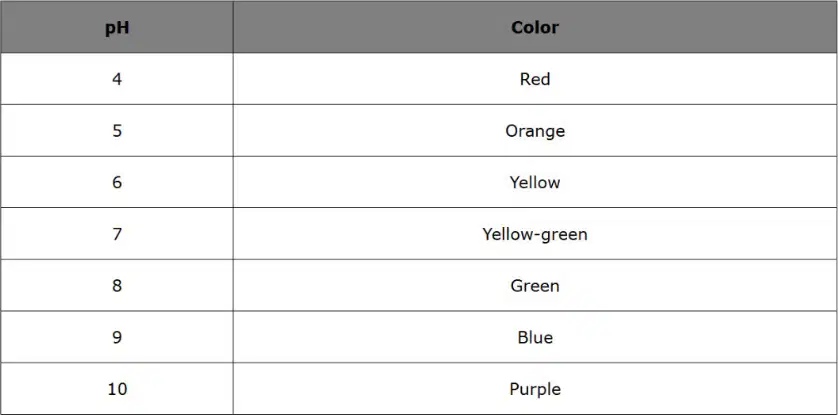
Which of the following is the most reasonable conclusion for the students to make based on these observations when comparing and contrasting the substances to the pH of water?
The reaction with the universal indicator produced a purple color; therefore, the substance is more acidic than water.
The reaction with the universal indicator produced an orange color; therefore, the substance is more acidic than water.
The reaction with the universal indicator produced a red color; therefore, the substance is neutral, like water.
The reaction with the universal indicator produced a yellow-green color; therefore, the substance is more basic than water.
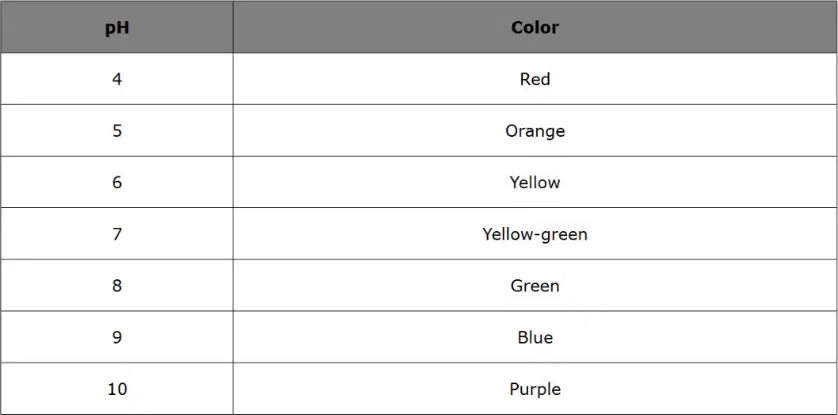
If a student tested a substance and found that it had an orange color, is that substance an acid or base, and what other properties should it also have?
The substance is an acid and would also have a sour taste and a sticky feel.
The substance is an acid and would also have a bitter taste and a slippery feel.
The substance is a base and would also have a sour taste and a sticky feel.
The substance is a base and would also have a bitter taste and a slippery feel.
Students in a science class were comparing and contrasting the pH levels of two different substances to water. Each student made a statement about whether each substance was an acid or a base and why. Water: 7 pH Substance 1: 10 pH Substance 2: 4 pH • Ishaan said that Substance 1 has a higher pH than water, so it must be an acid. • Olivia said that Substances 1 and 2 are both neutral, because their pH levels are close to that of water. • Natsuki said that Substance 2 has a lower pH than water, so it must be an acid. • Camila said that Substance 2 has a pH lower than water, so it must be a base. Which student’s statement is correct?
Ishaan
Olivia
Natsuki
Camila
Identify the substance described by the properties below as an acid or base. Water has a pH of 7.
• pH of 5
• Sour taste
Which of the following best describes the substance?
Acid
Base
Salt
Neutral
Identify the substance described by the properties below as an acid or base. Water has a pH of 7.
• pH of 9
• Bitter taste
Base
Acid
Salt
Water
Identify the substance described by the properties below as an acid or base. Water has a pH of 7.
• pH of 12
• Slippery feel
Base
Acid
Salt
Water
Identify the substance described by the properties below as an acid or base. Water has a pH of 7.
• pH of 1
• Sticky feel
Acid
Base
Salt
Neutral
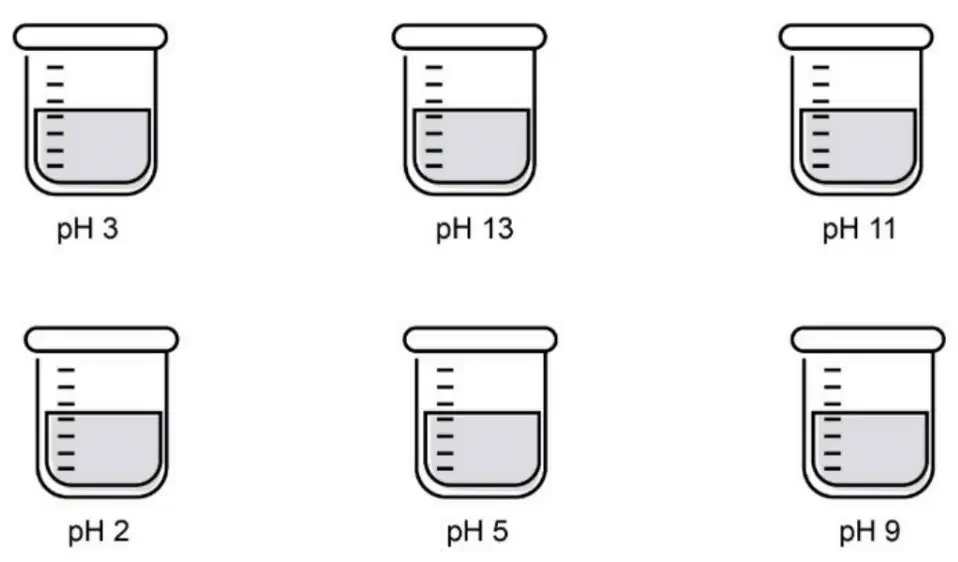
Which substances are bases? Circle/highlight your answers.
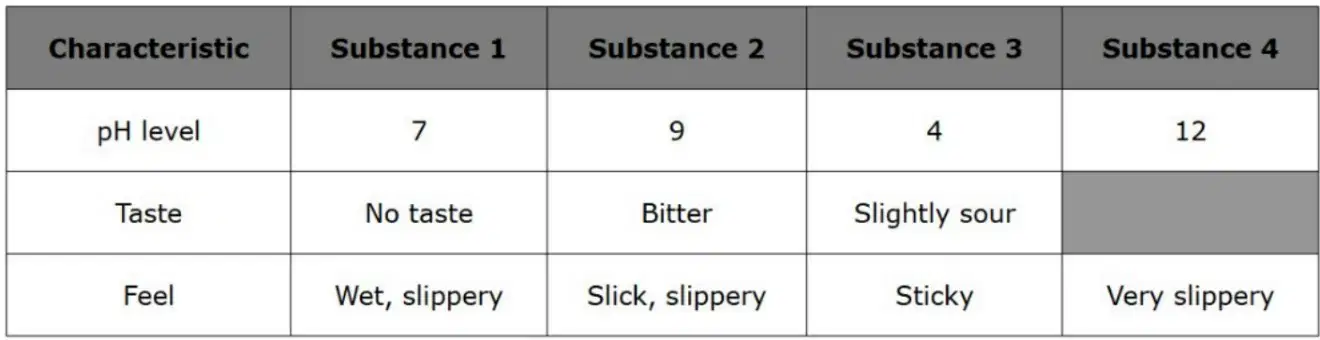
Which substance is most likely an acid?
Substance 1
Substance 2
Substance 3
Substance 4
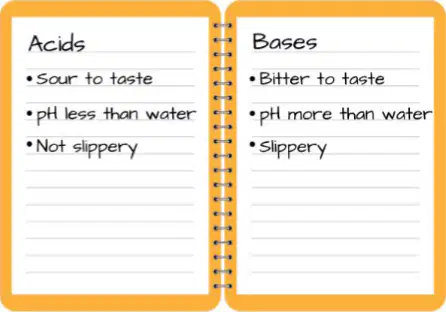
Classify each of the following household substances as an acid or a base: vinegar, baking soda, lemon juice, and soap.
Vinegar and lemon juice are acids; baking soda and soap are bases.
Vinegar and soap are acids; baking soda and lemon juice are bases.
Vinegar and baking soda are acids; lemon juice and soap are bases.
Vinegar and lemon juice are bases; baking soda and soap are acids.
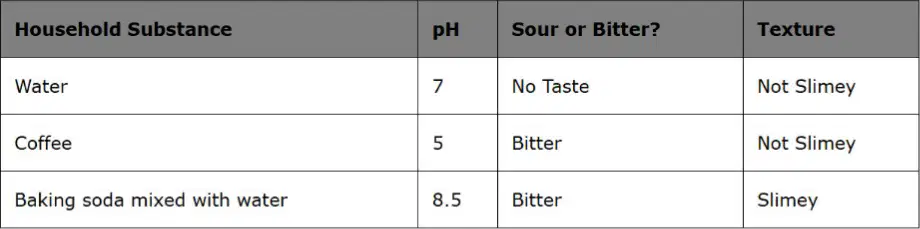
Based on the data table and the characteristics of acids and bases, classify water as an acid, base, or neutral. Explain your reasoning.
Water is neutral. It has a pH of 7, no taste, and is not slimy, which does not match the characteristics of acids or bases.
Water is an acid. It has a sour taste and reacts with metals, which matches the characteristics of acids.
Water is a base. It feels slippery and has a bitter taste, which matches the characteristics of bases.
Water is both an acid and a base because it can react with both acids and bases.
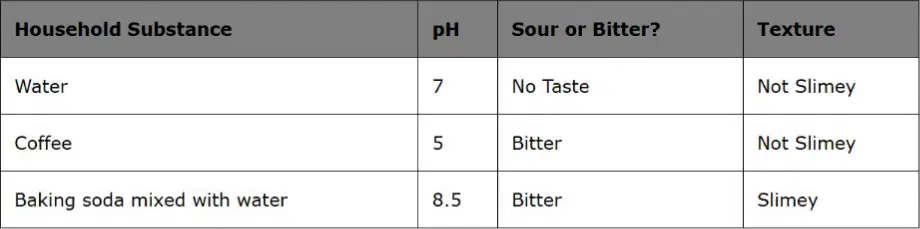
Based on the data table and the characteristics of acids and bases, classify coffee as an acid or a base. Explain your reasoning.
Coffee is an acid. It has a pH lower than water and is not slimy, which matches two of the three characteristics of acids.
Coffee is a base. It has a pH higher than water and is slimy, which matches two of the three characteristics of bases.
Coffee is neutral. It has a pH equal to water and does not match the characteristics of acids or bases.
Coffee is a base. It has a pH lower than water and is slimy, which matches two of the three characteristics of bases.
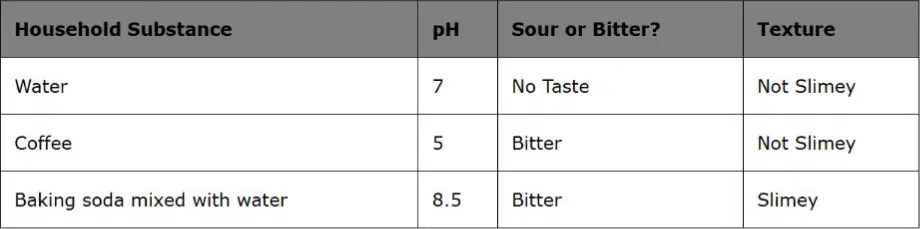
Based on the data table and the characteristics of acids and bases, classify baking soda mixed with water as an acid or a base. Explain your reasoning.
Baking soda mixed with water is a base. It has a pH higher than water, is bitter to taste, and is slimy, which matches all the characteristics of bases.
Baking soda mixed with water is an acid. It has a pH lower than water, is sour to taste, and is not slimy, which matches all the characteristics of acids.
Baking soda mixed with water is neutral. It does not change the pH of water and does not show any characteristics of acids or bases.
Baking soda mixed with water is neither an acid nor a base. It does not affect the properties of water in any way.
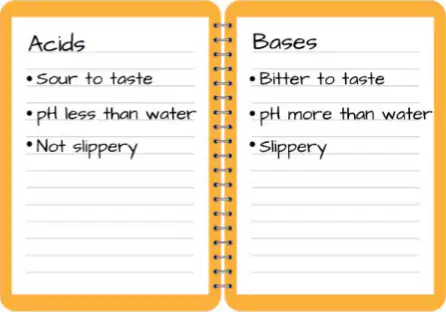
Which of the following is NOT a characteristic of acids?
Sour to taste
pH less than water
Slippery
Not slippery
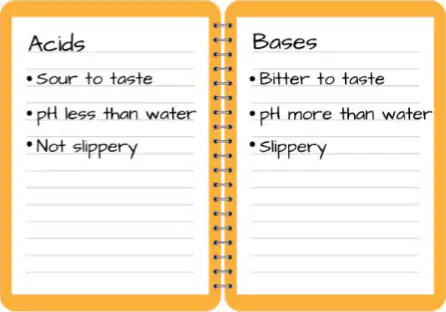
Which of the following is a characteristic of bases?
Sour to taste
pH less than water
Slippery
Not slippery
Match each term to the correct definition.
The smallest particle of an element; made of electrons, protons, and neutrons
Atom
The process by which one or more substances change to produce one or more different substances
Chemical reaction
To prevent the loss of something
Conserve
The measure of how much matter is present in a substance
Mass
A chemical reaction during which plants convert radiant energy from the Sun to chemical energy; the reaction converts Carbon Dioxide and water into sugar and Oxygen
Photosynthesis
Use the words below to label the equation in the image.
During a chemical reaction, the products must equal the reactants. How does this show the law of conservation of mass?
The law of conservation of mass states that mass cannot be created or destroyed. If matter disappears during a reaction, then the law of conservation of mass is not being upheld. The matter must go somewhere.
The law of conservation of mass states that energy is always lost during a reaction.
The law of conservation of mass states that new elements are formed in every reaction.
The law of conservation of mass states that mass can be created from nothing.
How is it possible to check whether a chemical reaction follows the law of conservation of mass?
First, you need to find the equation of the reaction. Next, you count the atoms of each element in the reactants, and then you count the products. They should be equal.
By measuring the temperature change during the reaction.
By observing the color change in the reactants and products.
By checking if the reaction produces a gas.
Students want to conduct an investigation to gather evidence for the claim that the number of atoms present before a chemical reaction is equal to the number of atoms present after the chemical reaction. They decide to combine vinegar and baking soda in a sealed plastic bag. Which of the following would provide the evidence the students need?
The mass of the plastic bag, baking soda, and vinegar before the reaction was equal to the mass after the reaction.
Bubbles were produced during the reaction, which means that a gas was being produced.
The plastic bag did not change in any way, indicating that it was not involved in the reaction.
The mass of baking soda was exactly equal to the mass of the vinegar used to create the chemical reaction.
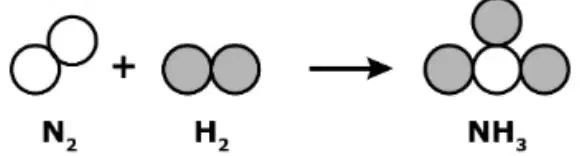
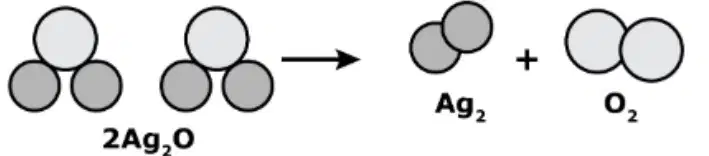
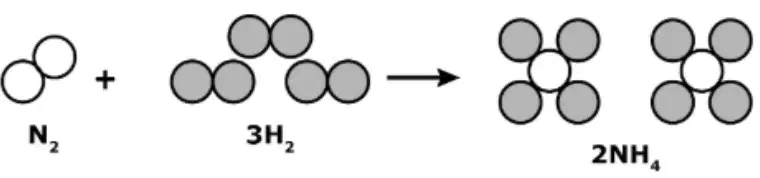
Which of the following atomic models correctly demonstrates the law of conservation of mass?
Photosynthesis is a process that plants use to transform light energy into chemical energy. The reactants in the chemical reaction are carbon dioxide and water. The products are sugar and oxygen. Which of the following statements is true about the mass of the reactants and products?
The mass of the 6CO₂ + 6H₂O + Sunlight will be less than the mass of the C₆H₁₂O₆ + 6O₂.
The mass of the 6CO₂ + 6H₂O + Sunlight will be greater than the mass of the C₆H₁₂O₆ + 6O₂.
The mass of the 6CO₂ + 6H₂O + Sunlight will be destroyed to make C₆H₁₂O₆ + 6O₂.
The mass of the 6CO₂ + 6H₂O + Sunlight will be equal to the mass of the C₆H₁₂O₆ + 6O₂.
Students are given the following equation. Which atoms are included in this equation? NaOCl + 2HCl → NaCl + H₂O + Cl₂ sodium hypochlorite + hydrochloric acid → salt + water + chlorine gas
Nickel, oxygen, chlorine, and helium
Sodium, oxygen, chlorine, and hydrogen
Nadium, oxide, chlorine, and hydrogen
Sodium, oxygen, chlorine, and helium
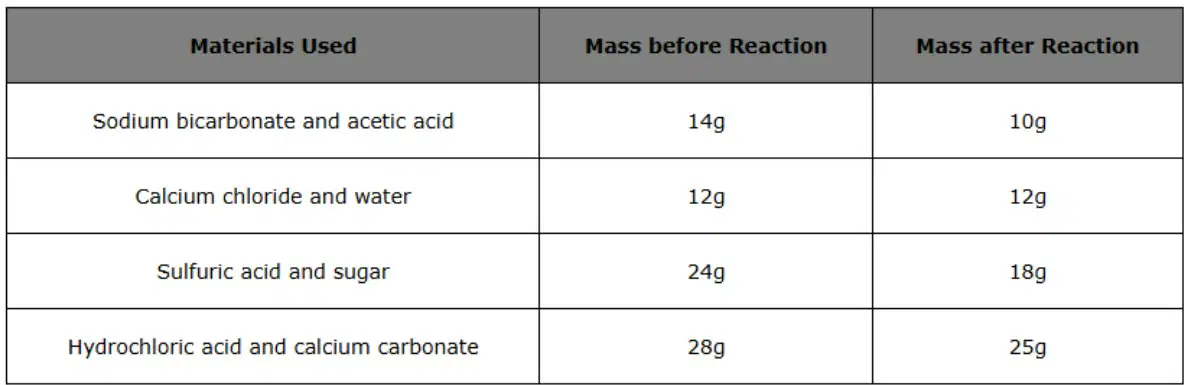
Students planned an investigation to see if they could show that matter is conserved in a chemical reaction. Which one of their experiments shows that mass was conserved?
Sodium bicarbonate and acetic acid
Calcium chloride and water
Sulfuric acid and sugar
Hydrochloric acid and calcium carbonate
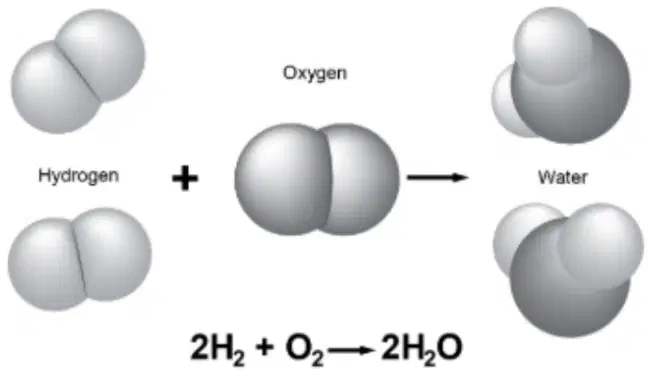
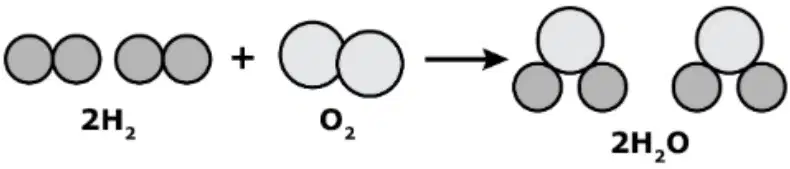
The chemical equation for water is shown in the image provided. Which statements about this equation are true? Select two correct answers.
There are different numbers of oxygen atoms on the reactants and products side of the equation.
Some of the atoms were destroyed in the reaction.
There is the same number of hydrogen atoms on the reactants and products side of the equation.
Two more hydrogen atoms are needed to make this equation balanced.
The equation shows that mass has been conserved.
Which chemical equation shows that mass has been conserved?
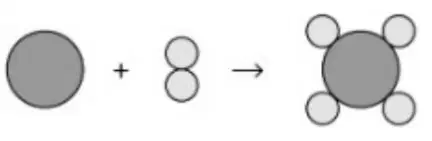
Diagram 1
Diagram 1

Diagram 2
Diagram 2
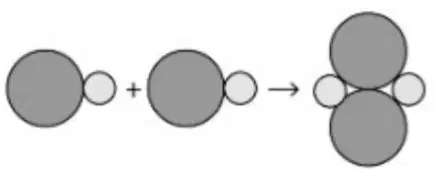
Diagram 3
Diagram 3
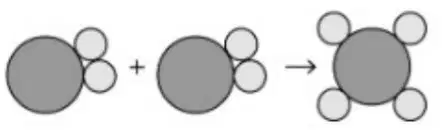
Diagram 4
Diagram 4
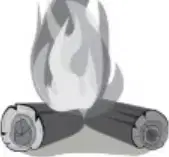
Students investigated the conservation of mass. Their investigation is illustrated in the picture below. What happened to the logs?
When the logs were burned, a chemical reaction occurred that caused them to turn into ash and smoke. According to the law of conservation of mass, matter cannot be created or destroyed. Even though the physical characteristics have changed, there is still the same amount of matter in the end as there was at the beginning. The atoms that were present at the start were still present at the end; they were just rearranged.
When the logs were burned, all of their mass disappeared completely and was lost forever, violating the law of conservation of mass.
When the logs were burned, only the ash remained and the smoke did not contain any matter, so mass was not conserved.
When the logs were burned, the chemical reaction created new atoms that did not exist before, increasing the total mass.

Students were asked to create an experiment to determine if mass is conserved during a chemical reaction. They decided to mix baking soda and vinegar. First, they measured the mass of each substance. They placed the baking soda in a plastic bag and measured the mass. Then, they placed a measured amount of vinegar into a small, plastic cup and measured the mass. They added the masses together and recorded the total mass in a data table. Then, the students placed the plastic cup inside the plastic bag, sealed it, and dumped the cup of vinegar into the baking soda. After the reaction, they measured the mass of the sealed bag and its contents. Their observations and results are provided.
Data Table:
Before reaction: Baking soda: white, solid powder; Vinegar: clear liquid with odor; Total Mass: 280.2 g
After reaction: Cloudy, cold liquid; odor; gas produced; Total Mass: 280.2 g
Which statement best describes if mass is conserved during the chemical reaction between baking soda and vinegar, based on the students' experiment and data?
Mass is conserved because the total mass before and after the reaction is the same.
Mass is not conserved because a gas was produced and escaped.
Mass is not conserved because the substances changed form.
Mass is conserved only if no gas is produced during the reaction.

