
Font size
 Worksheets
Study Guide Questions
Total questions: 87
Worksheet time: 46mins
Which assessment approach best reduces cultural bias?
Standardized tests
Dynamic assessment
Teacher report
Norm-referenced scoring
A student from a high-context culture gives topic-associated narratives. What should the SLP do?
Score as disorganized
Interpret within cultural norms
Correct narrative format
Ignore
A child uses AAE features in writing. What tool helps differentiate difference vs. disorder?
CELF-5
PPVT
DELV
EVT
A bilingual student shows errors only in English but not L1. What is likely?
Disorder
Difference
Intellectual disability
Motor impairment
Which modification is appropriate when testing culturally diverse students?
Using norms anyway
Adding response time
Skipping items
Changing scoring
A child from a high-context culture prefers demonstration. What does this reflect?
Avoidance
Cognitive delay
Cultural learning style
Anxiety
A student struggles with vocabulary across both languages. What does this suggest?
Second-language process
Difference
Possible disorder
Behavioral issue.
Which task is processing-dependent?
Vocabulary test
Story retell
Nonword repetition
Grammar test
A bilingual child improves quickly during teaching phase. What does dynamic assessment show?
Disorder
Low potential
Cultural difference
Strong modifiability.
A bilingual child learns new words slower than siblings. Which is a red flag?
Slow vocabulary growth
Code-switching
Accent
Pragmatic variation
Which narrative style is typical in high-context cultures?
Topic-centered
Linear
Topic-associated
Chronological only.
A teacher wants a student to “stick to schedule,” but their culture values flexible time. What is this?
Disorder
Behavior problem
High-context orientation
Avoidance
Double negatives in AAE represent:
Disorder
Random errors
Linguistic rule-governed form
Limited intelligence.
A student uses Spanish-influenced English. What should SLP assess?
Syntax in both languages
Speech only
Memory only
English only
TEKS-linked goals reflect which type of target?
Functional
Academic
Transitional
Behavioral
Compensatory approaches focus on teaching:
Phonology
Grammar
Strategies
Articulation
A student needs semantic networks. Which root would you teach?
ing
ed
port
the
A student knows words in isolation but not writing. What is needed?
More drills
Discourse practice
Phonology
Motor work
A student struggles with inference. Which program applies?
Masterson & Perry
MARCS
Beck’s model
Orton-Gillingham
Literal interpretation of idioms suggests difficulty with:
Phonology
Figurative language
Motor planning
Fluency
A student attends their ARD meeting. This reflects:
Punishment
Student-centered practice
Optional task
Transition only
Poor narrative coherence in high school indicates need for:
Articulation therapy
Advanced story grammar
Oral reading drills
RAN tasks
A student cannot retrieve vocabulary. Which helps?
Multiple contexts
Copying words
Spelling tests
Lower expectations
Figurative language strategy includes:
Memorizing idioms
Identify, interpret, activate knowledge
Guessing
Reading only
A teen struggles with planning. Which approach applies?
Articulation
Meta-cognitive
Drill-only
Phonology
Poor summary writing indicates need for:
Strategy instruction
Articulation
RAN
Voice therapy
Student can't maintain conversation. Which step comes first?
Generalization
Feedback
Introduction & modeling
Punishment
A student struggles with RAN and nonword repetition. Which diagnosis fits?
Stuttering
Dyslexia
ASD
Hearing loss
Student decodes but can’t comprehend syntax. Likely issue:
Pragmatics
Semantics/syntax
Hearing
Vision
Preschool language delay is a risk factor for:
Dyslexia
LBRD
ADHD
Articulation disorder
A student misses inferential questions. This reflects difficulty with:
Literal comprehension
Hidden curriculum
Pragmatics only
Articulation
Difficulty understanding passive voice impacts:
Fluency
Academic talk
Motor skills
Hearing
A PLAAFP describing narrative deficits belongs under:
Behavior
Communication
Motor
Sensory
A student avoids tasks. Which function is likely?
Tangible
Escape
Attention
Sensory
Student hits to get peers’ attention. Intervention should include:
Break card
Peer helper role
Noise cancellation
Token removal
Behavior momentum involves:
Hard tasks first
Preferred tasks first
Punishment
Ignoring
Family wants functional goals. What must SLP balance?
Only TEKS
Functional + academic
Ignore family
Articulation only.
Integrating written + oral language supports:
L4L principle
High context
Phonology only
Motor speech
Being explicit and going meta includes:
Correction only
Modeling + explanation
Ignoring errors
Only drill.
Collaboration in RTI Tier 2 includes:
Teacher-only
SLP-only
Teacher + SLP
Parent-only
Curriculum-based therapy uses:
Worksheets
Classroom materials
Only SLP-made tasks
Random stories
To support WH questions, which activity helps?
I Spy
Articulation drill
Vocal warmups
Copying
EET is used for:
Decoding
Describing
Articulation
Fluency
A dysregulated student benefits from:
More demands
Sensory supports
Ignoring them
Faster pace.
Which sensory tool supports proprioception?
Swing
Push-ups
Finger paint
Noise machine
Word webs help build:
Spelling
Semantic networks
Motor skills
Prosody
Narrative mats help target:
Syntax only
Multiple language goals
Articulation
Voice
Expanding vocabulary through roots reflects:
Strategy approach
Punishment
RAN
Motor planning
Language-based reading disorders are characterized by difficulties in ______, involving writing and spelling.
reading
speaking
listening
Drawing
Difficulties in ______ processing point to reading difficulties.
Visual
Phonological
Motor
Emotional
Which of the following is NOT a learning disability but is language-based?
Dyslexia
Language-based reading disorder
ADHD
Autism
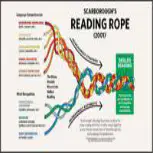
According to Scarborough's Reading Rope, skilled reading is a result of which two main components?
Language comprehension and word recognition
Phonological processing and memory
Visual processing and attention
Rapid automatized naming and spelling
Which of the following is considered less complex?
Oral
Written
Retell is less complex than which of the following?
Generation
Personal
Dyslexia is a disorder affecting just ______ aspect of the reading process.
one
every
no
Many

In a dyslexic brain, which area is under-activated during reading tasks?
Broca's Area
Wernicke's Area
Angular Gyrus
Occipital Lobe
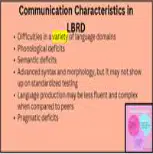
What are some communication characteristics in LBRD? List any two.
Difficulties in a variety of language domains, Phonological deficits
Excellent verbal fluency, Advanced vocabulary
Superior reading comprehension, Fast processing speed
Exceptional public speaking, No language difficulties
Which document helps with meeting where the child is at in the ARD process?
Vertical alignment document
IEP Progress Report
504 Plan
Behavior Intervention Plan
What does PLAAFP stand for in the context of ARD elements?
Present Levels of Academic Achievement and Functional Performance
Professional Learning and Academic Achievement for Future Planning
Primary Learning and Assessment for Academic Performance
Programmed Levels of Achievement and Functional Planning
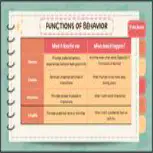
What are the four functions of behavior listed in the table?
Sensory, Escape, Attention, Tangible
Sensory, Avoidance, Compliance, Tangible
Escape, Attention, Compliance, Social
Sensory, Social, Tangible, Compliance
Which function of behavior is described as 'Provides preferred sensory experiences (tactile input such as touching, spinning, etc.)'?
Sensory
Escape
Attention
Access
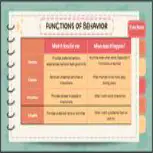
When does the 'Escape' function of behavior typically happen?
When a task is too hard, easy, boring, scary
When a reward is expected
When someone is praised
When a rule is followed

Which function of behavior is associated with 'Removes or avoids certain task or interaction'?
Escape
Attention
Access
Sensory
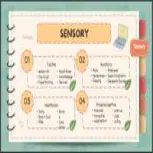
What are the four types of sensory input listed in the 'Sensory' slide?
Tactile, Auditory, Vestibular, Proprioceptive
Visual, Gustatory, Olfactory, Thermal
Auditory, Visual, Olfactory, Gustatory
Tactile, Visual, Auditory, Olfactory

What is the function of 'Proprioceptive' sensory input?
Body awareness, posture, movement, pressure to muscles and joints
Regulation of body temperature and sweating
Detection of light and color
Processing of auditory signals
Which strategy is used to allow a student to take a break from a non-preferred activity?
Break Card
Timer
Token Economy
Visual Cue
Which of the following is an answer choice from the list below?
Choice Between Therapy Tasks
Token Economy
Errorless Learning
Prompt Fading
Which of the following is NOT listed as a strategy for 'Escape'?
Break Card
Quiet Area
Token Economy
Seating Choices
What is a strategy for providing tangibles?
Visual cues/reminders and first/then timer are strategies for managing _________.
Tangibles
Attention
Escape
Sensory
When you have used all the tools and behavior continues to interfere with progress, what should you do to reset and try again?
Reflect on your approach and implement a new strategy.
Ignore the behavior and continue as before.
Punish the behavior immediately.
Wait for someone else to intervene.
What is one of the guiding principles for the L4L stage? USE __________ BASED INSTRUCTION.
CURRICULUM
TEXTBOOK
PROJECT
LECTURE
Which guiding principle for the L4L stage focuses on both oral and written forms? INTEGRATE (a) AND WRITTEN LANGUAGE.
Which guiding principle for the L4L stage involves participation in RTI/MTSS?
Participate in RTI/MTSS
Focus on phonemic awareness only
Ignore classroom data
What type of communication does 'VISUAL' refer to?
Communication using visual cues or aids.
Communication using spoken words.
Communication using written text.
Communication using gestures only.
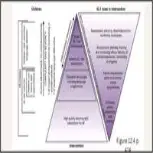
A key role of SLTs in intervention, according to the diagram in Figure 12.4 p. 414, is:
to provide specialized language therapy
to diagnose hearing impairments
to prescribe medication
to conduct psychological assessments
What type of communication does 'GESTURAL' refer to?
Communication using gestures or body movements.
Communication using written words.
Communication using electronic devices.
Communication using spoken language.
What type of communication does 'TECHNICAL' refer to?
Communication using technical devices or methods.
Communication using only verbal language.
Communication through body language only.
Communication using informal words.

The rules of the In and Out Game involve which of the following?
Players must follow a pattern of saying 'in' or 'out' based on a hidden rule.
Players must guess a number chosen by the leader.
Players must run in and out of a circle as fast as possible.
Players must collect objects placed inside and outside a boundary.
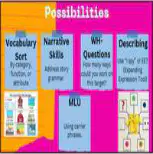
Describe the object using 'I Spy' or the Expanding Expression Tool (EET).
I spy something that is round and red.
I spy something that is blue and square.
I spy something that is green and triangular.
I spy something that is yellow and rectangular.
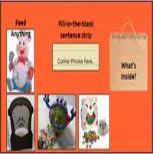
'Carrier phrase here...'
E.g., 'I am feeding the pig.' or 'The monster is eating.'
E.g., 'The dog is flying.'
E.g., 'I am reading a book.'
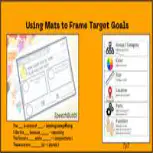
The ____ is a kind of _____
The apple is a kind of fruit.
The apple is a kind of vehicle.
The apple is a kind of animal.
The apple is a kind of tool.
Which of the following is an example of a tangible function of behavior?
Leaving the classroom to avoid a test
Receiving a favorite toy after completing a task
Clapping hands for sensory input
Getting attention from a teacher
What is a common strategy to support students with language-based reading disorders during standardized testing?
Skipping the test
Allowing group work
Reducing the number of questions
Providing extended time
Which sensory input is primarily responsible for balance and spatial orientation?
(a)
What does 'Tactile' mean?
Related to the sense of touch.
Related to the sense of taste.
Related to the sense of hearing.
Related to the sense of sight.
What does 'Auditory' mean?
Related to the sense of hearing.
Related to the sense of sight.
Related to the sense of touch.
Related to the sense of taste.

