
 Worksheets
Worksheet Extraction
Total questions: 74
Worksheet time: 37mins
What does borrowing money generate?
Savings that earn interest
Debt that must be repaid with interest
Regular income from employment
Equity ownership in a company
What is an overdraft?
A loan secured on property
Permission to spend more than the account balance up to an agreed limit
A credit card rewards program
A bonus paid on a savings account
Who makes the decision to provide someone with an overdraft?
The government
The bank or account provider
The person’s employer
Credit reference agencies
A personal loan is taken out by an individual from which entity?
A retail store
A bank or finance company
Their employer
The tax office
Which is NOT a common reason for taking out a personal loan?
Buying a car
Funding home improvements
Consolidating existing debts
Buying everyday groceries
What is Hire Purchase?
A short-term cash advance due on payday
An agreement to pay for goods in instalments while using them, with ownership after the final payment
A bank account that earns interest
A mortgage used to buy property
Hire Purchase is commonly used for selling which item?
Motor vehicles
Utility bills
Holidays
Textbooks
What is a mortgage?
An unsecured short-term loan
A long-term loan secured against property
A type of savings bond
A government grant for housing
What may happen to homes/buildings if mortgage payments are not made?
The interest rate is reduced
The owner receives a bonus
The lender may repossess the property
The loan converts into a grant
What government support may be available for first-time property buyers?
Student loans
Being given a free house
First-time buyer schemes such as help-to-buy or shared ownership
Unemployment benefits
What is a credit card?
A debit card linked directly to savings
An identity card used for proof of age
A card that lets you borrow up to a limit to pay later
A travel pass for public transport
For what should credit cards ideally be used?
Long-term borrowing that is repaid over many years
Everyday purchases repaid in full each month
Regular cash withdrawals
Storing long-term savings
Borrowing on credit cards can be very:
Expensive
Interest-free for years
Guaranteed to improve credit scores
Secured by property
What are payday loans?
Long-term mortgages for buying homes
Short-term, small loans due on the next payday, usually at high cost
Government grants for education
Savings accounts with prize draws
What is a typical use for payday loans?
Buying a house
Paying for everyday groceries for a full year
Bridging a short-term cash shortfall until the next paycheck
Investing in the stock market
What is a major drawback of payday loans?
Very high interest and fees
Large government taxes on them
They require property as collateral
They cannot be obtained online
What do savings and investments help build?
Debt
A financial cushion and long-term wealth
Monthly utility bills
Tax liabilities
What is an ISA?
A tax-free savings or investment account
An insurance policy for a car
A payroll system used by employers
A type of student loan
What is a feature of some ISAs?
Unlimited withdrawals but with penalties
Tax-free returns up to an annual allowance
Mandatory employer contributions
They are fixed to a mortgage
What do Deposit and Savings accounts allow individuals to do?
Borrow for the long term
Store money safely and earn interest
Pay taxes automatically
Apply for mortgages directly
What are Premium Bonds?
High-risk corporate bonds paying fixed interest
A government-backed savings product where returns come via a prize draw instead of interest
Shares in a private company
A type of life insurance policy
How are Bonds often given to children/grandchildren?
As employment benefits
As gifts for future savings
As utility bill discounts
As credit cards for spending
What can Bonds be used to pay for?
Monthly rent only
Groceries only
Future expenses such as education or other milestones
Council tax only
What is important when making financial decisions?
Acting on impulse to secure deals quickly
Researching and comparing costs, risks, and terms before committing
Ignoring professional advice to avoid fees
Choosing the option with the highest interest rate
Which is NOT a source of financial advice mentioned?
Banks or building societies
Independent financial advisers
Government information services
Random social media influencers
What does the Financial Ombudsman Service (FOS) handle?
Setting national interest rates
Selling insurance policies
Resolving complaints and disputes between consumers and financial businesses
Prosecuting financial crimes in court
What types of institutions can disputes be made with through the FOS?
Banks, insurers, and other financial firms
Schools and colleges
Private landlords
Retailers and supermarkets only
What is a potential benefit of buying shares in a business?
Receiving regular interest regardless of profits
Earning dividends and potential capital growth if the company does well
Guaranteed protection of your original money
Getting a fixed salary from the company
What can happen to share value in a short period of time?
It always increases steadily
It can rise or fall quickly due to market changes
It never changes once purchased
It only changes once per year
Where are shares bought?
At a shopping mall
On a stock exchange through a broker or platform
Only directly from a company office
At a bank ATM
What are pensions earned over?
A single year after retirement
Your working life as contributions build up
Only the last five years before retiring
Only when you receive an inheritance
Which is NOT a type of pension mentioned?
State Pension
Workplace Pension
Personal Pension
Cash ISA
What do Workplace Pensions provide?
A cashback bonus on shopping
A retirement pot funded by you and your employer with tax relief
An automatic pay rise every year
An interest‑free loan while you work
What is the main purpose of insurance?
To guarantee profit on investments
To transfer risk and protect against financial loss
To avoid paying taxes
To increase day‑to‑day income
Is car insurance a legal requirement in the UK?
Yes, at least third‑party cover is required
No, it is optional for all drivers
What does car insurance cover?
Parking fines and speeding tickets
Costs of injury or damage you cause to other people and property (and sometimes your own car)
Routine servicing costs only
Fuel expenses
What can happen if there is insurance fraud?
Nothing if the claim is small
The claim can be refused, the policy cancelled, and there could be prosecution
The insurer must still pay the claim
Premiums are refunded to the customer
What does home insurance protect?
Only garden plants
The building and/or contents against risks like fire, theft and flood
Only mortgage repayments
Electricity and water bills
What is a benefit of having home insurance?
Guaranteed increase in house price
Payout to repair or replace items if damaged or stolen
Free home maintenance every month
No need to lock doors and windows
What is Life Assurance/Insurance?
A policy that pays a sum of money if the insured person dies during the term
A savings account with fixed interest
A type of travel ticket
Coverage for routine car servicing
What could life insurance money cover?
Concert tickets
Funeral costs, mortgage or debt repayments, and living expenses for dependants
Gym memberships only
Pet grooming
Can some life insurance policies pay out if diagnosed with a terminal illness?
Yes, some include a terminal illness benefit
No, they only pay after the policy ends
What is Travel Insurance?
A guarantee your flight will be on time
Cover for unexpected events and costs related to a trip
A discount card for hotels
A work visa application
What are typical areas covered by Travel Insurance?
Emergency medical treatment
Trip cancellation or curtailment
Lost or delayed baggage
Routine home maintenance
What does Pet Insurance cover?
Veterinary bills for illness or injury
Food and grooming every month
Pet training classes
Kennel fees only
What is the main purpose of Health Insurance?
To pay for private medical treatment and related healthcare costs
To replace your salary if you resign
To fund gym memberships
To pay council tax
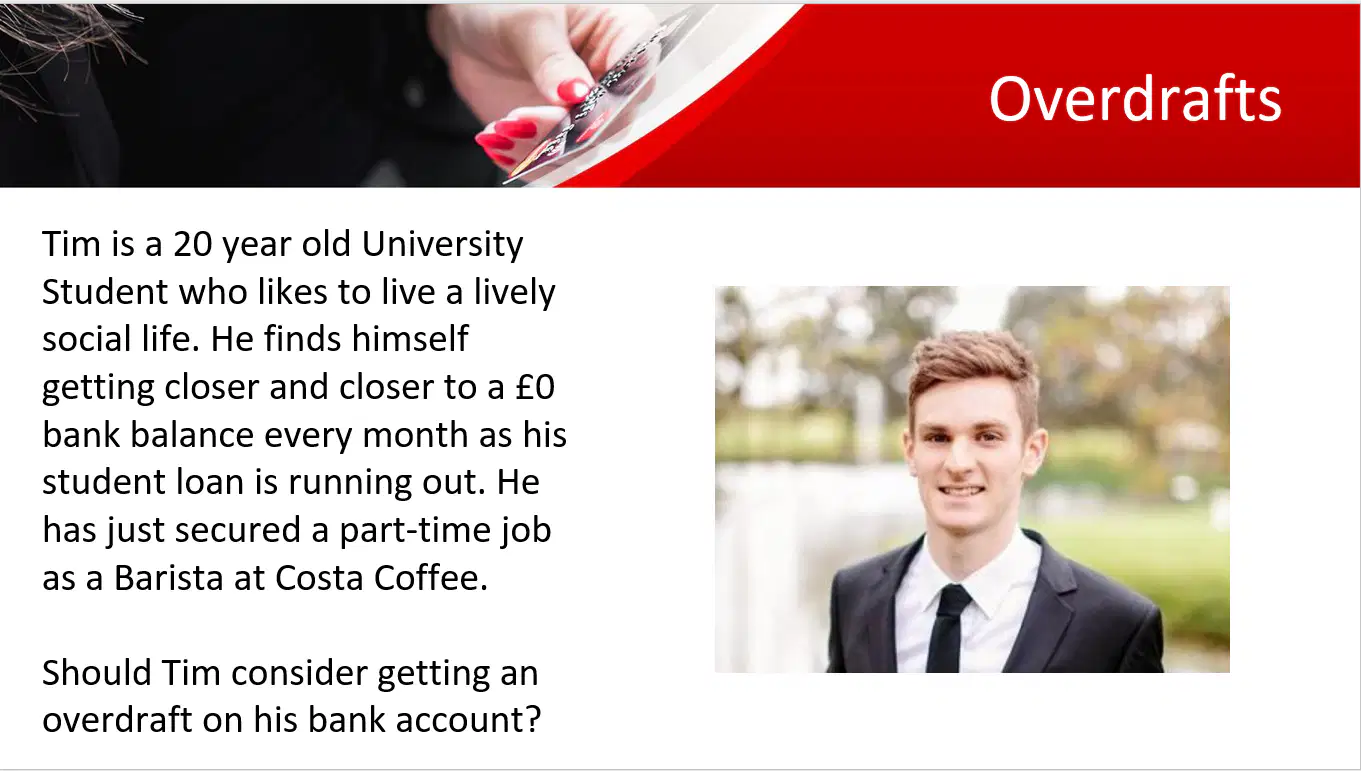
In the Tim case study, what is Tim's main financial challenge?
A short‑term cash shortfall before income arrives
Long‑term retirement planning
Buying an investment property outright
Managing a large inheritance

Why might an overdraft be suitable for Tim?
It provides long‑term fixed borrowing for big purchases
It offers flexible, short‑term borrowing to cover a temporary gap in funds
It permanently increases his salary
It is interest‑free for unlimited time
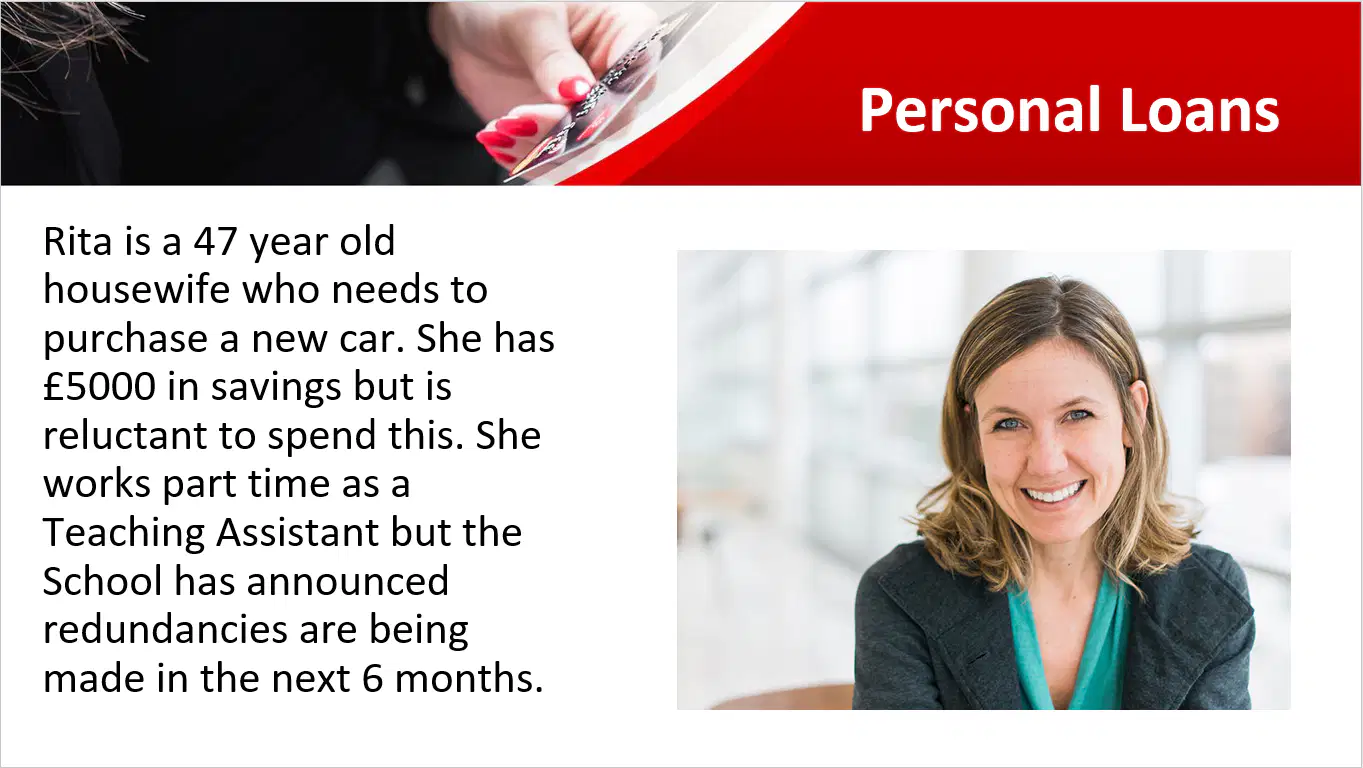
In Rita's case study, how much does she have in savings?
£500
£2,000
£5,000
£10,000
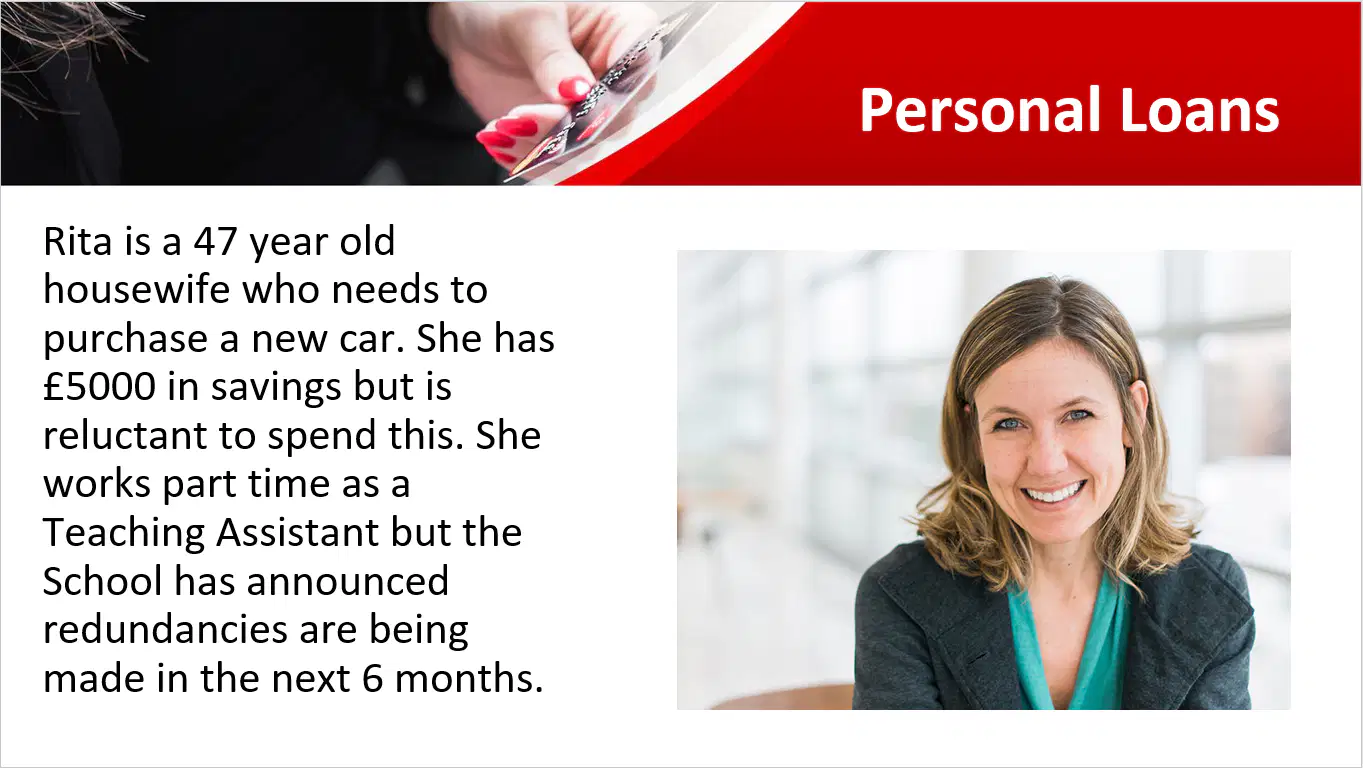
Why is Rita reluctant to use her savings for a car?
She plans to spend it on a holiday next week
She wants to keep an emergency fund and avoid depleting her savings
She does not have a driving licence
She expects the car price to double soon
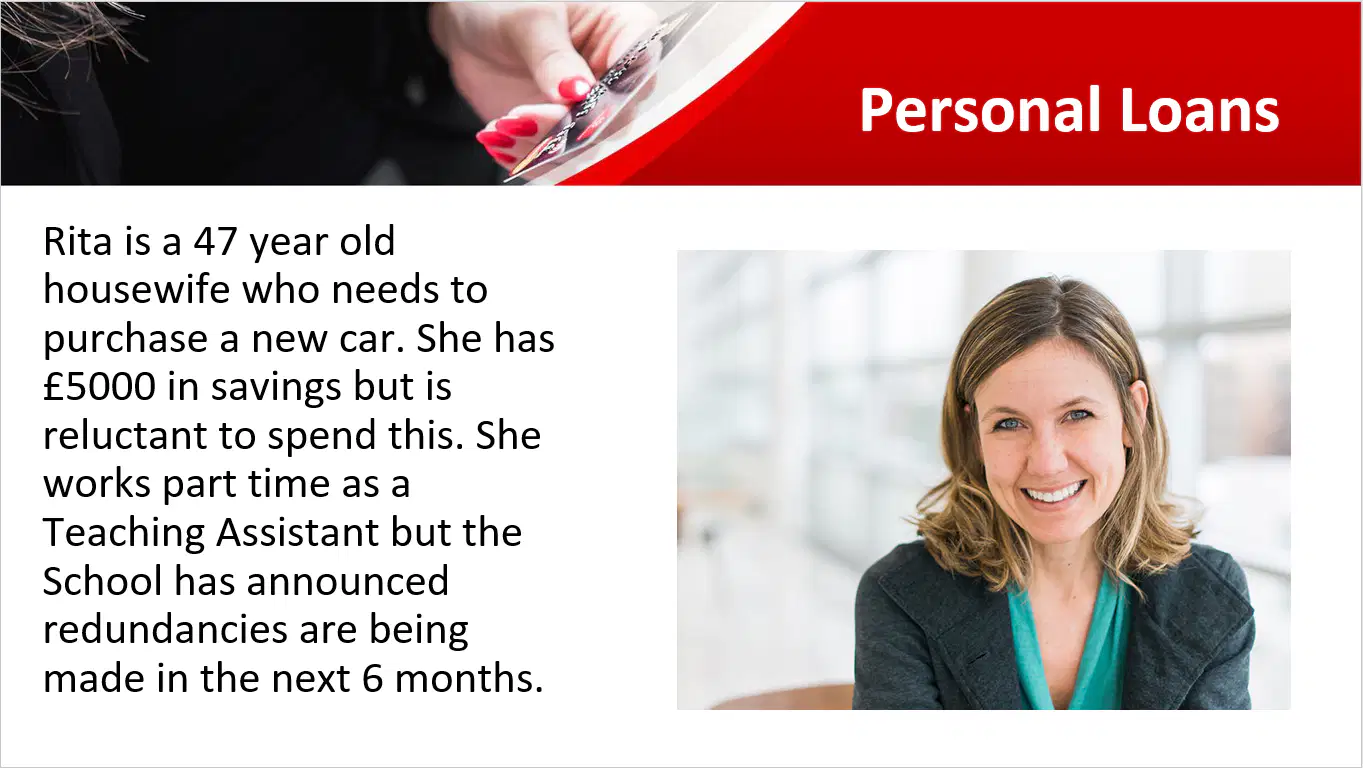
What is Rita's employment situation that affects her financial decision?
She works full‑time on a permanent contract
She is self‑employed with irregular income
She is on a part‑time or temporary contract
She is retired

In Malik's case study, what is his main financial need?
To finance the purchase of a car
To save for retirement immediately
To buy a house with cash
To pay for a holiday already taken
What is the price of the car Malik wants to purchase?
£3,000
£6,000
£9,000
£12,000

What is the price of the car Malik wants to purchase?
£3,000
£6,000
£9,000
£12,000

Why might Hire Purchase be attractive to Malik?
It allows him to spread the cost into fixed monthly payments with ownership at the end
It gives the car for free if he changes jobs
It requires no deposit and no interest under any circumstances
It is only available for holidays

In David's case study, what is his main frustration about renting?
He cannot build equity by paying rent
He can never move house
He must purchase contents insurance
He has to pay for the landlord’s mortgage directly

What is David's employment situation?
Full-time employment with a steady salary
Part-time work with variable hours
Self-employed on short-term contracts
Unemployed and seeking work

What is David's family situation?
Single with no dependents
Married with two children
Living with parents as a dependent
Caring for an elderly relative full-time

In Sally's case study, why might credit cards with high interest rates be risky for her?
Carrying a balance will make repayments expensive and slow to clear
High rates reduce her credit limit automatically
High rates guarantee better rewards than low-rate cards
Interest rates do not affect the total cost of borrowing
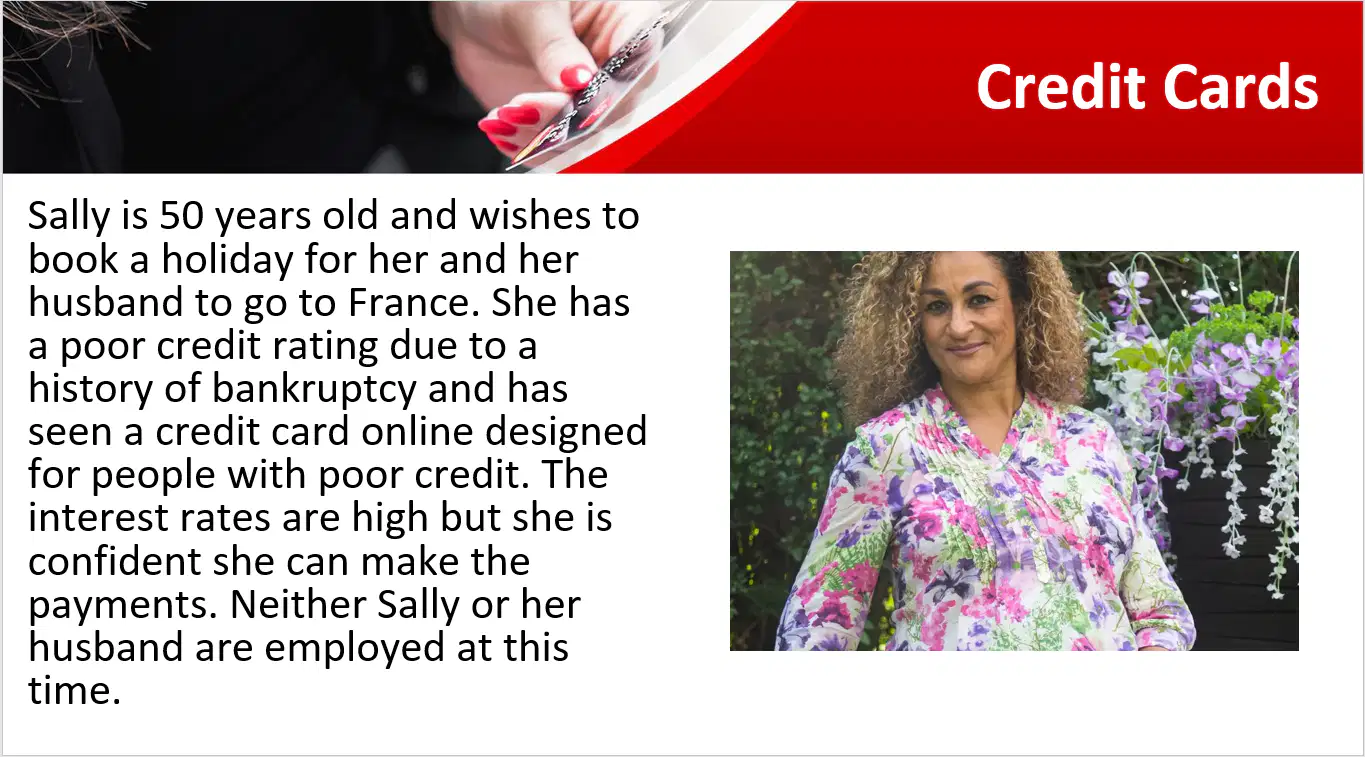
What is Sally's main financial goal?
To build an emergency fund
To increase discretionary spending
To close all her bank accounts
To switch to cash-only spending forever
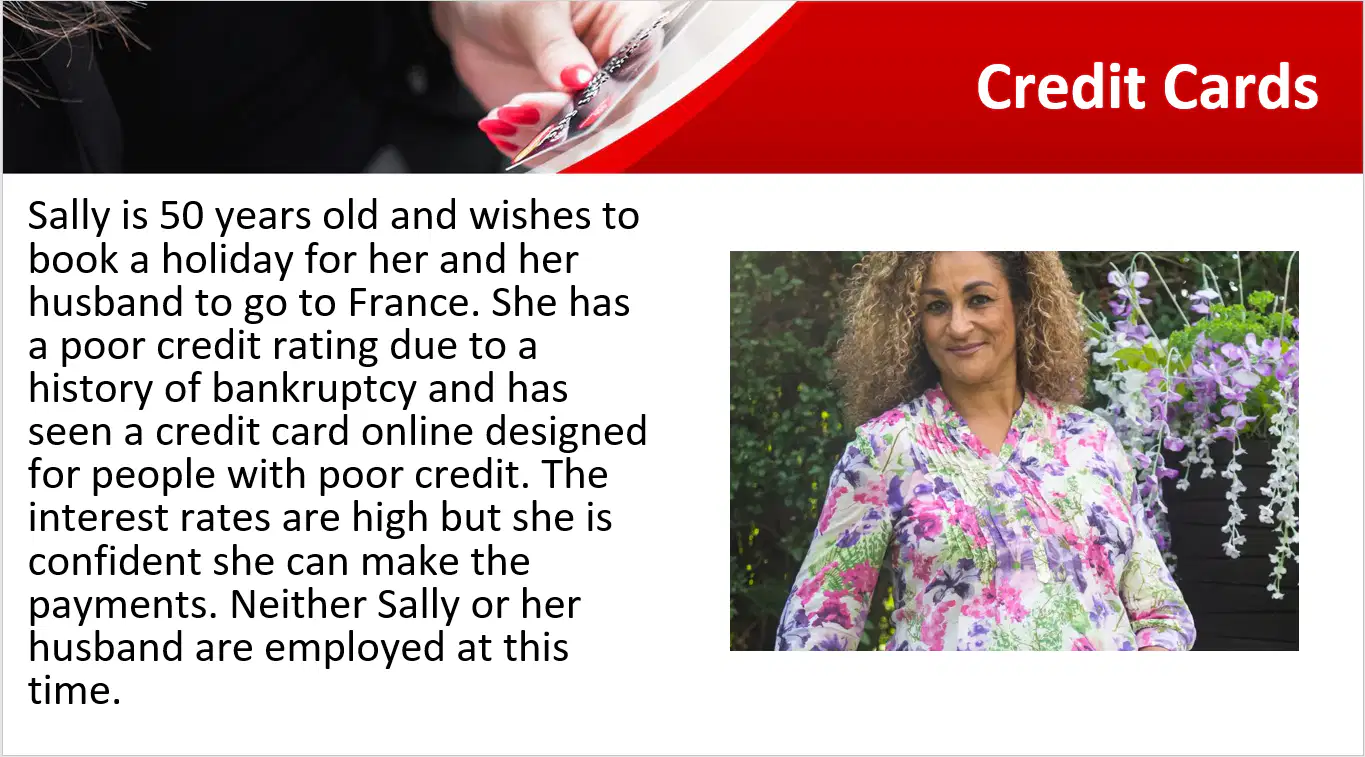
What is a key concern about Sally's planned credit card use?
Relying on minimum payments could lead to growing debt
Using a card will prevent her from making online purchases
Credit cards cannot be used for everyday expenses
A card must always be paid off over 10 years
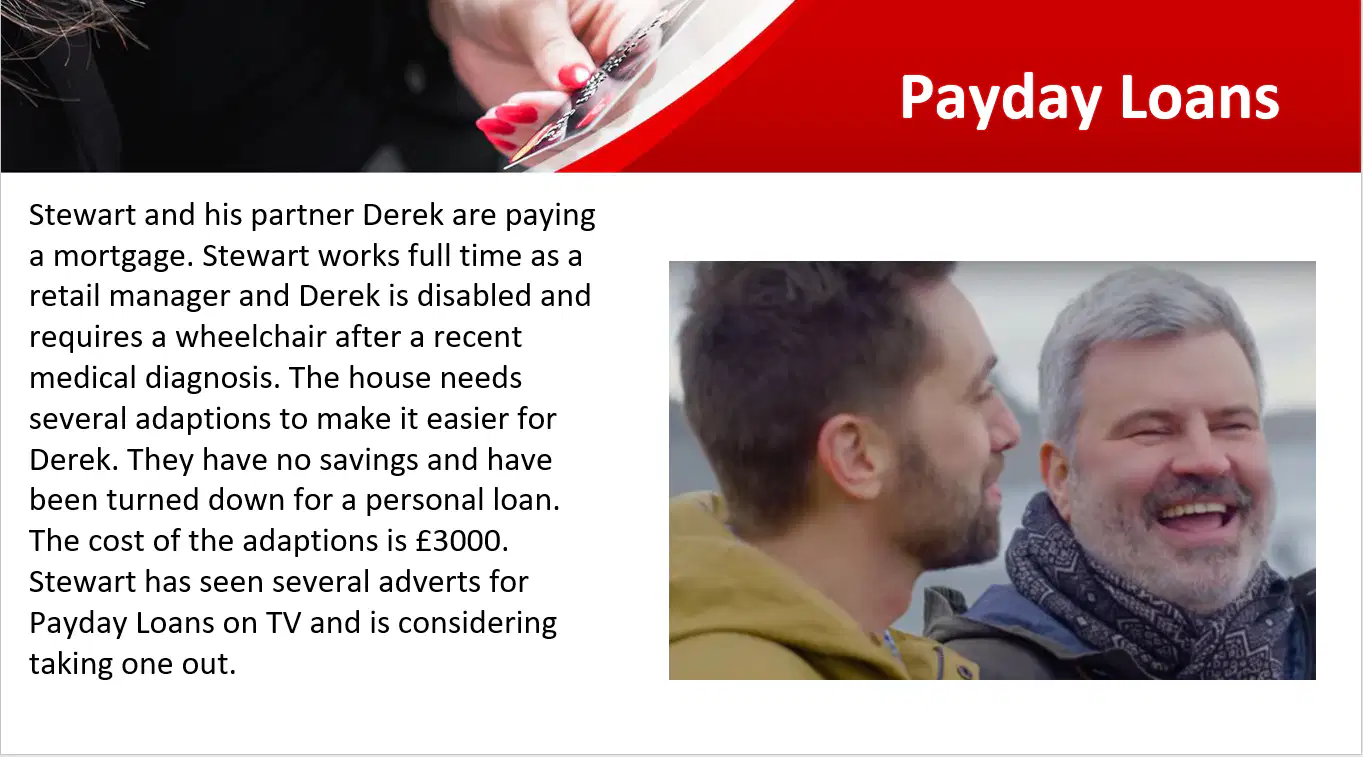
In Stewart and Derek's case study, why do they need £3,000 ?
To pay for home adaptations to improve accessibility
To purchase a holiday abroad
To invest in high-risk shares
To pay off a student loan
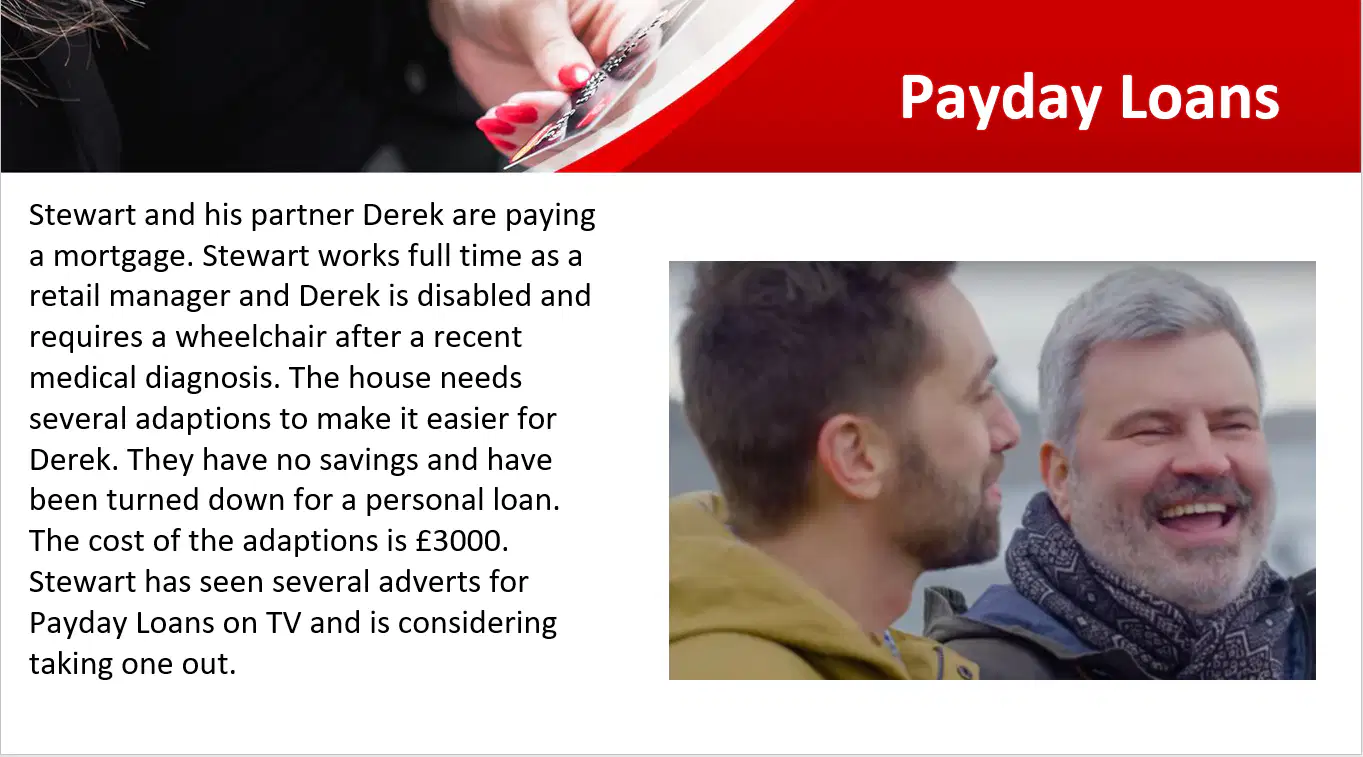
Why were Stewart and Derek turned down for a personal loan?
Insufficient credit history or affordability concerns
They already had a mortgage
They requested too small an amount
Personal loans are illegal for home improvements
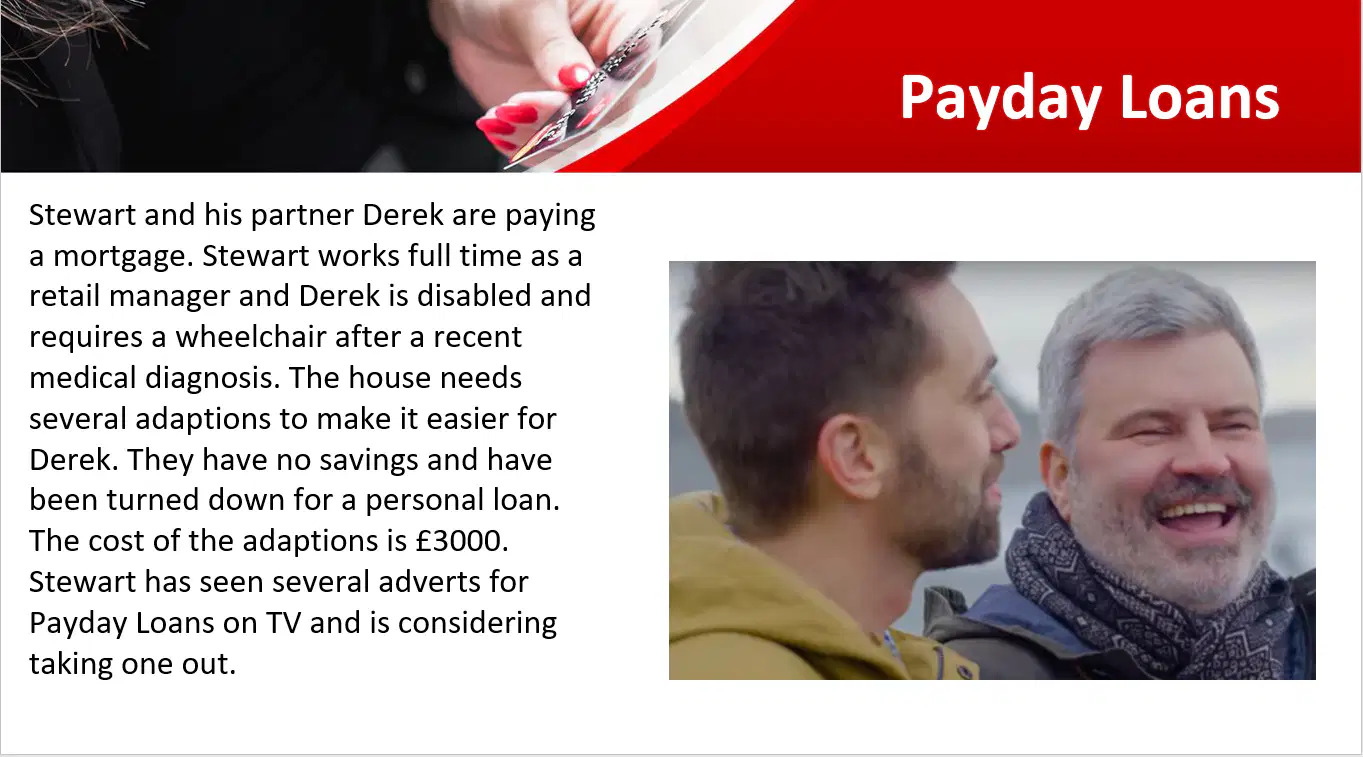
What is Derek's situation that makes the adaptions necessary?
A mobility impairment requiring accessibility changes
A temporary holiday plan
A desire to redecorate for style
A plan to sell the home immediately
Which borrowing method should be used for long-term large purchases?
A secured loan or mortgage aligned to the asset’s life
A payday loan due in two weeks
An overdraft used daily
A store card paid over 30 years
What is the key difference between saving in an ISA vs. a regular savings account?
ISA interest is tax-free while regular savings interest may be taxable
ISAs charge higher fees on every deposit
Regular savings accounts have government guarantees while ISAs do not
ISAs cannot be used for long-term goals
What factor is most important when choosing between borrowing methods?
The total cost of credit, including APR and fees
The color of the lender’s logo
How quickly the application page loads
Whether a friend used the lender
Which of the following is an example of secured borrowing?
A car loan secured on the vehicle
A credit card used for groceries
An unsecured personal loan
A buy-now-pay-later purchase with no collateral
What is the main advantage of building a 'nest egg' through savings and investments?
Financial resilience and growth through compound returns
Guaranteed elimination of all taxes
Unlimited access to free credit
Protection from any market risk
How should individuals approach seeking financial advice?
Use a regulated, impartial adviser and check credentials
Rely solely on social media tips
Avoid comparing fees or services
Choose the adviser with the flashiest advertisements
What is one key characteristic that influences whether a borrowing method is suitable?
The repayment term should match the life of what is being financed
How many reward points the lender offers
Whether the lender offers free pens
If monthly statements are printed in color
Which financial product is designed to provide income after retirement?
Personal loan
Pension
Current account
Credit card
What is typically required before a lender approves a mortgage?
Proof of income and a deposit
Owning a car
Having a credit card
Paying council tax
Which type of insurance helps cover costs if your belongings are stolen from your home?
Travel insurance
Home contents insurance
Car insurance
Health insurance

